
Home Addition Wiring in Troy, MI
Safely Powering Your New Space: Expert Home Addition Wiring
Planning a home addition in Troy requires careful consideration regarding electrical load and safety, as improper installation can jeopardize the entire household. Contact us today to schedule an on-site consultation or to discuss financing options for your project.
Adding square footage to a home involves far more than framing and drywall; it requires a sophisticated integration of new electrical circuits into an existing system. Whether you are building a master suite, expanding a kitchen, or adding a sunroom, the electrical infrastructure must support modern energy demands. Our licensed electricians ensure your expansion is powered safely and efficiently, handling the complexities of load calculations and circuit distribution.
- Seamless integration of new wiring with existing electrical panels and systems.
- Compliance with all local Troy building codes for complete peace of mind.
- Use of high-quality materials, from copper wiring to premium breakers, for lasting reliability.
Fully licensed and insured, with all work permitted and inspected to meet municipal standards.
Ensuring the Electrical Safety of Your Home Addition
Expanding a home changes the dynamic of the entire electrical system. A common misconception among homeowners is that existing wiring can simply be extended to cover new rooms. However, adding outlets, lighting fixtures, and heavy-duty appliances to a circuit that is already near capacity creates immediate fire hazards and tripping risks. The primary goal of professional home addition wiring is to manage the increased electrical load safely.
In Troy, MI, where winter temperatures often drop into the teens, heating demands are significant. If your addition relies on supplemental electric heating or runs off the main HVAC system, the amperage draw increases substantially. A standard 100-amp panel may no longer suffice. Professional evaluation determines if the current service entrance cable and main panel can handle the additional square footage or if a heavy-up (service upgrade) is required.
Safety also involves the correct installation of Arc Fault Circuit Interrupters (AFCIs) and Ground Fault Circuit Interrupters (GFCIs). Modern code requires these safety devices in specific areas to prevent electrical shocks and electrical fires. Attempting to bypass these requirements or "do it yourself" often results in failed inspections and, more importantly, a less safe living environment. Professional wiring ensures that every connection is tight, every circuit is properly grounded, and every wire gauge is appropriate for the intended load.
Comprehensive Wiring Services: From Consultation to Inspection
When undertaking a major renovation, you need a partner who manages the entire electrical scope. Blue Heron Electrical provides end-to-end wiring solutions designed to keep your project on schedule and up to code. We handle the logistical coordination between general contractors and electrical teams to prevent bottlenecks during the build.
Detailed Load Calculations and System Design
Before a single wire is run, a thorough assessment of your current electrical capacity takes place. This involves calculating the total amperage draw of the new space based on the square footage, intended use, and planned appliances. A kitchen addition, for example, requires dedicated circuits for refrigerators, microwaves, and ranges, whereas a bedroom addition focuses on general lighting and AFCI-protected outlets.
Rough-In Wiring Phase
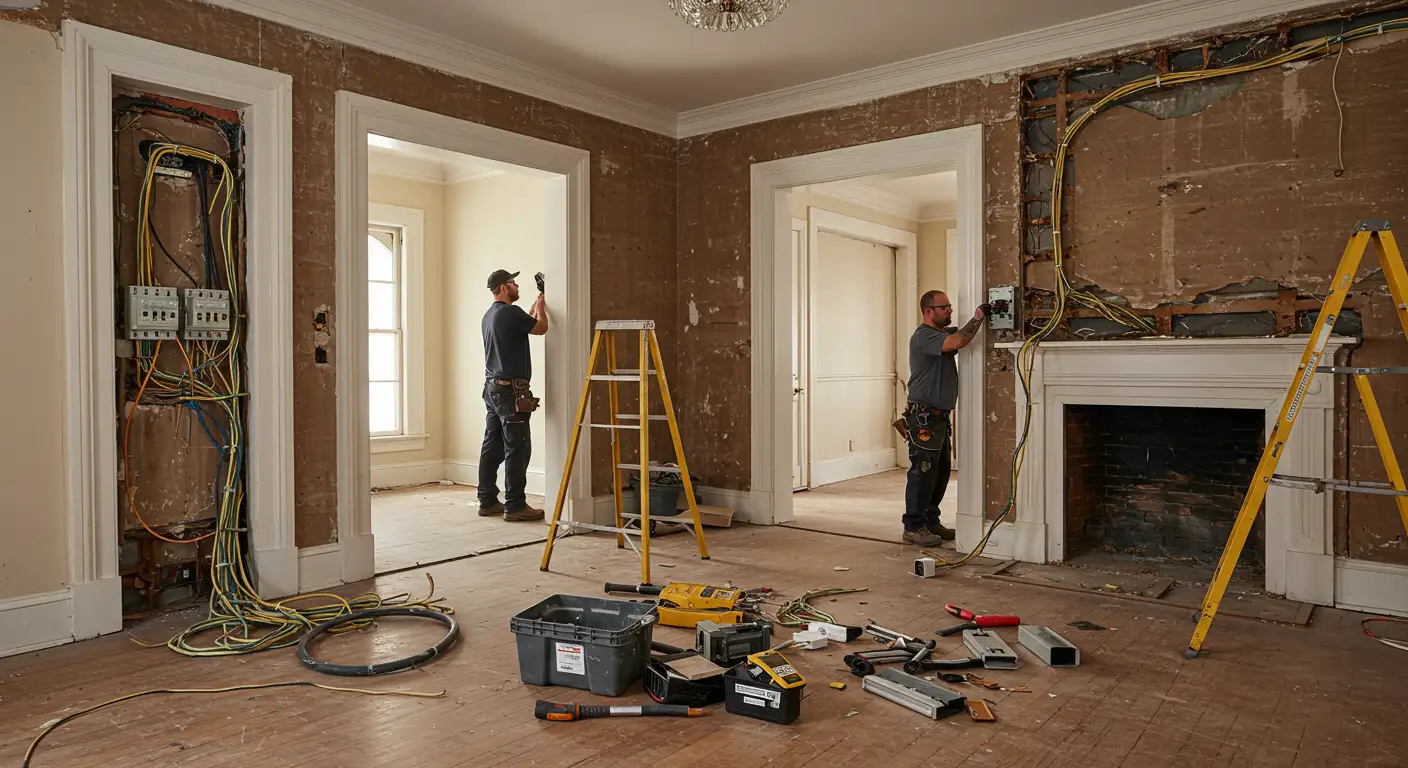
The rough-in phase occurs after framing but before insulation and drywall. This is the critical stage where the infrastructure is built.
- Installation of electrical boxes for outlets, switches, and fixtures.
- Drilling through studs and joists to run cabling efficiently.
- Stapling and securing wiring to ensure it remains protected behind the walls.
- Running main feed lines back to the service panel.
Sub-Panel Installation
For additions that are far from the main panel or require numerous new circuits such as a garage workshop or a secondary suite installing a sub-panel is often the most efficient solution. This allows for local control of circuits in the new addition and reduces voltage drop over long wire runs.
Specialty Wiring and Smart Home Integration
Modern additions often include specialized requirements beyond standard 120-volt outlets.
- 240-volt circuits for dryers, ranges, electric vehicle chargers, or ductless mini-split heat pumps.
- Cat6 ethernet wiring for home offices or media rooms.
- Coaxial cable for television and internet service.
- Hardwired smoke and carbon monoxide detector interconnection.
- Smart lighting controls and automated system integration.
Finish Electrical Work
Once the walls are closed and painted, the finish phase begins. This involves installing the actual devices homeowners interact with daily.
- Mounting and connecting light fixtures, chandeliers, and ceiling fans.
- Installing receptacles, USB outlets, and dimmer switches.
- Labeling the electrical panel clearly so homeowners know which breaker controls the new addition.
- Testing all circuits for polarity, grounding, and voltage drop.
Your Wiring Project Process: What to Expect from Start to Finish
Understanding the workflow of an electrical installation helps homeowners plan their construction timeline. We operate with a strict adherence to process to ensure efficiency and code compliance.
- Initial Site Assessment: The process begins with an evaluation of the existing main panel and the architectural plans for the addition. This determines the scope of work and whether a service upgrade is necessary.
- Permitting and Planning: Electrical work in Troy requires specific permits. These must be pulled before work begins. The layout is planned to meet National Electrical Code (NEC) requirements regarding outlet spacing and switch placement.
- Rough-In Installation: Once the framing is complete, the electrical team arrives to install boxes and run wires. This stage usually takes one to three days depending on the size of the addition.
- Rough Inspection: Before insulation is installed, a municipal inspector must verify that the wiring allows for safe operation and meets code. The walls cannot be closed until this inspection is passed.
- Finish Installation: After the general contractor finishes the drywall and painting, electricians return to install the final fixtures and faceplates.
- Final Inspection: A final walkthrough with the local inspector ensures that all devices are working correctly, the panel is labeled, and safety systems (like smoke detectors) are functional.
- Power Up and Testing: The system is energized, and a final check verifies that everything functions as intended.
Why Upgrading Your Electrical System Is a Smart Choice
During a home addition, the question often arises: should we just add to what exists, or is it time to upgrade? While patching into an existing system might seem cost-effective initially, it often leads to overloaded circuits and dimming lights. Upgrading the electrical infrastructure during construction is the most logical decision for long-term performance.
Older homes in Michigan may still operate on 60-amp or 100-amp service. A modern family home with central air, multiple televisions, computers, and kitchen appliances typically requires 200 amps. Adding a new room pushes an older system past its limits. Upgrading the main service panel ensures that you have ample power not just for the new addition, but for future needs like electric vehicle charging stations or hot tubs.
Furthermore, older wiring types, such as aluminum wiring or knob-and-tube found in historic properties, are not compatible with modern safety standards. Renovations provide the perfect opportunity to replace these outdated materials with grounded, copper wiring. This reduces the risk of arcing and electrical fires. Investing in a panel upgrade or a sub-panel ensures that the breaker trips correctly when a fault occurs, protecting both the new addition and the original structure.
Navigating Local Electrical Codes and Permits
Electrical work is strictly regulated to ensure public safety. In Troy, specific amendments to the code may apply, and navigating these regulations requires local expertise.
Permitting Requirements
Every home addition involving electrical work requires a permit. This is not a suggestion; it is a legal requirement. The permit process creates a paper record that the work was performed by a licensed professional and inspected by the city. This documentation is crucial when selling the home in the future or when filing insurance claims. Work done without a permit can lead to retroactive fines and the removal of drywall to expose wiring for inspection.
Climate-Specific Considerations
The local climate impacts electrical design.
- Outdoor Circuits: Exterior outlets for the addition must be GFCI protected and have weather-resistant covers to withstand snow and ice.
- Heating Loads: Wiring must account for the heavy draw of heating systems during freezing winter months.
- Ice Melt Systems: Many homeowners choose to install roof de-icing cables during an addition; these require dedicated circuits to prevent panel overload.
Coordination with Utility Providers
If a service upgrade is deemed necessary to support the addition, coordination with the local utility provider (DTE Energy) is required. This involves disconnecting power at the street, installing a new meter socket, and scheduling the reconnection. Professional electricians handle this logistics chain, ensuring that the home is not left without power for extended periods.
Trusted by Residents for Reliable Electrical Solutions
Selecting the right contractor for your home addition wiring dictates the safety and functionality of your new space. Electrical work is the nervous system of the home; when it fails, the home ceases to function comfortably. You need a team that prioritizes technical precision over speed, ensuring that every connection is secure and every load calculation is accurate.
We distinguish our services through transparency and technical excellence. Our team arrives equipped to handle the specific challenges of tying new construction into existing residential infrastructure. We maintain a clean job site, respecting that the rest of the house may still be occupied during the renovation. From the initial rough-in to the final flip of the switch, the focus remains on delivering power that is consistent, safe, and code-compliant.
Expert Wiring for a Space Built to Last
Your home addition represents a significant investment in your property and lifestyle. Ensure that the wiring behind the walls is built to last as long as the structure itself. Don’t leave your electrical safety to chance or inexperienced hands.
Secure the power and safety of your new addition today. Contact Blue Heron Electrical to discuss your project requirements.
Customer Testimonials

Service Areas