
The Complete Guide to Why a Home Electrical Inspection Matters Before Buying or Selling in Metro Detroit
What Every Metro Detroit Buyer and Seller Needs to Know About Home Electrical Inspections
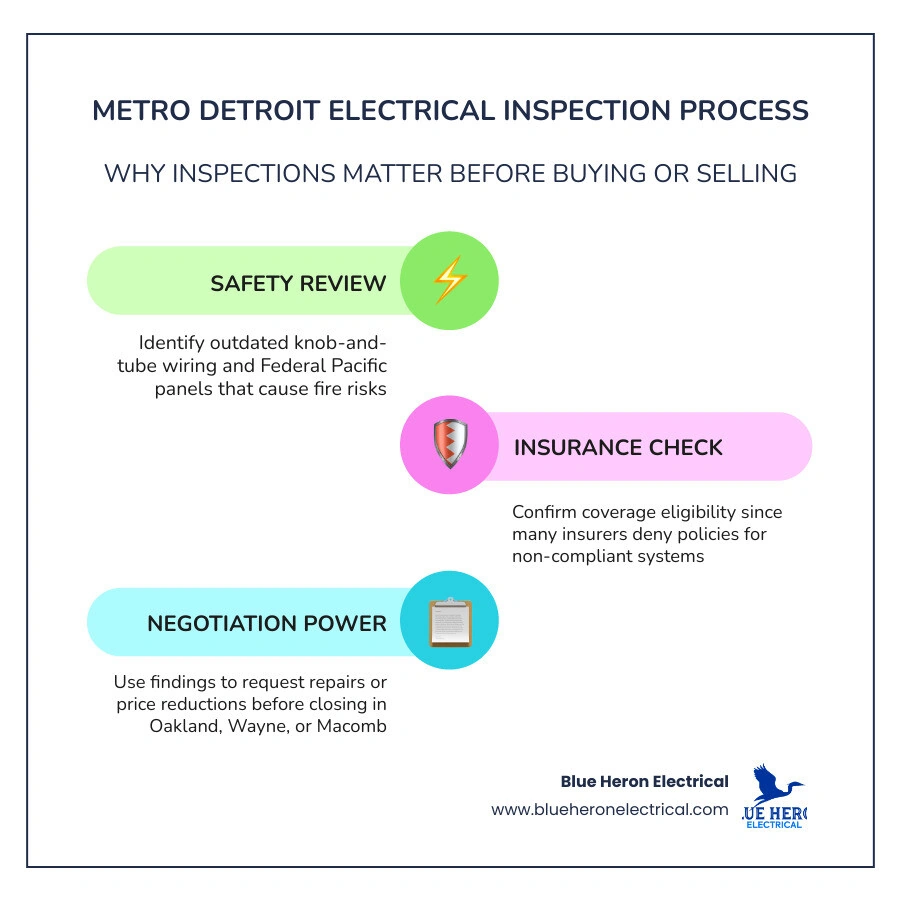
Understanding why a home electrical inspection matters before buying or selling in Metro Detroit could save you from a costly — or dangerous — surprise. Metro Detroit's housing stock is older than most major U.S. metros. Many homes across Oakland, Wayne, and Macomb counties were built before 1970, which means they may still have wiring systems, panels, and electrical components that haven't kept pace with modern safety standards or today's power demands.
Here's why it matters at a glance:
- Safety: Older wiring like knob-and-tube and outdated panels like Federal Pacific Stab-Lok are linked to electrical fires and shock hazards
- Insurance: Many insurers will not cover homes with certain outdated wiring, or may require replacement within 30 days of issuing a policy
- Real estate transactions: Some Michigan jurisdictions require electrical inspection approval before a home sale can proceed
- Negotiating power: Inspection findings give buyers leverage to request repairs or price reductions — and give sellers a chance to get ahead of deal-breakers
- Code compliance: Detroit follows the National Electrical Code (NEC) with local amendments, and non-compliant systems can stall or derail a closing
Homes over 25 years old may have electrical components that no longer meet current safety codes. In a market where buyers and sellers both have a lot on the line, skipping this step is one of the riskiest moves you can make.
Why a Home Electrical Inspection Matters Before Buying or Selling in Metro Detroit
When you are in the middle of a real estate transaction, it is easy to get caught up in cosmetic details like fresh paint, updated countertops, or modern landscaping. However, the most critical systems in a home are often the ones you cannot see. The electrical system is the network that powers daily life, and when it is compromised, the consequences can be severe.
According to the National Fire Protection Association (NFPA), electrical malfunctions are a leading cause of home structure fires. A professional safety inspection serves as your primary line of defense against these hazards. By identifying issues like loose connections, degraded insulation, or overloaded circuits, an inspection prevents minor issues from escalating into major safety hazards.
Understanding How a Whole Home Electrical Inspection Finds Hidden Problems Before They Become Dangerous is essential for anyone entering the Metro Detroit housing market. Beyond basic safety, a documented inspection is a powerful tool when dealing with homeowners insurance providers. In today’s insurance market, underwriting guidelines are stricter than ever. Many insurance companies will ask direct questions about the age and type of the electrical system. If a home has uncertified upgrades or outdated materials, obtaining coverage can become a major hurdle.
Furthermore, because the National Electrical Code (NEC) updates regularly, an older home that was compliant when built may now pose significant compliance issues. An inspection verifies that the home is equipped to handle modern appliances safely, protecting your investment from the day you sign the closing papers.

Common Electrical Hazards in Older Southeast Michigan Properties
Southeast Michigan is famous for its beautiful, historic neighborhoods. From the classic bungalows of Royal Oak and Ferndale to the grand estate homes of Birmingham and Bloomfield Hills, these properties possess incredible architectural charm. However, this historic character comes with a unique set of electrical challenges.
To truly understand how to preserve these properties, we must look at How an Electrical Inspection Protects Older Homes in Southeast Michigan. One of the most widespread issues we encounter in homes built before the 1970s is ungrounded outlets. These are easily recognized as the traditional two-prong receptacles. Without a dedicated grounding wire, excess electricity has no safe path to travel in the event of a surge or short circuit, significantly increasing the risk of electrocution and damage to sensitive electronics.
Another common hazard is the lack of Ground Fault Circuit Interrupter (GFCI) protection. Modern electrical codes require GFCI outlets in all "wet" areas of a home, including kitchens, bathrooms, basements, crawlspaces, and outdoor locations. GFCIs monitor the flow of electricity and instantly shut off power if a ground fault is detected, protecting family members from severe shocks. During a real estate transaction, missing GFCI protection is one of the most frequently cited safety violations.
To help you visualize the differences between the wiring systems found in Metro Detroit homes, we have put together this comparison table:
| Wiring Type | Typical Era of Installation | Safety Risk Level | Grounding Available? | Modern Compatibility |
|---|---|---|---|---|
| Knob-and-Tube | 1880s – 1940s | High | No | Poor (not designed for modern loads or insulation coverage) |
| Aluminum Branch | Late 1960s – 1970s | High | Yes (but connections degrade) | Poor (requires specialized connectors to prevent fire hazards) |
| Modern Copper | 1970s – Present | Low | Yes | Excellent (supports high-demand appliances and smart tech) |
Outdated Wiring Systems: Knob-and-Tube and Aluminum
If you are looking at a historic home in communities like Huntington Woods, Pleasant Ridge, or Grosse Pointe, there is a strong possibility you will encounter knob-and-tube wiring. This system utilizes ceramic knobs to secure wires and ceramic tubes to protect them as they pass through wood framing. While a perfectly maintained, untouched knob-and-tube system can technically function, it was never designed to handle today’s electricity demands.
The primary danger of knob-and-tube wiring lies in its age and how it has been modified over the decades. Over time, the rubberized cloth insulation surrounding the wires becomes brittle and flakes away, leaving bare, live wires exposed inside walls and attics. Additionally, because knob-and-tube requires open air to dissipate heat, covering it with modern attic insulation is a major fire hazard.
Aluminum branch wiring, common in homes built during the late 1960s and early 1970s, presents a different set of problems. Due to rising copper prices during that era, builders substituted aluminum. However, aluminum expands and contracts at a different rate than copper when heated by electrical currents. This thermal expansion causes connections at outlets, switches, and panels to loosen over time, leading to arcing, overheating, and potential fires.
When navigating these issues, knowing When to Upgrade Wiring in an Older Home and What to Expect is vital. Many insurance providers will flatly refuse to write a policy for a home with active knob-and-tube or aluminum wiring, or they will issue a strict deadline for complete replacement. For a buyer, finding this out after making an offer can bring the entire transaction to a sudden halt.
Overloaded Electrical Panels and Safety Risks
Your electrical panel is the heart of your home’s electrical system, distributing power to various circuits and protecting your home from overloads via circuit breakers. Unfortunately, many older homes in Southeast Michigan still rely on outdated, dangerous panels that should have been retired decades ago.
Two specific brands of panels are notorious safety hazards: Federal Pacific Electric (FPE) Stab-Lok panels and Zinsco panels. FPE panels are known to have a high rate of breaker failure, meaning the breakers fail to trip when a circuit is overloaded. This allows dangerous levels of electricity to continue flowing, melting wires and causing electrical fires. Zinsco panels suffer from design flaws where the breakers melt directly onto the bus bar, rendering them incapable of cutting off power during a surge.
If you suspect your home has one of these systems, look for the Signs Your Electrical Panel Is No Longer Safe for Modern Power Needs. Today's households use far more electricity than families did fifty years ago. Between central air conditioning, high-end kitchen appliances, home offices, and modern entertainment systems, older panels are pushed to their absolute limits.
Furthermore, we must consider How an Overloaded Panel Causes Electrical Problems in Older Metro Detroit Homes. When a panel is overloaded, you may experience flickering lights, warm outlet covers, buzzing sounds, or breakers that trip constantly. If you plan to add modern amenities like an Electric Vehicle (EV) charger or a hot tub, a panel upgrade is almost always a prerequisite to ensure your home can handle the load safely.
Navigating Real Estate Transactions: Buyers vs. Sellers
In the competitive Metro Detroit real estate market, knowledge is leverage. Whether you are buying a historic home in Royal Oak or preparing to sell a property in Troy, an electrical inspection provides the objective data you need to make smart decisions.
For both parties, the inspection report serves as a baseline of truth. In Michigan, sellers are required to fill out a Seller’s Disclosure Statement, noting any known defects in the home's major systems. Failing to disclose known electrical issues can lead to legal complications down the road. Conversely, having a professional inspection report in hand allows both sides to negotiate with complete transparency, avoiding the emotional stress of last-minute discoveries.
Why a Home Electrical Inspection Matters Before Buying or Selling in Metro Detroit for Buyers
For home buyers, an electrical inspection is the ultimate form of protection. When you fall in love with a house, it is easy to overlook subtle warning signs. A dedicated electrical inspection ensures you know exactly what lies behind the drywall before you commit to a mortgage.
By identifying hidden defects—such as bootleg grounds, DIY wiring mistakes in the attic, or overloaded circuits—you gain critical peace of mind. If the inspector discovers issues, you have the documentation needed to request that the seller make repairs prior to closing, or you can negotiate a price reduction or credit so you can hire your own licensed electrician to complete the work after move-in. This prevents you from inheriting a home that requires immediate, unexpected electrical work.
Why a Home Electrical Inspection Matters Before Buying or Selling in Metro Detroit for Sellers
For home sellers, scheduling a pre-listing electrical inspection is a highly strategic move. Waiting for the buyer’s inspector to find problems puts you on the defensive. You may be forced to make rushed repairs using whatever contractor is available, or accept a steep price reduction to keep the deal from falling through.
By taking a proactive approach, you can identify and resolve issues on your own schedule. Correcting outdated wiring, replacing an old panel, or simply installing GFCI outlets in the kitchen and bathrooms before your home hits the market removes potential deal-breakers. This streamlines the closing process, showcases your commitment to home safety, and instills confidence in potential buyers, often helping you secure higher offers.
Local Codes, Permits, and Compliance in Oakland County
Electrical work is highly regulated for a reason: mistakes can be fatal. In Michigan, all electrical work must comply with the National Electrical Code (NEC), along with specific local municipal amendments. When buying or selling a home, verifying that past electrical work was completed legally with the proper permits is crucial.
If you are planning to sell or buy a home that needs updates, you might wonder: Does a Panel Upgrade Require an Inspection and Permit in Michigan? The answer is a resounding yes. Any major modification to a home's electrical service requires a permit from the local building department and a follow-up inspection by a municipal inspector to verify code compliance.
The same rule applies to extensive wiring projects. To protect your investment, make sure you understand if and when Does Rewiring a Home Require a Permit in Michigan. Working with licensed, insured electricians is the only way to guarantee that these permits are pulled correctly and that the work will pass city inspections.
Local climate factors also play a major role in how we evaluate systems in Metro Detroit. We must always consider How Michigan Winters and Summer Storms Stress Home Electrical Systems in Metro Detroit. Heavy snow, ice storms, and intense summer thunderstorms frequently cause power outages and power surges across Oakland County. An inspection ensures your home's grounding system, surge protection, and main service connections are robust enough to withstand Michigan's extreme weather patterns.
Frequently Asked Questions About Metro Detroit Electrical Inspections
How often should a home electrical system be inspected?
As a general rule of thumb, homeowners should schedule a professional electrical safety inspection every 3 to 5 years as part of standard home maintenance. However, certain situations warrant immediate attention. If your home is over 25 years old, if you are planning major renovations, if you are installing large new appliances, or if you have experienced a major power surge, scheduling an inspection is highly recommended to catch potential issues early.
Can you sell a house with knob-and-tube wiring in Michigan?
Yes, but it can be extremely difficult. While there is no state law that outright bans the sale of a home with knob-and-tube wiring, many local municipal inspectors will not approve a home sale if active knob-and-tube is present during a city-mandated inspection. Additionally, because most buyers will struggle to secure homeowners insurance or financing for a property with this type of wiring, sellers usually must either replace the wiring before closing or offer a significant credit to cover the upgrade.
What are the warning signs of a failing electrical panel?
You should call a licensed electrician immediately if you notice any of the following red flags:
- Flickering or dimming lights when major appliances turn on
- Circuit breakers that trip frequently and refuse to stay reset
- Warmth, scorch marks, or discoloration on the panel door or outlet covers
- Persistent buzzing, clicking, or sizzling sounds coming from the panel or outlets
- A faint burning plastic or electrical smell near the panel or switches
Conclusion
Whether you are buying your dream home in Royal Oak or preparing to sell a cherished family property in Troy, understanding why a home electrical inspection matters before buying or selling in Metro Detroit is the key to a safe, successful transaction. Don't let hidden wiring issues, outdated panels, or code violations compromise your safety or derail your real estate goals.
At Blue Heron Electrical, we specialize in providing dependable, code-compliant residential electrical services across Oakland County and the surrounding Metro Detroit communities. Our team focuses on clear communication, safety, and long-term reliability, ensuring your home's electrical system is fully prepared for the future.
Ready to move forward with confidence? Schedule your professional electrical inspection with Blue Heron Electrical today to protect your home and your investment.
Customer Testimonials

Service Areas