
An Essential Guide to Michigan Saves Program
What the Michigan Saves Program Is and How It Helps Homeowners Pay for Electrical Upgrades
If you've been wondering what is the Michigan Saves program and how does it help homeowners pay for electrical upgrades, here's the short answer: Michigan Saves is the nation's first nonprofit green bank. It connects Michigan homeowners with low-interest, fixed-rate loans through a network of local lenders — making it easier to afford electrical upgrades, HVAC systems, solar panels, EV chargers, and more without tapping your home equity.
Quick Answer:
- What it is: A Michigan-based nonprofit green bank that negotiates favorable loan terms on behalf of homeowners
- Who runs it: Michigan Saves, a nonprofit organization working with a network of private credit unions and lenders
- What it covers: Over 150 eligible energy and electrical improvements, including panel upgrades, EV chargers, insulation, heat pumps, and solar
- How it helps: Provides unsecured personal loans with fixed rates and no early repayment penalties, so you can start upgrades now and pay over time
- Who qualifies: Michigan homeowners, including those with manufactured homes, who meet basic credit requirements and work with an authorized contractor
For Metro Detroit homeowners dealing with outdated wiring, aging electrical panels, or rising energy bills, the cost of upgrades can feel out of reach. Michigan Saves was built specifically to close that gap — not by offering grants, but by making affordable financing available to people who might not otherwise qualify for traditional home improvement loans. Since its founding, the program has helped thousands of Michigan households fund real improvements through a straightforward, contractor-guided process.
What is the michigan saves program and how does it help homeowners pay for electrical upgrades terms you need:
- DTE Energy and Michigan Rebates and Incentives for Electrical Upgrades
- How to Apply for DTE Energy Rebates on Lighting and Efficiency Upgrades in Michigan
- How to Combine DTE Rebates with Federal Credits for Maximum Savings on Electrical Upgrades
What is the Michigan Saves Program and How Does It Help Homeowners Pay for Electrical Upgrades?
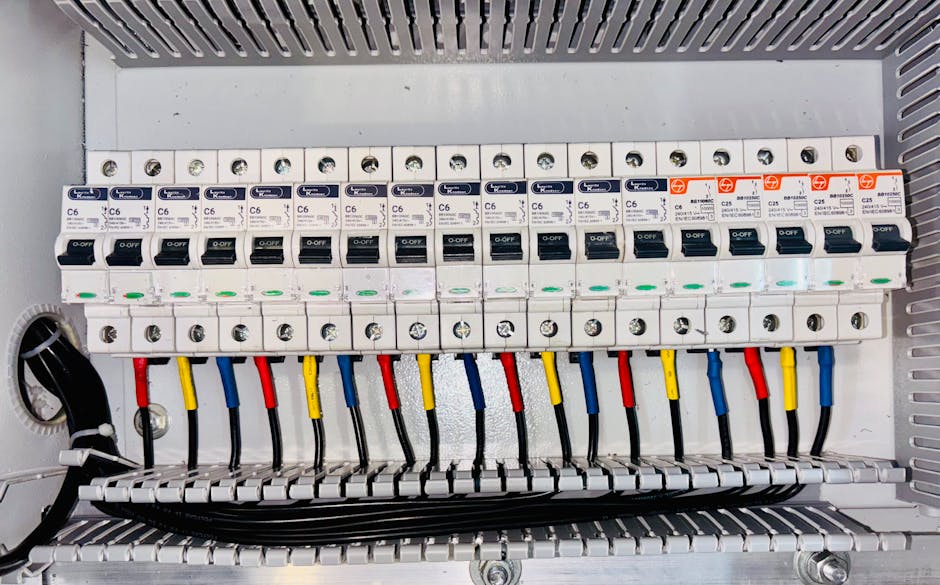
To really understand what is the Michigan Saves program and how does it help homeowners pay for electrical upgrades, it helps to look at how traditional home improvement financing works. Typically, if you need to upgrade your home’s electrical infrastructure, you are forced to choose between high-interest credit cards, personal loans with sky-high rates, or home equity lines of credit (HELOCs) that require appraisal fees and put your home at risk as collateral.
Michigan Saves offers a modern alternative. By utilizing a public-private partnership model, this program provides accessible Financing that bridges the gap between home safety, energy efficiency, and financial practicality.
Understanding the Nation's First Nonprofit Green Bank
As the country’s very first nonprofit green bank, Michigan Saves operates differently than a traditional commercial bank. Instead of lending money directly from its own vaults, the organization leverages private capital. It partners with credit unions and community lenders across the state, establishing a loan loss reserve. This reserve reduces the financial risk for lenders, which in turn allows them to offer highly competitive, low-interest, fixed-rate loans to everyday homeowners.
The core mission of Michigan Saves is to provide equitable access to clean energy and home health improvements. Whether you live in a historic home in Royal Oak or a newer build in Troy, the program ensures that everyone—no exceptions—has a pathway to a safer, more efficient living space.
How the Program Makes Home Electrification Affordable
Electrification is the future of home comfort, but switching to electric heat pumps, installing solar panels, or setting up a home charging station requires a robust electrical backbone. Michigan Saves makes this transition affordable by offering unsecured personal loans. This means you do not have to leverage your home’s equity to secure funding.
Furthermore, the program offers fixed interest rates that will not fluctuate over the life of your loan. This predictable structure helps you plan your monthly budget without worrying about surprise rate hikes. To make things even more accessible, there are no annual fees or early repayment penalties, meaning you can pay off your loan as quickly as you want to save on interest.
How to Apply and Work with Authorized Contractors
One of the best consumer protection features of Michigan Saves is its authorized contractor network. You cannot simply hire anyone off the street or attempt a DIY installation to qualify for this financing. Every project must be executed by an authorized contractor who has been thoroughly vetted for proper licensing, active insurance (including a minimum of $1,000,000 in general liability coverage), and a clean professional track record.
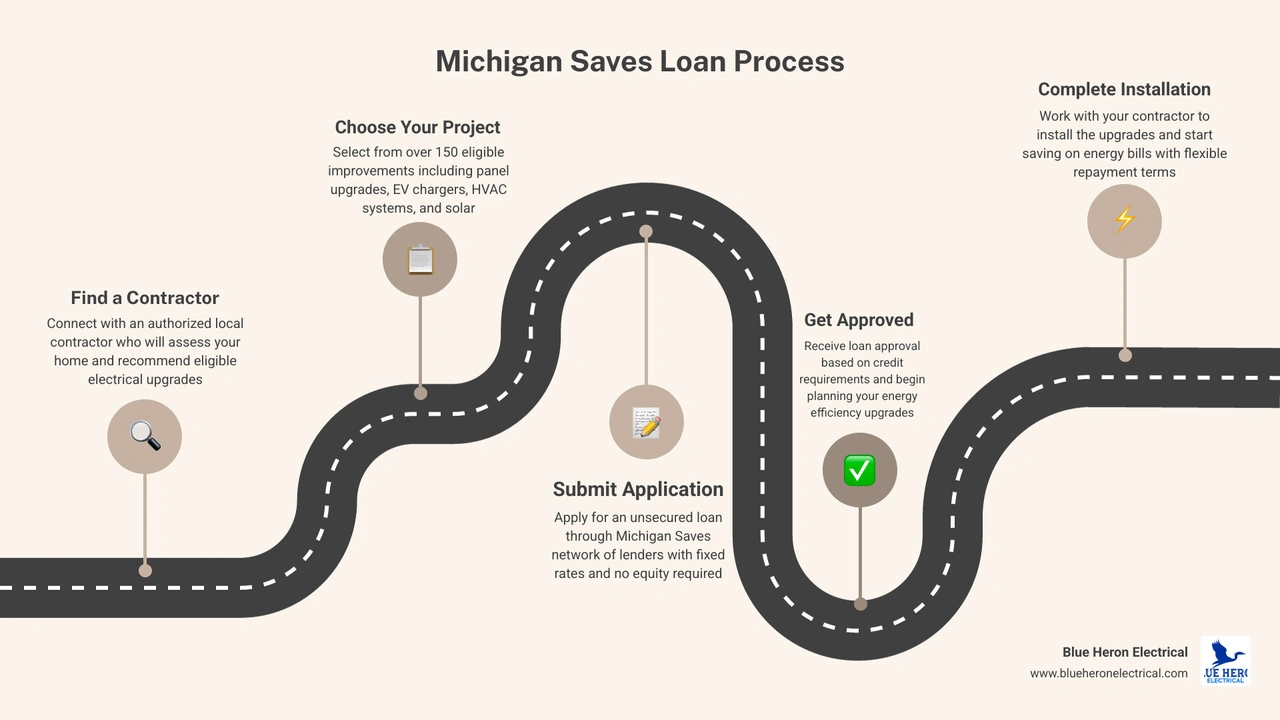
The process is straightforward:
- Find an Authorized Contractor: Connect with a registered contractor to evaluate your electrical needs and provide an official project estimate.
- Receive the Contractor ID: Your contractor will provide their unique six-digit ID number.
- Apply Online or Over the Phone: Use the contractor ID to apply through one of the program’s participating credit unions or lenders.
- Fast Approval: Credit decisions are typically made quickly, and approvals are generally valid for 90 to 120 days.
- Installation and Sign-Off: Once approved, the contractor completes the work. You sign a completion form, and the lender pays the contractor directly.
For more details on navigating utility incentives alongside your project, check out our guide on How to Apply for DTE Energy Rebates on Lighting and Efficiency Upgrades in Michigan.
Eligible Electrical and Energy-Efficiency Upgrades
A common misconception is that Michigan Saves only covers solar panels or insulation. In reality, the program supports over 150 diverse energy-efficiency and home health improvements. It recognizes that clean energy and modern HVAC systems cannot run on outdated, unsafe electrical systems.
What Is the Michigan Saves Program and How Does It Help Homeowners Pay for Electrical Upgrades like Panel Upgrades?
If your home still runs on an old 60-amp or 100-amp service panel—or worse, a dangerous fuse box or a recalled panel brand—you are likely struggling to power modern appliances. An electrical service panel upgrade is crucial for safety, code compliance, and future-proofing your home.
Through Michigan Saves, Electrical Panel Upgrades Troy MI (and surrounding Metro Detroit communities) are fully eligible for financing when they are tied to a qualifying energy-efficiency project or required by building codes to support new equipment.
For example, if you are installing a high-efficiency air-source heat pump or a central air conditioning unit, your existing electrical panel may not have the capacity to handle the load. In this scenario, the panel upgrade, service mast replacement, and utility hookup fees can all be bundled into your Michigan Saves loan.
Additionally, the program allows for the financing of critical "non-energy" home safety improvements when they are necessary to complete a clean energy upgrade. These include:
- Upgrading hazardous knob-and-tube wiring so insulation can be safely installed.
- Remediation of asbestos, lead, radon, or mold when paired with qualifying measures.
- Structural repairs necessary to support solar panels or heavy equipment.
What Is the Michigan Saves Program and How Does It Help Homeowners Pay for Electrical Upgrades like EV Chargers and Generators?
As electric vehicles become more common in areas like Birmingham, Rochester, and Sterling Heights, the demand for fast home charging has skyrocketed. A standard wall outlet can take days to charge an EV, which is why most homeowners opt for a 240-volt Level 2 charger.
Michigan Saves supports this transition by offering financing for EV Charger Installation Troy MI and across our Southeast Michigan service area. You can bundle your Level 2 charger installation with whole-home battery storage systems or solar PV installations to create a fully self-sustaining home energy ecosystem.
But what about power reliability? With Michigan's unpredictable weather, severe storms frequently knock out power grids. To ensure your family remains safe and warm, you can utilize financing for a Whole Home Generator Installation Troy MI. To protect your new generator, EV charger, and sensitive home electronics from damaging voltage spikes, we also highly recommend installing Whole Home Surge Protection Troy MI, which can be integrated into your comprehensive electrical system overhaul.
Maximizing Savings: Combining Financing with Rebates and Tax Credits
The beauty of the Michigan Saves program is that it does not exist in a vacuum. You can combine this low-interest financing with federal tax credits from the Inflation Reduction Act (IRA) and local utility rebates to dramatically lower your net project costs.
For example, the Energy Efficient Home Improvement Credit (Section 25C) allows homeowners to claim a federal tax credit of up to 30% for qualified upgrades, including electrical panel upgrades (up to $600) and heat pumps (up to $2,000). By financing the upfront cost with a Michigan Saves loan, you can complete the work today, claim your tax credits when you file your taxes, and use those savings to pay down your loan balance early without penalty.
To learn how to coordinate these financial tools, read our detailed guide on How to Combine DTE Rebates with Federal Credits for Maximum Savings on Electrical Upgrades.
Loan Terms, Interest Rates, and Eligibility Requirements
Michigan Saves works with respected credit unions and lenders—such as Genisys Credit Union and Christian Financial Credit Union—to provide consistent, affordable loan terms. Because these terms are negotiated at a program-wide level, you get access to rates that are often far lower than standard unsecured personal loans.
| Feature | Homeowner Loan Details |
|---|---|
| Loan Limits | $1,000 minimum up to $50,000 maximum (some lenders cap at $30,000 or $40,000) |
| Interest Rates | Fixed rates starting as low as 5.99% to 7.00% APR (depending on lender and credit profile) |
| Repayment Terms | 12 to 180 months (typically structured as 1 year of term per $1,000 borrowed up to $4,999; longer terms for larger amounts) |
| Collateral | Unsecured (no home equity or property appraisal required) |
| Prepayment Penalties | None (pay off early at any time to save on interest) |
| Minimum Credit Score | Typically 640 (some lenders may underwrite lower scores with a co-applicant) |
To make these loans even more appealing, you can check out current Promotions and utility-sponsored rate buy-downs that may lower your APR even further.
Frequently Asked Questions about Michigan Saves
Navigating home financing can feel overwhelming, but Michigan Saves keeps the process transparent. Here are answers to some of the most common questions Metro Detroit homeowners ask us about the program.
Can I do the electrical work myself under the program?
No. To maintain strict safety, quality assurance, and code compliance standards, all work financed through Michigan Saves must be completed by an authorized contractor. Self-installed projects or work performed by unlicensed individuals are not eligible for funding. This protects your investment and ensures that your home’s new electrical systems are safe and fully compliant with local Michigan building codes.
Are there any early repayment penalties for these loans?
None at all! You are only responsible for the interest that has accrued up to the date of your payment. A smart strategy used by many homeowners is to opt for a longer repayment term (such as 120 or 180 months) to keep their mandatory monthly payments low and manageable, and then make larger principal payments whenever they have extra cash or receive their tax refunds.
What happens if my credit score is below the minimum requirement?
While most participating lenders look for a credit score of 640 or higher, having a lower score does not automatically disqualify you. You can apply with a co-applicant who meets the credit criteria to secure approval. Additionally, because Michigan Saves is dedicated to equitable access, some lenders in their network offer alternative underwriting guidelines to help homeowners with less-than-perfect credit secure the financing they need.
Conclusion
Upgrading your home’s electrical system is not just about keeping the lights on—it is about protecting your family, reducing your carbon footprint, and preparing your home for a clean energy future. Whether you are in Troy, Royal Oak, Rochester Hills, or Sterling Heights, the Michigan Saves program provides an outstanding, low-stress pathway to fund these essential upgrades.
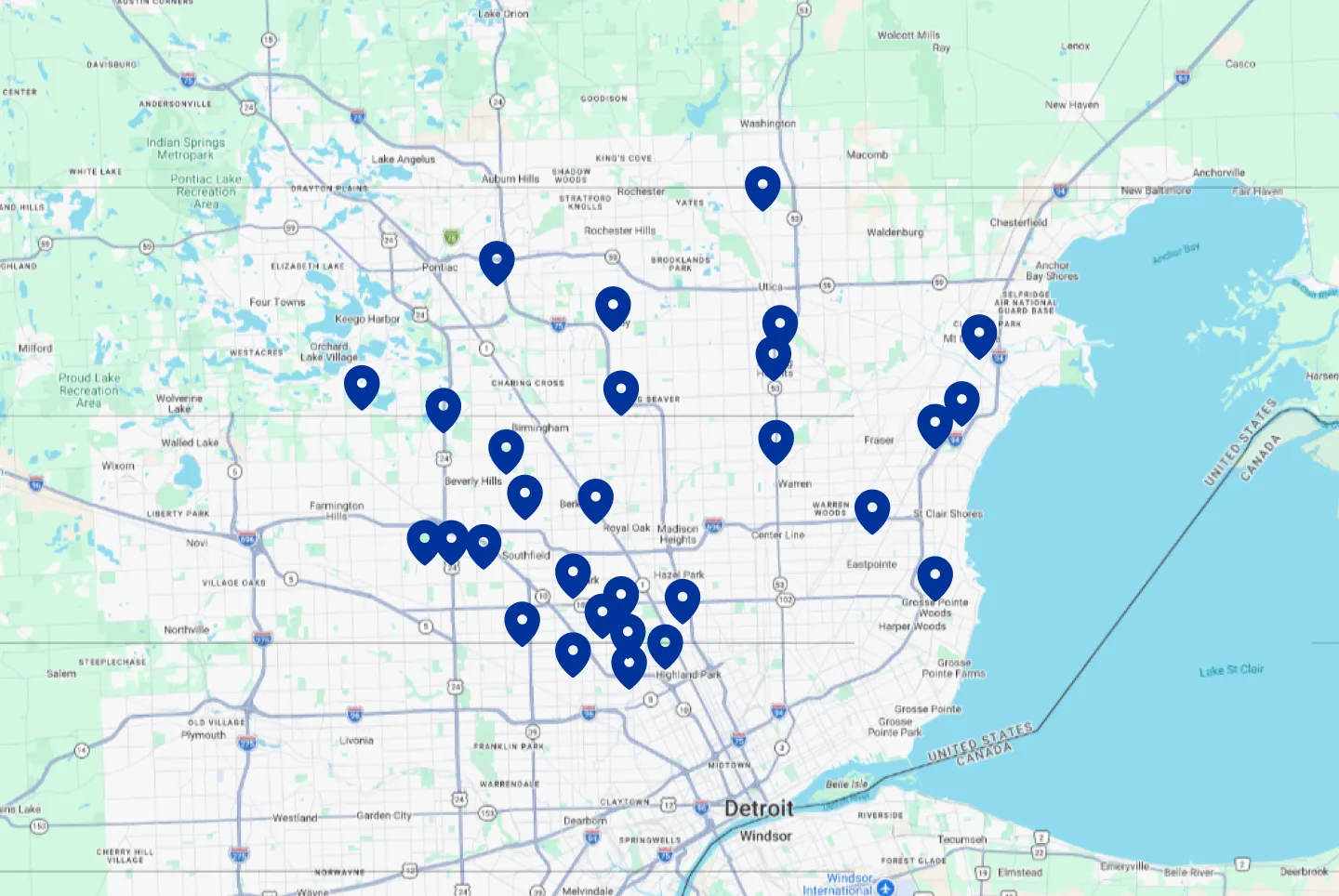
At Blue Heron Electrical, we are dedicated to providing dependable, code-compliant residential electrical services across Oakland County and the Metro Detroit area. Our focus is always on safety, clear communication, and long-term reliability. If you are ready to upgrade your electrical panel, install an EV charging station, or prepare your home for a whole-home generator, we are here to help you every step of the way.
Are you ready to make your home safer and more energy-efficient? Contact Blue Heron Electrical today to schedule your consultation and take the first step toward your Michigan Saves project!
Customer Testimonials

Service Areas