
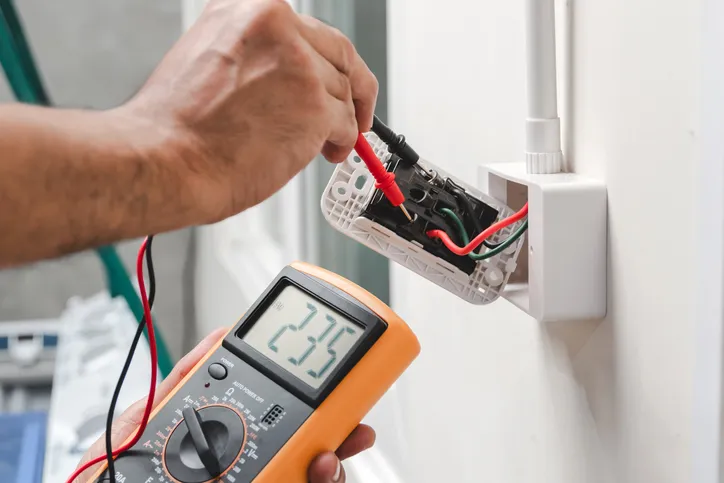
Troubleshoot Dead Outlets: 5 Fixes That Work
Why Outlets Stop Working in Metro Detroit Homes — and What to Do First
There are several reasons what causes outlets to stop working in a metro detroit home, and most of them come down to a handful of fixable problems. Here's a quick answer before we go deeper:
The most common causes of dead outlets in Metro Detroit homes:
- Tripped circuit breaker - A breaker that has shut off power to part of the circuit
- Tripped GFCI outlet - A single GFCI outlet that has cut power to several downstream outlets
- Loose or failed wiring - Connections that have loosened over time due to age or heat cycles
- Worn or damaged receptacle - An outlet that has simply reached the end of its usable life
- Backstabbed wiring - Push-in connections common in 1980s and 1990s homes that fail without warning
- Overloaded circuit - Too many high-draw appliances running on the same circuit
- Outdated wiring - Knob and tube or aluminum wiring found in many older Metro Detroit homes
You plug something in and nothing happens. No flicker, no sound — just silence. It's one of the most common and frustrating calls we get from Metro Detroit homeowners. The good news is that most dead outlets have a clear, fixable cause. The tricky part is knowing which one you're dealing with, and whether it's safe to troubleshoot yourself or time to call a licensed electrician.
Metro Detroit has a large share of older homes — many built before 1970 — and aging wiring is one of the biggest reasons outlets fail here more than in newer construction. Add in Michigan's cold winters, humid summers, and the growing demand of modern appliances, and your electrical system faces real stress year-round. According to national data, electrical failures account for an estimated 51,000 home fires every year in the U.S., with outlets and wiring among the leading causes.
This guide walks you through five practical fixes, how to spot dangerous warning signs, and when to stop troubleshooting and pick up the phone.
What Causes Outlets to Stop Working in a Metro Detroit Home?
When we visit homes in Royal Oak, Berkley, or Troy, we often see the same underlying issues. To understand why your outlet died, it helps to understand how your home’s electrical grid functions. Your outlets don't work in isolation; they are part of a larger daisy-chained circuit that runs back to your electrical panel.
If any link in that chain is broken, everything downstream goes dark. For a detailed breakdown of how these issues manifest, you can read our guide on Common Outlet Problems and What They Mean for Your Electrical System.
Outdated Wiring and What Causes Outlets to Stop Working in a Metro Detroit Home
In historic Metro Detroit communities like Ferndale or Pleasant Ridge, homes built in the early-to-mid 20th century possess incredible charm—but they also carry vintage electrical challenges.
- Knob and Tube Wiring: Found in homes built before the 1940s, this system lacks a ground wire. Over time, the protective rubberized cloth insulation becomes brittle and crumbles away, leaving bare wires exposed inside your walls.
- Aluminum Wiring: Popular in the late 1960s and early 1970s, aluminum wiring expands and contracts at a much higher rate than copper. This constant shifting loosens terminal screws on outlets, leading to intermittent power and serious fire hazards.
- Loose Connections: Even in copper-wired homes, decades of plugging and unplugging devices can physically wiggle the outlet body, eventually loosening the wires attached to the side.
When older wiring is combined with modern, high-draw appliances like microwaves, space heaters, and hair dryers, the old system simply cannot keep up. To learn more about panel-level issues in older homes, check out How an Overloaded Panel Causes Electrical Problems in Older Metro Detroit Homes.
Seasonal Weather and What Causes Outlets to Stop Working in a Metro Detroit Home
Michigan's dramatic weather shifts also play a major role in electrical failures. Our freezing winters and hot, humid summers put unique physical demands on your home's infrastructure.
During our freezing winters, we crank up electric space heaters. These high-wattage units put immense strain on older outlets, often drawing right up to the limit of a 15-amp circuit. This sustained load generates heat, accelerating the wear on outlet contacts and wire insulation.
In the summer, high humidity levels can introduce moisture into crawl spaces, basements, and outdoor outlets. Moisture is highly conductive and triggers Ground Fault Circuit Interrupter (GFCI) outlets to trip instantly. Furthermore, summer storms bring power surges and utility fluctuations that can damage sensitive outlet components or trip breakers at the main panel. If you suspect your panel is struggling to handle these seasonal demands, read about the Signs Your Electrical Panel is No Longer Safe for Modern Power Needs.
5 Safe and Practical Fixes for Dead Outlets
Before you assume you need a complete home rewiring, there are several safe, straightforward troubleshooting steps you can take. Always prioritize safety: never stick metal tools into an outlet, and if you ever feel uncomfortable, stop and call a professional.
1. Reset the Tripped Circuit Breaker
The absolute first place to look when an outlet dies is your main electrical panel. Circuit breakers are designed to shut off power automatically when a circuit draws more current than it can safely handle.
To check for a tripped breaker:
- Locate your electrical panel (usually in the basement, utility closet, or garage).
- Look for a breaker switch that is not fully aligned with the "ON" position. Tripped breakers often rest in a middle position or display a small red window.
- To reset it, you must push the switch firmly to the OFF position first until you hear a distinct click, and then flip it back to ON.
If the breaker immediately trips again, do not force it. This indicates a direct short circuit or a severe overload. For homeowners in Oakland County, our team provides expert Electrical Panel Services in Royal Oak MI to diagnose and resolve stubborn breaker issues.
2. Reset Tripped GFCI Outlets
GFCI outlets are easily identified by the "TEST" and "RESET" buttons on their faceplates. They are required by building codes near water sources—such as in kitchens, bathrooms, laundry rooms, basements, and outdoor spaces. These safety devices monitor the balance of electrical current and will cut power in a fraction of a second if they detect an imbalance as small as 5 milliamperes.
What many homeowners do not realize is that one GFCI outlet can protect multiple standard outlets downstream. If the GFCI outlet in your master bathroom trips, it might kill power to the outlets in your guest bathroom or even your garage.
To fix this:
- Walk around your home and inspect every GFCI outlet, even those in rooms where the dead outlet is not located.
- Press the RESET button firmly until you hear a satisfying click.
- If the button pops right back out, there is still an active ground fault on the circuit (such as a damp outdoor outlet or a faulty appliance plugged in nearby).
3. Check for Switched Outlets
It sounds simple, but you would be surprised how often a "dead" outlet is actually just waiting for you to flip a wall switch. This is incredibly common in living rooms and bedrooms built in the mid-to-late 20th century, where ceiling lights were not originally installed.
In these setups, one or both receptacles in a wall outlet are controlled by a switch near the entryway.
- Walk around the room and flip every wall switch to the "ON" position.
- Plug a small lamp or a phone charger into both the top and bottom plugs of the outlet to test if it is a "half-hot" outlet (where only one plug is controlled by the switch).
If you want to modernize your home's switching layout or replace faulty switches, you can learn more about our Outlet Switch Installation in Royal Oak MI.
4. Inspect for Loose or Damaged Receptacles
If the breaker is fine and no GFCIs are tripped, the problem might be physical wear inside the outlet itself. Outlets have a lifespan of about 15 to 25 years. Over time, the metal contact springs inside the outlet loosen, making it hard for plugs to stay secure. This loose connection creates electrical resistance, which generates heat.
Additionally, homes built in the 1980s and 1990s often feature "backstabbed" wiring. This is a installation method where the installer pushes the bare wire into a spring-loaded hole in the back of the outlet rather than wrapping it around the side screw terminals. These spring connections lose their tension over time, leading to failed connections.
If you suspect your receptacle is physically broken or worn out, professional replacement is highly recommended. Explore our specialized Outlet Repair in Royal Oak MI to get your receptacles safely replaced with heavy-duty, screw-terminal alternatives.
5. Address Upstream Circuit Failures
Electrical circuits are wired in a series, or "daisy chain." Power travels from your breaker panel to the first outlet, then to the second, then to the third, and so on. If a wire comes loose on the second outlet in the chain, the third and fourth outlets will lose power entirely—even though their individual receptacles are perfectly fine.
This is known as an upstream failure. Diagnosing this requires tracing the circuit, identifying which outlet is the "parent," and checking the connections behind the wall plates. Because this involves handling live wires and working inside junction boxes, it should always be left to a professional. If you are in Macomb or Oakland County, you can rely on our team for precision Outlet Installation Repair Troy MI to trace and repair complex circuit breaks.
Warning Signs Your Outlet Issue is Dangerous
Not all outlet failures are benign inconveniences. Some are active fire hazards hiding behind your drywall. If you notice any of the following warning signs, turn off the power at your breaker panel immediately and call us.
- Burning Smells: A fishy, plastic, or metallic odor near an outlet indicates that wire insulation is melting due to extreme heat.
- Buzzing or Crackling: Electricity should be completely silent. Any sizzling, popping, or buzzing sounds mean that electricity is arcing across a loose connection or gap in the wiring.
- Warm Faceplates: If an outlet cover feels warm to the touch, even when nothing is plugged into it, there is dangerous heat building up inside the junction box.
- Discoloration or Charring: Black, brown, or gray marks on the face of the outlet are a clear sign of localized electrical fires or sparking.
| Symptom | What It Means | Danger Level | Recommended Action |
|---|---|---|---|
| Plug falls out easily | Worn internal contact springs | Low to Medium | Replace the outlet receptacle |
| Outlet is completely dead | Tripped breaker, GFCI, or loose wire | Medium | Follow troubleshooting steps; call if unresolved |
| Buzzing or sizzling sounds | Active electrical arcing | Extreme | Shut off breaker immediately; call an electrician |
| Warm faceplate or burning smell | Melting wire insulation or high resistance | Extreme | Shut off breaker immediately; call an electrician |
| Charring or soot marks | Previous or ongoing electrical sparking | Extreme | Shut off breaker immediately; call an electrician |
When to Call a Licensed Electrician in Metro Detroit
While resetting a breaker or pushing a GFCI button is perfectly safe for a homeowner, actual electrical repairs require specialized training, diagnostic tools, and strict adherence to local building codes.
Attempting to DIY your home's wiring can result in severe shock, electrical fires, or code violations that can complicate future home sales. You should call a licensed electrician if:
- Your circuit breaker trips repeatedly after being reset.
- You smell burning plastic or hear buzzing behind your walls.
- Your home still has ungrounded two-prong outlets, knob-and-tube, or aluminum wiring.
- You need to add new outlets to support modern appliances.
At Blue Heron Electrical, we specialize in identifying hidden hazards before they turn into emergencies. A great way to protect your home is by scheduling a comprehensive inspection. Learn how we catch these issues early with our guide: Whole Home Electrical Inspection Finds Hidden Problems. If your home needs more power to support modern life, we also provide seamless Electrical Panel Upgrades in Royal Oak MI.
Frequently Asked Questions about Dead Outlets
Why do outlets in only part of the house lose power?
This usually happens because those outlets share a single circuit that has been interrupted. The interruption could be a tripped breaker, a tripped GFCI, or a loose connection at an upstream outlet.
In some cases, older Metro Detroit homes may experience a "partial power loss" where half the house loses power while the other half works fine. This often points to a utility issue where one of the two 120-volt "hot legs" coming from the power company has failed. If you simply need more power in a specific room, learn How to Add Outlets in a Room Without Enough Power in a Michigan Home.
Why won't my GFCI outlet reset?
If a GFCI outlet refuses to reset when you press the button, it is usually due to one of three reasons:
- No Power: The GFCI cannot reset if it is not receiving power from the main panel. Check for a tripped breaker first.
- Active Ground Fault: The GFCI is doing its job and detecting an active hazard, such as moisture inside an outdoor outlet box or a faulty appliance plugged into the circuit.
- Internal Failure: GFCI outlets contain delicate circuitry that wears out over time. If it won't reset even with everything unplugged, the outlet itself likely needs replacement.
Are loose outlets dangerous?
Yes, absolutely. When a plug fits loosely into an outlet, or when the outlet body itself moves inside the wall, it creates electrical resistance. This resistance generates localized heat, which can melt the plastic receptacle, degrade wire insulation, and ignite surrounding drywall or wood framing. Loose outlets are a leading cause of residential electrical fires and should be replaced promptly.
Conclusion
A dead outlet can range from a simple, five-second fix to a warning sign of a major electrical hazard. By following our safe troubleshooting steps—checking your breakers, resetting your GFCIs, and looking for wall switches—you can resolve many common issues on your own.
However, if you encounter warm faceplates, buzzing sounds, burning smells, or persistent breaker trips, your home is telling you that it's time for professional help.
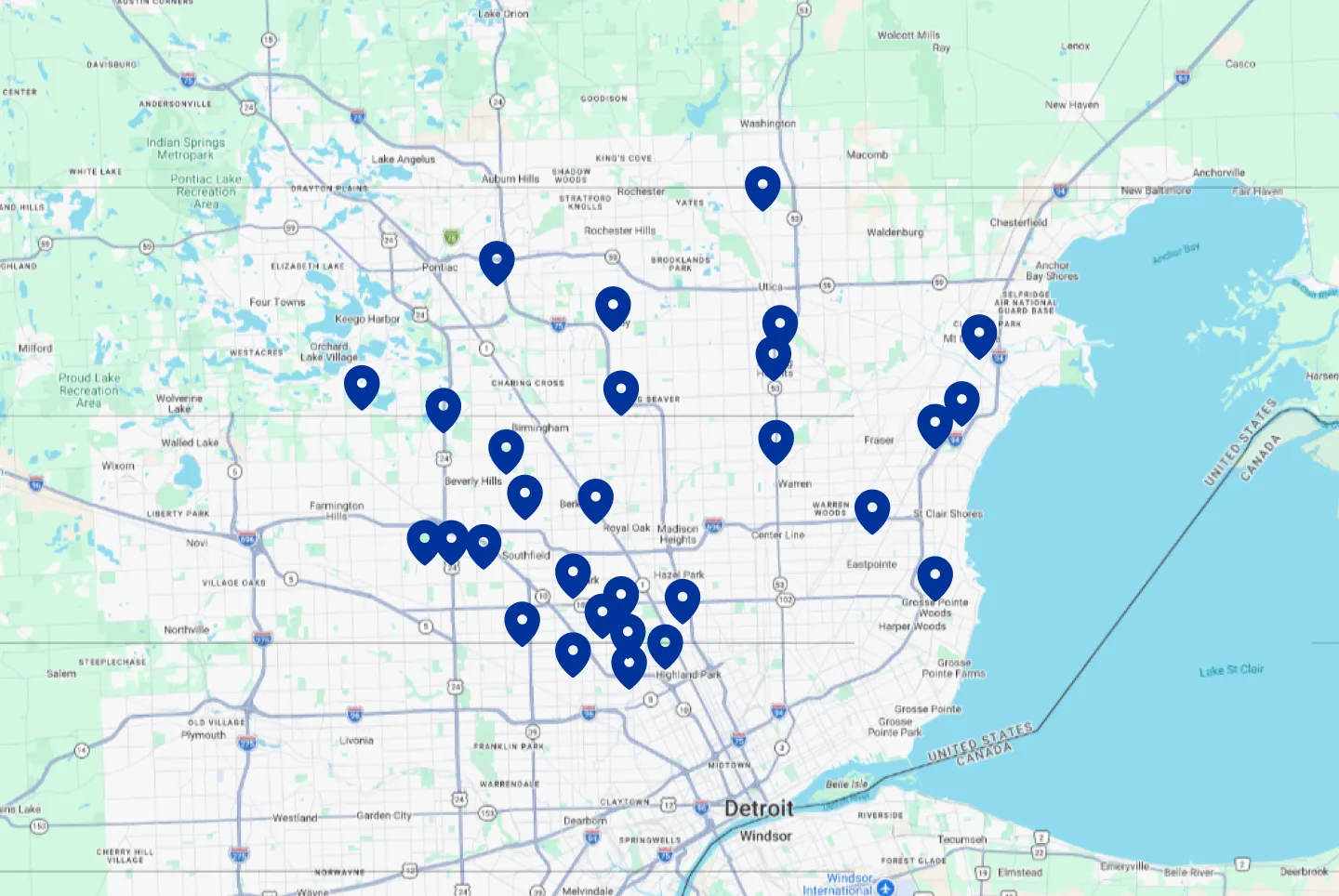
At Blue Heron Electrical, we are dedicated to providing dependable, code-compliant electrical services across Metro Detroit and Oakland County. Whether you are in Birmingham, Sterling Heights, St. Clair Shores, or Troy, our focus is always on safety, clear communication, and long-term reliability.
Don't guess when it comes to your home's safety. Schedule professional electrical services in Metro Detroit with the team at Blue Heron Electrical today, and let us restore your power with peace of mind.
Customer Testimonials

Service Areas