
A Comprehensive Guide to Overload Risks in Older Metro Detroit Homes
How an Overloaded Panel Causes Electrical Problems in Older Metro Detroit Homes
How an overloaded panel causes electrical problems in older Metro Detroit homes is something thousands of local homeowners deal with every year — often without realizing the panel is the root cause.
Here's a quick summary of what's happening and why it matters:
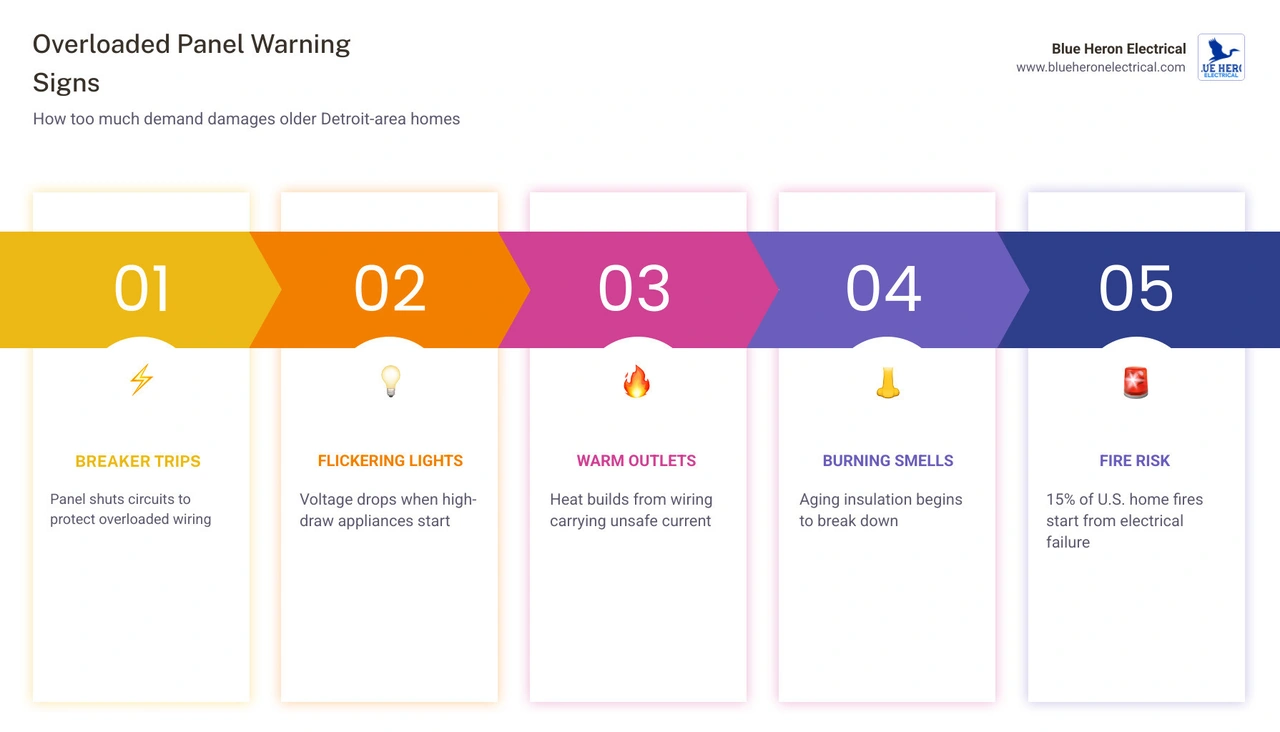
An overloaded electrical panel occurs when your home's total power demand exceeds what the panel was designed to handle. In older Metro Detroit homes, this is especially common because panels were built for a fraction of today's electrical load. The result is a chain of problems:
- Frequent breaker trips - the panel shuts down circuits trying to protect overloaded wiring
- Flickering or dimming lights - voltage drops when high-draw appliances kick on
- Warm outlets or a hot panel - heat builds up when wiring carries more current than it safely can
- Burning smells near the panel or outlets - insulation on aging wires begins to break down
- Appliance damage - unstable power delivery wears out motors and electronics faster
- Increased fire and electrocution risk - especially in homes with outdated panel brands or vintage wiring
Homes built before the 1980s in cities like Ferndale, Berkley, Royal Oak, and Dearborn were typically wired for 60 to 100 amps of service. Modern households routinely need 200 amps or more to run central air, electric dryers, dishwashers, home offices, and EV chargers simultaneously. That mismatch between old infrastructure and new demand is exactly where problems start — and where they quietly get worse over time.
According to the NFPA, electrical failures are responsible for roughly 15% of all U.S. home fires every year. Power surges from overloaded panels also destroy electronics, costing homeowners an estimated $1.3 billion annually. And in older homes where panels haven't been touched in decades, the risks are even higher — pre-1980 panels are reported to fail at three times the rate of modern ones.
This guide walks you through everything you need to know: the warning signs, the specific dangers of outdated panel brands, how Michigan's seasonal weather makes things worse, and what to do if you suspect your panel is struggling to keep up.
Why Older Metro Detroit Homes Struggle with Modern Power Demands
Walk through the tree-lined streets of Ferndale, Berkley, or Royal Oak, and you will see some of the most charming historic architecture in Southeast Michigan. These homes have stood the test of time, but the electrical systems hidden behind their plaster walls were never designed for life in 2026.
When many of these homes were built in the mid-20th century, a household's electrical needs were incredibly modest. You had a few lightbulbs, a radio, perhaps a refrigerator, and eventually a black-and-white television. To power these basic conveniences, a 60-amp or 100-amp electrical panel was more than sufficient.
Fast forward to today. The average modern home is packed with high-draw electronics and heavy-duty appliances. We rely on central air conditioning, electric ranges, high-speed internet routers, multiple smart TVs, computers, and increasingly, level 2 electric vehicle (EV) chargers in our garages. Asking a 60-amp or 100-amp panel to safely power all of these modern devices is like asking a vintage typewriter to run your business's cloud network—it simply does not have the capacity.
To handle modern electrical usage safely, a home typically requires a 200-amp service panel. When an older system is pushed past its original design limits, the panel becomes a major bottleneck. This constant strain is why so many residents in historic neighborhoods require professional Electrical Panel Services in Royal Oak MI to bring their infrastructure up to modern standards.
Recognizing how an overloaded panel causes electrical problems in older metro detroit homes
How do you know if your electrical panel is crying out for help? Often, the warning signs start small before escalating into major safety hazards.
- Flickering or Dimming Lights: If your living room lights briefly dim or flicker when your refrigerator compressor kicks on or when you start the microwave, your system is experiencing a temporary voltage drop. The panel is struggling to distribute enough power to meet the sudden demand.
- Frequent Breaker Trips: Circuit breakers are safety devices designed to cut power when a circuit carries too much current. If you find yourself making regular trips to the basement or garage to reset a tripped breaker, your panel is telling you that you are overloading its capacity.
- Warm Outlets or a Warm Panel Faceplate: Electrical current naturally generates heat. When a system is overloaded, that heat can build up to dangerous levels. If you touch an outlet cover or the front of your breaker panel and it feels warm to the touch, you are looking at a serious hazard.
- Unusual Noises: A healthy electrical panel should operate silently. If you hear a faint buzzing, clicking, or sizzling sound coming from your breaker box, it indicates a loose connection, an active overload, or dangerous electrical arcing.
- Burning Smells: A distinct odor of burning plastic or fish near outlets or the main panel is an absolute emergency. This smell indicates that the protective plastic insulation on your wires is melting due to extreme heat.
If you notice any of these red flags, your system is actively telling you that it is overwhelmed. To dive deeper into these warning signs, you can read our detailed guide on the Signs Your Electrical Panel Is No Longer Safe for Modern Power Needs.
How an Overloaded Panel Causes Electrical Problems in Older Metro Detroit Homes
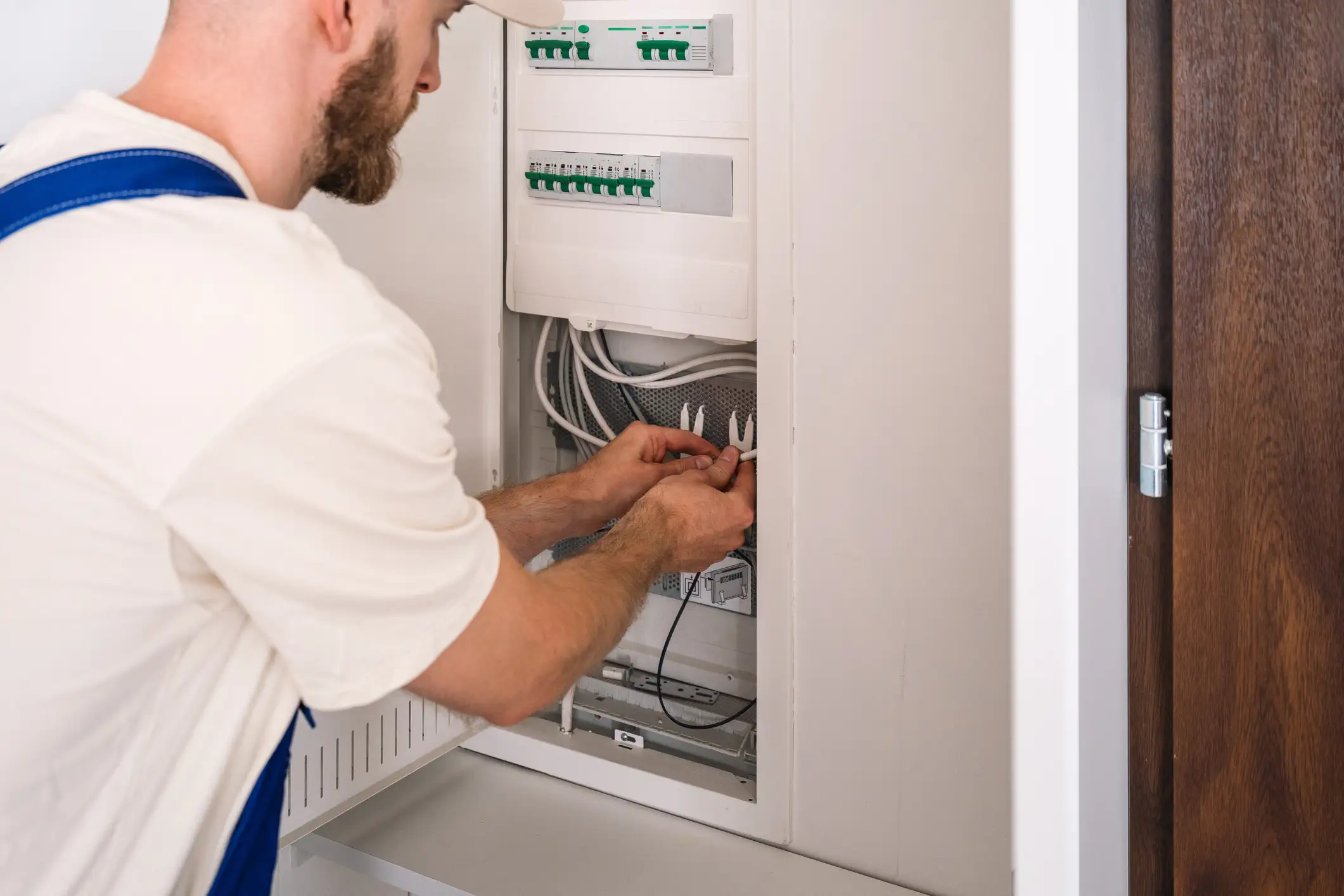
To understand how an overloaded panel causes electrical problems in older Metro Detroit homes, it helps to look at the mechanics of your electrical system. Your electrical panel acts as the distribution brain of your home, taking high-voltage power from the utility line and dividing it into individual branch circuits.
When you plug too many devices into a single circuit, or when the cumulative demand of all your circuits exceeds the main panel's capacity, the system overheats. Over time, this chronic overheating degrades the physical components of your electrical system.
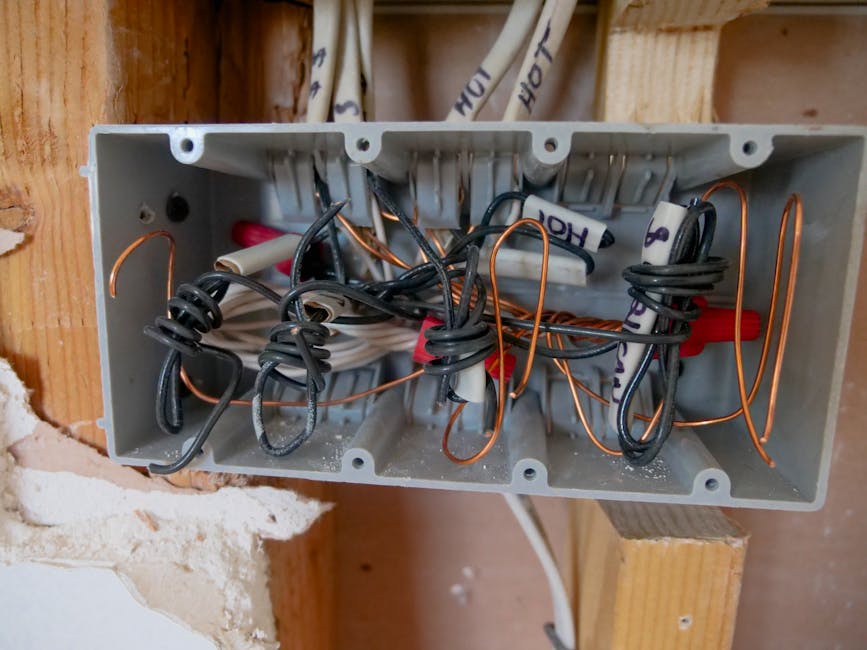
First, the constant thermal expansion and contraction cause terminal screws to loosen. Loose connections create resistance, which in turn generates even more heat. Second, the protective plastic coating on your copper or aluminum wires begins to bake, dry out, and crack. Once this insulation fails, bare wires can touch, leading to short circuits, dramatic electrical arcing, and devastating house fires.
Furthermore, breakers that are repeatedly forced to trip eventually wear out. A worn-out breaker may fail to trip at all during a future overload, allowing unlimited electrical current to rush through your walls until the wires literally melt. If your breakers are acting up, getting a professional Circuit Breaker Repair Troy MI or scheduling comprehensive Circuit Breaker Services in Birmingham MI is critical to restoring your home's primary line of defense.
The impact of seasonal weather on Michigan electrical loads
In Southeast Michigan, our electrical systems have to deal with extreme weather shifts. Our summers can be hot and humid, while our winters are notoriously freezing. These seasonal swings put unique, heavy demands on older electrical panels.
During the peak of summer, central air conditioning units run around the clock. An A/C unit draws a massive amount of power when its compressor cycles on. If your old panel is already running close to its maximum capacity, the added load of a heavy air conditioner can easily push it over the edge, causing main breakers to trip and leaving half your house in the dark.
In the winter, we see a different kind of surge. Homeowners plug in space heaters to warm up drafty rooms in older homes, run electric blankets, and turn on heavy heating systems. Because space heaters draw a continuous 1,500 watts of power, running even one or two of them on an older 100-amp panel can instantly overload your local circuits. This seasonal stress is why many homeowners choose to schedule preventative Electrical Panel Services in Birmingham MI before the extreme weather sets in.
Why modern appliances show how an overloaded panel causes electrical problems in older metro detroit homes
Modern appliances are highly efficient, but we simply use far more of them than families did fifty years ago. Our kitchens are filled with high-wattage devices like air fryers, instant pots, espresso machines, and high-speed blenders.
In an older home, multiple kitchen outlets are often chained together on a single 15-amp circuit. If you try to run a toaster and a coffee maker at the same time on the same counter, the breaker will likely trip.
The solution to this problem is installing dedicated circuits. High-draw appliances—such as microwaves, refrigerators, sump pumps, and hot tubs—should each have their own direct line back to the breaker panel so they don't have to share power with other outlets. If you are tired of coordinating which appliances you can run at the same time, look into a professional Dedicated Circuit Installation Troy MI to safely isolate your high-demand devices.
The Hidden Dangers of Outdated Panel Brands and Vintage Wiring
While an overloaded modern panel is a serious issue, an overloaded outdated panel is an immediate hazard. If your Metro Detroit home was built between the 1950s and the 1990s, there is a strong chance it contains a legacy electrical panel that has been documented as a major fire hazard.
Several brands of panels from these eras have severe design flaws that prevent their breakers from tripping during an overload:
- Federal Pacific Electric (FPE) Stab-Lok: These panels were installed in millions of American homes. Independent testing has shown that up to one in four FPE breakers will fail to trip when overloaded. Instead of cutting the power, the breaker allows the current to keep flowing, overheating the panel and sparking fires.
- Zinsco: Zinsco panels feature bus bars made of an aluminum alloy that is highly susceptible to corrosion. Over time, the connection between the breaker and the bus bar degrades, causing the breaker to literally fuse to the panel. Once fused, the breaker cannot trip, creating a massive fire risk.
- Pushmatic: These panels utilize push-button breakers rather than toggle switches. As they age, the internal grease hardens, making the buttons stiff and prone to sticking in the "on" position even when they should trip.
To help you understand the difference between these legacy systems and modern standards, here is a quick comparison:
| Panel Feature | Vintage Panels (FPE, Zinsco, Pushmatic, Fuse Boxes) | Modern Breaker Panels |
|---|---|---|
| Average Capacity | 60 to 100 Amps | 200 Amps (or more) |
| Overload Protection | High failure rate; breakers can fuse or fail to trip | Highly reliable magnetic-thermal tripping |
| Safety Certifications | Lost safety listings; major fire hazards | UL-listed with modern AFCI/GFCI integration |
| Modern Appliance Support | Extremely poor; requires extension cords/strips | Excellent; easily supports EV chargers & HVAC |
| Home Insurance Status | Often blacklisted; can cause policy cancellation | Fully accepted by all major insurance carriers |
If your home still relies on one of these dangerous brands or an old-fashioned fuse box, upgrading is one of the most important investments you can make for your family's safety. For a complete breakdown of what to expect during this process, read our guide on When to Upgrade Wiring in an Older Home and What to Expect.
Vintage wiring hazards in Southeast Michigan
An overloaded panel does not operate in a vacuum; it is connected to the wiring running through your walls. In older Metro Detroit communities, we frequently encounter three distinct types of vintage wiring that do not mix well with modern electrical loads:
- Knob and Tube Wiring: Common in homes built before the 1940s, this system uses ceramic knobs and tubes to run single insulated wires through wall cavities. Because it lacks a ground wire, it offers no protection against electrical shocks. When homeowners cover knob and tube wiring with modern attic insulation, the heat generated by overloaded circuits cannot escape, creating a severe fire hazard. If your historic home still has this setup, a professional Knob and Tube Rewiring Troy MI is highly recommended.
- Cloth-Covered Wiring: Popular in the 1950s and 1960s, this wiring features rubber insulation wrapped in a cloth sheath. Over the decades, the rubber dries out and turns to dust, leaving bare, live wires exposed inside your walls.
- Aluminum Wiring: Due to copper shortages in the late 1960s and early 1970s, many homes were built with aluminum branch wiring. Aluminum expands and contracts much more than copper when heated. This movement causes connections at outlets and switches to loosen, leading to overheating and electrical fires. If your home has these connections, you should look into Aluminum Wiring Replacement in Royal Oak MI to secure your system.
Frequently Asked Questions About Overloaded Panels
Why does my circuit breaker keep tripping when I use multiple appliances?
A circuit breaker trips because the electrical current passing through it has exceeded its safe amp rating (usually 15 or 20 amps for standard household circuits). When you run multiple high-wattage appliances—like a microwave, a hair dryer, and a space heater—on the same circuit at the same time, the collective draw is simply too high.
To prevent this, you can practice "load balancing" by spreading your high-draw devices across different circuits. However, if your breakers continue to trip during normal daily activities, it is a clear sign that your home's electrical layout needs professional attention. If you are experiencing this in Macomb County, scheduling Circuit Breaker Services in Sterling Heights MI can help diagnose and resolve the issue.
How do I know if my older home needs a panel upgrade or a full rewire?
Determining whether you need a simple panel upgrade or a complete home rewiring depends on several factors:
- Age of the System: Most electrical panels and circuit breakers are designed to last 25 to 30 years. If your panel is older than this, its performance has likely declined, and it should be replaced.
- Type of Wiring: If your home still has ungrounded knob and tube wiring, crumbling cloth-covered insulation, or unsafe aluminum branch wiring, a panel upgrade alone won't solve your safety issues. You will likely need a complete rewiring to ensure your home is safe.
- Your Power Needs: If your wiring is in good condition but you have run out of physical space in your breaker box to add new circuits (such as for a kitchen remodel or an EV charger), a panel upgrade to 200 amps is the ideal solution.
If you suspect your home's wiring is past its prime, consulting with an expert for a Whole House Rewiring in Bloomfield MI will give you a clear roadmap for your home's safety.
Can I replace a circuit breaker or upgrade my panel myself?
No. Electrical panel upgrades and circuit breaker replacements are absolutely not DIY projects.
Working inside an electrical panel exposes you to live service wires that carry enough voltage to cause severe injury or death. Additionally, improper installation can lead to hidden fire hazards that may violate local building codes and void your homeowner's insurance policy.
A licensed electrician understands the National Electrical Code (NEC), knows how to pull the necessary local permits, and will coordinate safely with DTE Energy to shut off power during the installation. For safe, code-compliant repairs and upgrades, always rely on professional Electrical Panel Repair Troy MI.
Conclusion
Understanding how an overloaded panel causes electrical problems in older Metro Detroit homes is the first step toward protecting your property and your family. Your electrical panel is the heart of your home’s infrastructure. Keeping it updated ensures that your modern appliances run efficiently, your electronics are protected from power surges, and your home remains safe from electrical fires.
At Blue Heron Electrical, we specialize in helping homeowners throughout Oakland and Macomb Counties transition their historic properties into the modern era. We provide dependable, code-compliant electrical work with clear communication and a strict focus on safety and long-term reliability. Whether you are in Troy, Birmingham, Bloomfield Hills, or Sterling Heights, our team is here to help.
If you decide to upgrade your panel to a modern 200-amp system, you may also qualify for a federal tax credit of up to $600 under current energy efficiency programs, making it an even smarter investment for your home's future.
Don't wait for a warning sign to turn into an emergency. Contact us today to schedule a comprehensive safety inspection of your Electrical Panels and ensure your home is fully equipped for modern life.
Customer Testimonials

Service Areas