
What Actually Counts as a Midnight Electrical Emergency in Metro Detroit
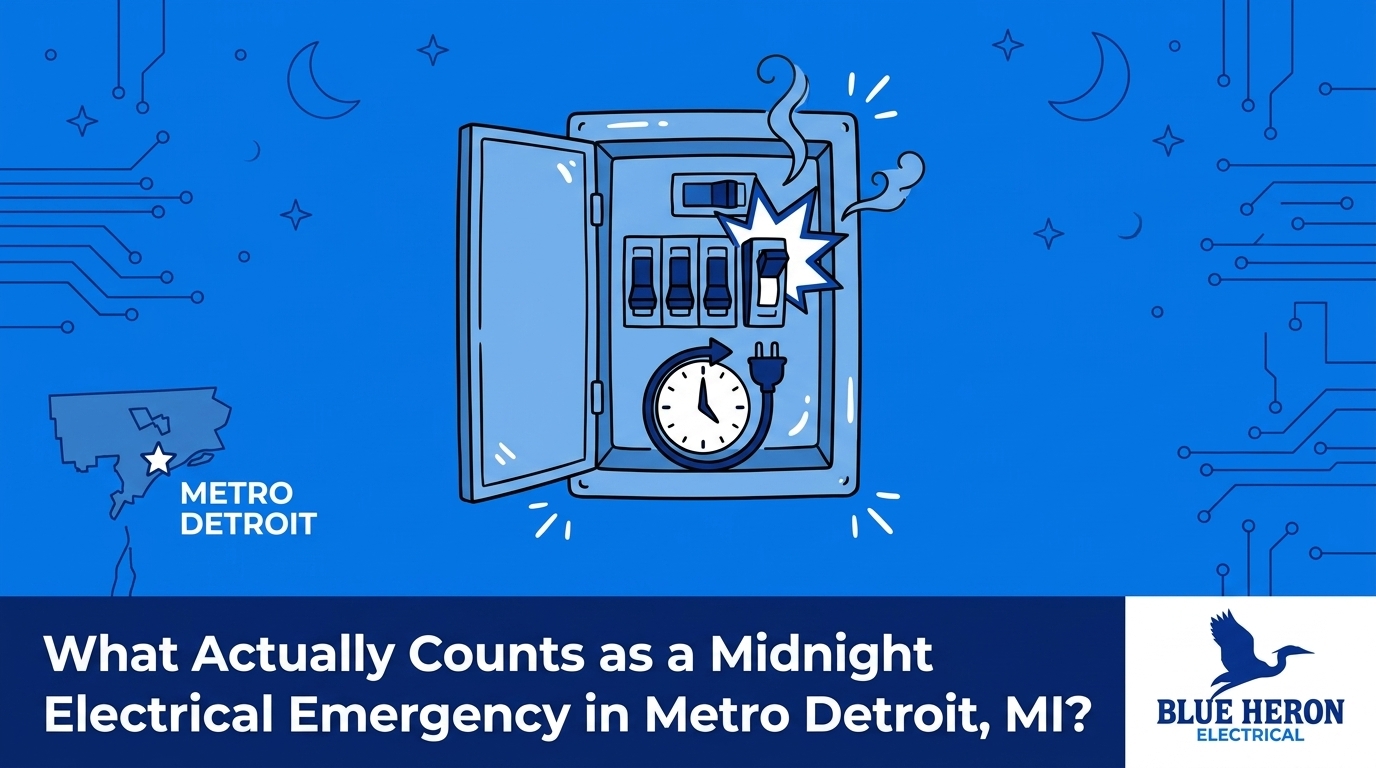
Waking Up to a 2 AM Power Problem: Do You Need Immediate Help?
Are you wondering what actually counts as a midnight electrical emergency in Metro Detroit when a sudden pop or a strange burning smell wakes you out of a deep sleep? At Blue Heron Electrical, our dispatch team fields these panicked 2 AM calls every week during the peak of summer. Waking up to a dead outlet, a flickering hallway light, or an unsettling fishy odor immediately spikes your stress levels. Your first instinct might be to grab your phone and call for immediate help. However, accurately triaging the issue is critical for your safety and your wallet. Panic often leads to unnecessary late-night dispatch fees for minor inconveniences, while ignoring true warning signs risks severe fire hazards.
In our years of serving homeowners in Sterling Heights and greater Metro Detroit, we have found that knowing the difference between a harmless tripped breaker and an active electrical fire risk saves both money and property. The electrical system in your home is designed with multiple fail-safes, but those fail-safes cannot protect you if the wiring itself is compromised. This guide provides a definitive, symptom-based checklist from our experienced technicians to help you make the right call in the middle of the night. Whether you need comprehensive electrical services or just a simple morning reset, understanding your home's warning signs puts you safely in control.
The 'Call Now' Symptoms: True Fire Hazards That Cannot Wait
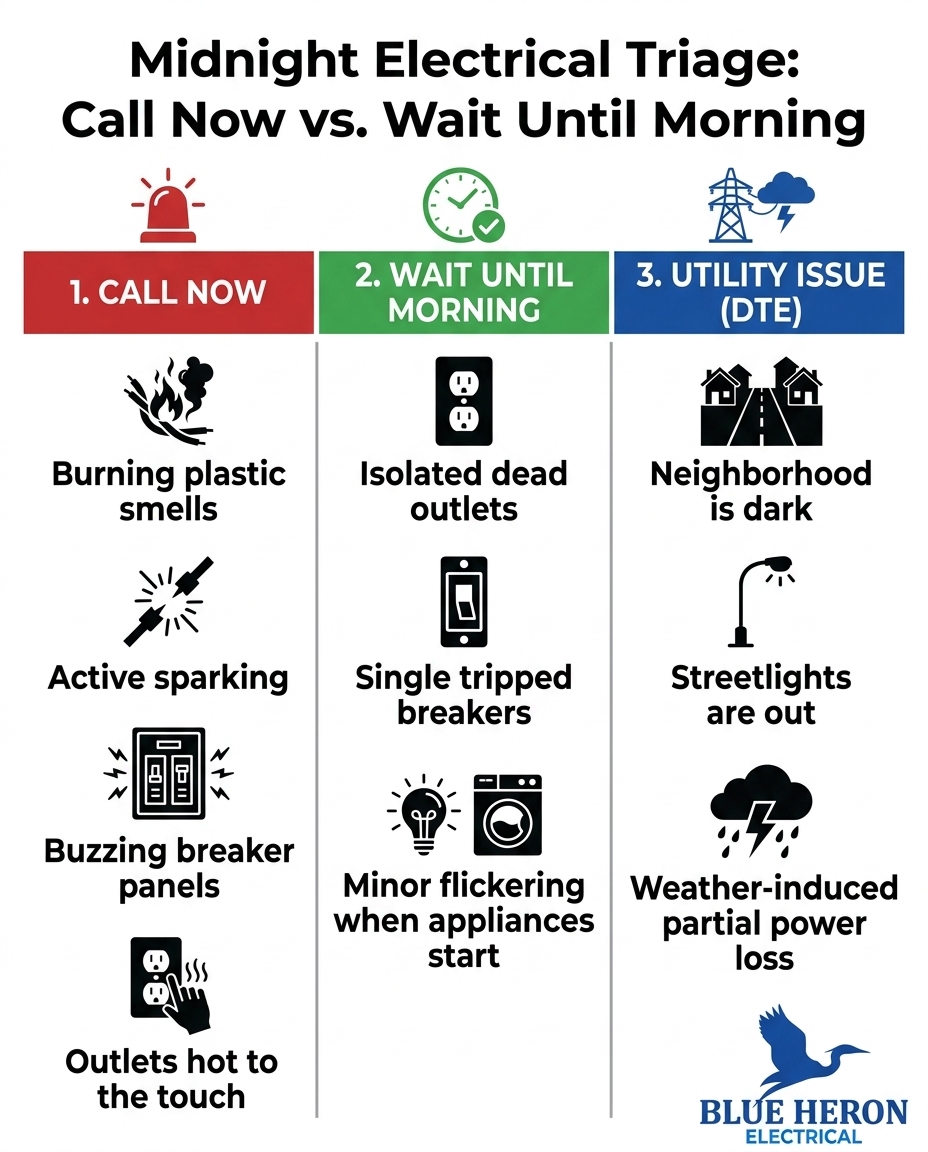
In our extensive experience resolving Metro Detroit electrical hazards, we know that not every power issue requires a middle-of-the-night response. However, certain symptoms indicate that your home's electrical system is actively failing. An electrical issue becomes a true emergency when there is an active risk of fire, electrocution, or catastrophic panel failure. When these specific hazards arise, our team at Blue Heron Electrical provides rapid-response 24/7 emergency electrician services, ensuring homeowners are never left in a dangerous situation overnight.
Here are the definitive signs that you need immediate professional intervention:
• Distinct burning odors: Smells resembling melting plastic or fish.
• Visible arcing: Continuous sparks shooting from an outlet or switch.
• Extreme heat: Switch plates or outlet covers that are physically hot to the touch.
• Audible panel noises: Loud buzzing, crackling, or sizzling sounds originating directly from your main breaker box.
Burning Odors and Melting Plastics
One of the most alarming signs our emergency electricians encounter is a distinct "fishy" or burning plastic smell. We often have to explain to homeowners that this specific odor is the chemical byproduct of thermoset plastics melting. Wire insulation and the internal components of your wall outlets are manufactured from specialized plastics designed to resist heat. When a loose wire connection or a failing internal contact creates excessive electrical resistance, it generates intense, localized heat.
Because this heat is trapped behind your drywall, you will often smell the melting plastic long before you see any smoke. If you detect this odor near an outlet, switch, or light fixture, it means the insulation is actively failing. This is an active smoldering fire risk that cannot wait until morning.
Active Sparking or Hot Outlets
Our technicians always advise customers to differentiate between a tiny, brief static spark when you plug in a heavy appliance and sustained electrical arcing. A microscopic blue flash when you plug in a vacuum cleaner is generally normal. However, if an outlet sparks continuously, pops loudly, or emits flashes of light without anything being plugged in, you have an active arc fault. Arcing occurs when electricity jumps across a gap in compromised wiring, reaching temperatures high enough to ignite surrounding wood and drywall.
Similarly, if you place your hand near an outlet or switch plate and it feels hot to the touch, the internal wiring is dangerously overloaded. Never attempt to unscrew or remove a hot faceplate. The heat indicates that the components are melting, and exposing them to fresh oxygen can cause the smoldering materials to ignite into a full flame.
The 'Wait Until Morning' List: Safe Inconveniences
While true emergencies require immediate action, our team typically sees that many late-night power problems are isolated inconveniences that pose no immediate threat if left alone overnight. Reassuringly, if a symptom does not involve heat, burning smells, sparking, or water, it is almost always safe to wait for standard business hours. Accurately identifying these safe inconveniences saves you from paying premium emergency dispatch fees for a problem that can easily be resolved the next day.
Isolated Dead Outlets
If you wake up and find that a single outlet in your bedroom or living room has stopped working, but the rest of the room has power, you are likely dealing with a localized failure. Check the outlet carefully. Confirm there are no smells, no visible scorch marks, and no heat radiating from the cover plate. If the outlet is completely cold and silent, it has simply failed or a wire has slipped loose internally.
In this scenario, we recommend unplugging any devices connected to that specific outlet. Do not attempt to plug anything else into it to "test" it. Once the devices are removed, the isolated dead outlet poses no immediate threat. You can safely go back to sleep and schedule standard service during normal business hours.
A Stubborn Tripped Breaker
Circuit breakers are designed to be your home's primary safety net. When a breaker trips, it physically cuts the flow of electricity to prevent wires from overheating due to an overload or a short circuit. If you go to your panel, find a tripped breaker, and attempt to reset it, only for it to immediately snap back to the "off" position, the breaker is doing exactly what it was engineered to do.
A stubborn breaker that refuses to reset is protecting you from an active electrical fault on that circuit. Forcing the breaker to stay in the "on" position removes this vital protection and forces electricity through compromised wiring, which drastically increases the risk of fire. If a breaker will not reset, leave it in the "off" position. The circuit is now dead and safely neutralized. You can confidently wait until morning to have a professional diagnose the underlying short circuit.
Summer Storms or Panel Failure? DTE vs. Your Home's Grid
Living in the Sterling Heights service area means dealing with severe July thunderstorms and intense peak cooling loads. During the height of summer, we see firsthand how air conditioners draw massive amounts of amperage, putting immense stress on both your home's electrical panel and the broader utility grid. When the power cuts out at 2 AM during a humid summer night, your first step is determining whether the failure is inside your house or out on the utility pole.
Calling an emergency electrician for a utility-side problem will result in a dispatch fee, but our electricians are not legally allowed to touch the utility company's equipment. Here is how we tell our customers to distinguish between a DTE grid issue and an internal home failure:
• Complete darkness, neighbors' houses are dark, streetlights are out. — Likely Cause: Utility grid failure (DTE outage). — Next Step: Check the DTE outage map on your phone; wait for utility repair.
• Half the house has power, but 240V appliances (AC, dryer) hum and fail to start. — Likely Cause: "Dropped leg" of power from the utility transformer. — Next Step: Turn off main breaker to protect AC motors; report to DTE.
• Only your house is dark, neighbors have power, main breaker is tripped or buzzing. — Likely Cause: Internal main panel failure or severe home surge. — Next Step: Call a 24/7 emergency electrician immediately.
• Lights flicker intensely only when lightning strikes nearby. — Likely Cause: Utility-side grid stress and minor power surges. — Next Step: Normal during storms; investigate only if flickering persists days later.
A "dropped leg" is a pattern we see often during Metro Detroit summer storms when peak cooling demands are already stressing the grid. Homes are fed by two 120-volt lines that combine to run heavy 240-volt appliances like your central air conditioner. If a falling tree branch knocks out just one of those lines on the street, half your lights will work, but your AC will violently hum and fail to turn on. This is a utility issue, but you should turn off your AC breaker immediately to prevent the compressor motor from burning out while it struggles on low voltage.
Safe Triage Steps: Securing Your Breaker Panel Overnight
If you have identified a specific issue—such as a burning smell isolated to one bedroom—you can safely neutralize the threat until morning by cutting the power at the source. Homeowners should never open the inner metal cover of a breaker panel or attempt internal wiring repairs, but operating the external switches is perfectly safe if done correctly. If you need professional circuit breaker services, secure the panel first and call at dawn.
Follow these strict safety steps to secure a problematic circuit in the dark:
1. Use a dedicated flashlight: Do not rely solely on your smartphone light. You need clear visibility and both hands free if possible, so use a headlamp or have a family member hold a strong flashlight.
2. Ensure the area is dry: Never approach a breaker panel if the floor is wet or if you have damp hands. Water and electrical panels are a lethal combination.
3. Locate the correct branch breaker: Open the outer panel door. Look at the directory index to find the breaker corresponding to the room with the burning smell or sparking outlet.
4. Flip the breaker firmly: Push the switch entirely to the "OFF" position. You should feel a firm click.
5. Verify the power is cut: Return to the room and safely verify that the lights or outlets in that specific area are no longer receiving power.
6. Use the main breaker as a last resort: If you cannot identify which breaker controls the burning outlet, or if the panel itself is buzzing, shut off the main breaker (the large switch at the very top). This will cut power to the entire house, but it guarantees your safety until morning.
Once the power is definitively cut to the dangerous area, the immediate threat of an electrical fire is neutralized. The wires can no longer heat up, and you can safely go back to sleep knowing the hazard is contained.
Frequently Asked Questions About Midnight Electrical Emergencies
Before diving into specific late-night scenarios, our technicians always recommend understanding broader warning signs, such as when to call an electrician for flickering lights versus when to wait. When you are awake at 2 AM searching for answers, you need clear, definitive guidance. Here are the most common questions homeowners ask our team during a midnight power crisis.
What is considered an electrical emergency?
An electrical emergency is any situation presenting an immediate risk of fire, shock, or electrocution in your home. This includes smoking outlets, continuous arcing, burning plastic smells, and water interacting with live wiring. If you experience any of these symptoms, the structural integrity of your wiring is compromised and requires immediate 24/7 professional intervention.
Can a sparking outlet wait until morning?
No, continuous sparking or arcing from an outlet is an active fire hazard that cannot wait. Sustained sparking means electricity is jumping across a broken connection, generating enough heat to ignite the wood framing and drywall behind the outlet. Shut off the breaker to that specific outlet immediately and call an emergency electrician.
Should I call an electrician or DTE for a power outage?
Check your neighbors' homes and the streetlights first; if they are dark, it is a grid issue and you should call DTE. If only your house is dark, and your main breaker is not tripped, the issue is likely isolated to your property. In that case, you need to call a licensed residential electrician to diagnose your main panel or service drop.
Is a buzzing breaker dangerous?
Yes, a loud buzzing or crackling breaker often indicates a loose internal connection or a breaker that is failing to trip during an overload. This mechanical failure leads to severe overheating inside the panel box, which can melt the bus bar or cause a catastrophic panel fire. This requires immediate professional assessment and should not be ignored.
What should I do if I smell burning plastic near an outlet?
Turn off the circuit at the breaker panel immediately to stop the flow of electricity. Do not plug anything into the outlet, do not touch the faceplate, and contact an emergency electrician right away. This distinct smell indicates that the wire insulation or the outlet's internal plastic components are actively melting behind your wall.
Why are my lights flickering during a thunderstorm?
Flickering lights during severe summer storms are typically caused by utility-side grid stress, high winds affecting power lines, or minor power surges. This is generally normal behavior as the local grid absorbs weather impacts. However, if the flickering persists long after the storm has passed, or is accompanied by buzzing sounds, professional diagnosis is required to rule out internal surge damage.
Make the Right Call for Your Home's Safety
Understanding what actually counts as a midnight electrical emergency in Metro Detroit empowers you to protect your home without falling victim to panic. Remember the golden rules of triage: true emergencies always involve heat, burning smells, sustained sparking, or buzzing panels. These are the critical moments when you must cut the power at the breaker and call for immediate 24/7 dispatch. Conversely, isolated dead outlets and stubborn tripped breakers that remain cool and silent are safe inconveniences. By leaving the affected breaker in the "off" position, you neutralize the risk and can comfortably wait for standard business hours.
You now have the knowledge to safely secure your breaker panel overnight and accurately diagnose the severity of your power problems. If you are experiencing any of the "Call Now" symptoms, or if you simply need a thorough daylight inspection of an outlet that failed overnight, do not ignore the warning signs. Make the right call for your home's safety and schedule an expert evaluation with Blue Heron Electrical to ensure your electrical system is fully secure.
Customer Testimonials

Service Areas