
What Electrical Work Can Be Done Without a Permit? A Homeowner's Guide to Safe Heating
Why Your Breakers Are Tripping This Fall (And What to Do About It)
Are you struggling with sudden power losses in your bedroom as temperatures drop, and searching for common homeowner questions answered about what is going wrong? You are not alone. Every year during the October pre-winter heating startup, homeowners experience nuisance tripping when they plug high-draw space heaters into convenient but overloaded bedroom outlets. The immediate question is always the same: is the breaker simply doing its job to prevent a fire, or is this a sign that your home requires professional intervention?
When the lights go dark, the frustration is immediate. However, a tripping breaker is actually a successful safety mechanism working exactly as designed. The core decision you face is determining whether you simply need to relocate your heavy-draw appliances to a different circuit, or if your home's electrical infrastructure requires professional residential electrical services to handle the modern demand safely. Understanding the strict boundary between safe, everyday load management and complex work that legally requires a permit is the first step in keeping your home safe and warm this season.
The Legal Boundary: Defining Permitted vs. Non-Permitted Electrical Work
An electrical permit is a formal approval from your local municipality that ensures any modifications to your home's electrical system meet strict safety standards. Local jurisdictions require these permits because improper wiring is one of the leading causes of residential fires. The fundamental rule for homeowners is straightforward: any modification to the home's permanent electrical infrastructure requires a permit. This includes adding new wiring, changing the electrical panel, or altering the permanent pathways that carry electricity through your walls.
There is a clear distinction between "plug-and-play" appliance usage and altering the circuit pathways. Plugging a device into an existing, properly functioning wall outlet does not require a permit. However, if that appliance consistently overloads the circuit, you cannot simply change the wiring or the breaker yourself to accommodate it. Managing heavy electrical loads safely is the primary reason strict building codes exist, and bypassing these codes often means a home requires professional electrical remodeling services to correct dangerous DIY mistakes.
The Role of the National Electrical Code (NEC)
The National Electrical Code (NEC) sets the baseline for safe electrical installations across the country. It dictates everything from the specific type of wire required for a damp location to the exact maximum load a standard residential circuit can handle. Local municipalities adopt these codes—often adding their own specific amendments—to prevent residential fires and protect homeowners. These codes are not suggestions; they are legally binding standards designed specifically to protect homes from the hidden dangers of overloaded circuits and melting wire insulation.
The Math Behind the Tripping Breaker: Space Heaters and Circuit Limits
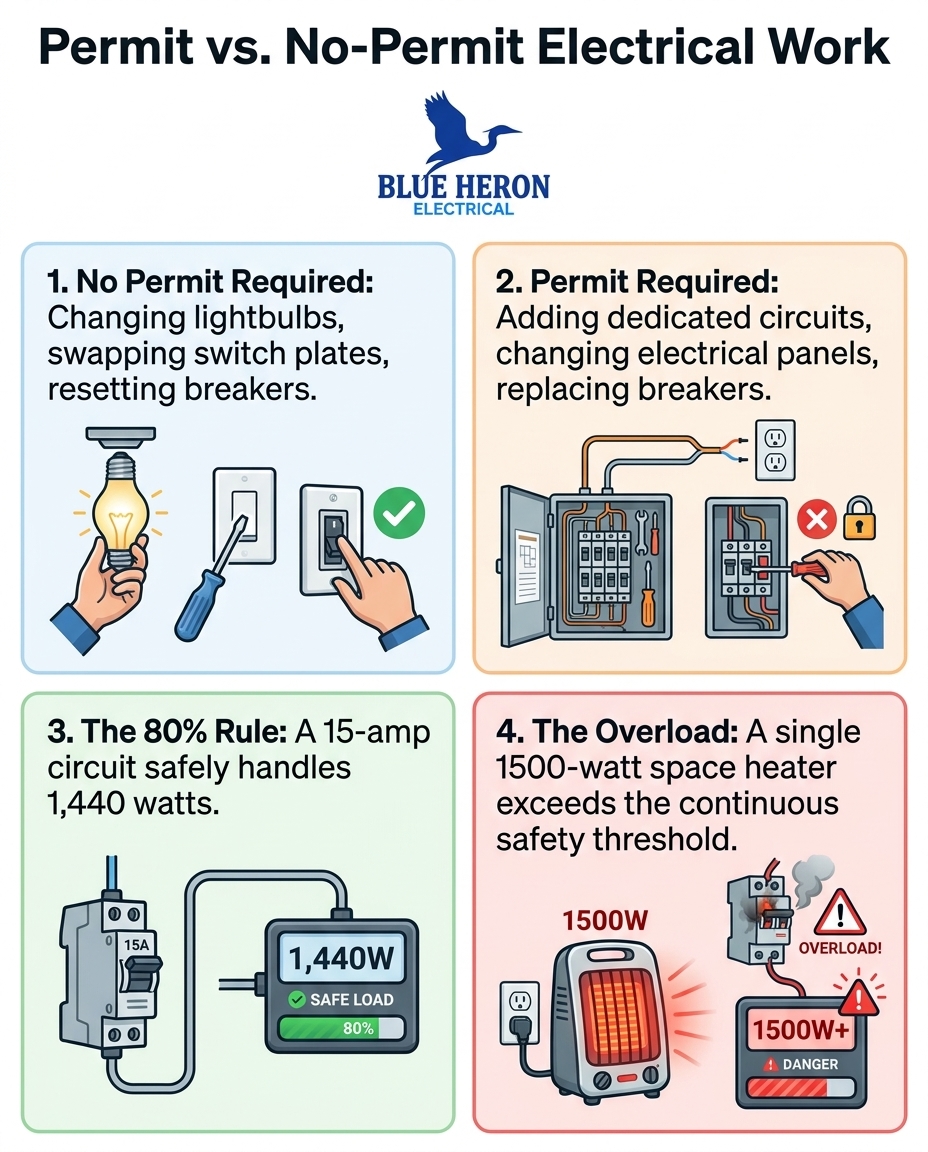
To understand why your breaker trips, you have to look at the math behind residential electrical limits. Most standard bedroom and living room outlets run on a 15-amp circuit. According to the NEC, a circuit should only handle 80% of its maximum capacity for continuous loads (defined as anything running for three hours or more). This 80% rule prevents the wiring inside your walls from slowly overheating over time.
Let's break down the math. A 15-amp circuit operating at 120 volts has a total maximum capacity of 1,800 watts. Following the 80% continuous load rule, that circuit can safely handle up to 1,440 watts of continuous load. The problem arises because a standard portable space heater typically draws a full 1,500 watts the moment it is turned on.
The overload breakdown:
• Standard Space Heater — Typical Wattage: 1,500 Watts — Impact on 15-Amp Circuit (1440W Continuous Limit): Exceeds continuous limit by 60 watts immediately
• Bedroom Television — Typical Wattage: 100 Watts — Impact on 15-Amp Circuit (1440W Continuous Limit): Safe, minimal draw
• Space Heater + TV + Lights — Typical Wattage: 1,650+ Watts — Impact on 15-Amp Circuit (1440W Continuous Limit): Severe overload, guarantees a tripped breaker
As you can see, a 1500-watt continuous load on a 15-amp circuit exceeds the safety threshold before you even turn on a lamp or a television in that same room. When the breaker trips in this scenario, it is not a broken part failing you; it is a successful safety mechanism preventing the wires in your wall from melting and starting a fire. Upgrading that breaker without a permit to "fix" the tripping is both illegal and highly dangerous.
Minor Electrical Tasks You Can Safely Manage Without a Permit
While the rules regarding electrical infrastructure are strict, there are still several routine maintenance tasks that homeowners can handle safely and legally without pulling a municipal permit. These tasks generally involve managing the electrical load or interacting with the cosmetic exterior of the system, rather than altering the permanent wiring.
• Replacing standard lightbulbs: Swapping out old incandescent bulbs for energy-efficient LED equivalents is always safe. LEDs draw a fraction of the wattage, which actually helps reduce the overall load on your circuits.
• Swapping out decorative switch plates: You can safely change the plastic or metal outlet covers and switch plates, provided you are only removing the outer cosmetic screws and not touching the actual wired terminals behind the switch.
• Relocating heavy-draw appliances: If a space heater trips a shared bedroom circuit, moving it to a dedicated circuit (like a heavily wired kitchen or bathroom receptacle, provided it is GFCI protected) is a safe, permit-free way to manage the load.
• Resetting a tripped breaker: Unplug the offending appliance first, then walk to your electrical panel. Push the tripped breaker firmly to the "off" position until it clicks, and then firmly push it back to the "on" position.
During the October pre-winter heating startup, managing where you plug in your devices is the most effective permit-free task you can perform to keep your power on and your home safe.
Major Electrical Upgrades That Legally Require a Permit
When load management is no longer enough and you need to expand your home's electrical capacity, you cross the legal threshold. Specific electrical modifications require both a municipal permit and a licensed professional to ensure they meet stringent safety codes.
Adding new dedicated circuits to support supplemental heating appliances safely is a common permitted upgrade. If you want a space heater in a specific room without tripping the existing shared circuit, a professional must run new, appropriately sized wire from the panel to a new receptacle. Likewise, replacing, upgrading, or modifying electrical panels always requires a permit. This includes electrical panel changes that increase the overall amperage of the home to support modern appliances, electric vehicle chargers, or heavy winter heating loads. Hardwiring new appliances or extending existing electrical pathways into home additions also falls strictly under permit-required work.
Why You Can't Just Install a Bigger Breaker
One of the most dangerous DIY mistakes homeowners make is attempting to swap out a tripping 15-amp circuit breaker for a 20-amp circuit breaker. The breaker size must match the wire gauge hidden inside the walls. Standard 15-amp circuits use 14-gauge wire, which physically cannot handle 20 amps of current safely. Oversizing a breaker allows the wires to overheat, melt their protective insulation, and potentially cause a fire long before the oversized breaker ever recognizes a problem and trips. This type of modification is strictly regulated, highly dangerous, and requires a licensed professional to evaluate and correct.
The Hidden Costs of Unpermitted Electrical Work
Bypassing permit requirements to save time or money on electrical modifications carries severe liability, insurance, and safety risks. The immediate danger is life safety; improper wiring, particularly when dealing with high-draw heating appliances during the October pre-winter heating startup, creates a massive fire hazard behind your drywall where you cannot monitor it.
Beyond the physical danger, unpermitted work creates financial nightmares. If an electrical fire occurs and the fire investigator traces the cause back to unpermitted, improper wiring, your homeowners insurance provider can legally deny the claim, leaving you entirely responsible for the costly damage. Additionally, unpermitted work often surfaces during home inspections when you try to sell the property. Municipalities can levy hefty fines and force you to tear out the unpermitted work and pay a licensed professional to redo it properly.
As a fully licensed Michigan electrical contractor, Blue Heron Electrical ensures all installations and repairs meet strict local codes, protecting homeowners from safety hazards, denied insurance claims, and hefty fines associated with unpermitted work. Working with a licensed contractor protects you from these liabilities. If you are wondering does rewiring a home require a permit in Michigan, the answer is always yes, and a licensed professional will handle the entire permitting process for you.
Preparing Your Home's Electrical System for Harsh Winter Weather
Michigan's extreme weather, including harsh winters and severe storms, demands highly reliable electrical systems. Unpermitted or improper DIY work on critical systems like backup generators or electrical panels can lead to catastrophic failures when homeowners need power the most. As the temperature drops, the electrical demand in your home naturally increases from heating systems, additional indoor lighting, and extended indoor activities.
Preparing for this heavy load means ensuring your system is compliant and robust. If you are considering whole-home backup power solutions to combat winter outages, understand that generator installation requires strict permitting, professional load calculations, and specialized transfer switches to operate safely. We advise homeowners to have their electrical panels inspected before the coldest weather arrives. The peace of mind that comes from a compliant, professionally evaluated electrical system allows you to weather the worst winter storms safely and comfortably.
Frequently Asked Questions About Electrical Permits and DIY Work
Why does my space heater keep tripping the breaker?
Your space heater trips the breaker because it draws more continuous power than a standard residential circuit is designed to handle safely. A typical 1500-watt continuous load on a 15-amp circuit exceeds the 1,440-watt continuous safety threshold set by electrical codes. When the breaker senses this overload, it shuts off the power to prevent the internal wall wiring from overheating and starting a fire. The breaker is working correctly; the solution is to relocate the heater to a dedicated circuit.
Do I need a permit to change a circuit breaker?
Yes, replacing a circuit breaker requires an electrical permit and should only be performed by a licensed professional. The breaker must perfectly match the gauge of the wire inside your walls to provide accurate protection against electrical fires. Installing the wrong size breaker—such as placing a 20-amp breaker on 15-amp wiring—removes the safety mechanism and allows the wires to melt, which is why municipalities strictly regulate panel modifications.
Can I do my own electrical work in Michigan?
In Michigan, homeowners are generally prohibited from performing electrical work that alters the permanent wiring, panels, or circuits unless they hold the proper licensing and pull the necessary permits. While you can perform minor maintenance tasks like changing lightbulbs or swapping cosmetic switch plates, any work involving the electrical panel, adding new circuits, or hardwiring appliances requires a licensed professional to ensure compliance with the National Electrical Code and local safety regulations.
Do you need a permit to add a dedicated outlet?
Yes, adding a dedicated outlet requires an electrical permit because it involves running new permanent wiring from the electrical panel to the receptacle location. This modification alters the home's electrical infrastructure and must be inspected to ensure the wire gauge, breaker size, and installation methods meet local fire safety codes. Attempting to add a dedicated circuit without a permit is illegal and introduces severe fire risks to the home.
What happens if I do electrical work without a permit?
Performing electrical work without a permit exposes you to significant safety hazards, financial liabilities, and legal consequences. If unpermitted wiring causes a fire, your homeowners insurance provider will likely deny your claim, leaving you financially responsible for the damage. Furthermore, unpermitted work is typically discovered during municipal inspections or when selling the home, resulting in hefty fines and the requirement to hire a licensed professional to tear out and replace the illegal work.
How do I know if my electrical panel is outdated or overloaded?
Frequent breaker tripping, dimming lights when appliances turn on, and a panel that feels physically warm to the touch are strong indicators of an overloaded or outdated electrical system. If your home still uses fuses instead of modern breakers, or if the panel is manufactured by companies known for safety defects (such as Federal Pacific or Zinsco), it is outdated and requires immediate professional assessment. A licensed electrician can perform a load calculation to determine if your panel can safely handle your home's current energy demands.
Ensure Your Home Is Safe and Compliant This Season
Managing where you plug in your heater during the October pre-winter heating startup is a perfectly safe DIY task, but upgrading the electrical system to handle that heavy load permanently requires a licensed professional. A tripping breaker is a warning sign that your system is working to protect you from an overload. Reaching for a quick, unpermitted fix introduces unnecessary danger and liability into your home.
Enjoy the peace of mind that comes from legally compliant, permitted electrical work. If you are experiencing frequent power losses or want to ensure your home is ready for the heavy demands of winter, schedule a professional inspection. A clear, safe explanation of your circuit loads and a proper assessment will keep your home comfortable, compliant, and safe all season long.
Customer Testimonials

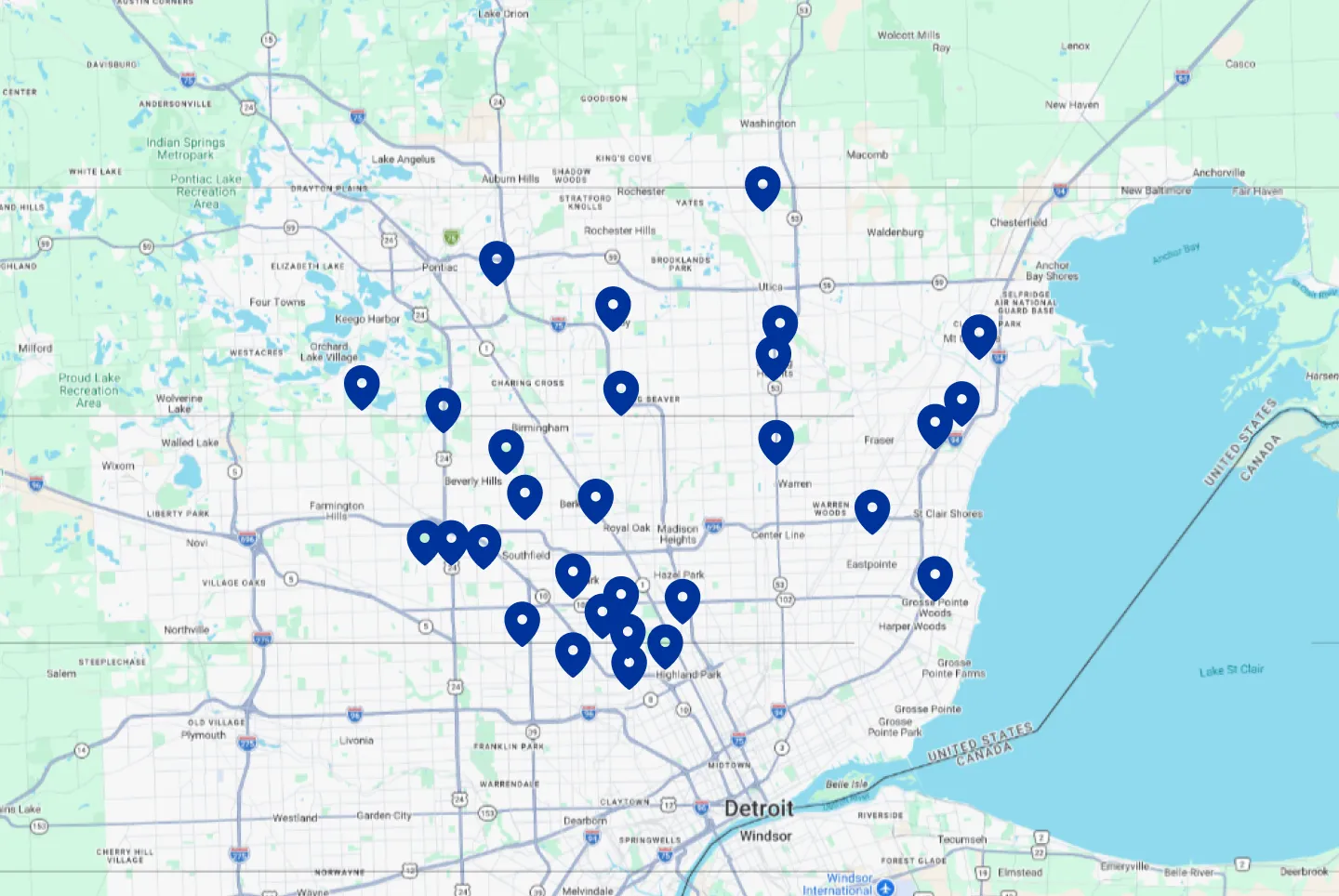
Service Areas