
How Powered Attic Fans Reduce Second-Story Heat in Sterling Heights Colonials
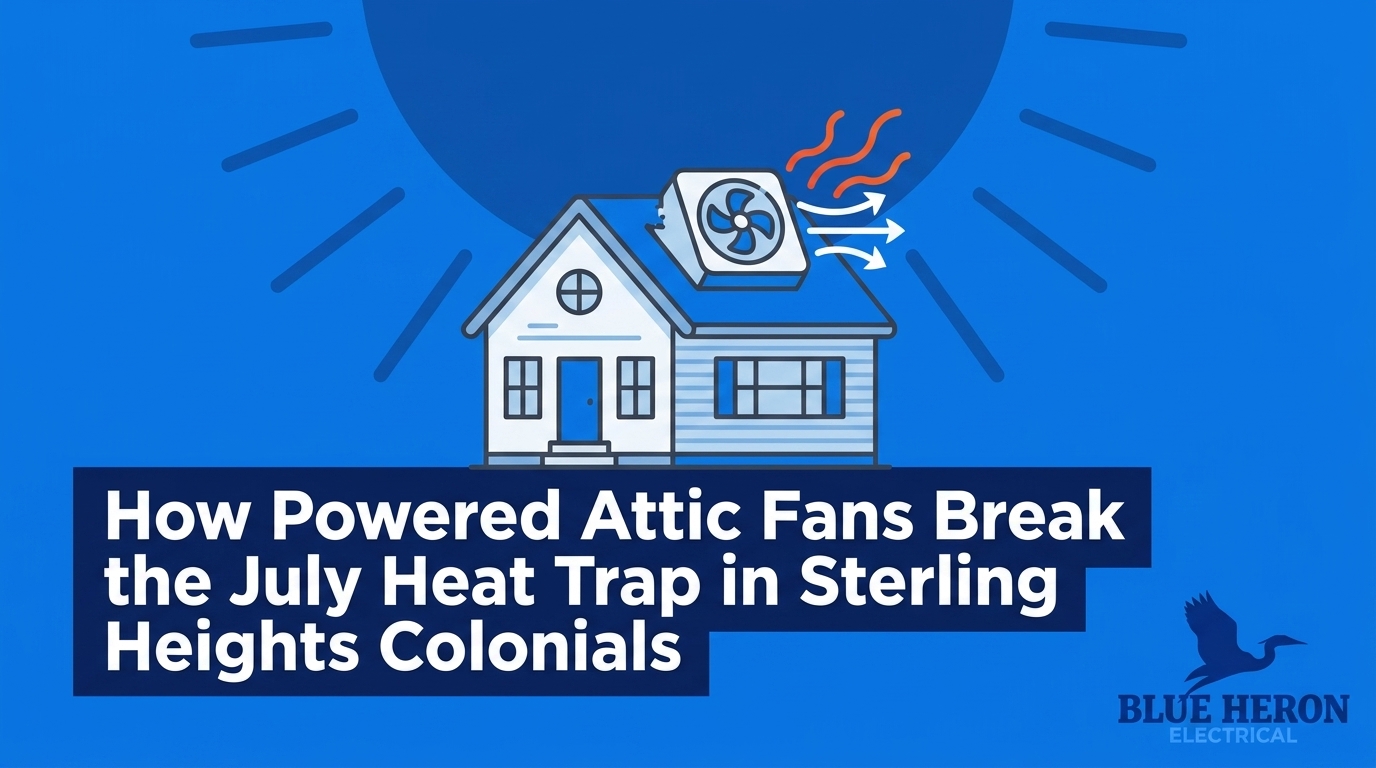
The July Heat Trap: Why Your Second-Story Bedrooms Won't Cool Down
July in Metro Detroit brings relentless solar heat that bakes asphalt shingle roofs from sunrise to sunset. At Blue Heron Electrical, we constantly hear from homeowners living in traditional two-story homes who know the frustrating routine: the central air conditioning runs constantly, yet the upstairs bedrooms remain stuffy, stagnant, and completely miserable. Understanding exactly how powered attic fans reduce second-story heat in Sterling Heights Colonials is the key to finally fixing this seasonal problem.
Homeowners often face a difficult decision point during peak summer weather. You can either keep dropping the AC thermostat—driving up your energy bills while freezing the first floor—or you can install a powered attic exhaust fan to actively change the thermal dynamics of the entire house. Addressing the root cause of the heat trap requires professional intervention, as active cooling solutions rely on robust residential electrical systems to operate safely and effectively.
If you are tired of battling the heat trap and want to explore active cooling solutions, learning more about professional residential electrical services is the first step toward a more comfortable upper level.
The Thermodynamics of Two-Story Sterling Heights Colonials
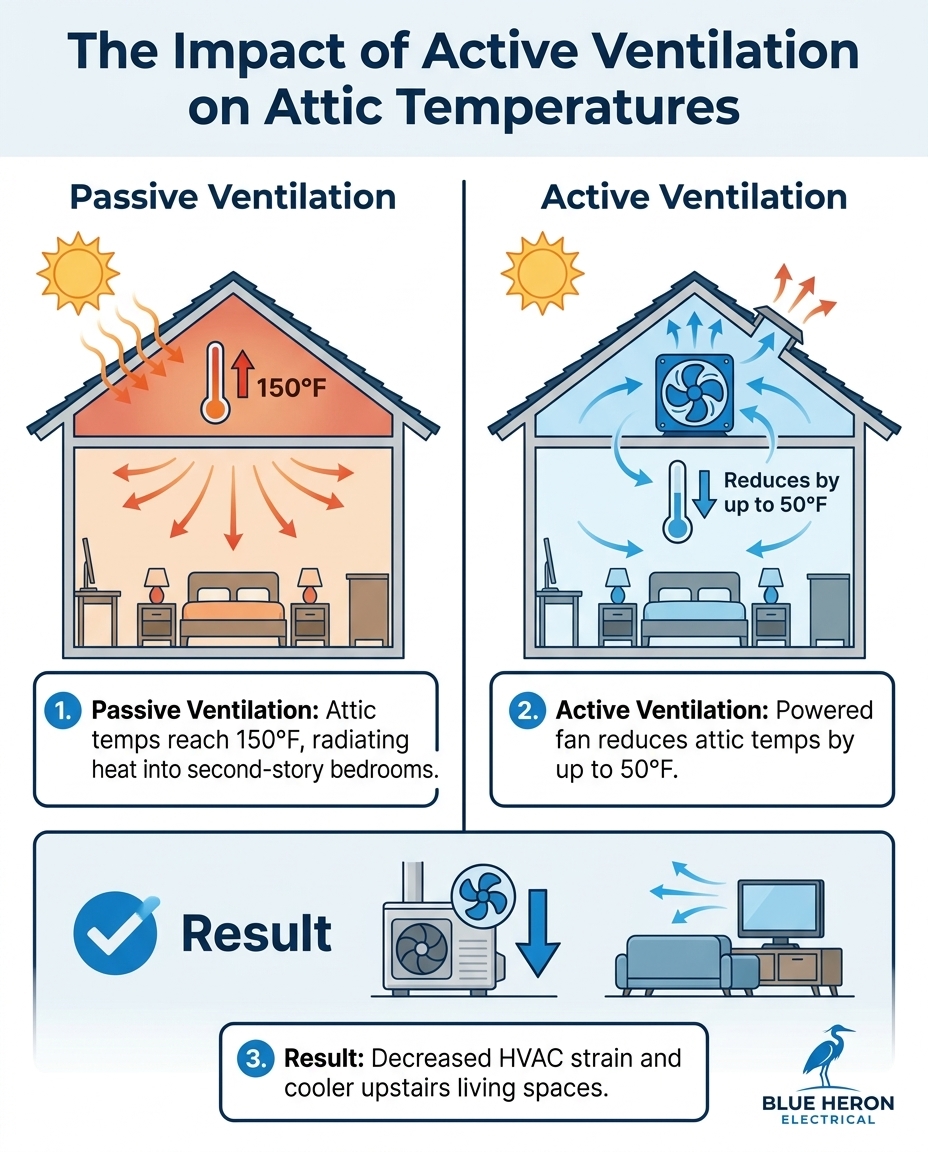
To understand why your upstairs bedrooms feel like a sauna, you have to look directly above the ceiling. During the peak of summer, solar heat gain on a dark asphalt roof is immense. While the outside air temperature might read 90 degrees Fahrenheit, the trapped air inside an unventilated or poorly ventilated attic space can easily reach 150 degrees Fahrenheit. This massive pocket of superheated air acts like a giant thermal blanket pressing down on the rest of your house.
Our team spends a lot of time working in traditional Sterling Heights Colonials built in the 1970s and 1980s, where we see this problem especially pronounced. These homes feature expansive second stories positioned directly beneath large, pitched roofs. The architectural design naturally encourages the "stack effect." Hot air is less dense than cold air, meaning the ambient heat generated inside your living space naturally rises to the highest point in the house. When that rising interior heat meets the crushing 150-degree heat radiating down from the roof, the second floor becomes completely trapped in a thermal squeeze.
Understanding Radiant Heat Transfer
Radiant heat transfer occurs when heat energy moves from a warmer object to a cooler one through electromagnetic waves. In your home, the sun heats the roof shingles, the shingles heat the roof deck, and the roof deck radiates heat into the attic air and down into your attic floor.
Standard drywall and older fiberglass insulation cannot completely block this level of intense, sustained thermal energy. Eventually, the insulation reaches its maximum thermal capacity and begins radiating that stored heat directly into the living space below. This is why the ceiling in an upstairs bedroom often feels physically warm to the touch by late afternoon.
• Attic Space — Typical Mid-Summer Temperature: 130°F - 150°F — Primary Heat Source: Direct solar radiation on roof shingles
• Second Floor — Typical Mid-Summer Temperature: 78°F - 85°F — Primary Heat Source: Radiant heat through ceiling + rising interior heat
• First Floor — Typical Mid-Summer Temperature: 70°F - 72°F — Primary Heat Source: Ambient outdoor air (easily cooled by AC)
• Basement — Typical Mid-Summer Temperature: 65°F - 68°F — Primary Heat Source: Naturally cooled by surrounding earth
Why Passive Roof Vents Fail During Michigan Summer Heatwaves
Most older homes were constructed with passive ventilation systems, typically consisting of soffit vents under the eaves and gable vents on the sides of the house, or a ridge vent running along the peak of the roof. Passive systems rely entirely on natural breezes and temperature differentials to move air. The theory is that cooler outdoor air enters through the lower soffit vents, naturally pushing the rising hot air out through the higher vents.
However, during peak July heatwaves across Metro Detroit, our electricians frequently find that passive ventilation is undersized for modern active cooling demands. The physics of passive airflow break down when external temperatures and humidity reach their seasonal highs. Michigan's high summer humidity traps dense, hot air in the upper levels of the home, rendering passive ventilation completely insufficient to push out heavy solar heat. When the air outside is thick, stagnant, and windless, the natural draft inside the attic simply stalls out.
The Limits of Soffit and Ridge Ventilation
Even if your soffit and ridge vents are perfectly clear of debris and insulation, they can only do so much. Here is why passive systems struggle:
• Lack of wind pressure: Passive vents require a steady exterior breeze to create a pressure vacuum that pulls air through the attic. On still, stagnant summer days, this vacuum disappears.
• Thermal stalling: When the temperature difference between the outside air and the attic air narrows (such as on a 95-degree day), the natural upward draft weakens significantly.
• Inadequate net free area: Many older homes simply do not have enough physical vent space cut into the roof deck to handle the massive volume of hot air generated by modern, darker asphalt shingles.
When natural airflow stalls, the hot air sits stagnant, baking the structural wood and radiating downward into your living spaces.
The Physics of Powered Attic Fans: Breaking the Radiant Heat Cycle
A powered attic exhaust fan serves as the active, physics-based solution to this structural problem. Instead of waiting for a natural breeze that may never arrive, a powered fan forcefully alters the pressure dynamics inside the roof space. Mounted either on the roof deck or behind a gable vent, the heavy-duty motor actively pulls superheated air out of the attic and exhausts it into the atmosphere.
This forceful exhaust creates a negative pressure zone inside the attic. To equalize the pressure, the system aggressively draws cooler, fresh outdoor air in through the existing soffit vents. This constant, mechanical circulation prevents the air from stagnating. Data shows that active attic ventilation can reduce peak attic temperatures by up to 50 degrees Fahrenheit. Dropping an attic from 150 degrees down to 100 degrees fundamentally changes the thermal profile of traditional Sterling Heights Colonials.
Relieving the Strain on Your HVAC System
The secondary benefit is massive: lowering the cooling load on your air conditioning system. Your AC ductwork often runs through the attic or the upper floor ceilings. When the attic is 150 degrees, the conditioned air inside those ducts warms up before it ever reaches your bedroom vents. By dropping the ambient attic temperature, your AC system delivers colder air faster, allowing the thermostat to finally reach its target and shut off.
Electrical Requirements for Active Attic Ventilation in Older Homes
While the cooling benefits of an attic fan are clear, the installation is not a simple plug-and-play project. Powered attic fans feature high-draw electric motors that require a dedicated electrical circuit to operate safely and efficiently. In our years of servicing local homes, we've seen exactly what happens when homeowners attempt to splice a heavy-duty exhaust fan into an existing attic lighting circuit: it is a recipe for tripped breakers and potential fire hazards.
This is a critical concern for older homes. Residential electrical panels installed decades ago were not designed to handle the heavy, continuous electrical loads required by modern cooling appliances running constantly through the summer. Overloading these existing circuits is dangerous. Having a licensed professional evaluate the electrical panel before adding a high-draw motor is an absolute necessity. Our team at Blue Heron Electrical provides deep expertise in safely wiring new ventilation circuits, navigating the unique structural and electrical nuances of older properties without overloading the system. If you live in an older property, understanding the risks of overloaded panels in older Metro Detroit homes is vital before starting any major upgrade.
Why Dedicated Circuits Matter
A dedicated circuit means the attic fan has its own exclusive wire running directly back to a single breaker in the main electrical panel. Nothing else shares this power supply. Here is why this matters for Sterling Heights Colonials:
• Continuous Operation: Attic fans often run for 8 to 10 hours straight during peak heat. Shared circuits overheat under continuous loads.
• Startup Surge: Electric motors require a massive surge of power the moment they turn on. A dedicated circuit handles this inrush without dimming lights or tripping breakers.
• Code Compliance: Modern electrical safety standards require heavy motor loads to be isolated to prevent localized wire melting and insulation damage.
Maximizing Upstairs Comfort: Pairing Attic Exhaust with Interior Airflow
While the attic fan removes the primary heat source from above, you still need interior circulation to distribute the conditioned AC air effectively throughout the living space. An attic fan stops the heat from pressing down, but it does not actively blow cold air into the room. To achieve total comfort, we always recommend pairing active roof ventilation with active interior airflow.
Installing ceiling fans in the upstairs bedrooms creates a powerful wind-chill effect for the occupants. Moving air evaporates moisture from the skin, making the room feel up to four degrees cooler than the actual thermostat reading. This allows you to raise the AC temperature slightly while remaining perfectly comfortable, saving significant energy in July.
The electrical expertise required to run a dedicated circuit for an attic fan is the exact same skill set needed to safely install heavy ceiling fixtures. Older bedrooms often lack the reinforced junction boxes required to support the weight and vibration of a modern ceiling fan. Upgrading the entire upper level's airflow strategy at once is a pattern we see often as the smartest approach. Professional ceiling fan installation in Sterling Heights ensures your fixtures are balanced, safely wired, and securely mounted to support your summer cooling strategy.
Frequently Asked Questions About Attic Fans and Second-Story Heat
Why is the second floor of my house so hot in summer?
The second floor gets dangerously hot due to a combination of rising interior heat and downward radiating heat from the roof. Hot air naturally rises through the house due to the stack effect, gathering on the upper floor. Simultaneously, the sun bakes the roof, pushing 150-degree radiant heat down through the ceiling insulation, trapping the bedrooms in a thermal squeeze that standard AC struggles to overcome.
Will an attic fan cool my second floor?
Yes, an attic fan actively cools the second floor by removing the massive blanket of heat pressing down on the ceilings. By forcefully exhausting superheated air and drawing in cooler outside air, the fan prevents radiant heat from penetrating the living space. This allows your existing air conditioning system to finally cool the upstairs bedrooms effectively.
Do powered attic fans help AC run less?
Powered attic fans significantly reduce the workload on your AC system by lowering the overall cooling load of the house. When the attic temperature drops by 40 to 50 degrees, the ductwork running through the attic stays cooler, and less heat enters the living space. Because the AC doesn't have to fight against extreme radiant heat, the thermostat reaches its target temperature faster and shuts off sooner.
How much temperature difference does an attic fan make?
A properly sized and professionally installed attic fan can reduce the air temperature inside the attic space by up to 50 degrees Fahrenheit during peak summer heat. For the living space below, this massive reduction in radiant heat can lower the ambient temperature of second-story bedrooms by several degrees, eliminating the stuffy, stagnant feeling entirely.
Can my existing electrical panel handle a new attic fan?
Whether your panel can handle a new fan depends heavily on the age of the home and the current electrical load. Powered fans require a dedicated electrical circuit to handle the continuous motor draw safely. We frequently inspect older Sterling Heights Colonials with full or outdated panels that require a professional evaluation by a licensed electrician to ensure a new circuit can be added without creating a fire hazard.
Take Control of Your Summer Comfort Before the Next Heatwave
Beating the sweltering July heat requires more than just dropping the thermostat and hoping for the best. You have to address the root cause: the massive volume of trapped attic heat pressing down on your home. A clear, physics-based approach utilizing active ventilation is the most effective way to cool the second floor and relieve the immense strain on your air conditioning system.
At Blue Heron Electrical, we strongly advise homeowners not to wait until the upstairs bedrooms are unbearable to start looking for solutions. Schedule an inspection with local experts to evaluate your home's current ventilation capacity and electrical panel safety. Reach out to licensed electricians in Sterling Heights today to design a comprehensive airflow strategy, and ensure your home is ready long before the next major heatwave arrives.
Customer Testimonials

Service Areas