
How a Whole Home Electrical Inspection Finds Hidden Problems
Why a Whole Home Electrical Inspection Is Your First Line of Defense Against Hidden Hazards
How a whole home electrical inspection finds hidden problems before they become dangerous is something every homeowner in Metro Detroit and Oakland County should understand — because most electrical hazards give no visible warning until it's too late.
Here's a quick answer to what the inspection process actually does:
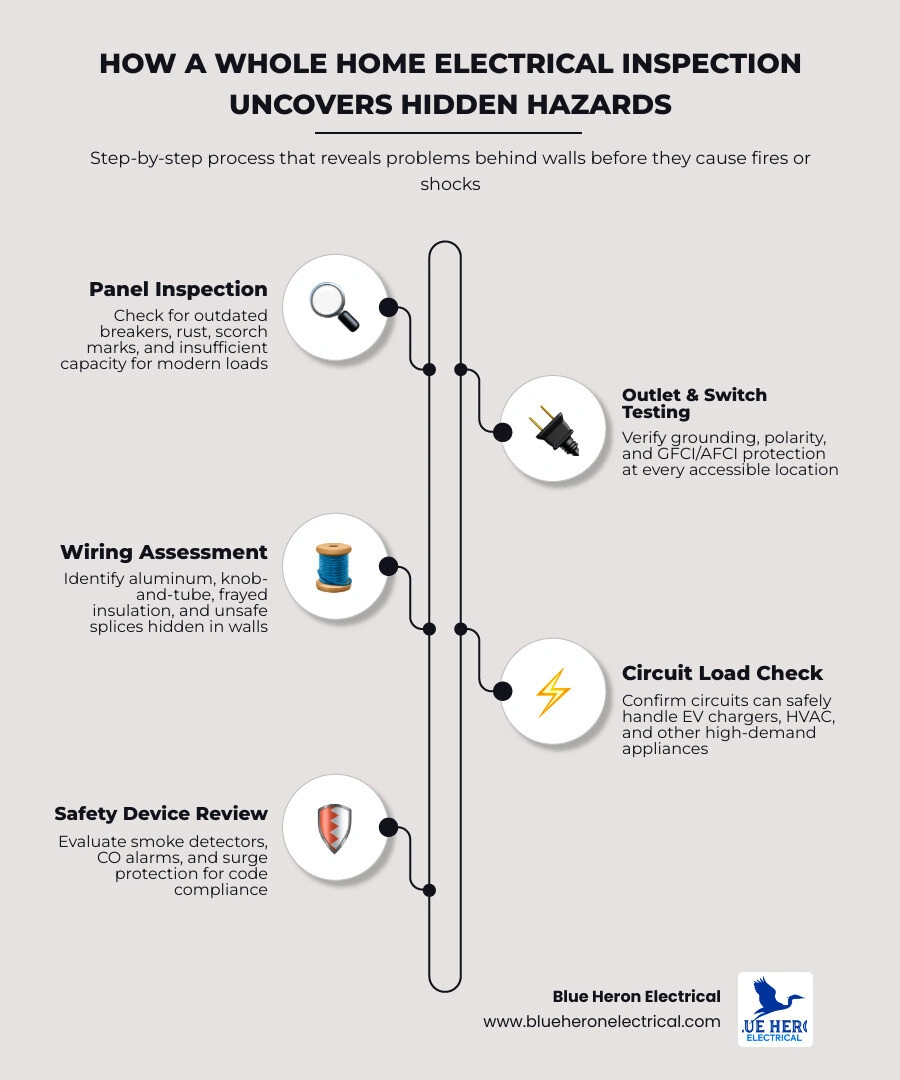
- Examines the electrical panel for outdated breakers, rust, scorch marks, and capacity issues
- Tests outlets and switches for proper grounding, polarity, and GFCI/AFCI protection
- Checks wiring throughout the home for aluminum conductors, knob-and-tube systems, frayed insulation, and improper splices
- Identifies overloaded circuits that can't handle modern appliances like EV chargers or HVAC systems
- Flags DIY or unlicensed work that may violate local codes and create fire or shock risks
- Evaluates safety devices including smoke detectors, carbon monoxide alarms, and surge protection
Most of these problems hide behind walls, inside panels, or in attics and crawl spaces — places you'd never think to look. Electrical malfunctions caused over 23,000 residential fires in the U.S. in 2023 alone, and many of those fires started in homes where nothing seemed wrong. Older homes in Metro Detroit are especially at risk, since wiring and panels from the 1960s and 1970s were never built to handle the electrical loads we depend on today.
A professional electrical inspection is how you find those problems while they're still small — before a loose connection becomes a fire, or an undersized circuit becomes a serious safety event.
What is a Whole Home Electrical Inspection?
Think of a whole home electrical inspection as a comprehensive, top-to-bottom physical exam for your home’s electrical system. While we all know to change the oil in our cars or service our furnaces before the Michigan winter hits, we often take the wires behind our drywall completely for granted. A professional inspection changes that by bringing hidden infrastructure into clear focus.
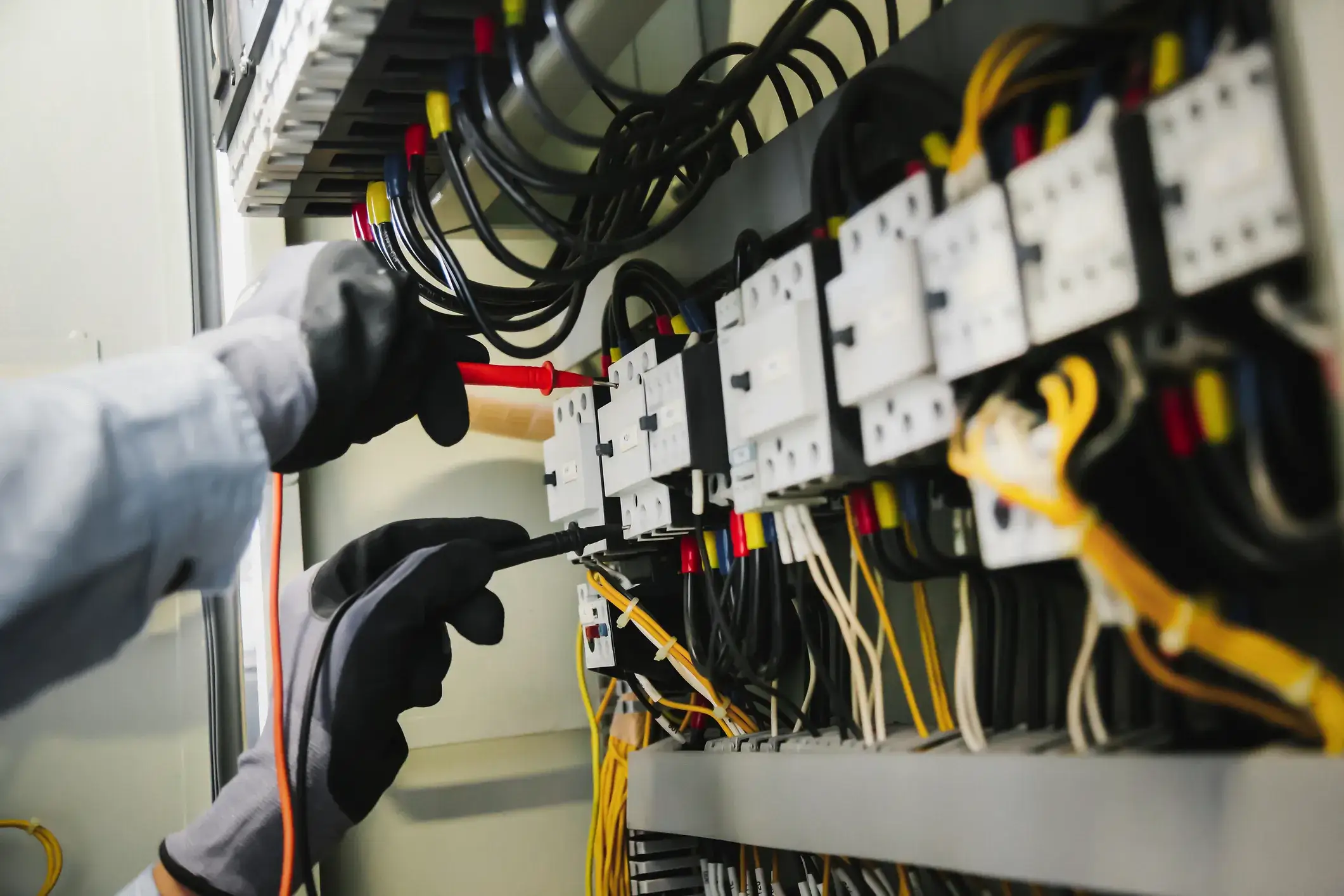
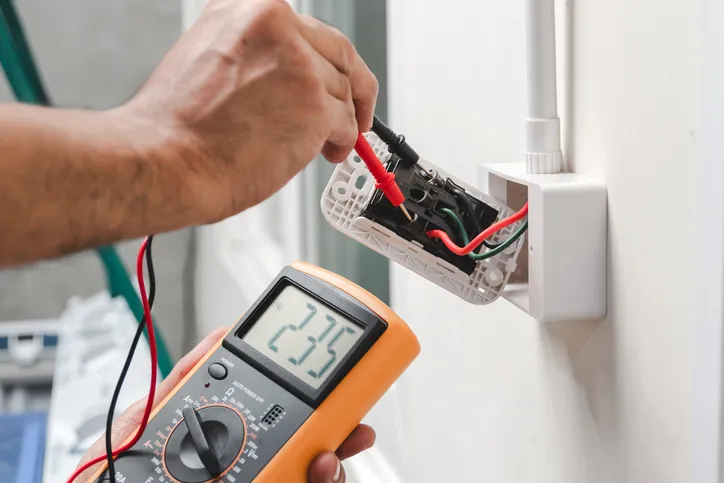
During an inspection, a licensed electrician uses specialized diagnostic tools to systematically check every path electricity takes through your home. We start where the power enters your house and trace it all the way to the devices you plug in every day. This is a highly technical process designed to verify code compliance, ensure safety standards, and provide preventative maintenance that keeps your household running without unexpected interruptions.
Evaluating the Electrical Panel and Circuit Breakers
The electrical panel is the brain of your home's power distribution. If it is outdated, damaged, or overloaded, the safety of your entire house is compromised. During an inspection, we open the panel to check for proper wire sizing, tight connections, and any signs of overheating, such as melted insulation or scorch marks.
We also look closely at your breakers. A circuit breaker's only job is to shut off power when a circuit carries too much electricity. However, certain outdated panels—particularly those manufactured by Federal Pacific, Zinsco, or Sylvania—have documented histories of failing to trip during an overload. If you are noticing warning signs like flickering lights or frequent trips, it may be time to learn about the Signs Your Electrical Panel Is No Longer Safe for Modern Power Needs.
For homeowners in Oakland County, we provide specialized Electrical Panel Services Bloomfield MI and comprehensive Circuit Breaker Services Troy MI to ensure your panel is fully capable of protecting your home.
Testing Outlets, Switches, and Safety Devices
Outlets and switches are the primary touchpoints where you interact with your electrical system. We test them for proper polarity, solid grounding, and physical wear. Over time, the internal contacts in wall outlets can loosen, creating electrical resistance that generates dangerous heat. You can read more about these risks in our guide on Common Outlet Problems and What They Mean for Your Electrical System.
A critical phase of our inspection involves safety devices:
- Ground Fault Circuit Interrupters (GFCIs): These are mandatory in moisture-prone areas like kitchens, bathrooms, basements, and outdoor areas. They detect tiny current leaks and cut power instantly to prevent electrocution.
- Arc Fault Circuit Interrupters (AFCIs): These modern safety devices detect dangerous electrical arcing (sparking), which is a leading cause of house fires.
- Smoke and Carbon Monoxide Detectors: We verify that your alarms are hardwired with reliable battery backups and are fully operational. For local assistance, we offer professional installation of Smoke and CO Detectors Bloomfield MI.
How a Whole Home Electrical Inspection Finds Hidden Problems Before They Become Dangerous
The real power of a comprehensive inspection is its ability to reveal what is happening where you cannot see. Copper wires are hidden behind plaster, drywall, and attic insulation. Under normal conditions, they carry electrical currents quietly. But when connections degrade, insulation cracks, or wire types are mismatched, danger builds silently.
Understanding how a whole home electrical inspection finds hidden problems before they become dangerous comes down to comparing the safety and capacity of the materials carrying power through your walls:
| Wiring Type | Active Years | Primary Risks | Modern Suitability |
|---|---|---|---|
| Knob-and-Tube | Late 1800s – 1940s | No ground wire; disintegrating rubber insulation; hazard when covered by modern attic insulation. | Highly unsafe; cannot support modern appliances. |
| Aluminum | Mid-1960s – 1970s | Highly prone to expansion and contraction, leading to loose connections, arcing, and fire risks. | Obsolete for branch circuits; requires remediation or replacement. |
| Modern Copper | 1970s – Present | Minimal risk when installed correctly; features dedicated ground and durable PVC insulation. | Excellent; industry standard for safety and capacity. |
Uncovering Outdated Wiring Systems
If your home was built before 1980, there is a strong chance it contains wiring that does not meet modern safety codes. During an inspection, we look for two major culprits: knob-and-tube wiring and single-strand aluminum wiring.
Aluminum wiring, commonly installed in the late 1960s and early 1970s, expands and contracts much more than copper when carrying electricity. This constant thermal movement loosens connections over time, creating gaps where dangerous electrical arcs can jump and ignite surrounding wood or insulation. If your home has these materials, we can assist with Aluminum Wiring Replacement Troy MI or Knob and Tube Rewiring Troy MI. To understand the scope of these upgrades, read our article on When to Upgrade Wiring in an Older Home and What to Expect.
How a Whole Home Electrical Inspection Finds Hidden Problems Before They Become Dangerous in Older Properties
In older Metro Detroit homes, aging infrastructure is a constant concern. Over decades, wire insulation can degrade due to heat, age, and environmental exposure. Rodents nesting in attics or crawl spaces frequently chew through wire jackets, leaving bare, energized conductors exposed to dry wood framing.
Furthermore, older systems were designed for a time when a home’s biggest electrical draw was a refrigerator and a few lightbulbs. Today, we plug in multiple computers, smart TVs, high-powered microwaves, and space heaters. When an old system is pushed past its limits, the wires heat up behind the walls, degrading the insulation further. An inspection helps determine if your home requires a targeted upgrade or a complete Whole House Rewiring Troy MI to keep your family safe.
Identifying Overloaded Circuits and Improper DIY Work
One of the most common hazards we find during inspections isn't caused by age, but by human error. DIY electrical work or unpermitted renovations by previous owners are incredibly common.
Our team frequently uncovers dangerous "handyman" mistakes, including:
- Double Lugging: Connecting more than one wire to a single circuit breaker terminal not designed for it, which leads to loose connections and overheating.
- Concealed Junction Boxes: Splicing wires outside of an approved, accessible junction box, or drywalling over an active junction box, making future troubleshooting impossible.
- Incorrect Wire Gauges: Using thin wire on a high-amperage circuit, which can cause the wire to overheat and melt before the breaker ever trips.
- Loose Terminations: Poorly tightened wire nuts or screw terminals that create electrical resistance and localized heat.
Warning Signs That Your Home Needs an Electrical Assessment
Your home will often try to tell you when something is wrong. While some hazards remain entirely silent, many issue subtle warnings that should never be ignored. Paying attention to these signs can save you from a catastrophic system failure or an electrical fire.
Recognizing Immediate Red Flags in Your Daily Routine
If you notice any of the following symptoms during your normal day-to-day routine, you should contact a licensed electrician to schedule an inspection immediately:
- Frequent Tripping Breakers: If your microwave or hair dryer trips the breaker regularly, your circuits are overloaded, or the breaker itself is failing.
- Flickering or Dimming Lights: This often indicates a loose connection in your main panel, a failing service line, or a circuit overloaded by a major appliance kicking on.
- Warm or Discolored Outlets: Outlets should never feel warm to the touch. Discoloration or scorch marks on wall plates are proof that active arcing and high heat are occurring behind the plate.
- Buzzing or Humming Sounds: Safe electrical systems operate silently. Sizzling, buzzing, or humming near outlets, switches, or your main panel indicates a loose connection or arc fault.
- Mild Shocks: Feeling a tingle or a mild shock when touching an appliance or a metal faceplate is a clear sign of a grounding failure.
How a Whole Home Electrical Inspection Finds Hidden Problems Before They Become Dangerous When Adding Modern Appliances
As we transition to more energy-intensive lifestyles in 2026, our homes are facing unprecedented power demands. Installing a new electric vehicle (EV) charger, upgrading to a high-efficiency heat pump, or adding a hot tub can easily push an older electrical system past its safe operating limits.
Before making these upgrades, an electrical inspection is essential. We analyze your system’s total load capacity to ensure your panel can handle the new demand without overheating. Additionally, modern electronics are highly sensitive to voltage fluctuations. During our visit, we can evaluate your home's defense systems and install Whole Home Surge Protection Troy MI to safeguard your investments from external lightning strikes and internal power surges.
Frequently Asked Questions About Home Electrical Safety
How often should I schedule a whole home electrical inspection?
For general peace of mind, we recommend having your home's electrical system inspected every 5 to 10 years. However, if your home is more than 40 years old, or if you have recently purchased an older property in the Metro Detroit area, you should schedule an inspection every 1 to 3 years. You should also book an inspection immediately before undertaking any major home renovations or when adding high-demand appliances.
What is the difference between a general home inspection and a professional electrical inspection?
A general home inspector performs a high-level visual check of the entire house. They will test a few outlets, look at the outside of the panel, and ensure the lights turn on. They do not have the specialized diagnostic equipment, code training, or licensing required to perform a deep-dive safety evaluation. A licensed electrician conducts a specialized inspection, looking behind panel covers, measuring voltage drops, performing load calculations, and mapping out grounding pathways to ensure complete code compliance.
Can an electrical inspection help improve my home's energy efficiency?
Yes! Loose wiring connections and corroded terminals create electrical resistance. This resistance forces your system to work harder, wasting energy as heat and driving up your utility bills. An inspection can also identify "phantom loads"—older, inefficient appliances or faulty circuits that draw power continuously even when turned off. Resolving these hidden inefficiencies helps lower your monthly bills and extends the lifespan of your appliances.
Conclusion
Your electrical system is the lifeblood of your home, but because it is hidden away behind plaster and drywall, it is easy to ignore. Investing in a professional inspection is the single most effective way to ensure your family is protected from hidden fire hazards, electrical shocks, and costly emergency repairs.
At Blue Heron Electrical, we are dedicated to providing dependable, code-compliant residential services across Metro Detroit and Oakland County. Whether you are living in Troy, Bloomfield Hills, Royal Oak, or Rochester, our focus is always on safety, clear communication, and long-term reliability.
Don't wait for a warning sign to turn into an emergency. Schedule your professional electrical services today and get the peace of mind that comes with a safe, reliable home.
Customer Testimonials

Service Areas