
What Electrical Upgrades Qualify for the 25C Tax Credit?
What Electrical Upgrades Qualify for the Federal 25C Energy Efficiency Tax Credit in Michigan?
If you're trying to figure out what electrical upgrades qualify for the federal 25C energy efficiency tax credit in Michigan, here's the quick answer: the IRS allows you to claim a credit for upgrades to your electrical panel (panelboard), subpanelboard, branch circuits, and feeders — as long as the work meets National Electrical Code (NEC) standards and the system has a capacity of 200 amps or more.
Qualifying electrical upgrades under the 25C credit:
- Panelboards (main electrical panels) - must meet NEC standards and support at least 200-amp load capacity
- Sub-panelboards - same NEC and 200-amp requirements apply
- Branch circuits - new or upgraded circuits tied to qualifying energy improvements
- Feeders - wiring that connects your main panel to subpanels or large equipment
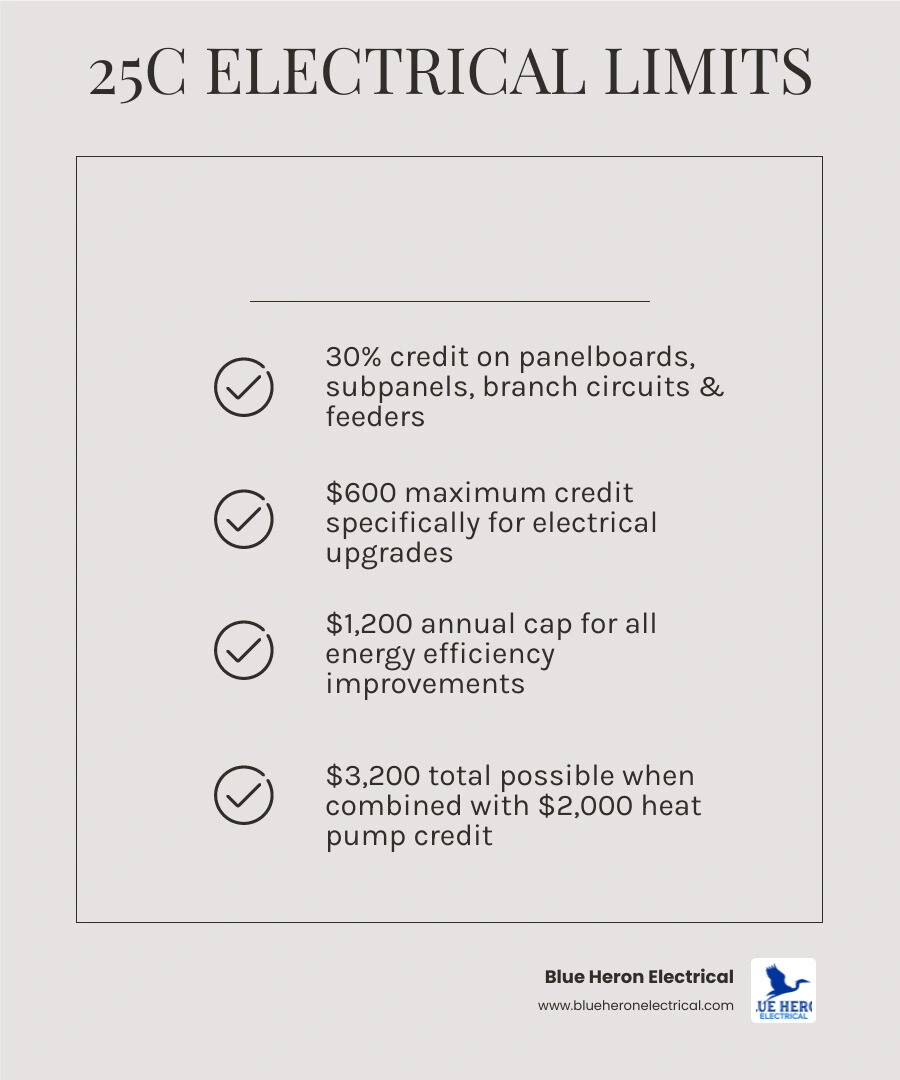
The credit covers 30% of your qualifying costs, up to a $600 maximum for electrical components. This falls under the broader $1,200 annual cap for energy efficiency improvements, which can be combined with up to $2,000 for heat pump systems — reaching a $3,200 total annual credit through December 31, 2025.
For Michigan homeowners, the 25C credit was a real opportunity to offset the cost of upgrading aging electrical infrastructure — especially when pairing a panel upgrade with a new heat pump or other energy-efficient equipment. However, following the passage of the One Big Beautiful Bill in 2025, these credits expired at the end of 2025. If you completed qualifying work by December 31, 2025, you can still claim the credit when you file your 2025 federal tax return in 2026.
Know your what electrical upgrades qualify for the federal 25c energy efficiency tax credit in michigan terms:
- does dte energy offer rebates for panel upgrades in southeast michigan
- dte energy and michigan rebates and incentives for electrical upgrades
- how to combine dte rebates with federal credits for maximum savings on electrical upgrades
For those of us living in Southeast Michigan — from Royal Oak and Troy to Rochester Hills and Bloomfield Township — our historic homes often feature outdated electrical infrastructure. Many older properties still run on 60-amp or 100-amp services that simply cannot handle the load of modern electric appliances, high-efficiency heat pumps, or electric vehicle chargers.
When you decide to invest in an upgrade, understanding the specific components covered under Section 25C is essential. The federal government does not just write a blank check for any electrical work; the upgrades must be highly specific.
First, the main panelboard (your primary breaker box) is fully eligible if it is replaced to increase capacity to at least 200 amps. Second, subpanelboards — which are often installed in garages, basements, or home additions to distribute power safely — qualify under the exact same technical guidelines. Third, branch circuits, which are the individual wiring paths running from your breakers to specific outlets or appliances, are covered if they are installed to directly support new energy-efficient equipment. Finally, feeders, the heavy-duty wires that transmit power between your main panel and subpanels, are also eligible.
To ensure your home remains safe, reliable, and fully compliant with local regulations, any work performed must strictly adhere to the National Electrical Code (NEC). Working with a licensed professional is the only way to guarantee that your new system meets these rigorous safety standards. If you are ready to modernize your system, scheduling professional Electrical Panel Upgrades Troy MI is an excellent starting point to secure your home's electrical future.
Technical Requirements and Pairing Upgrades for the 25C Credit
To successfully claim the 25C tax credit for your electrical work, your system must meet specific technical benchmarks. The most critical requirement is the 200-amp capacity threshold. The IRS specifies that the panelboard, subpanelboard, branch circuits, or feeders must have a load capacity of 200 amps or more.
Even if your local utility provider (such as DTE Energy or Consumers Energy) only delivers 100-amp or 150-amp service to your meter, you can still qualify for the credit as long as the physical panel and equipment installed inside your home are rated for 200 amps or more. This is a crucial distinction: the equipment rating is what matters for the tax credit, not necessarily the current utility drop capacity.
Additionally, the electrical upgrade cannot be a standalone aesthetic project. It must be installed in conjunction with or to enable the installation of qualified energy-efficiency property. This means your panel upgrade must directly support one of the following:
- An electric or natural gas heat pump
- A heat pump water heater
- A central air conditioner meeting Consortium for Energy Efficiency (CEE) highest tier standards
- A highly efficient natural gas, propane, or oil furnace/boiler
- A biomass stove or boiler
Because these high-efficiency heating and cooling systems demand significant electrical current, upgrading your panel is often a technical necessity. To see how this applies locally, you can learn more about how regional programs fit into this equation by reading about Does DTE Energy Offer Rebates for Panel Upgrades in Southeast Michigan.
Here is a quick reference table to help you understand how different electrical components align with federal tax credit requirements:
| Electrical Component | Capacity Requirement | Standards to Meet | Must Be Paired with Energy Property? | Maximum 25C Tax Credit |
|---|---|---|---|---|
| Main Panelboard | 200 Amps or more | National Electrical Code (NEC) | Yes (to support qualified equipment) | 30% of cost up to $600 |
| Subpanelboard | 200 Amps or more | National Electrical Code (NEC) | Yes (to support qualified equipment) | 30% of cost up to $600 |
| Branch Circuits | Rated for the load | National Electrical Code (NEC) | Yes (must feed the new energy property) | 30% of cost up to $600 |
| Feeders | Rated for the load | National Electrical Code (NEC) | Yes (must connect qualifying systems) | 30% of cost up to $600 |
Understanding What Electrical Upgrades Qualify for the Federal 25C Energy Efficiency Tax Credit in Michigan for Homeowners
One of the most common points of confusion for Michigan residents is determining who actually qualifies to claim this credit. Under the IRS guidelines for Section 25C, there are distinct rules based on your housing situation:
- Primary Residences: If you own and live in your home in Metro Detroit, you are fully eligible to claim the 25C credit for both building envelope improvements (like insulation and windows) and residential energy property (like heat pumps and electrical panels).
- Second Homes & Vacation Properties: Unlike building envelope upgrades—which are strictly limited to your primary residence—electrical panel upgrades, heat pumps, and central AC systems do qualify when installed in a second home or vacation property that you use as a residence.
- Renters: If you rent a home or townhouse in Michigan and pay for a qualifying electrical panel upgrade yourself (perhaps to support a heat pump system you agreed to install), you are legally allowed to claim the 25C credit.
- Landlords: If you own rental properties but do not personally reside in them, you cannot claim the 25C credit for those properties. The credit is strictly reserved for homes used as a residence by the taxpayer.
- Existing Homes vs. New Construction: The 25C credit is designed exclusively for retrofitting and improving existing homes. If you are building a brand-new home in Rochester Hills or West Bloomfield, you cannot claim the 25C credit for your electrical panel installation. Instead, your homebuilder may qualify for separate incentives under Section 45L.
How to Verify What Electrical Upgrades Qualify for the Federal 25C Energy Efficiency Tax Credit in Michigan Before Filing
Filing your taxes and claiming energy credits requires proper documentation. To successfully claim your 30% credit (up to $600) for an electrical panel upgrade, you must ensure you have the correct paperwork from your contractor and the equipment manufacturer.
First, you must obtain a Manufacturer’s Certification Statement. This is a signed document from the manufacturer certifying that the specific panelboard or subpanelboard model meets all federal efficiency and capacity requirements (including the 200-amp rating).
Second, starting with equipment placed in service after December 31, 2024, the IRS requires taxpayers to provide a Product Identification Number (PIN) or a Qualified Manufacturer Identification Number (QMID) on their tax returns for certain qualifying properties. When we install your panel, we provide you with the exact model numbers, serial numbers, and manufacturer details to ensure you have everything needed for your tax professional.
Finally, when it is time to file your federal tax return, you or your CPA will use IRS Form 5695 (Residential Energy Credits), Part II. You will input the qualified solar, thermal, or energy-efficient property costs, including the labor and material costs associated with your qualifying 200-amp electrical panel upgrade.
Stacking Federal 25C Credits with Michigan Utility Rebates
While saving up to $600 on your federal taxes is a fantastic benefit, you do not have to stop there. In Southeast Michigan, you can stack federal tax credits with local utility rebates from DTE Energy and Consumers Energy to maximize your overall savings.
When you combine these programs, the financial math works in a specific way: you must subtract any utility rebates or upfront subsidies from your total project cost before you calculate your 30% federal tax credit.
For example, if you install a qualifying heat pump and a matching 200-amp panel upgrade, and receive an upfront rebate from DTE, you subtract that rebate amount from the invoice total. Then, you apply the 30% federal tax credit to the remaining net cost. This keeps you fully compliant with IRS rules while still leaving you with a significantly lower out-of-pocket investment.
Additionally, programs like Michigan Saves offer low-interest financing options specifically designed for energy-efficiency upgrades. This allows you to finance your electrical panel and heat pump installations with no upfront capital, while still remaining fully eligible to claim the tax credits and utility rebates.
To help you navigate this process, we have compiled resources on DTE Energy and Michigan Rebates and Incentives for Electrical Upgrades and a detailed guide on How to Combine DTE Rebates with Federal Credits for Maximum Savings on Electrical Upgrades.
If you are also planning to transition to an electric vehicle, you should explore What is the Federal Tax Credit for EV Charger Installation in 2025 and How to Stack Federal and Michigan Utility Incentives for EV Charger Installation. While you are upgrading your panel, it is also the perfect time to safeguard your entire home's electronics by investing in Whole Home Surge Protection Troy MI.
Here is a list of stackable incentives and rebates you should look out for in Michigan:
- DTE Energy Electric Panel Rebates: Upfront rebates for customers upgrading their panels to support heat pumps or electric vehicle chargers.
- Consumers Energy HVAC Rebates: Cash-back incentives for installing qualifying heat pumps, which require a supporting 200-amp panel.
- Michigan Saves Financing: Low-interest, residential energy loans that can cover 100% of your electrical and heating upgrade costs.
- Federal Section 30C EV Charger Credit: Up to a 30% tax credit for installing an EV charging station, which pairs perfectly with a panel upgrade.
That the 25C tax credit is non-refundable. This means it can only reduce your tax liability to zero. If you owe $400 in federal taxes for the year, a $600 electrical panel credit will reduce your tax bill to $0, but you will not receive the remaining $200 as a cash refund, and it cannot be carried forward to future tax years.
Frequently Asked Questions about Michigan Electrical Tax Credits
Navigating tax codes can feel like trying to wire a three-way switch in the dark. To help clear things up, we have answered some of the most common questions we hear from homeowners in Oakland and Macomb counties.
Can renters claim the 25C credit for electrical panel upgrades in Michigan?
Yes! Renters can legally claim the 25C credit. If you rent a home in Michigan and pay out-of-pocket for a qualifying 200-amp electrical panel upgrade to support your appliances or heating systems, you can claim the 30% credit (up to $600) on your federal tax return.
However, landlords who do not live on the property cannot claim this credit. If you live in a housing cooperative or a condominium, you can claim your proportionate share of the expenditures if the building association upgrades the shared electrical infrastructure to support energy-efficient systems.
What is the maximum tax credit amount for electrical upgrades under 25C?
The maximum credit specifically allocated for electrical panelboards, subpanelboards, branch circuits, and feeders is $600 per year (calculated as 30% of a project cost).
This is part of the general $1,200 annual limit for home energy improvements (which includes windows, doors, and insulation). However, if you pair your electrical upgrade with a qualifying heat pump or heat pump water heater, you can claim an additional credit of up to $2,000, bringing your maximum possible annual credit to $3,200.
Do I need to pair my electrical panel upgrade with a heat pump to qualify?
Yes, the tax code specifies that qualifying electrical upgrades must be installed "in conjunction with" or to enable the installation of qualified energy-efficient property. This means you cannot claim the credit for a standalone panel upgrade if it does not directly support a new energy-efficient system like a heat pump, heat pump water heater, or high-efficiency central air conditioner.
The electrical upgrade serves as an "enabling" improvement, ensuring your home's infrastructure can safely handle the increased electrical load of your new, eco-friendly systems.
Conclusion
Upgrading your home’s electrical system is one of the smartest investments you can make for safety, convenience, and long-term value. While the federal 25C tax credit program has officially expired for new installations as of the end of 2025, those who completed qualifying work by December 31, 2025, have a valuable opportunity to claim their savings when filing their taxes in 2026.
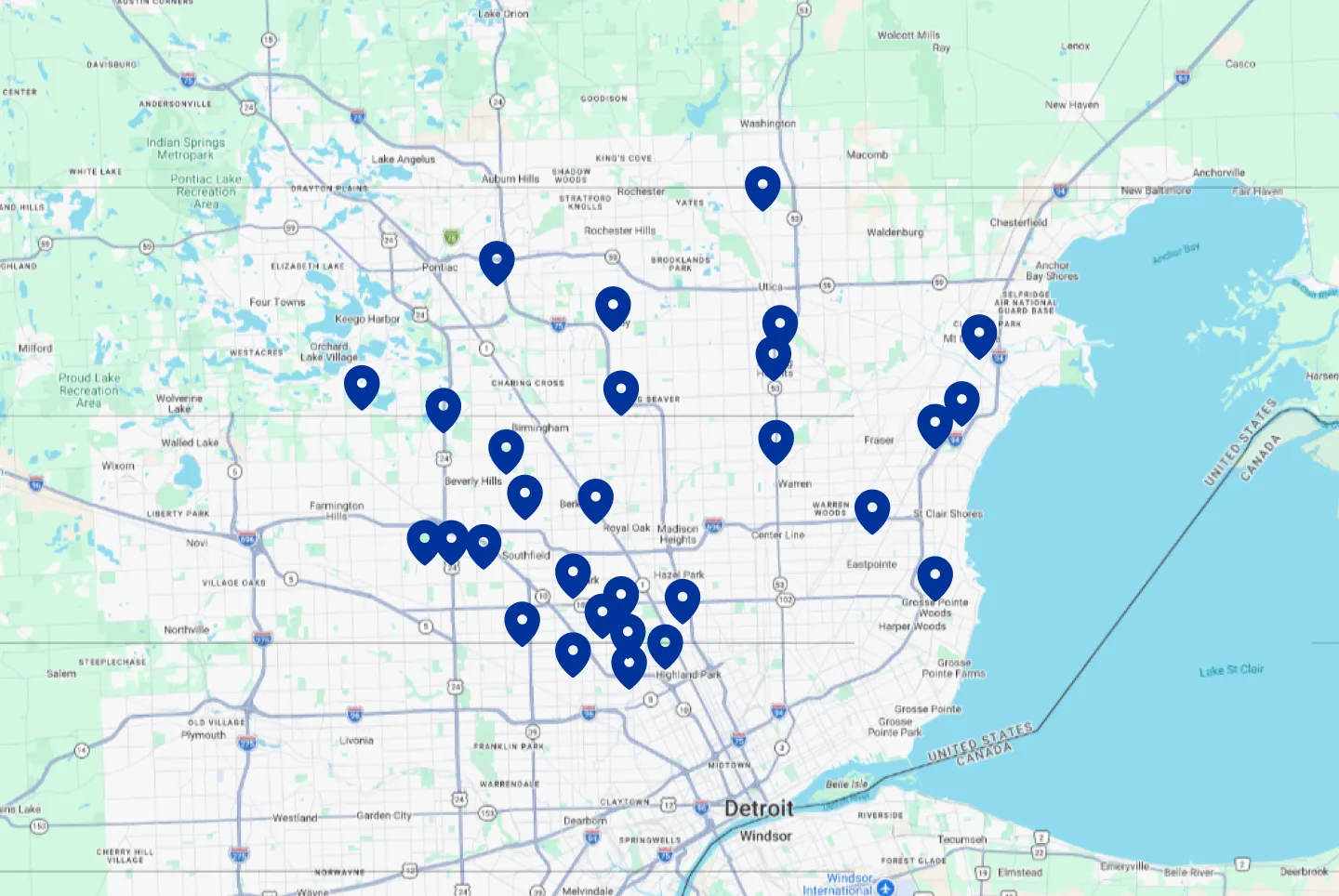
At Blue Heron Electrical, we specialize in providing dependable, code-compliant residential and commercial electrical services throughout Metro Detroit and Oakland County. Whether you are located in Troy, Rochester, Royal Oak, Bloomfield Hills, or any of our surrounding service areas, our priority is always focused on safety, clear communication, and long-term reliability.
If you need professional assistance verifying past work, upgrading your current system to meet modern safety standards, or preparing your home for future energy-efficient appliances, we are here to help. Contact us today to learn more about our services or to schedule an appointment by visiting Blue Heron Electrical Services.
Customer Testimonials

Service Areas