
What Is the Federal Tax Credit for EV Charger Installation in 2025
The Federal Tax Credit for EV Charger Installation in 2026: What Metro Detroit Homeowners Need to Know
What is the federal tax credit for EV charger installation in 2026? It's a federal incentive called the Alternative Fuel Vehicle Refueling Property Credit (Section 30C) that lets eligible homeowners claim 30% of their EV charger installation costs, up to a maximum of $1,000 per charging port, when filing their federal tax return.
Here's a quick summary:
- Credit amount: 30% of qualified installation costs
- Maximum credit: $1,000 per charging port (individuals)
- Where it applies: Primary residence located in an eligible low-income or non-urban census tract
- Deadline: Equipment must be placed in service by June 30, 2026
- How to claim: File IRS Form 8911 with your federal tax return for the year of installation
If you own a home in Metro Detroit and you're thinking about installing a Level 2 EV charger, you're probably wondering whether you can get money back from the federal government for doing it. The short answer is yes — if you meet the eligibility requirements.
The 30C credit was updated by the Inflation Reduction Act of 2022 and applies to chargers placed in service from January 1, 2023 through June 30, 2026. Roughly two-thirds of Americans live in areas that qualify geographically, so there's a solid chance your home is eligible. But the rules around location, equipment, and filing can trip people up if they're not prepared.
This guide breaks it all down in plain language so you know exactly what to expect before you install.
Understanding the 30C Alternative Fuel Vehicle Refueling Property Credit
The federal tax credit for EV charger installations isn't actually a new program, but it received a major facelift under the Inflation Reduction Act. Officially known as the Section 30C Alternative Fuel Vehicle Refueling Property Credit, this incentive is designed to help Americans transition to clean energy by offsetting the upfront costs of building out charging infrastructure.
For residential installations, the credit is non-refundable, meaning it can reduce your federal tax liability to zero, but it won't trigger a refund check for any excess amount. To claim it, the charging equipment must be "placed in service"—meaning fully installed, inspected, and operational—before the program's current expiration date of June 30, 2026.
What is the federal tax credit for ev charger installation in 2026 for homeowners?
For homeowners, what is the federal tax credit for ev charger installation in 2026? It is a straightforward 30% credit on all qualified hardware and installation expenses, capped at a maximum of $1,000 per charging port.
To qualify for this residential credit, the installation must occur at your primary residence. This means second homes, vacation properties, and standard investment properties do not qualify for the residential portion of the credit. Additionally, the property must be located within a designated low-income or non-urban census tract (which we will cover in detail below).
Upgrading to a dedicated Level 2 charger at home makes daily driving incredibly convenient, eliminating "range anxiety" and allowing you to wake up to a full battery every morning. For a deeper look at why this is one of the best upgrades you can make for your home, check out our guide on The Benefits of Installing an EV Charger at Home.
How the 30C credit applies to commercial properties and businesses
If you own a business, commercial property, or multifamily residential building (like an apartment complex) in Metro Detroit, the rules for the 30C credit look a bit different.
For businesses, the base tax credit starts at 6% of the depreciable property cost, capped at $100,000 per single item of property (per charging port). However, businesses can unlock a 30% credit (up to the $100,000 cap) if they meet strict federal prevailing wage and apprenticeship requirements during the installation process. This makes professional, code-compliant commercial installation more critical than ever to ensure you qualify for the maximum multiplier.
Geographic Eligibility: The Census Tract Requirement
One of the biggest changes introduced by the Inflation Reduction Act is the geographic restriction. You can no longer claim the 30C credit simply because you installed a charger in the United States. Instead, the installation must take place within an eligible low-income census tract or a non-urban census tract.
The IRS defines these tracts using specific U.S. Census Bureau data:
- Low-income census tracts: Areas that meet the poverty rate or median family income thresholds defined under the New Markets Tax Credit program.
- Non-urban census tracts: Areas designated as rural or non-urbanized by the Census Bureau.
Because boundaries and designations can shift, the IRS updated its guidelines. For installations completed in 2026 and up to the June 30, 2026 deadline, the IRS utilizes the newer 2020 Census GEOID boundaries (Appendix B) to determine eligibility.
How to determine if your home qualifies for the 30C credit
Fortunately, checking your eligibility doesn’t require you to manually sift through government spreadsheets. The Department of Energy (DOE) and Argonne National Laboratory provide an online 30C Tax Credit Eligibility Locator tool.
To check your home's status:
- Open the official mapping tool.
- Enter your home address to find your specific 11-digit GEOID census tract number.
- The tool will instantly tell you if your location falls within an eligible low-income or non-urban zone.
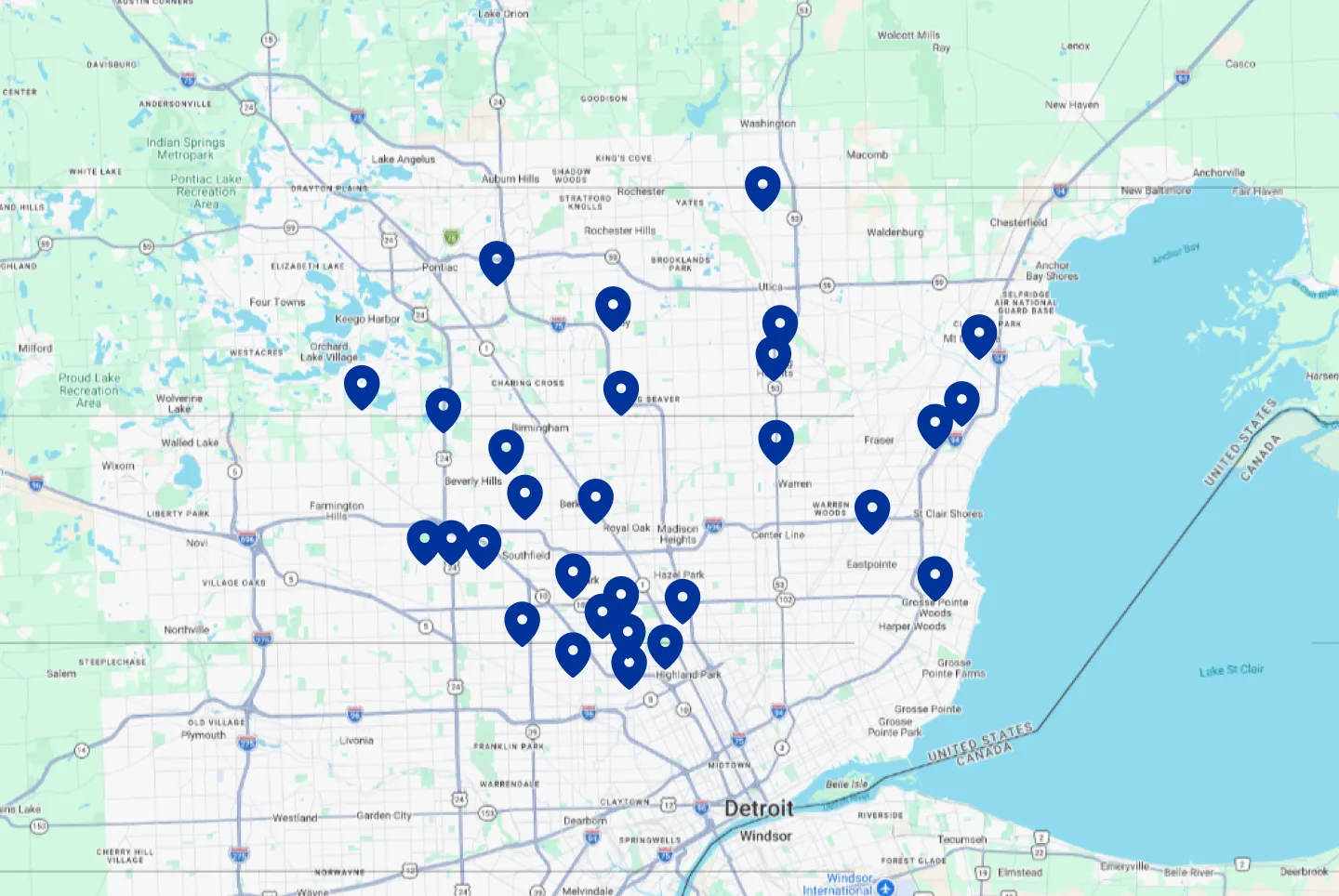
Interestingly, approximately two-thirds of Americans live in census tracts that qualify for this credit. Many suburban and outer-ring communities across Metro Detroit meet these requirements. If you reside in Oakland County and want to verify your home’s eligibility or plan an installation, we specialize in local, code-compliant setups. Learn more about our services for EV Charger Installation in Troy MI.
What is the Federal Tax Credit for EV Charger Installation in 2026?
When calculating what is the federal tax credit for ev charger installation in 2026, it helps to know exactly what expenses the IRS allows you to include. The credit applies to the total cost of the "refueling property," which includes both the physical hardware and the labor required to safely install it.
Notably, the qualified property must be brand new, and its original use must begin with you. The credit also covers advanced charging technologies, including:
- Standard Level 2 and DC fast charging equipment.
- Bidirectional charging equipment (which allows your EV to feed power back into your home or the electrical grid).
- Charging stations designed for 2- and 3-wheeled plug-in electric vehicles.
| Qualified Installation Costs | Non-Qualified Costs |
|---|---|
| Brand new EV charging port/equipment | Used or refurbished charging equipment |
| Dedicated electrical permit fees | General home maintenance or landscaping |
| Labor costs for professional installation | Solar panel installations (claimed separately) |
| New wiring, conduit, and dedicated circuit breakers | Smart home hubs not dedicated to the charger |
| Upgraded electrical panel (if dedicated to the charger) | Extended warranties or service plans |
Eligible equipment and installation costs
The tax credit covers much more than just the plastic charging box on your garage wall. It includes all "associated property" directly attributable to the charging port. This means you can write off 30% of the cost of:
- The charging unit itself (the EVSE).
- Associated hardware, such as pedestals, wall mounts, and cable organizers.
- Electrical infrastructure, including conduit, heavy-duty wiring, and dedicated circuit breakers.
- Main electrical panel upgrades, provided the upgrade is necessary to support the load of the new EV charger.
- Professional labor costs, which represent a significant portion of a safe, code-compliant installation.
Because local electrical codes are strict, hiring a licensed electrician is essential to ensure your system is safe and qualifies for the credit. If you are located in the Woodward Corridor, we can assist with your home setup; visit our dedicated service page for EV Charger Installation in Birmingham MI.
Calculating your tax credit with the $1,000 cap
Let's look at how the math works in the real world. The 30% credit is calculated based on the sum of your qualified equipment and labor costs, up to a maximum credit of $1,000 per charging port.
Example Scenario:
- Level 2 Charger Hardware: $650
- New Electrical Panel & Dedicated Wiring: $1,200
- Professional Installation Labor: $850
- Total Qualified Cost: $2,700
To find your credit, multiply the total cost by 30%:$2,700 x 0.30 = $810
Since $810 is below the $1,000 federal cap, you can claim the entire $810 credit on your tax return. If your total installation cost had been $4,000, 30% would be $1,200, but your credit would be capped at the maximum limit of $1,000.
If you are planning an upgrade in the Royal Oak area, we can help you design an efficient system that maximizes your safety and savings. Learn more about EV Charger Installation in Royal Oak MI.
How to Claim the 30C Tax Credit on Your Federal Return
Claiming your credit is straightforward, but it requires careful record-keeping. You must claim the credit on the federal tax return you file for the specific calendar year in which the charger was fully installed and "placed in service."
Because the 30C credit is non-refundable, it can only reduce the federal income tax you actually owe. If you owe $800 in federal taxes and qualify for a $1,000 credit, your tax liability drops to $0, but you will not receive the remaining $200 as a refund check, nor can you carry that leftover credit forward to future tax years.
Step-by-step guide to filing Form 8911
To claim your credit, you must file IRS Form 8911 (Alternative Fuel Vehicle Refueling Property Credit) alongside your standard Form 1040.
Here is the general process:
- Gather your documentation: Keep all itemized invoices, retail receipts for hardware, permit copies, and proof of payment.
- Calculate your basis: Determine the total qualified cost of the equipment and labor.
- Complete Form 8911: Follow the form instructions to calculate your credit (Part II for personal use property, or Part III for business/depreciable property).
- Reduce your basis: That you must reduce the tax basis of your home by the amount of the credit claimed if you sell the property in the future.
For homeowners in Macomb County looking to complete their installations before tax season, we provide fully itemized receipts and code-compliant installations. Explore our services for EV Charger Installation in Sterling Heights MI.
What is the federal tax credit for ev charger installation in 2026 recapture rule?
The IRS has a safeguard in place known as the recapture rule. When you claim the 30C credit, you are certifying that the property will remain in service and qualify for the credit.
If your charging property stops qualifying within three full years of being placed in service (for example, if you convert your primary residence into a commercial rental property or remove the charger entirely), you may be required to "recapture" the credit. This means you would have to pay back some or all of the tax credit by adding it to your tax liability in the year it stopped qualifying.
If you live in Bloomfield and want to ensure your installation is done right the first time with high-quality, long-lasting materials, check out our options for EV Charger Installation in Bloomfield MI.
Frequently Asked Questions about the 2026 EV Charger Tax Credit
Can I claim the credit for a second home or rental property?
No, you cannot claim the residential 30C tax credit for a second home, vacation home, or a property where you do not permanently reside. It must be your primary residence. However, if you own a rental property, you may be able to claim the credit under the commercial rules as depreciable business property, subject to the business guidelines and limits.
What is the final deadline to install a charger and claim the credit?
Under current federal law, the qualified charging equipment must be fully installed and placed in service by June 30, 2026. Any installations completed after this date will not be eligible for the credit unless Congress passes legislation to reauthorize or extend the program.
Can tax-exempt organizations benefit from the 30C credit?
Yes! The Inflation Reduction Act introduced an elective pay (direct pay) option. This allows tax-exempt entities—such as schools, charities, religious organizations, and local government agencies—to receive the full value of the tax credit as a direct payment from the IRS, even though they do not have federal tax liability.
Conclusion
Installing a Level 2 EV charger at home is one of the smartest upgrades you can make for your electric vehicle, and the federal 30C tax credit makes it highly affordable. By taking advantage of this 30% tax credit before the June 30, 2026 deadline, you can save up to $1,000 on your installation while adding long-term value and convenience to your home.
At Blue Heron Electrical, we provide dependable, code-compliant residential and commercial electrical services across Metro Detroit and Oakland County. Our team focuses on safety, clear communication, and long-term reliability. We will handle your installation professionally, providing you with the clear, itemized documentation you need to confidently claim your tax credit.
Ready to upgrade your home charging setup? Contact us today to schedule your professional EV Charger Installation in Bloomfield MI or anywhere in our Metro Detroit service area!
Customer Testimonials

Service Areas