
Step-by-Step Guide to How Does Home Generator Installation Work in Southeast Michigan
How Does Home Generator Installation Work in Southeast Michigan?
How does home generator installation work in Southeast Michigan starts with a site assessment and ends with a fully tested, code-compliant standby system that turns on automatically the moment the grid goes down. Here's a quick overview of the process:
- Site assessment - A licensed electrician evaluates your electrical load, property layout, and gas supply.
- Permitting - Electrical and building permits are pulled before any work begins.
- Pad preparation - A level concrete pad is poured to permanently mount the generator.
- Electrical integration - An automatic transfer switch (ATS) is connected to your electrical panel.
- Fuel line connection - The unit is tied into your natural gas supply (or propane, for rural homes).
- Testing and inspection - The system is tested under load and inspected before sign-off.
Most installations take two to three days from start to finish.
Michigan winters are no joke. Ice storms, heavy snowfall, and aging grid infrastructure across Oakland, Macomb, and Livingston Counties regularly leave homeowners without heat, refrigeration, or sump pump protection — sometimes for days at a time. A professionally installed standby generator solves that problem permanently, without extension cords, manual startups, or trips to the gas station.
The good news is that the installation process is straightforward when handled by a licensed electrical team that knows Southeast Michigan's local codes and utility requirements.
Standby vs. Portable: Choosing the Right Backup Power for Michigan Weather
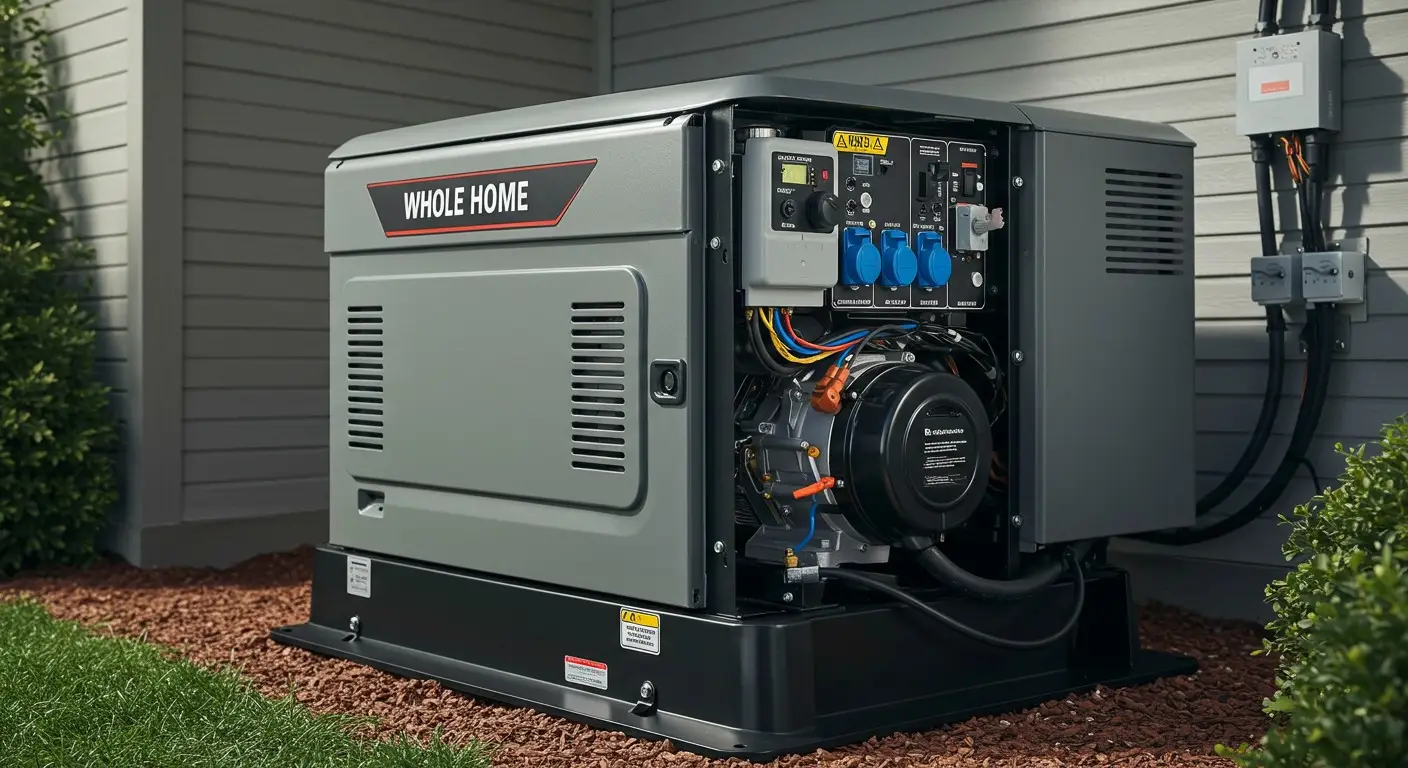
When preparing your home for unpredictable Michigan weather, you generally have two paths: a permanently installed standby generator or a portable generator. While portable units are common, they come with substantial physical work and safety considerations. Standby generators, on the other hand, provide an integrated, hands-free solution.
| Feature | Standby Generator | Portable Generator |
|---|---|---|
| Operation | Fully automatic; starts within seconds of an outage | Manual setup; requires pull-starting and plugging in cables |
| Fuel Source | Continuous natural gas or liquid propane (no refueling) | Gasoline or portable propane tanks (requires manual refilling) |
| Safety | Permanently wired; zero risk of carbon monoxide entering home | High risk of CO poisoning if placed too close to windows/doors |
| Power Capacity | Can run the entire home, including central AC and sump pumps | Limited to a few essential appliances via extension cords |
| Weather Resistance | Housed in a durable, weatherproof outdoor enclosure | Cannot be safely operated in heavy rain or snow without shelter |
| Home Value | Increases resale value and appeals to buyers | No impact on home value (goes with you when you move) |
For homeowners seeking reliable backup power, investing in professional Generator Services to install a standby unit ensures you are never left in the dark. Portable generators require you to drag a heavy machine out of the garage in the middle of a blizzard, find fresh gasoline, run extension cords through cracked windows, and hope the engine starts.
Furthermore, portable generators present real safety hazards. Running them too close to your home can lead to dangerous carbon monoxide buildup, and back-feeding electricity into your home without a proper transfer switch can endanger utility workers repairing the grid. A standby generator eliminates these concerns by connecting directly to your home's infrastructure.
Step-by-Step: How Does Home Generator Installation Work in Southeast Michigan?

Understanding the physical steps of how a standby system is put in place helps demystify the process. From the initial consultation to the final startup, a proper installation requires careful coordination between electrical work and fuel plumbing.
Preparing Your Property: How does home generator installation work in southeast michigan?
The physical installation process begins outside with site preparation. A standby generator is a heavy piece of machinery that must remain perfectly level to ensure proper oil circulation and to prevent strain on the connected gas and electrical conduits.
First, we select a location that complies with national safety codes and local municipal zoning laws. Once the ideal spot is chosen, the ground is excavated and leveled. We then install a permanent concrete pad (or a heavy-duty composite pad resting on a compacted gravel base) to support the unit. Proper drainage is verified so that rainwater or melting Michigan snow flows away from the generator's foundation.
If you are looking to secure your home's power in Oakland County, getting professional Standby Generator Installation Troy MI ensures that this physical foundation is built to withstand our freezing winter ground-heaves.
Electrical Integration and Transfer Switch Setup
Once the generator is securely mounted to its pad, the electrical integration begins. This is where the magic happens. The brain of the standby system is the automatic transfer switch (ATS).
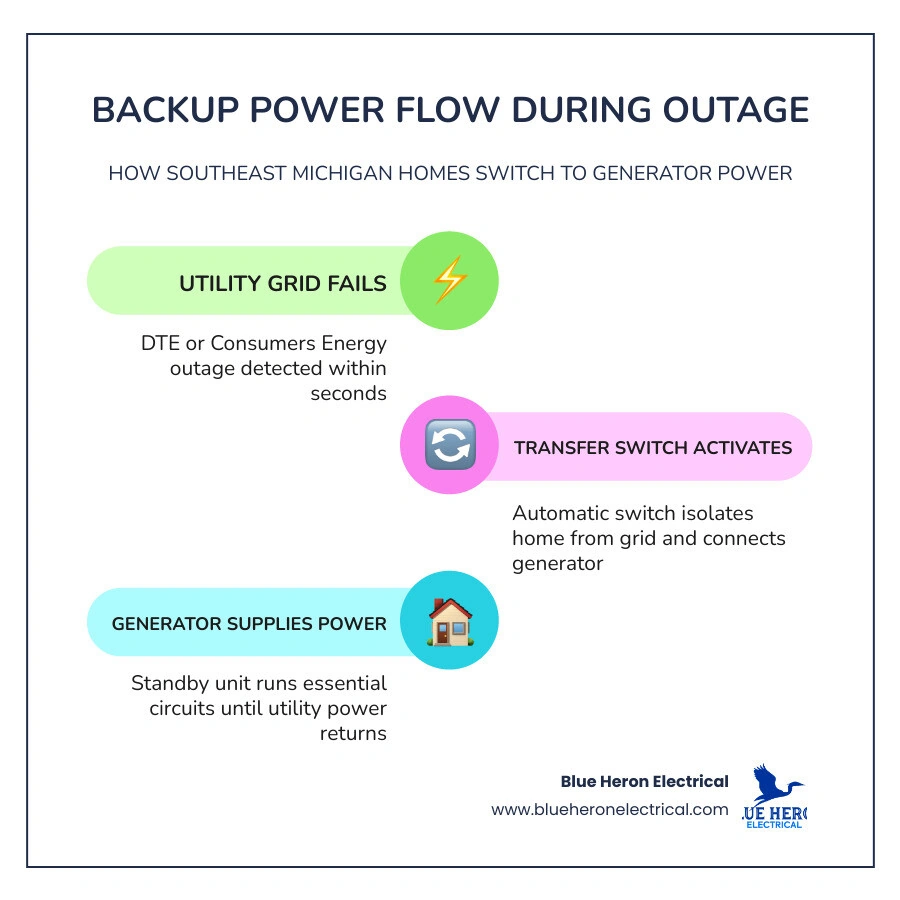
We install the ATS next to your main electrical panel. The ATS constantly monitors the incoming utility power from DTE Energy or Consumers Energy. When it detects a voltage drop or a complete blackout, it instantly disconnects your home from the utility grid. This is a crucial safety step that prevents "back-feeding" electricity onto the power lines, which could otherwise injure utility linemen. Once isolated, the ATS signals the generator to start and routes the generator's power into your home's panel.
During this stage, we also assess your main electrical panel. In some older homes in Metro Detroit, an electrical upgrade is necessary to handle the integration. We can perform Electrical Panel Upgrades Troy MI or complete Generator Transfer Switch Installation Troy MI to ensure your system is fully code-compliant and capable of routing power safely.
Fuel Line Connection and System Testing
With the electrical work underway, a professional team handles the plumbing. Most standby generators in Southeast Michigan run on natural gas, drawing directly from your home's existing gas line. For rural properties in parts of Macomb or Livingston Counties that do not have natural gas access, we connect the system to a liquid propane (LP) tank.
The gas line must be sized correctly to ensure the generator receives adequate fuel pressure under full electrical load. If the pipe is too small, the generator may starve for fuel and shut down during an outage. After routing the pipe, we perform rigorous pressure and leak tests to guarantee safety.
Finally, we conduct a system startup and testing sequence. This includes:
- Simulating a power outage by flipping the main utility breaker.
- Verifying the startup time (usually under 10 to 20 seconds).
- Monitoring voltage and frequency output to ensure clean, stable power.
- Performing a break-in run to ensure all internal components settle correctly.
Key Placement and Safety Regulations for Michigan Homeowners
When installing a standby generator, safety is our absolute priority. Standby units must be placed in a location that protects your family from carbon monoxide and complies with strict national and local ordinances.
- Distance from Openings: Under national fire safety codes (NFPA 37), a generator must be installed at least 5 feet away from doors, windows, vents, or any other home openings to prevent exhaust fumes from drifting inside.
- Distance from Combustible Walls: The unit must stand at least 1.5 feet (18 inches) away from fire-resistant residential walls, though manufacturer guidelines often recommend a 3-foot clearance for optimal airflow and maintenance access.
- Clearance from Vegetation: Shrubs, plants, and trees must be kept clear. No vegetation taller than 12 inches should be within 3 feet of the unit to prevent intake blockages or fire hazards.
- Property Line Setbacks: Local municipalities across Metro Detroit (such as Royal Oak, Bloomfield, and Sterling Heights) have specific zoning laws regarding how close a generator can be placed to your property line. These setbacks can range anywhere from 5 to 20 feet depending on your city's ordinances.
- Exhaust Direction: The exhaust end of the generator must always point away from the house and any neighboring structures.
To keep your system running safely and within code year after year, regular check-ups are essential. Scheduling professional Generator Maintenance Troy MI ensures your clearances remain safe, your exhaust remains unobstructed, and your system is ready for the next big storm.
Frequently Asked Questions About Generator Installation
Do I need to upgrade my gas meter when understanding how does home generator installation work in southeast michigan?
In many cases, yes. A standby generator requires a significant volume of fuel to operate under full load. If your home already runs a furnace, water heater, gas stove, and clothes dryer, your existing gas meter may not have the capacity (measured in CFH, or Cubic Feet per Hour) to supply everything at once.
During our initial site assessment, we calculate the total BTU demand of your home. If a meter upgrade is necessary, we coordinate the paperwork with your utility provider (such as DTE or Consumers Energy). The utility company will typically install a higher-capacity meter to ensure there is no pressure drop or fuel starvation when your generator kicks on.
Can a standby generator power only essential circuits instead of the whole house?
Absolutely. This is often referred to as a "partial-home" or "essential-circuits" configuration. Instead of routing power to your entire main panel, the automatic transfer switch is connected to a subpanel containing only your most critical loads.
These typical essential circuits include:
- Sump pump and well pump
- Furnace blower (critical for preventing frozen pipes in winter)
- Refrigerator and freezer
- Kitchen outlets and home security system
- Select lighting and outlet circuits (including home office setups)
While partial coverage keeps your critical systems running, many homeowners find that upgrading to a whole-house system is highly desirable because it allows you to run central air conditioning and heavy appliances without managing your electrical load.
How does a standby generator start automatically during a DTE or Consumers Energy outage?
The entire process is automated through the automatic transfer switch (ATS) and the generator's internal controller:
- Power Loss Detection: The ATS constantly monitors utility voltage. If the power drops below a safe threshold for more than a few seconds, the ATS recognizes an outage.
- Startup Signal: The ATS signals the generator engine to start.
- Warm-up: The generator engine starts and runs for a few seconds to warm up and stabilize its electrical output.
- Grid Disconnection: The ATS disconnects your home from the dead utility grid.
- Power Delivery: The ATS switches your home's electrical load over to the generator. Your lights and appliances turn back on.
- Restoration Monitoring: When utility power is restored, the ATS monitors the grid for a few minutes to ensure the voltage is stable.
- Switching Back: Once grid stability is confirmed, the ATS seamlessly transfers your home back to utility power, signals the generator to run through a cool-down cycle, and shuts it off until the next outage.
Conclusion
A standby generator is more than just an appliance; it is an investment in your family's safety, comfort, and peace of mind. When the next severe weather event rolls through Southeast Michigan, you won't have to worry about shivering in a freezing house, losing thousands of dollars in spoiled food, or dealing with a flooded basement from a dead sump pump.
At Blue Heron Electrical, we are dedicated to providing dependable, code-compliant generator installations across Metro Detroit and Oakland County. From handling local municipal permits to executing flawless electrical integrations and coordinating fuel lines, our team manages every detail with a focus on safety and long-term reliability.
Ready to secure your home's power supply? Learn more about our professional Generator Installation services or Contact us today to schedule your in-home consultation.
Customer Testimonials

Service Areas