
Why Plugs Fall Out of Outlets: The Hidden Hazard in Your Exterior Holiday Display
The Hidden Danger of Sagging Cords During Holiday Setup
You spend hours untangling strings of lights, balancing on a ladder, and running heavy extension cords across the yard, only to wonder why plugs fall out of outlets as soon as you connect them. That sagging cord isn't just a nuisance; it is a clear warning sign of a compromised electrical connection. At Blue Heron Electrical, our team receives dozens of calls every November from homeowners who notice this problem during their pre-holiday lighting installation, right when they need their exterior power sources to be at their most reliable. When a heavy, weather-rated extension cord slips halfway out of the receptacle, the immediate temptation is to prop it up with a stick, wrap it in electrical tape, or bend the prongs to force a tighter fit.
Before you resort to dangerous workarounds to keep the display illuminated, it is critical to understand that this is a mechanical failure requiring professional electrical services, not a quick fix. Addressing this issue with proper residential electrical repairs ensures your home stays safe during the high-draw holiday season. A loose plug creates a severe, hidden fire hazard right inside your exterior walls, and recognizing the danger is the first step toward a safe and bright winter season.
The Mechanics Behind Receptacle Tension Loss
To understand why an outlet loses its grip, you have to look past the plastic faceplate and into the mechanics of the receptacle itself. The technical term for this issue is "receptacle tension loss." It is a physical wearing down of the internal components that make contact with the metal prongs of your plug. In our years of inspecting electrical systems in older Sterling Heights area homes, our electricians frequently find that the original exterior outlets have endured years of use and exposure, slowly degrading the internal mechanisms until they can no longer function safely.
How Internal Contact Blades Work
Inside every standard electrical outlet are small, spring-like metal clips called contact blades. When you push a plug into the receptacle, these blades are forced apart, and their natural tension clamps down tightly onto the metal prongs. This tight grip does two vital things: it physically holds the plug in place, and it ensures a seamless, low-resistance pathway for electricity to flow from your home's wiring into your device.
The critical connection: A secure connection means electricity flows smoothly without generating excess heat. The contact blades must have enough tension to maximize the surface area touching the prongs. When that tension is strong, the electrical resistance remains low, and the outlet operates safely even under a heavy load.
The Natural Wear and Tear Process
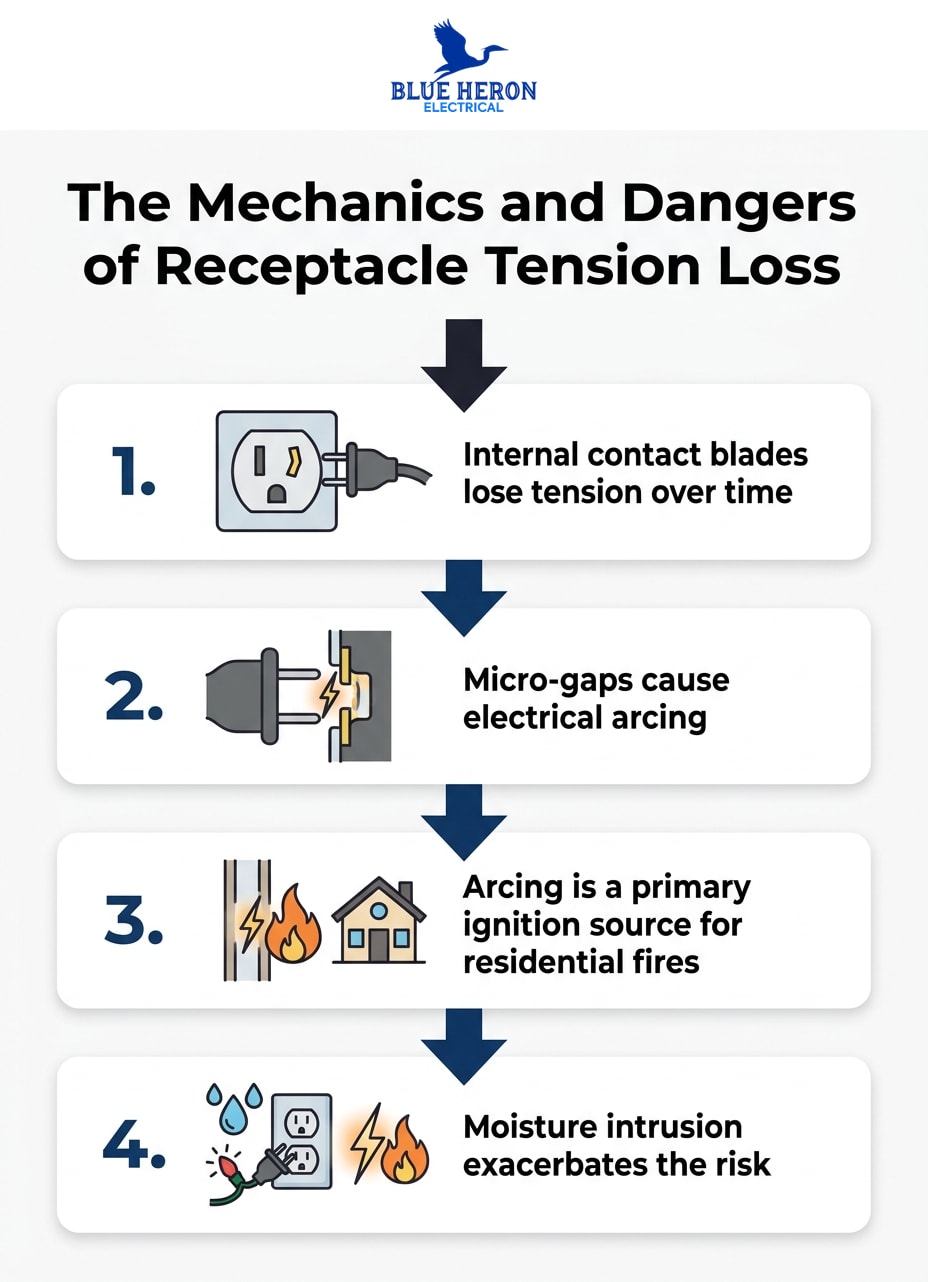
Over time, frequent plugging and unplugging physically bends and relaxes those internal metal blades. Age, extreme temperature fluctuations, and UV exposure all contribute to metal fatigue. Once those contact blades lose their spring-like tension, they cannot be repaired, bent back into place, or recalibrated. The looseness creates microscopic gaps between the plug's prongs and the outlet's internal wiring.
• Healthy Receptacle — Physical Symptoms: Firm resistance when inserting or removing a plug; cord stays flush. — Electrical Impact: Low resistance, cool operation, seamless power flow.
• Worn Receptacle — Physical Symptoms: Plug slips out easily; cord sags; plug feels loose when wiggled. — Electrical Impact: Micro-gaps, high resistance, potential for dangerous arcing.
Once a receptacle reaches the "worn" stage, it has effectively failed. Continuing to use it, especially for high-draw applications, transitions the outlet from a functional power source into an active hazard.
Why Loose Plugs and Winter Weather Are a Dangerous Mix
The mechanical failure of an outlet is dangerous on its own, but when you combine it with regional winter weather, the risks multiply rapidly. During a typical November pre-holiday lighting installation, homeowners are exposing these worn outlets to the elements just as the weather turns hostile. Understanding the interaction between electricity and moisture is crucial for protecting your property.
The Threat of Electrical Arcing
When a plug sags and creates micro-gaps inside the outlet, the electricity doesn't simply stop flowing. Instead, it attempts to jump across the air gap to complete the circuit. This phenomenon is called electrical arcing. Arcing generates localized, extreme heat—often reaching temperatures capable of melting plastic insulation and igniting surrounding building materials.
• Silent danger: Unlike a short circuit that immediately trips a breaker, arcing can occur continuously without drawing enough excess current to trigger your electrical panel's safety mechanisms.
• Heat buildup: The longer the electricity arcs across the gap, the hotter the receptacle becomes, slowly degrading the wire insulation inside the wall.
• Fire risk: Electrical arcing is one of the primary ignition sources for residential electrical fires, making a loose plug far more dangerous than most homeowners realize.
Moisture Intrusion and Freezing Temperatures
Having repaired countless winter-damaged electrical systems across Macomb County, we know firsthand that with winter temperatures regularly dropping below freezing in Sterling Heights, accompanied by ice and driving snow, exterior outlets face a brutal environment. A standard exterior outlet relies on a tight connection and a specialized cover to maintain its weather-resistant seal. When a heavy extension cord sags out of a worn outlet, it breaks that seal.
The funnel effect: A sagging plug creates a physical gap that acts as a funnel, directing melting snow and freezing rain straight into the electrical box. When moisture enters a live, arcing electrical connection, it can cause immediate short circuits, destroy the receptacle, and send dangerous electrical currents through damp exterior walls. Freezing and thawing cycles further expand these gaps, destroying whatever tension the outlet had left.
The Impact of Heavy Holiday Displays on Worn Outlets
Not all electrical loads are created equal. Plugging a string of LED lights into an outlet places a different stress on the system than running a power tool, and understanding this difference is key to holiday safety. A pattern we see often in Sterling Heights area homes is exterior outlets sitting largely unused for months, only to be suddenly tasked with powering extensive holiday displays for weeks on end.
The critical factor is the difference between an intermittent electrical load and a continuous electrical load. When you plug in an electric leaf blower or a power drill, you are using the outlet intermittently. The power flows for a few minutes, the tool is turned off, and the internal components of the outlet have time to cool down. If the outlet is slightly loose, the brief period of arcing might not generate enough heat to cause an immediate fire.
Holiday lighting, however, is a continuous load. Once the sun goes down, those lights often remain on for six to eight hours straight. If you plug a heavy extension cord into a worn outlet to power your outdoor lighting solutions, you are pushing maximum current through a compromised connection for hours at a time.
• Intermittent Load — Example Device: Electric Weed Trimmer — Duration: 15-30 minutes — Impact on a Worn Outlet: Brief heat generation; components usually cool down before reaching ignition temperatures.
• Continuous Load — Example Device: Holiday Light Displays — Duration: 6-8 hours daily — Impact on a Worn Outlet: Constant arcing; heat builds exponentially, rapidly increasing the risk of melting and fire.
Warning signs to watch for: If you touch the faceplate of your exterior outlet after the lights have been on for an hour and it feels warm to the touch, or if you detect a faint burning plastic odor near the receptacle, disconnect the power immediately. These are late-stage warning signs of severe arcing and heat buildup.
Why Taping Plugs and DIY Hacks Increase Fire Risks
When faced with a heavy cord that simply won't stay put during a November pre-holiday lighting installation, the frustration often leads to dangerous DIY workarounds. When our crews are called out to troubleshoot holiday lighting issues, we frequently see extension cords duct-taped to the side of the house, propped up with bricks, or tied off to a nearby railing to keep tension on the plug. Some homeowners even attempt to bend the metal prongs of the plug outward, hoping to force a tighter friction fit inside the worn receptacle.
Here is the reality: forcing a plug to stay in a worn outlet does absolutely nothing to fix the internal tension loss. It only masks the arcing hazard.
• Bending prongs: This damages the plug and only creates a temporary, false sense of security. The internal contact blades remain worn, and the micro-gaps will still cause arcing.
• Taping cords: Wrapping tape around the plug and the outlet cover traps heat. If the connection is arcing, the tape acts as an insulator, accelerating the heat buildup and providing a highly flammable material right at the source of ignition.
• Propping cords: Using physical tension to hold the plug at an angle puts severe stress on the faceplate and breaks whatever weather-resistant seal remains, inviting water directly into the connection.
Replacing an exterior receptacle is not a simple DIY project. It requires strict adherence to local building codes, proper grounding techniques, and specialized weatherproofing steps that go far beyond swapping two wires. This is where Blue Heron Electrical's rigorous safety standards make a difference. Our professional inspections and installations ensure that your exterior power sources are not just functional, but thoroughly protected against hidden holiday fire risks. Attempting DIY electrical work in a damp, exterior environment is a risk no homeowner should take.
Professional Upgrades for Exterior Electrical Safety
When an exterior outlet loses its tension, the only safe resolution is a complete, professional replacement. Modern electrical codes have evolved significantly to protect homes from the exact hazards associated with outdoor power use. A licensed electrician will implement several vital upgrades to ensure your holiday displays run safely and reliably in all weather conditions, protecting Sterling Heights area homes from hidden dangers.
Weather-Resistant (WR) Receptacles
Standard indoor outlets are not built to survive the outdoors. A professional installation will utilize Weather-Resistant (WR) receptacles. These specialized outlets are constructed with UV-resistant plastics that will not become brittle in the freezing cold or crack under the summer sun. More importantly, the internal contact blades and mounting straps are made from corrosion-resistant metals, ensuring that the gripping tension lasts significantly longer, even in high-humidity or damp environments.
Heavy-Duty In-Use Covers
The flat, spring-loaded metal covers of the past are no longer sufficient for continuous outdoor loads. Modern code requires heavy-duty, "in-use" covers—often referred to as bubble covers. These deep plastic or metal housings allow you to plug in a heavy extension cord and close the cover completely over the connection. This maintains a watertight seal against rain, snow, and ice while the lights are actually running, preventing the moisture intrusion that plagues sagging plugs.
Additional protection layers: Your electrician will also ensure the circuit is protected by a Ground Fault Circuit Interrupter (GFCI). This critical device monitors the flow of electricity and instantly cuts the power if it detects current leaking to the ground—a common occurrence when water mixes with electricity. For homeowners with extensive, high-draw holiday displays, our electricians can also evaluate the overall system load. If you find yourself running multiple heavy cords across the yard, installing dedicated exterior soffit outlets can eliminate the need for ground-level extension cords entirely, keeping connections dry and secure under your roofline.
Frequently Asked Questions About Loose Exterior Outlets
Is a loose plug in an outlet a fire hazard?
Yes, a loose plug is a severe fire hazard. A loose plug indicates worn internal contact blades, which creates micro-gaps between the plug and the outlet. Electricity jumping across these gaps causes arcing, generating extreme heat that can easily melt wire insulation and ignite surrounding materials inside your walls.
Why do heavy extension cords fall out of outdoor outlets?
Heavy extension cords fall out because the outlet's internal metal blades have lost their tension over time. This loss of grip is caused by frequent use, metal fatigue, age, and exposure to harsh outdoor elements. Once the tension is gone, the outlet can no longer support the weight of a thick, weather-rated cord.
How do you fix an outlet that won't hold a plug?
An outlet that won't hold a plug cannot be repaired; it must be completely replaced. The internal metal fatigue is permanent. Replacement requires a licensed professional to safely remove the old unit and install a new, code-compliant, weather-resistant receptacle with proper grounding.
Can I just bend the plug prongs to make it fit tighter?
No, bending plug prongs is dangerous and strongly discouraged. Bending the metal damages the plug and only provides a temporary, false sense of security. The internal arcing hazard remains active inside the wall, and the forced fit can actually accelerate heat buildup.
How long do exterior electrical outlets typically last?
While indoor outlets can last decades, exterior outlets often degrade much faster due to UV exposure, extreme temperature fluctuations, and moisture. Depending on the frequency of use and the quality of the weather cover, exterior outlets should be professionally inspected periodically to ensure they maintain proper tension and weatherproofing.
Ensuring a Safe and Bright Holiday Season
Preparing your home for the holidays should bring joy, not hidden hazards. Addressing receptacle tension loss is a vital step in your seasonal preparation, ensuring that the power flowing to your lights is secure, stable, and safe from the elements. By recognizing that a sagging plug is a mechanical failure rather than a minor annoyance, you can take the right steps to protect your property from dangerous electrical arcing.
Replacing worn exterior outlets before you connect heavy lighting loads prevents hidden dangers from taking root in your walls. If you have noticed cords slipping from your receptacles during your holiday setup in Sterling Heights area homes, do not rely on tape or temporary fixes. Prioritize your family's safety by having your exterior electrical systems professionally evaluated and upgraded by the trusted electricians serving Macomb County. A secure connection guarantees a safe, bright, and worry-free holiday season.
Customer Testimonials

Service Areas