
Installing Dedicated Exterior Soffit Outlets for Holiday Lighting
Winter is Coming: The Smart Way to Power Your Holiday Display
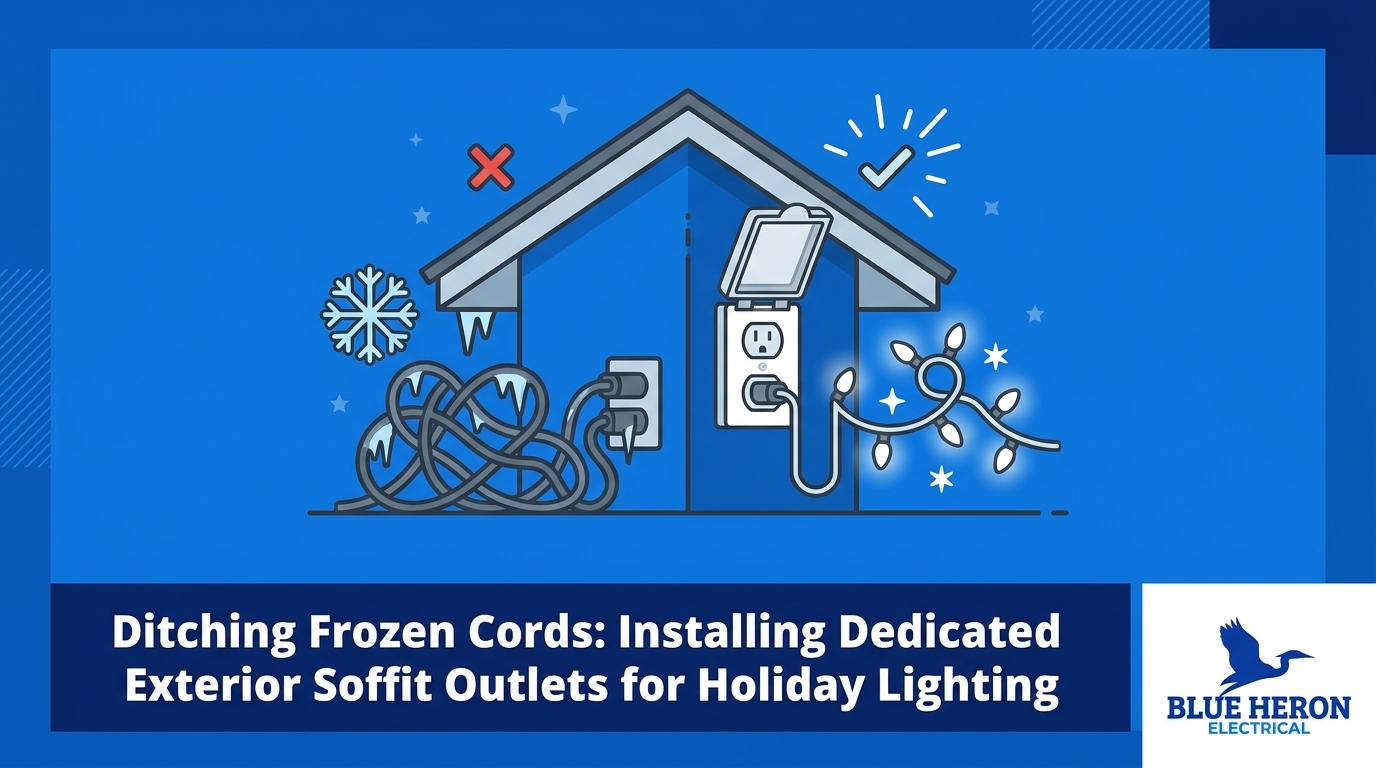
When it comes to seasonal home preparation, our team at Blue Heron Electrical consistently tells homeowners that installing dedicated exterior soffit outlets for holiday lighting is one of the smartest upgrades you can make before the freezing weather arrives. September is the ideal window to finalize these home exterior upgrades, allowing you to tackle your September pre-winter prep long before the first frost hits the ground. Every year, we see homeowners look forward to the tradition of illuminating their rooflines, only to immediately dread the frustrating process of unspooling tangled, temporary extension cords across the yard. Those temporary cords laid across wet, freezing lawns are more than just an eyesore—they represent a significant and recurring safety hazard for your property and your family.
Instead of battling the elements this winter, taking a proactive approach transforms how you manage your exterior displays. Upgrading to permanent eaves outlets before the holiday rush hits eliminates the need for ground-level wiring entirely. By integrating this solution as part of your broader residential electrical services, you ensure your home is equipped to handle modern lighting demands safely and efficiently. The goal is to move the power source exactly where you need it—up under the roofline—so you never have to drag another extension cord through the slush again.
The Hidden Hazards of Running Extension Cords Across Snowy Lawns
Relying on temporary extension cords during winter weather introduces severe safety risks that many homeowners underestimate until a failure occurs. In our years serving the Sterling Heights / Metro Detroit area, we've seen firsthand how the average 30 to 40 inches of annual snowfall wreaks havoc on temporary wiring. This specific climate makes ground-level cords highly susceptible to freezing, moisture intrusion, and severe physical damage. When a cord is buried under a fresh layer of snow, it becomes an invisible tripping hazard for delivery drivers, guests, and family members navigating your walkways.
Beyond the tripping risks, buried cords are notoriously vulnerable to accidental snowblower damage. A single pass over a hidden wire can destroy the equipment and create an immediate, dangerous electrical short. Moisture intrusion is another constant battle our electricians are called out to fix. As ice melts during daytime thaws and refreezes at night, water easily seeps into the connection points where multiple extension cords meet. This moisture causes tripped breakers, localized power outages, and significant shock hazards when someone attempts to reset the connection with wet gloves.
The stark reality of holiday electrical fires:
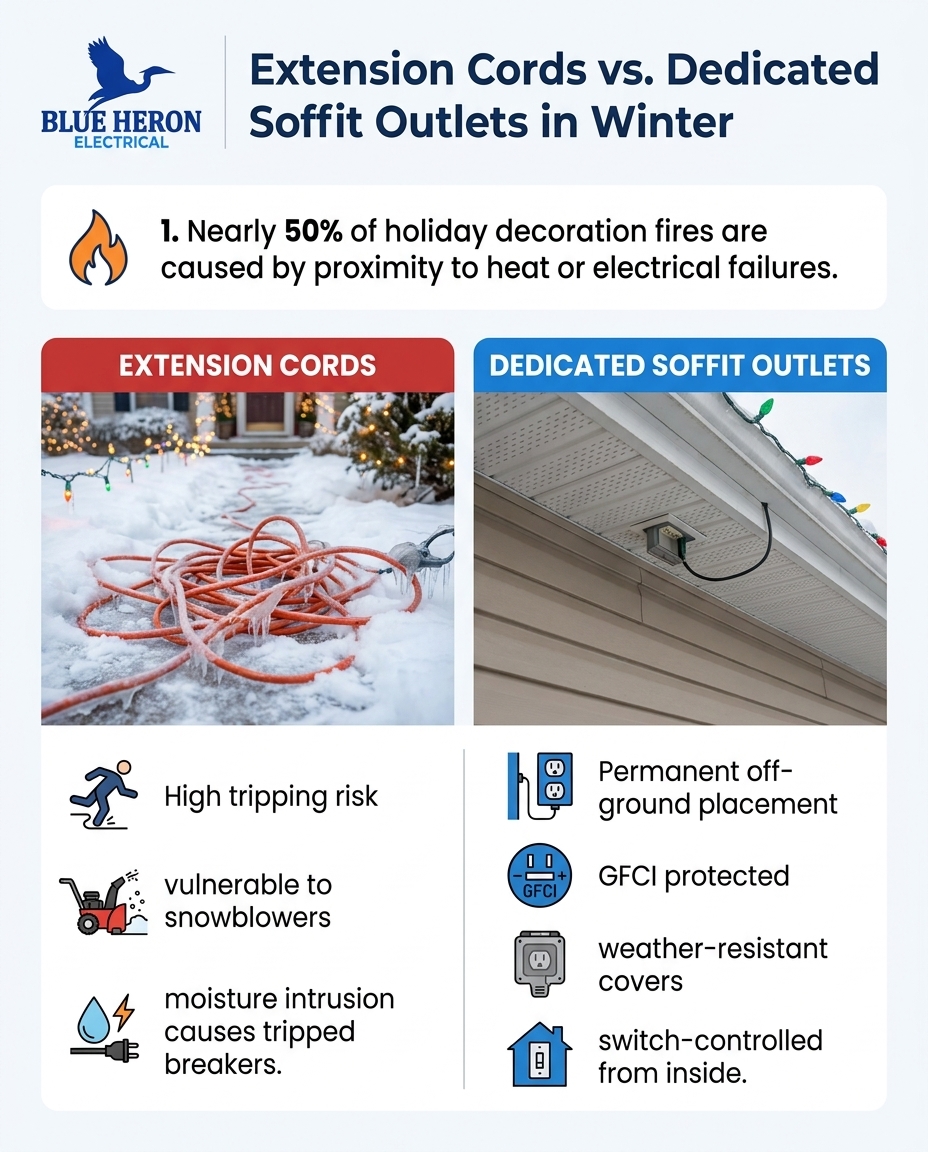
According to the National Fire Protection Association (NFPA), nearly half of all holiday decoration fires happen because decorations are placed too close to a heat source or due to underlying electrical failures. Overloaded extension cords are a primary culprit in these statistics.
• Moisture Protection — Temporary Extension Cords: Connections rest on wet ground, highly prone to water intrusion and shorting. — Permanent Soffit Outlets: Elevated under the eaves, protected by weather-resistant covers and GFCI technology.
• Physical Damage — Temporary Extension Cords: Vulnerable to shovels, snowblowers, foot traffic, and animal chewing. — Permanent Soffit Outlets: Safely out of reach from ground-level activities and winter yard maintenance.
• Electrical Load — Temporary Extension Cords: Often daisy-chained, leading to dangerous overheating and voltage drops. — Permanent Soffit Outlets: Wired on dedicated circuits designed specifically to handle continuous lighting loads.
Contrasting temporary cords with the safety of permanent electrical fixtures highlights exactly why we strongly advocate for professional upgrades. Permanent solutions remove the electrical path from the harsh ground environment, keeping your connections dry, secure, and entirely out of harm's way.
What Are Dedicated Soffit Outlets?
Soffit outlets, commonly referred to as eaves outlets, are permanent electrical receptacles installed strategically along the underside of your roofline. Their primary purpose is to provide a safe, elevated power source exactly where roofline holiday lights, security cameras, and heat tape are typically mounted. By integrating these fixtures, you streamline your outdoor lighting solutions and eliminate the web of wires that typically clutters the front of a home during the winter months.
When our team at Blue Heron Electrical performs these installations, one of the most critical aspects is ensuring they are placed on dedicated circuits. A dedicated circuit means the wiring runs directly from your electrical panel to these specific exterior outlets, serving no other appliances or interior rooms. This setup prevents your holiday lights from overloading existing home circuits. If you have ever plugged in your exterior lights only to have the living room television shut off, you have experienced an overloaded shared circuit. Dedicated lines ensure your seasonal displays have the isolated amperage they need to run continuously without disrupting the rest of your home.
Understanding GFCI and Weather-Resistant Ratings
Because soffit outlets are located outdoors, they must adhere to strict safety standards designed to protect against environmental hazards. We always utilize two critical technologies: Ground-Fault Circuit Interrupter (GFCI) protection and Weather-Resistant (WR) ratings.
• GFCI Protection: A GFCI receptacle constantly monitors the electrical current flowing into and out of the outlet. If it detects even a microscopic imbalance—meaning electricity is escaping its intended path and potentially traveling through water or a person—it cuts the power in milliseconds. This is the ultimate defense against electrical shocks in wet winter environments.
• Weather-Resistant (WR) Construction: WR receptacles are built with UV-stabilized polycarbonate components and corrosion-resistant metal contacts. They are engineered to withstand extreme temperature fluctuations, freezing winds, and indirect moisture.
• In-Use Weatherproof Covers: Also known as "bubble covers," these enclosures allow you to keep cords plugged in while the outlet remains completely sealed against snow and blowing rain, keeping the internal components dry all season long.
Staying Warm: Controlling Your Holiday Lights from Inside
The physical hazards of extension cords are only half the problem; the daily inconvenience of managing them is equally frustrating. Going out into freezing temperatures, battling biting winds, and trudging through snowdrifts just to unplug your lights every night is a chore no homeowner enjoys. Dedicated soffit outlets solve this by bringing the control mechanics entirely indoors.
When our professional electricians install your eaves outlets, we can hardwire the system directly to standard indoor wall switches. This allows you to turn your entire exterior display on and off with the simple flick of a switch from the comfort of your warm hallway or living room. The convenience can be taken even further by integrating modern automation.
1. Standard Indoor Switches: The most straightforward solution we offer. An electrician runs the wiring from the soffit down through the wall cavity to a convenient indoor location, giving you manual control without opening a door.
2. Programmable Smart Timers: By replacing the manual switch with an in-wall timer, you can set your lights to automatically turn on at dusk and shut off at midnight. This ensures your display is always active when you want it, without requiring daily attention.
3. Wi-Fi-Enabled Smart Switches: For the ultimate convenience, Wi-Fi switches allow you to control your roofline outlets directly from your smartphone. You can adjust schedules based on sunset times, control them remotely while on vacation, or integrate them with voice assistants.
4. Energy Efficiency Optimization: Automating your lighting ensures your lights are only on during optimal viewing hours. Eliminating the times you accidentally leave the lights burning until noon the next day significantly reduces the energy footprint of your seasonal display.
Why Early Fall is the Perfect Time for Electrical Upgrades
Timing is everything when it comes to exterior home improvements. September is the proactive "pre-winter prep" window for home safety upgrades, offering the ideal conditions for electrical work. Waiting until November or December makes exterior modifications significantly more difficult due to plunging temperatures and unpredictable weather patterns.
As the weather turns cold, exterior building materials like vinyl siding and plastic trim become brittle and prone to cracking. Electricians must work cautiously around freezing materials, and handling intricate wiring with cold, stiff hands naturally slows down the installation process. Furthermore, if any conduit needs to be run along the side of the house or near the foundation, frozen ground makes the job exponentially harder. Addressing these upgrades in early fall ensures the physical environment is highly cooperative.
Additionally, the late fall season introduces a severe holiday booking backlog. We see it every year at Blue Heron Electrical: as soon as the first snow flies, homeowners rush to address their winterization needs, filling up our service schedules rapidly. By planning your lighting layouts now and reaching out to trusted electricians in Sterling Heights before the pressure of the holiday season begins, you secure your spot on the calendar. You get the peace of mind knowing your home is fully prepared long before you pull the decoration boxes out of storage.
Upgrading Older Homes for Modern Holiday Demands
Older residential properties possess unique charm, but their aging electrical infrastructure often struggles to handle modern demands. Adding new exterior loads, like hundreds of LED or incandescent holiday lights, requires careful evaluation of the existing electrical panel. Older electrical boxes, such as outdated pushmatic or fuse panels, may not have the physical space or the total amperage capacity to support new dedicated circuits safely.
Installing new exterior outlets often requires a comprehensive look at the home's power distribution. If your panel is already operating near its maximum capacity, adding a heavy continuous load can lead to main breaker trips or dangerous overheating within the box itself. Upgrading an outdated electrical panel ensures the entire home remains safe, balanced, and capable of supporting both your daily appliances and your seasonal displays.
One local homeowner in an older property recently reached out to our team at Blue Heron Electrical to add new exterior outlets and update their outdated electrical box at the same time. Our crew evaluated the load requirements, installed the necessary dedicated circuits, and added seamless interior switches. We completed the requested electrical work in a quick and friendly manner, ensuring the entire system was safe, efficient, and professionally modernized. Addressing the panel and the exterior outlets simultaneously is a highly efficient way to future-proof your home's electrical safety.
Code Compliance and Professional Installation
Exterior electrical work is strictly a job for licensed professionals, never a DIY weekend project. The risks associated with improper outdoor wiring are simply too high. The National Electrical Code (NEC) outlines stringent outdoor wiring standards specifically designed to prevent fires, electrocution, and property damage in wet environments. Navigating these codes requires deep technical knowledge of wire gauges, conduit requirements, and weatherproofing techniques.
Proper load calculations are a mandatory part of this process. A licensed electrician from our team will calculate the exact continuous load your planned holiday lighting will draw, ensuring the new circuit breaker, the wiring, and the outlets are all perfectly matched to handle that demand without overheating. Guessing on load capacities is a primary cause of electrical fires behind closed walls.
Furthermore, modifying your home's electrical system requires pulling the correct permits and passing municipal inspections. Understanding the permit requirements for outdoor electrical lighting ensures your home remains compliant with local building codes, which is crucial for your homeowner's insurance and future property sales. Licensed, code-compliant installation by Blue Heron Electrical ensures safe, weather-protected exterior outlets that can reliably handle heavy holiday lighting loads without stressing the home's electrical system. Trusting a professional guarantees that every connection is watertight, every circuit is properly sized, and your home is entirely protected from winter electrical hazards.
Schedule Your Exterior Lighting Upgrade Before the Snow Flies
Transitioning from dangerous, snow-covered extension cords to safe, convenient indoor control is an upgrade that pays dividends every single winter. You eliminate the tripping hazards, protect your home from moisture-related electrical shorts, and gain the ultimate convenience of managing your holiday display with a simple switch or smartphone tap.
The September window is closing quickly, and the harsh Sterling Heights / Metro Detroit winter weather is rapidly approaching. Don't wait until you are standing in the freezing slush trying to reset a tripped breaker. Be proactive about your home's safety and convenience this season. Schedule an inspection or consultation with Blue Heron Electrical today to assess your roofline and panel capacity, and get your dedicated soffit outlets installed before the snow flies. You will be glad you made the upgrade the moment the holiday season begins.
Frequently Asked Questions
Do you need a dedicated circuit for exterior outlets?
Yes, our team highly recommends running a dedicated circuit for exterior outlets, especially for holiday lighting. A dedicated circuit ensures that the heavy, continuous electrical load from your outdoor displays does not overload the existing interior circuits you rely on for daily living. This prevents nuisance tripping, protects your interior electronics from voltage drops, and drastically reduces the risk of electrical fires caused by overloaded wires.
Are soffit outlets safe for Christmas lights?
Soffit outlets are incredibly safe for Christmas lights when installed correctly by a licensed professional. Because they are located high up under the eaves, they are naturally shielded from direct rain, heavy snow accumulation, and ground-level moisture. Furthermore, code requires these outlets to feature GFCI protection and weather-resistant covers, which actively prevent electrical shocks and keep the internal connections completely dry throughout the winter season.
How do you control eaves outlets?
Eaves outlets are typically controlled by hardwiring them to a switch located inside your home. During installation, our electricians route the wiring from the roofline down to a convenient interior wall, allowing you to turn the power on and off without going outside. Homeowners can also upgrade these controls to smart switches or programmable timers, enabling automatic scheduling and remote control via a smartphone.
What is the best way to power roofline holiday lights?
The absolute best way to power roofline holiday lights is through permanent, dedicated soffit outlets. This method eliminates the need to drape temporary extension cords down the side of your house and across your lawn. It provides a localized, code-compliant power source right where the lights are mounted, ensuring maximum safety, aesthetic appeal, and protection from winter weather.
Why shouldn't I just use heavy-duty extension cords in the winter?
Even heavy-duty extension cords are designed for temporary use and are highly vulnerable to winter conditions when left out for months. Cords buried in snow become invisible tripping hazards, are easily destroyed by snowblowers, and are prone to severe moisture intrusion at their connection points. Over time, UV exposure and freezing temperatures degrade the cord's insulation, creating significant shock and fire hazards that permanent outlets entirely avoid.
Are permits required for adding exterior outlets to my home?
Yes, adding new exterior outlets and running new dedicated circuits generally requires an electrical permit from your local municipality. Pulling a permit ensures that the work is inspected for safety and complies strictly with the National Electrical Code (NEC). Skipping this step can lead to dangerous DIY wiring mistakes, code violations, and potential issues with your homeowner's insurance if an electrical fire were to occur.
Customer Testimonials

Service Areas