
Troubleshooting Tripping Breakers: What Blue Heron Electric Reviews Reveal About Service Expectations
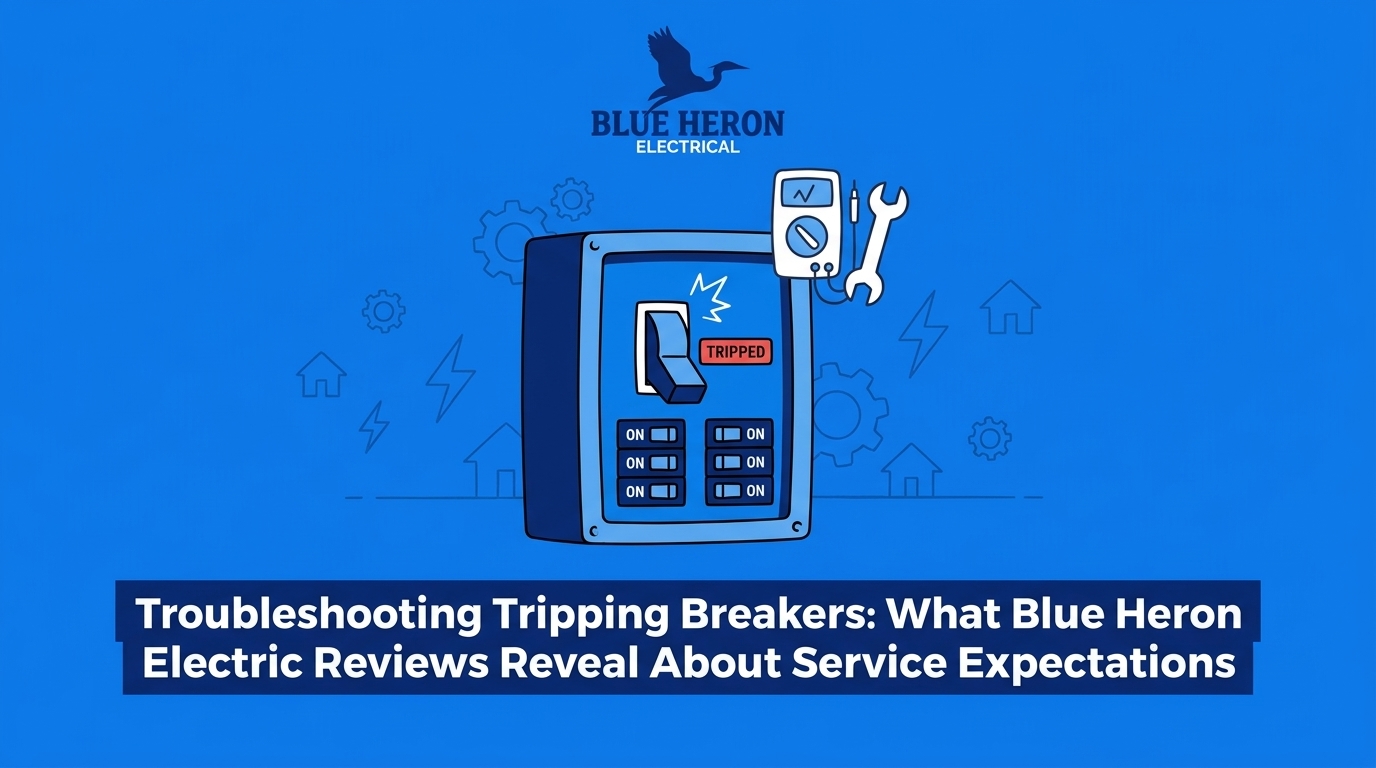
The Sudden Shift: Why Breakers Trip When the Cold Arrives
When the temperature drops and you plug in a space heater only to have the room go dark, you quickly realize that effective home maintenance tips and troubleshooting are about more than just changing air filters. Your electrical system is the unseen backbone of your house, and it faces its greatest test when the seasons change. As a homeowner, you are faced with an immediate decision: is this dark room just a simple overloaded circuit, or is your aging electrical panel crying out for professional help?
For expert guidance on your home's infrastructure, exploring professional Electrical Services and reading through Blue Heron Electric Reviews can help you understand the level of care required to keep your property safe.
During a mid-fall October cold snap, our electricians at Blue Heron Electrical frequently see rapid temperature drops force homeowners to suddenly rely on supplemental heating. This sudden shift in home energy demands puts massive stress on residential circuits. You might turn on the central HVAC system, plug in a portable space heater in the bedroom, and turn on an electric blanket all at the same time. While each device seems harmless on its own, their combined power draw is substantial.
The Math Behind the Overload
A standard residential electrical circuit typically provides 15 or 20 amps of power. This translates to roughly 1,800 to 2,400 watts of available capacity before the breaker steps in to cut the power. Consider what happens during that first freezing evening:
• Space heaters: Often draw 1,500 watts continuously on their highest setting.
• Electric blankets: Can draw between 200 and 400 watts.
• Room lighting and electronics: Add another 100 to 300 watts to the same circuit.
If you run a space heater and a television on the same 15-amp circuit, you are already pushing the absolute limit of what those wires can safely handle. Heating equipment is a leading cause of home electrical stress during colder months. Recognizing the difference between a temporary heavy load and a permanent system flaw is the first step in protecting your home from winter power failures.
Simple Circuit Overloads vs. Aging Electrical Panels
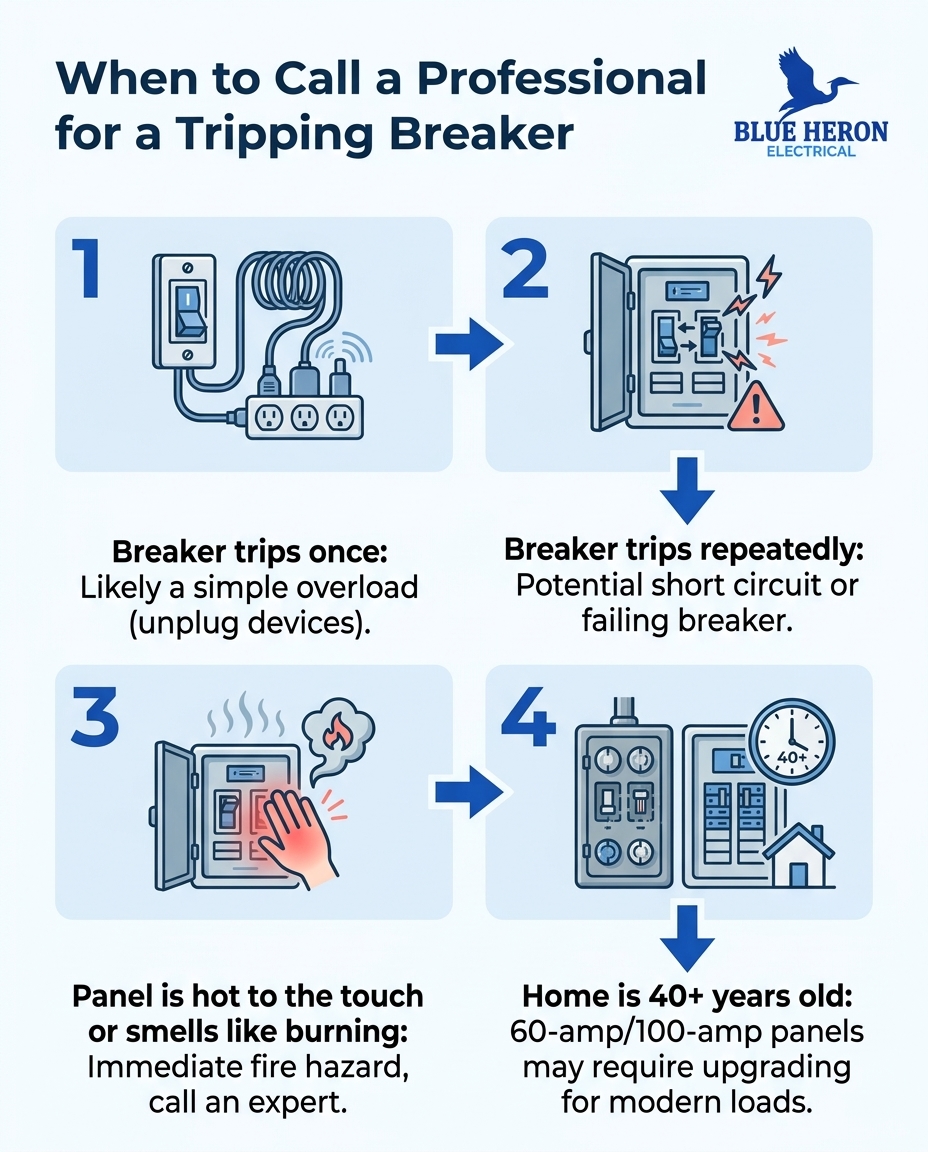
Determining whether you just need to move a plug to another room or if your entire panel is failing is a critical decision point. A simple circuit overload happens when too many high-wattage devices ask for power from a single path simultaneously. If you unplug the heavy draw appliance, reset the breaker, and the power stays on, you have likely identified a simple overload.
However, many homes in Sterling Heights built in the mid-20th century still operate on original 60-amp or 100-amp electrical panels. At Blue Heron Electrical, our team regularly replaces these older systems because they were never designed to handle the simultaneous demands of modern HVAC systems, high-definition televisions, multiple kitchen appliances, and supplemental winter heating. When these panels reach the end of their lifespan, they exhibit specific warning signs that go far beyond a single tripped breaker.
Recognizing the Warning Signs
Knowing when to stop redistributing plugs and seek professional circuit breaker services in Sterling Heights requires a clear understanding of the symptoms. If you notice frequent trips across multiple different circuits, your panel is struggling. If you hear a faint buzzing or humming noise coming from the metal box, or if you detect a faint burning smell near the breakers, the situation has escalated from a nuisance to a hazard.
• Frequency of Trips — Simple Overload: Only when specific devices are used together — Aging Panel Issue: Randomly, even with very low power usage
• Physical Heat — Simple Overload: Breaker feels normal to the touch — Aging Panel Issue: Breakers or the panel box feel noticeably hot
• Visual Signs — Simple Overload: None; panel looks completely normal — Aging Panel Issue: Scorched marks, rust, or melted wire insulation
• Age of Home — Simple Overload: Can happen in brand new builds — Aging Panel Issue: Common in homes over 40 years old
Once you recognize that the issue is systemic rather than an isolated overload, it is time to step back. Attempting to force an outdated panel to accept modern winter loads is a risk no homeowner should take.
The Hidden Dangers of Repeatedly Resetting a Breaker
When a breaker trips during a mid-fall October cold snap, the immediate reaction is usually to march down to the basement and flip the switch back on. Doing this once is standard practice. Doing it repeatedly is highly dangerous. A circuit breaker is not a simple on-and-off switch; it is a highly calibrated mechanical safety device designed to prevent house fires.
How Circuit Breakers Protect You
Inside most standard breakers is a bi-metallic strip. As electricity flows through the breaker, it generates a small amount of heat. If the current exceeds the safe limit for the wires in your walls, the strip heats up, bends, and physically snaps the connection open to stop the flow of electricity. This mechanical action protects the wire insulation from melting.
Every time you force a breaker to reset against an active overload, you degrade its internal mechanisms. The springs weaken, the metal contacts pit and score, and the bi-metallic strip loses its precise calibration. Eventually, a worn-out breaker may simply fail to trip the next time an overload occurs. When the breaker fails to trip, the wires inside your walls take the full force of the heat.
The Reality of Electrical Fires
Data from the National Fire Protection Association (NFPA) and the Electrical Safety Foundation International (ESFI) consistently shows that heating equipment is a leading cause of home electrical fires during the colder months. A pattern we see often in our service calls traces back to overloaded circuits where these early warning signs were ignored.
Never attempt DIY panel repairs: Opening an electrical panel, attempting to tighten connections, or trying to replace a breaker yourself exposes you to live, lethal voltage. The main bus bar in a panel remains highly energized even if you turn off individual breakers. Diagnosing internal panel wear is strictly a job for licensed professionals who have the proper insulated tools and safety training.
Setting the Standard: What to Expect During a Professional Electrical Assessment
Understanding the technical side of a tripping breaker is only half the battle. The other half is knowing what a trustworthy resolution looks like. A reputable electrician does not simply guess at the problem or immediately demand a total system replacement without evidence. At Blue Heron Electrical, our differentiator lies in deep expertise and transparency—safely diagnosing complex overloads without unnecessary upselling.
Recently, our team helped a Sterling Heights homeowner during a pre-winter home inspection. An outdated Pushmatic fuse panel needed upgrading, and the entire house required proper grounding. Instead of a disruptive, drawn-out ordeal, our professional team swapped the old fuse panel for a brand new one quickly, with very little interruption to the daily routine. This is the standard of care you should expect.
The Professional Diagnostic Process
When our licensed electricians arrive to investigate a frequently tripping breaker, we follow a rigorous, step-by-step methodology to trace the root cause:
1. Visual and Thermal Inspection: The technician inspects the panel for visible scorching, loose lugs, or water intrusion, often using thermal imaging to detect abnormal heat buildup on specific breakers.
2. Load Testing: Using specialized multimeters, the electrician measures the exact amperage draw on the tripping circuit while your appliances are running to verify if the load exceeds the wire's capacity.
3. Circuit Tracing: The technician checks the entire run of the circuit, looking for hidden faults, damaged wire insulation, or compromised junction boxes in attics and crawlspaces.
4. Options and Prioritization: Once the diagnostic is complete, a transparent professional provides multiple safe options. This might mean adding a new dedicated circuit for your space heater, replacing a single worn breaker, or planning a full panel upgrade if the system is dangerously obsolete.
Transparent communication helps you prioritize necessary electrical work for older homes. This structured approach ensures you have the peace of mind needed long before the harshest winter weather sets in.
Identifying Outlet Issues That Contribute to Breaker Trips
Sometimes the panel is perfectly fine, and the root cause of the tripping breaker lies at the very end of the line: the wall outlet. Receptacles endure significant physical wear and tear over the years. Plugging and unplugging vacuums, lamps, and heavy space heaters during a mid-fall October cold snap gradually loosens the internal metal contacts that grip the plug prongs.
When these contacts become loose, the electricity has to jump—or arc—across a tiny air gap to reach the plug. This arcing generates intense localized heat and creates erratic electrical resistance. The breaker senses this instability and trips to prevent an outlet fire. Worn, loose, or physically damaged receptacles are major contributors to short circuits.
The Role of GFCI Protection
In areas exposed to moisture, such as kitchens, bathrooms, unfinished basements, and exterior walls, Ground Fault Circuit Interrupter (GFCI) outlets are required by modern building codes. These specialized outlets monitor the balance of current flowing in and out. If even a tiny amount of current leaks out (perhaps into a puddle of melted snow near a space heater), the GFCI cuts the power instantly.
If you are experiencing frequent trips, our professional electricians will trace the fault from the panel down to the specific problematic outlet. We will check for "backstabbed" wiring—an older, less reliable installation method—and ensure all connections are securely wrapped around the terminal screws. Re-evaluating your home's receptacles is a vital part of understanding common outlet problems and what they mean for your broader electrical system. A comprehensive system check always yields better, safer results than isolated, temporary fixes.
Navigating Severe Weather and Emergency Panel Outages
While proactive troubleshooting is ideal, severe weather often dictates its own schedule. Extreme freezing winter nights in Michigan can turn a minor electrical vulnerability into a full-blown home emergency. When the exterior service box or the main panel is compromised by ice, wind, or falling debris, the situation shifts from a nuisance to a critical safety threat.
During a brutal late-fall storm with temperatures dropping well below 32 degrees Fahrenheit, our team responded to a local homeowner who lost power completely when a fallen tree ripped the electrical service box right off the side of the house. In a situation where heating is absolutely non-negotiable, our after-hours response team arrived immediately. We assessed the severe exterior damage and helped safely hook up a temporary generator. This rapid intervention kept the house above freezing while the full, complex electrical repair was completed over the following days.
Restoring Power Safely
When heating systems go offline during freezing temperatures, the protocol for restoring power must be handled with extreme care. You cannot simply plug a furnace into a standard portable generator using extension cords. A licensed electrician must install a proper generator interlock kit or a manual transfer switch. This ensures that generator power feeds safely into your panel without "backfeeding" dangerous voltage out onto the public utility lines, which could severely injure utility workers trying to restore the grid.
Having access to a responsive 24/7 emergency electrician is invaluable when severe weather strikes. They possess the training to secure exposed exterior wiring, coordinate with the local utility company for service disconnects, and restore your home's heat safely and legally.
Securing Your Home's Electrical System for the Season
Preparing your home for the demands of winter requires looking past the thermostat and ensuring the wires behind your walls can handle the load. Proactive electrical assessments before the harshest weather arrives can mean the difference between a cozy evening indoors and a dangerous midnight power failure.
Understanding the threshold between a simple overloaded circuit and the need for a professional diagnostic is the key to protecting your property. When you notice the warning signs—frequent trips, warm panels, or buzzing outlets—stop resetting the breaker and rely on a trusted local expert. By applying these home maintenance tips and troubleshooting principles, you ensure your electrical system remains safe, reliable, and ready for whatever the season brings.
Frequently Asked Questions
Why does my space heater keep tripping the breaker?
Space heaters draw a massive amount of continuous power, often up to 1,500 watts on high settings. If you plug a space heater into a standard 15-amp circuit that is already powering lights, televisions, or other appliances, the combined demand exceeds the wire's safe capacity. The breaker trips exactly as it is designed to do in order to prevent the wires from overheating and causing a fire.
How do I know if my electrical panel is overloaded?
An overloaded panel will show clear distress signals beyond a single tripped breaker. You may experience multiple different circuits tripping frequently, lights dimming when large appliances turn on, or a faint buzzing sound coming from the breaker box. If the metal face of the panel feels warm to the touch or emits a burning odor, the panel is severely overloaded and requires immediate professional attention.
When should I call an electrician for a tripping breaker?
You should call an electrician if a breaker trips repeatedly even after you have unplugged high-draw devices from the circuit. Additionally, if the breaker feels hot, will not stay in the "on" position, or if you live in an older home with a 60-amp or 100-amp panel, it is time for an expert assessment. Never attempt to force a breaker to stay on or open the panel yourself.
What happens during an electrical service call?
During a service call, a licensed electrician will perform a thorough visual and thermal inspection of your panel to look for scorching or loose connections. They will use specialized multimeters to test the load on the affected circuits and trace the wiring to identify hidden faults. Afterward, they will provide transparent options for repair, ranging from replacing a faulty breaker to installing a new dedicated circuit.
Is it safe to reset a circuit breaker multiple times?
No, repeatedly resetting a circuit breaker is highly dangerous. Every time a breaker trips under a heavy load, its internal mechanical parts and bi-metallic strip experience wear and fatigue. Forcing it to reset against an active fault degrades the mechanism, increasing the risk that it will eventually fail to trip, which can lead to melted wires and electrical fires.
Can an outdated electrical panel handle modern winter HVAC loads?
Most outdated mid-century panels, particularly 60-amp and 100-amp systems, lack the capacity to safely support modern winter heating demands alongside today's standard appliances. These older panels were installed before the era of multiple high-definition screens, advanced HVAC systems, and high-wattage space heaters. Upgrading to a 200-amp panel is often necessary to safely meet modern electrical codes and seasonal loads.
Customer Testimonials

Service Areas