
Common Homeowner Questions Answered: Why Your Heating System Trips the Breaker This Fall
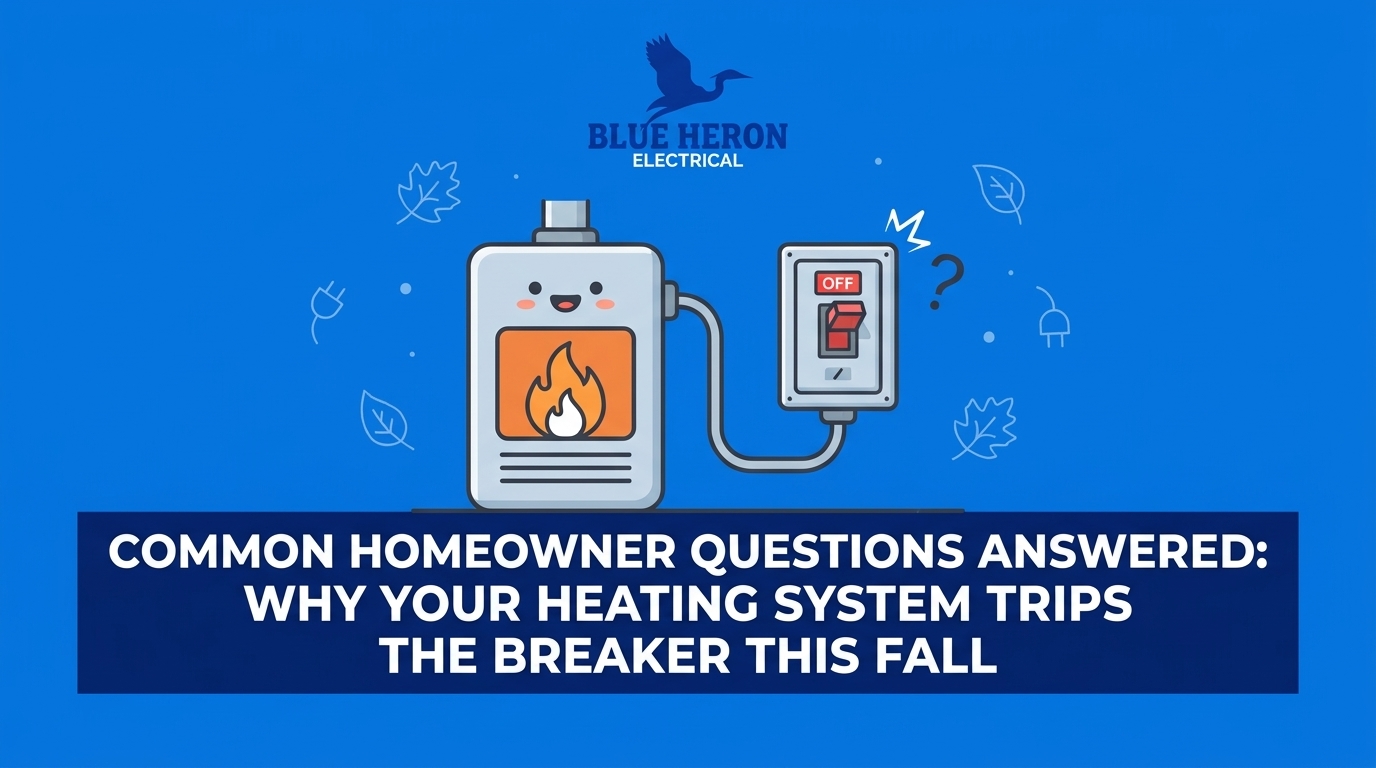
The Sudden Chill: When Your Heating System Refuses to Start
The first real freeze of the season arrives, you switch your thermostat to 'heat,' and instantly, a section of your house goes dark. When dealing with sudden power loss during these abrupt mid-October freezes, one of the most common homeowner questions answered by our team at Blue Heron Electrical is whether it is safe to simply flip the breaker back on. It is an incredibly frustrating scenario: experiencing that urgent mid-fall heating startup, only to have your electric furnace or heat pump instantly trip the breaker and leave your home freezing.
The immediate homeowner impulse is almost always the same. You treat the tripped breaker as a simple nuisance, walk down to the basement or garage, and force the switch back into the 'on' position. However, our electricians warn that this moment represents a critical decision point. You must know whether it is safe to reset that breaker or if a professional inspection is required to prevent a serious electrical hazard. Proper residential electrical wiring is designed to handle the sudden load of dormant heating equipment, but when a breaker trips immediately, it is doing exactly what it was engineered to do: protecting your home from a catastrophic wiring failure—an issue we see frequently in older 1970s and 1980s residential builds.
If you are dealing with a tripped heating circuit right now, securing professional electrical services to evaluate your residential electrical wiring is the safest way to restore your comfort.
The Physics of First-Startup Electrical Surges
To understand why your heating system is suddenly causing electrical issues, you have to look at what happens to mechanical equipment when it sits idle. Electric furnaces and heat pumps sit completely dormant all summer long. During these months of inactivity, dust accumulates on motor bearings, lubricants thicken and settle, and mechanical stiffness sets in across the system's moving parts.
Because of Michigan's sharp mid-fall temperature drops, our technicians notice homeowners throughout Sterling Heights often turn their heating systems on at the exact same time, demanding sudden, prolonged heavy electrical loads from equipment that hasn't moved in half a year. When these dormant systems are finally forced to start, they require a massive initial surge of electricity to overcome that mechanical inertia. This surge is known in the electrical industry as "inrush current."
The Problem: When a motor is stiff from months of disuse, the inrush current is significantly higher and lasts slightly longer than it does during normal winter operation.
The Cause: The electrical panel monitors the exact amount of amperage flowing through the dedicated circuit. If the heating system draws more current than the wire is safely rated to carry—for instance, if a standard 20-amp circuit suddenly pulls 35 amps for even a fraction of a second too long—the internal mechanisms of the breaker detect the thermal overload.
The Solution: The breaker trips, intentionally cutting the power. This is a vital safety mechanism, not a flaw. To better understand this dynamic, consider the differences between normal operation and a startup surge:
• Normal Running Current — Amperage Draw: Stable and within circuit limits — Duration: Continuous while heating — System Impact: Safe, steady operation
• Standard Inrush Current — Amperage Draw: Briefly spikes up to 3x normal draw — Duration: Fractions of a second — System Impact: Breaker allows momentary surge
• Dormant Startup Surge — Amperage Draw: Spikes exceptionally high due to friction — Duration: Prolonged beyond safety limits — System Impact: Breaker trips to prevent melting wires
The Hidden Danger of Repeatedly Resetting a Tripped Breaker
When a mid-fall heating startup results in a dark house, our service team emphasizes that the most dangerous thing you can do is repeatedly force the breaker back on. Many homeowners do not realize that circuit breakers are mechanical devices that suffer wear and tear every time they trip under a heavy load.
The 'why' behind this danger comes down to internal electrical arcing. When a breaker trips to stop a massive surge of electricity, a small spark, or arc, occurs inside the breaker casing. If you immediately reset the breaker into an active short circuit or severe overload, that arc happens again, but with much more intensity. Repeatedly resetting a tripped breaker causes the internal metal contacts to degrade, pit, and eventually weld together or fail completely.
Data from the Electrical Safety Foundation International (ESFI) and the National Fire Protection Association (NFPA) consistently shows that heating equipment is a leading factor in residential electrical fires. Often, these fires do not start in the furnace itself, but in the electrical panel or the wiring hidden behind the walls.
In our years of inspecting Macomb County panels, signs that a breaker has degraded include:
• A spongy switch: The breaker toggle feels loose and won't firmly click into the "on" or "off" position.
• Scorching or burning smells: A distinct acrid odor coming from the electrical panel area.
• Warm casing: The breaker itself feels hot to the touch (often exceeding 140°F, a major warning sign of internal resistance).
• Delayed tripping: The breaker takes longer to trip than it used to, allowing wires to overheat in the meantime.
When a degraded breaker loses its ability to trip effectively, it allows excess electricity to flow through the circuit unchecked. This causes the copper wires to overheat, eventually melting their protective plastic insulation and igniting surrounding building materials. Forcing a reset completely bypasses the panel's built-in safety mechanisms.
Common Electrical Faults in Dormant Heating Systems
If the breaker trips immediately upon turning on the heat, the issue is rarely a fluke. A direct, immediate trip usually indicates a hard electrical fault somewhere between the panel and the heating unit. After a long summer in Sterling Heights, several common issues can compromise your heating system's dedicated circuit.
Here are the most frequent electrical faults our Blue Heron Electrical diagnostic crews discover during October fall checks:
1. Pest Damage to Wiring: During the warmer months, mice, squirrels, and other rodents often seek shelter in basements, crawlspaces, and outdoor heat pump enclosures. They frequently chew through the protective insulation of electrical wires. When you turn the system on in the fall, the exposed wires touch, creating a direct short circuit that instantly trips the breaker.
2. Loose Electrical Connections: Michigan experiences significant temperature swings from summer to fall. This constant thermal expansion and contraction causes metal components to swell and shrink. Over time, the lug nuts and terminal screws securing the heavy-gauge wires at the panel or the furnace can vibrate loose. Loose connections create high electrical resistance, which generates excess heat and trips the breaker.
3. Overloaded Circuits: Sometimes the heating system itself is fine, but the circuit has been compromised by new additions. If homeowners have added other heavy-draw appliances to the same circuit, or if the home's overall electrical load has shifted while preparing for a standby generator installation, the combined amperage can easily exceed the breaker's limit.
4. Failed Capacitors or Grounded Compressors: In heat pumps, particularly older 10-SEER to 12-SEER models, the capacitor provides the extra jolt of energy needed to start the compressor. If the capacitor failed over the summer, the compressor will pull locked-rotor amps (a massive electrical draw) until the breaker trips. Similarly, if the internal motor windings have shorted to the metal casing (a grounded compressor), the breaker will trip instantly to prevent electrocution.
It is important to emphasize that locating these faults requires specialized diagnostic tools, such as digital multimeters and megohmmeters, to test the integrity of the hidden wiring safely.
End-of-Season Outdoor Electrical Safety
While a mid-fall heating startup is often the catalyst that brings our electricians to the main panel, this transition period is also the critical time to address the rest of your home's seasonal electrical footprint. Fall heating startups should always coincide with winterizing your outdoor electrical equipment.
As the intense end-of-summer thunderstorms give way to freezing temperatures, outdoor electrical systems become highly vulnerable. Weather-resistant outdoor wiring, exterior outlets, and 12-volt landscape lighting transformers must be inspected. The GFCI (Ground Fault Circuit Interrupter) receptacles on the exterior of your home are designed to trip when moisture compromises a connection, but freezing rain and snow can damage these sensitive components if their NEMA 3R weatherproof covers are broken.
Furthermore, if you have a pool, properly managing the grounding requirements for above-ground pools is a critical safety step before the winter freeze sets in. Disconnecting pool pumps and ensuring the bonding grid remains intact prevents dangerous voltage gradients from forming in the frozen ground around the pool area.
Your home's electrical network is a unified system. A fault in an improperly winterized outdoor circuit can cause erratic behavior at the main panel, just as a failing indoor furnace can. Taking a holistic approach to end-of-season electrical safety ensures the entire property is protected from winter weather extremes.
The 'One Reset' Rule: When to Call a Professional
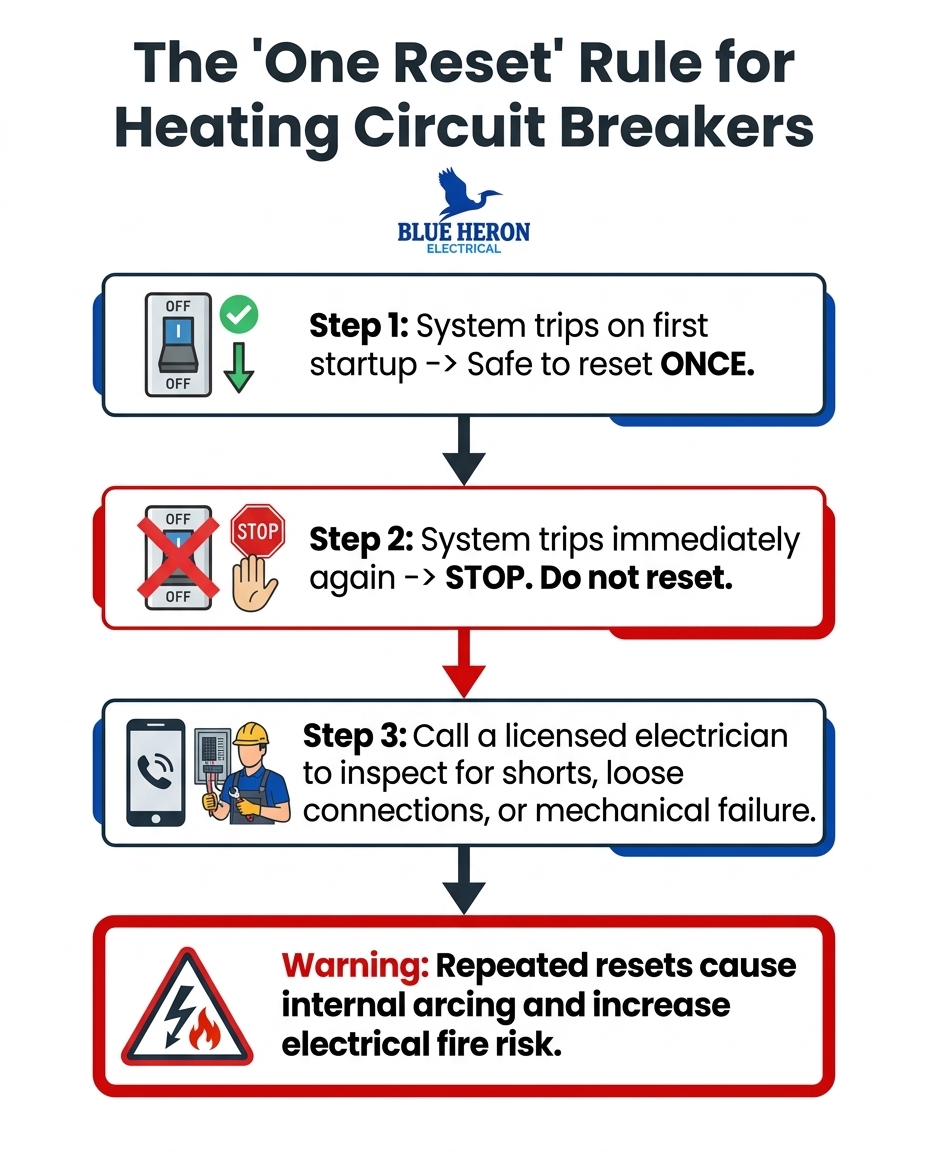
Because the risks of an electrical fire are so high, our team at Blue Heron Electrical strongly advocates for a definitive, strict protocol when dealing with tripped heating circuits. We call this the "One Reset" rule.
The 'One Reset' Rule: If your heating system trips the breaker upon startup, it is generally acceptable to firmly reset the breaker exactly one time. This allows you to rule out a temporary, harmless surge caused by a stiff motor. However, if the breaker trips a second time—especially if it trips immediately with a loud "pop"—you must stop touching the panel immediately.
Attempting DIY breaker panel investigations on a 240-volt dedicated heating circuit is highly dangerous and strictly against residential safety codes. Opening a live electrical panel exposes you to lethal voltages, and without the proper protective equipment and training, a simple slip of a screwdriver can result in a catastrophic arc flash.
When the One Reset rule is triggered, it is time to contact a local Sterling Heights electrical service team to perform a thorough, code-compliant inspection. Rely on fully licensed and certified Michigan electricians who prioritize strict code-compliant safety over quick DIY fixes. Licensed professionals have the expertise to safely diagnose hidden short circuits, tighten loose connections to proper torque specifications, and replace degraded breakers with the exact manufacturer-approved components.
Frequently Asked Questions About Fall Heating Electrical Issues
Is it safe to reset a heating breaker?
It is generally safe to reset a breaker exactly once to rule out a temporary surge during a mid-fall heating startup. However, if it trips again immediately, it is unsafe to reset it further due to severe fire risks. Forcing a breaker to stay on bypasses vital safety mechanisms.
Why does my electric furnace trip the breaker immediately?
Immediate tripping usually indicates a direct short circuit, a grounded wire, or a completely failed internal component within the heating system. Because the electrical draw is massive and instantaneous, the breaker cuts power to prevent the wires from melting. This requires professional diagnostic testing to safely resolve.
What happens if you keep resetting a tripped breaker?
Forcing a breaker to reset causes internal contacts to arc, degrading the breaker's ability to protect the circuit over time. This wear and tear destroys the internal bimetallic strip and magnetic components. This can eventually lead to melted wires, destroyed appliances, and severe electrical panel fires.
Can a dirty furnace filter cause the breaker to trip?
Yes, a clogged MERV 11 or MERV 13 filter forces the blower motor to work much harder to pull air through the system, drawing excess amperage in the process. This sustained heavy draw can eventually overheat the circuit and trip the breaker. Changing your filter regularly is a simple way to prevent electrical overloads.
Should I upgrade my electrical panel for a new heat pump?
Modern heat pumps require dedicated, properly sized circuits to handle their specific electrical demands. An electrician must calculate your home's total electrical load to determine if a 200-amp panel upgrade is necessary for safe operation. Older 100-amp panels often lack the physical space or the total amperage capacity required for new, high-efficiency heating equipment. Keep in mind that federal tax credits and local utility incentive programs may apply to qualifying high-efficiency heat pump or panel installations; we recommend verifying current programs with your utility provider or a tax professional.
Ensuring a Safe, Warm Winter for Your Home
A tripped heating breaker during the first cold snap is a vital warning sign from your electrical panel, not a nuisance to be bypassed. Understanding the physics behind these massive electrical surges, and respecting the hidden dangers of a degraded circuit breaker, is the key to protecting your property. There is immense peace of mind that comes from having a clear, safety-focused explanation of why heating components trip breakers after sitting dormant all summer.
As the temperatures continue to drop across Sterling Heights, our Blue Heron Electrical crew urges you not to leave your safety to chance. If your heating system is struggling to stay powered, we encourage you to explore professional inspection options to ensure your home is truly ready for winter. To learn more about securing your home's infrastructure, explore our residential electrical wiring solutions today.
Customer Testimonials

Service Areas