
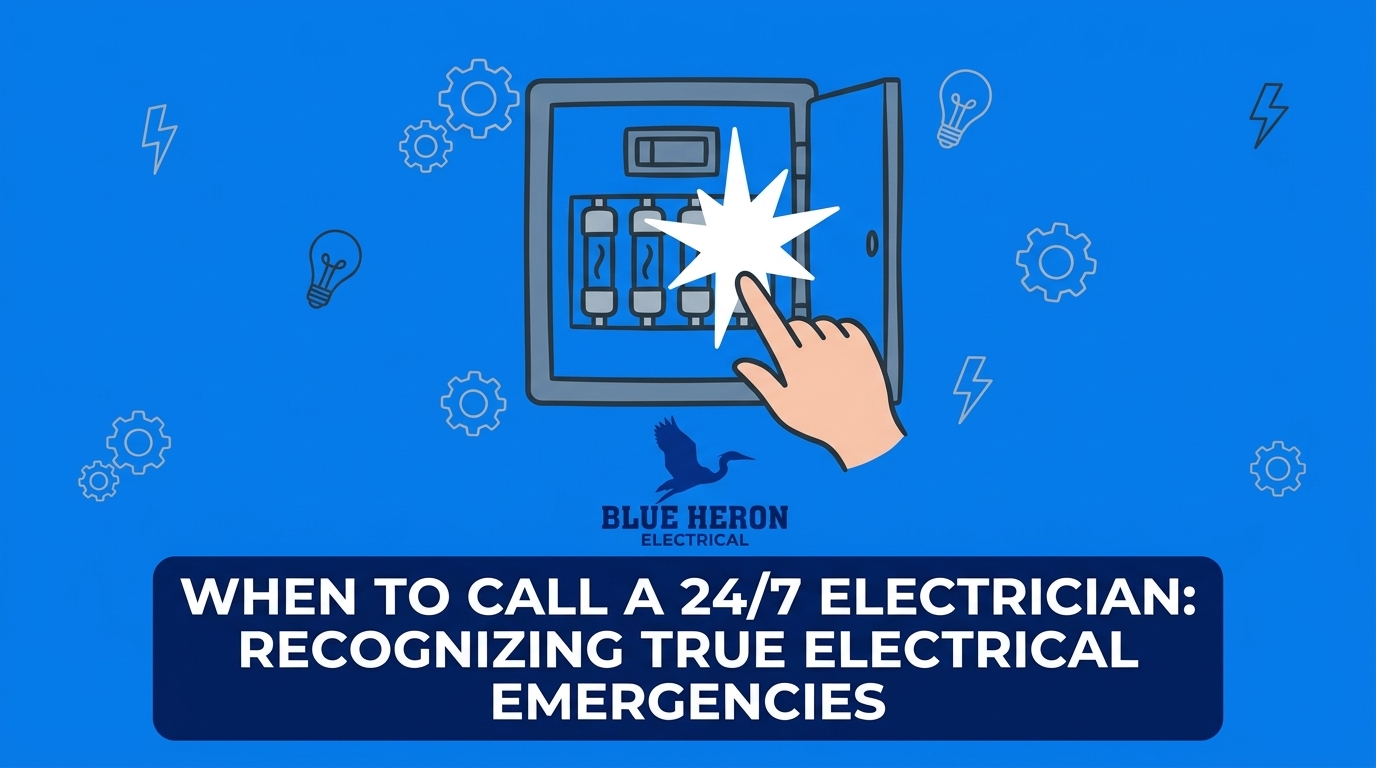
When to Call a 24/7 Electrician: Recognizing True Electrical Emergencies
Is Your Tripped Breaker a Nuisance or a True Emergency?
Are you constantly resetting tripped breakers now that October temperatures are dropping? If you are searching for reliable home maintenance tips and troubleshooting, understanding the difference between a minor electrical nuisance and a dangerous fault is the most important step you can take. As homeowners transition away from air conditioning and begin testing their furnaces, heat pumps, and supplemental space heaters, the sudden shift in electrical demand acts as a stress test for the entire house. What seems like a simple annoyance—a breaker that clicks off when you plug in a heater—can actually be an early warning sign of a system pushed beyond its safe limits.
The concrete problem many homeowners face during the mid-fall heating startup is overloading older residential panels with modern, high-draw heating equipment. In our years of providing electrical services across Sterling Heights, our team at Blue Heron Electrical typically sees that homes built decades ago were simply not wired to handle the simultaneous load of electric heat pumps, ceramic space heaters, high-definition televisions, and modern kitchen appliances. When you flip the switch on that supplemental heater, you are asking aging infrastructure to deliver a massive, continuous current. Recognizing the warning signs of circuit overload before severe winter weather hits is the decision point that separates a proactive homeowner from one facing a midnight power loss.
To safely navigate this transition, scheduling a professional inspection of your residential electrical services is the smartest proactive step. A licensed professional can evaluate the load capacity of your panel, tighten connections that may have loosened over the summer, and ensure your breakers are functioning correctly. However, if you are already experiencing undeniable immediate hazards—such as sparks, burning odors, or a panel that feels hot to the touch—you cannot wait for a scheduled appointment. In those situations, contacting a 24/7 emergency electrician is the only safe course of action to protect your home and family.
Warning Signs That Require an Immediate 24/7 Electrician
Not every electrical issue requires a midnight dispatch, but certain symptoms indicate an active, dangerous fault that could lead to a catastrophic fire if ignored. A pattern we see often in older Sterling Heights residential neighborhoods is that aging wiring and outdated panels can mask underlying problems until they reach a breaking point. Knowing exactly what to look for allows you to act decisively.
If you observe any of the following warning signs, you are dealing with a true emergency. Do not attempt to investigate the cause yourself. Evacuate the immediate area if necessary and call for professional help:
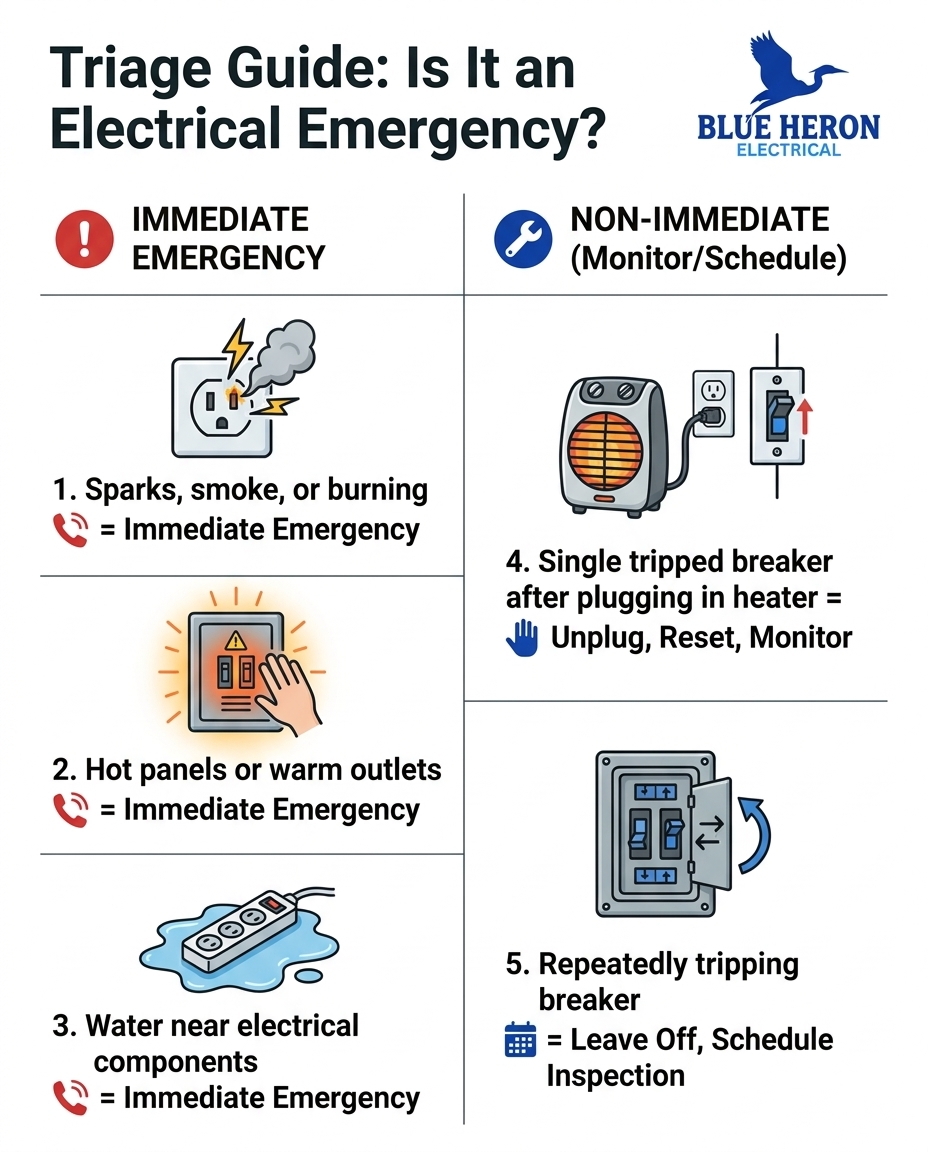
• Sparks, arcs, or visible smoke: Any visual indication of combustion coming from an outlet, switch, or the main electrical panel is an immediate red flag. Arcing occurs when electricity jumps across a gap in a loose connection, creating intense heat that can instantly ignite surrounding building materials.
• Persistent burning smells: A distinct odor resembling melting plastic, burning rubber, or even a strange fishy smell near electrical components usually means wire insulation is melting away. The fishy odor is often a specific byproduct of overheating plastic components inside outlets and switches.
• Water damage or active leaks: Water and electricity are a lethal combination. If a plumbing leak, roof leak, or flooded basement introduces water near your electrical panel or major wiring junctions, do not touch the panel. The risk of severe shock or electrocution is extremely high.
• Breakers that immediately trip again: A breaker that trips once might be a simple overload. A breaker that trips immediately after being reset—or a panel that feels physically hot to the touch—indicates a dead short or a severe, continuous overload that the safety mechanism is struggling to contain.
• Systemic flickering lights: While a single flickering bulb might just be a loose connection in a lamp, lights that dim and surge throughout the entire house often point to a failing main neutral connection. This imbalance can send destructive voltage surges through your sensitive electronics.
When these severe signs appear, fast, reliable, and fully licensed response is non-negotiable. Local Sterling Heights electricians are equipped to handle these exact hazards safely at any hour, providing Metro Detroit homeowners with the rapid intervention required to secure their property.
How Supplemental Heating Impacts Older Electrical Panels
To understand why the mid-fall heating startup causes so many electrical failures, you have to look at the math behind modern heating demands. Most standard residential outlets are wired to 15-amp or 20-amp circuits. A typical plug-in space heater draws exactly 1,500 watts of power on its highest setting. Using basic electrical formulas, 1,500 watts on a 120-volt circuit pulls about 12.5 amps of continuous current. If that heater is plugged into a 15-amp circuit that is already supplying power to a television, a few lamps, and a computer, the total draw easily exceeds the circuit's safe limit, causing the breaker to trip.
This localized overloading becomes a systemic issue when you look at the home's main electrical panel. Many older homes still operate on 100-amp electrical panels. While 100 amps was plenty of power in 1975, modern households draw significantly more current. When you combine the continuous load of a new heat pump system, the electric water heater, the electric oven, and a couple of space heaters running in drafty bedrooms, you are pushing that 100-amp panel to its absolute limits. Continuous loads generate heat, and over time, this heat degrades the internal components of the electrical panel.
The danger escalates significantly if the panel itself is compromised. Heating equipment is a leading cause of home fires in the United States, particularly when space heaters are plugged into overloaded circuits or cheap extension cords. In some older panels, the circuit breakers may become stiff or fail to trip entirely during an overload. When the breaker fails to interrupt the circuit, the wires inside your walls continue to heat up. Eventually, the protective insulation melts away, exposing bare copper wires to wood framing and drywall, which can ignite a hidden fire inside the wall cavity.
Because these dangers are largely hidden from view, visual inspections by a homeowner are not enough. Based on the thermal damage our technicians frequently uncover during pre-winter checkups, we strongly recommend scheduling professional electrical panel inspections to ensure your system can safely handle the upcoming winter load. A licensed technician can measure the actual current draw on your circuits, check for signs of thermal damage, and verify that every breaker will trip exactly when it is supposed to.
Triage: Safely Shutting Off Power vs. Immediate Dispatch
When an electrical issue occurs, the most critical skill a homeowner can possess is the ability to triage the situation accurately. You need clear criteria to determine whether you can safely shut off a breaker and wait for normal business hours, or if the situation demands immediate midnight dispatch. Making the wrong call can either result in an unnecessary emergency bill or, conversely, leave your home exposed to a severe fire hazard.
A "wait for tomorrow" scenario typically involves a single, identifiable overloaded circuit. For example, if you plug in a vacuum cleaner in the same room where a space heater is running, and the power in that room instantly goes out, you know exactly what caused the overload. In this situation, the safest approach is to unplug the offending appliance, leave the breaker in the "off" position, and schedule a standard service call. As long as there are no burning smells, sparks, or lingering heat, the immediate danger has been neutralized by the breaker doing its job.
To handle these minor localized issues safely, it is highly beneficial to know how to safely shut off power in your home at the main breaker. If you notice a single outlet acting strangely but cannot identify which specific branch breaker controls it, shutting off the main breaker cuts power to the entire house, instantly stopping the flow of electricity to the hazard. However, this action requires caution. Never stand in water when touching the panel, and only use one hand to flip the switch to minimize the risk of electrical current traveling across your chest.
Contrast this with a "call immediately" scenario. Systemic flickering across multiple rooms, persistent burning smells that you cannot trace to a specific appliance, or a panel that emits a humming or buzzing sound are undeniable emergencies. Furthermore, if a breaker trips, you reset it, and it immediately trips again with a loud pop, stop touching the panel. Never force a breaker to stay in the "on" position. These symptoms indicate a dead short or a failing panel that requires immediate, fully licensed intervention. Never attempt to open the panel cover or repair wiring yourself; the voltage inside the main electrical panel is lethal.
• Breaker trips when two high-draw appliances run together. — Triage Category: Wait for Tomorrow — Immediate Action Required: Unplug one appliance, leave breaker off, schedule regular service.
• Outlet feels warm to the touch or looks discolored. — Triage Category: Immediate Dispatch — Immediate Action Required: Stop using the outlet, shut off the circuit if safe, call a 24/7 electrician.
• Faint burning plastic smell near the breaker box. — Triage Category: Immediate Dispatch — Immediate Action Required: Do not touch the panel. Evacuate the immediate area and call for emergency service.
• Single light fixture stops working, no other symptoms. — Triage Category: Wait for Tomorrow — Immediate Action Required: Leave the light switch off and schedule a standard diagnostic visit.
• Main breaker trips repeatedly or panel feels hot. — Triage Category: Immediate Dispatch — Immediate Action Required: Leave power off. Call a 24/7 electrician immediately.
Preparing Your Electrical Infrastructure for Harsh Winter Storms
October is the most critical window for panel inspections before peak winter conditions arrive. During the mid-fall heating startup, the weather is generally mild enough that a brief planned power outage for an electrical inspection will not leave your home freezing. Waiting until January to discover that your electrical panel cannot support your heating system is a dangerous gamble. Proactive maintenance is the only reliable way to ensure uninterrupted power when you need it most.
An aging electrical system is significantly more vulnerable to failure during sudden power surges caused by severe winter weather. Our team knows firsthand the toll that harsh Michigan winter ice storms take on local homes, frequently causing sudden electrical failures, grid fluctuations, and power surges, meaning your home's infrastructure must be robust enough to handle the instability. When ice weighs down power lines, the resulting grid interruptions can send massive surges of electricity into your home when the power is restored. If your panel is already weakened by age or continuous overloading from space heaters, a winter surge can permanently destroy the panel, your HVAC control boards, and sensitive electronics.
Highlighting the importance of proactive maintenance cannot be overstated. A comprehensive inspection ensures that grounding systems are intact, surge protection is functioning, and breakers are properly calibrated to trip before a fire starts. The goal is to avoid being left without heat during a freezing night because an outdated breaker finally gave out under the strain of a heavy winter load.
It is equally important to reiterate that temporary handyman fixes are incredibly dangerous when dealing with infrastructure. Replacing a tripping 15-amp breaker with a 20-amp breaker to "solve" the problem is a common, illegal, and highly hazardous DIY mistake. The breaker is sized to protect the specific gauge of wire in the wall. Upsizing the breaker allows the wire to draw more current than it can safely handle, turning the wire itself into a heating element. Complex panel overloads and infrastructure upgrades require fully licensed professionals who understand local codes, load calculations, and the severe realities of winter power demands.
Frequently Asked Questions About Electrical Emergencies
What qualifies as an electrical emergency?
Any situation involving exposed live wires, sparking, smoke, burning odors, or water interacting with electrical components qualifies as a severe electrical emergency. These symptoms indicate an active fault that could result in electrocution or a house fire within minutes. Additionally, a complete power loss isolated strictly to your home (when the rest of the neighborhood has power) during extreme temperatures is an emergency, as it leaves you without vital heating systems. Always prioritize safety and call a professional rather than attempting to investigate these signs yourself.
Is a warm outlet an electrical emergency?
Yes, if an outlet is hot to the touch, it indicates severe electrical resistance and a high risk of an electrical fire. Outlets should never feel warm, even when powering heavy appliances. The heat usually stems from loose internal wiring, corroded contacts, or a failing receptacle that is arcing internally. Stop using the outlet immediately, unplug anything connected to it, and call a professional electrician to replace the device and inspect the wiring behind the wall.
Why does my space heater keep tripping the breaker?
Space heaters draw a massive amount of continuous current, often overloading circuits that share other household appliances. Most standard room circuits are rated for 15 amps, and a space heater alone can draw up to 12.5 amps. If you turn on a television, a vacuum, or a desktop computer on that same circuit, the total demand exceeds the safe limit. Repeated tripping means the breaker's safety mechanism is working perfectly, but the circuit itself is inadequate for the load you are placing on it.
Should I call an electrician for a tripped breaker?
If it trips once due to a known overload (like a vacuum and heater running together), resetting it is usually fine. Simply unplug the excess appliances and restore power. However, if the breaker trips repeatedly, trips immediately upon being reset, or feels physically hot to the touch, you must call an electrician. These are signs of a dead short circuit, a failing breaker, or a dangerous continuous overload in older Sterling Heights residential neighborhoods that requires professional diagnosis.
Can a space heater cause an electrical fire?
Yes, they are a leading cause of home heating fires, especially when plugged into extension cords or aging, overloaded circuits. Extension cords are often not rated for the high continuous amperage that space heaters demand, causing the cord itself to melt and ignite. Furthermore, relying on space heaters heavily during the mid-fall heating startup can overtax older electrical panels, leading to hidden electrical fires inside the walls if the breakers fail to trip.
Secure Your Home's Electrical Safety Before Winter Hits
Understanding electrical load limits and respecting the safety warnings associated with supplemental heating saves lives. As you move through the mid-fall heating startup, pay close attention to how your home's electrical system responds to the increased demand. Flickering lights, warm outlets, and the occasional tripped breaker are not just quirks of an older home; they are direct communications from your electrical infrastructure that it is struggling to keep up with the load.
The definitive rule for every homeowner is simple: stop resetting a breaker that repeatedly trips. The breaker is your primary line of defense against an electrical fire. Forcing it to accept a load it cannot handle bypasses that safety mechanism, putting your entire property at risk. Clear, non-technical explanations of these limits are meant to empower you to make safe decisions, not to encourage dangerous DIY panel repairs.
If you observe warning signs of circuit overload, or if you suspect an immediate hazard like burning smells or sparking outlets, do not wait for the problem to resolve itself. Contact a 24/7 emergency electrician immediately to secure your home. Proactive inspections and rapid emergency response provide the definitive criteria and professional solutions you need to ensure your home remains safe, warm, and fully powered throughout the harshest winter months.
Customer Testimonials

Service Areas