
How to Check Permit Requirements for Outdoor Electrical Lighting in Michigan
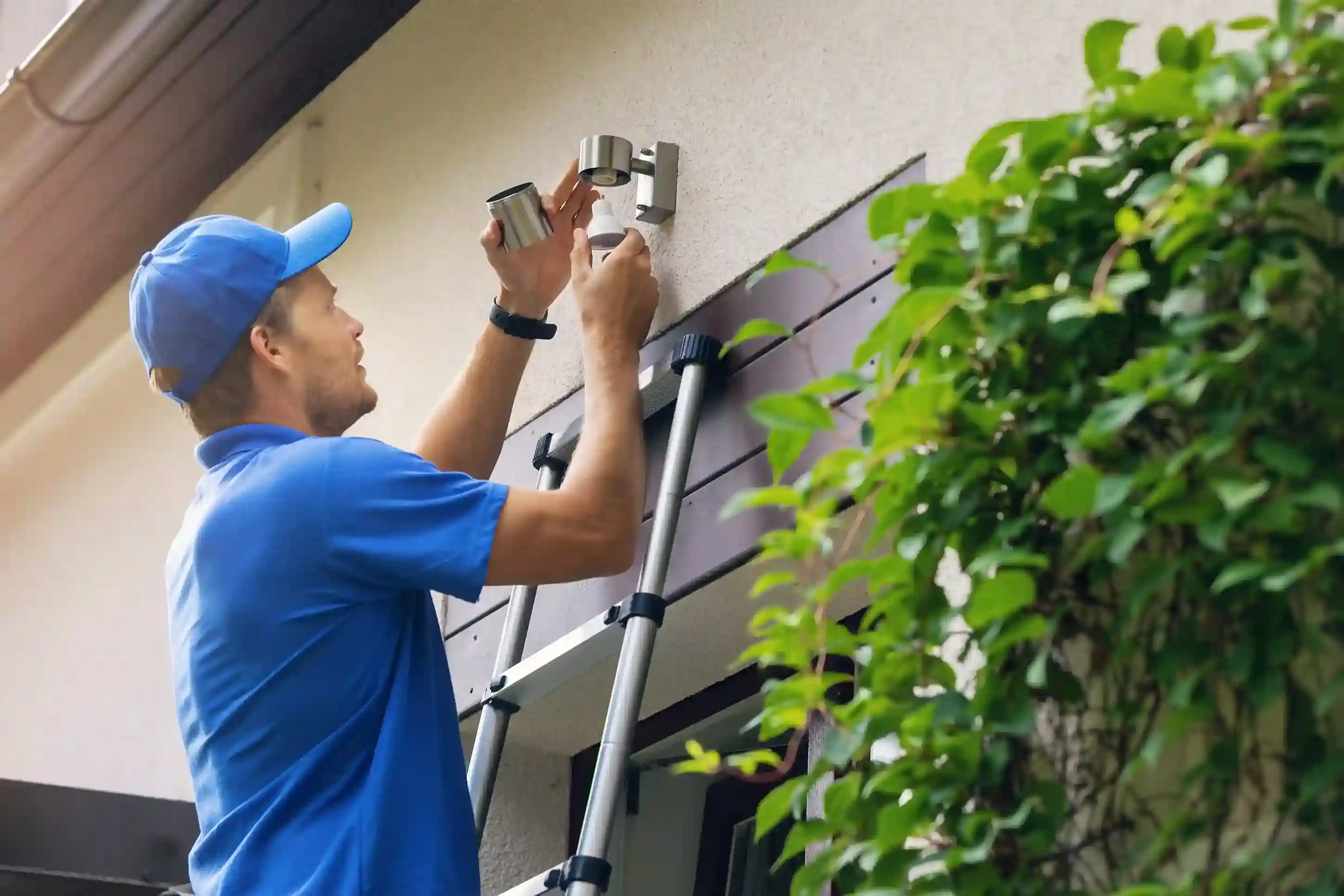
Do You Need a Permit for Outdoor Electrical Lighting Installation in Michigan?
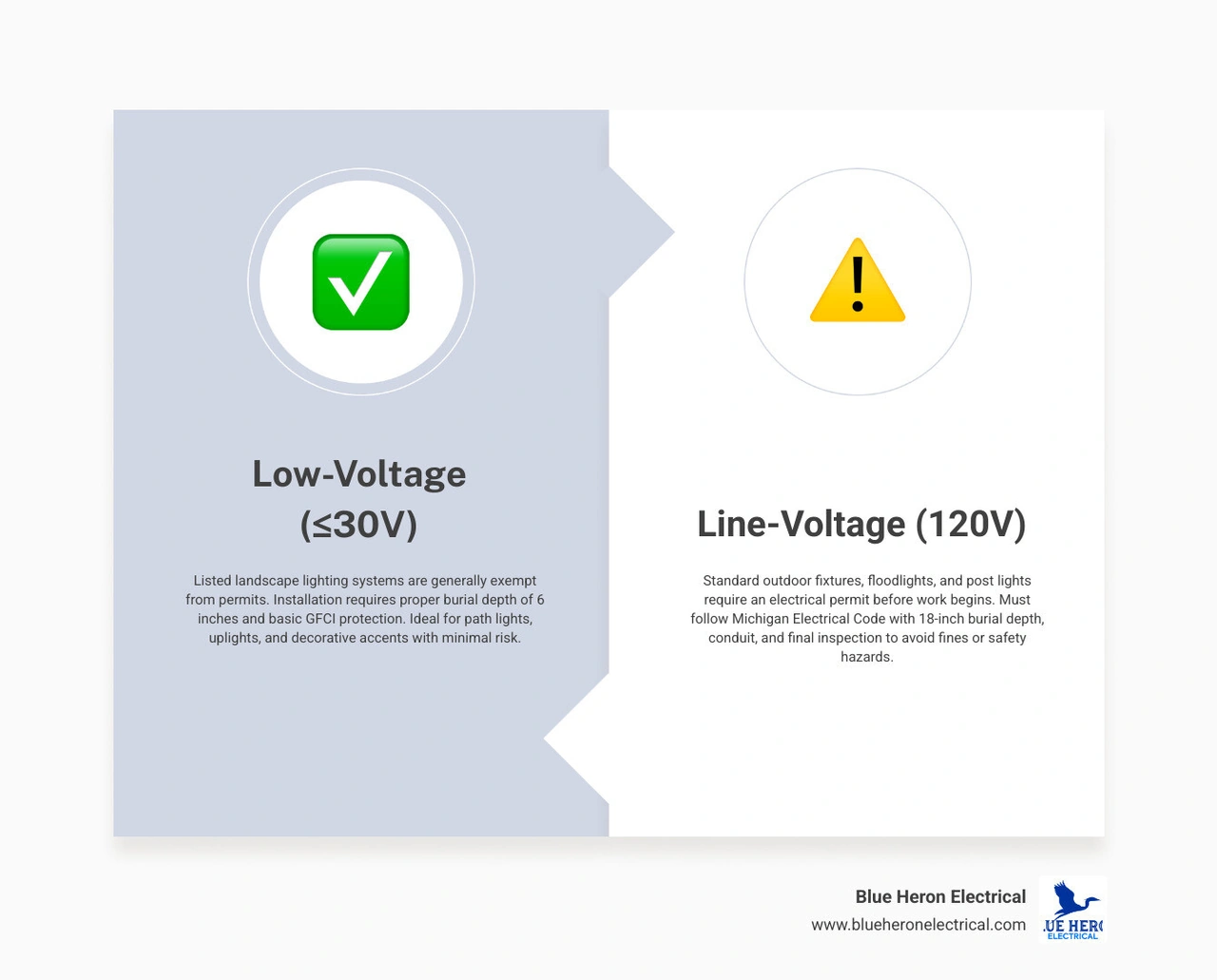
Do you need a permit for outdoor electrical lighting installation in Michigan? The short answer depends on one key factor: voltage.
| Lighting Type | Voltage | Permit Required? |
|---|---|---|
| Low-voltage landscape lighting (listed systems) | 30V or under | No — generally exempt |
| Standard outdoor fixtures, floodlights, post lights | 120V (line-voltage) | Yes — permit required |
| Lamp or bulb replacement only | Any | No — minor repair exemption |
| Temporary/portable plug-in lights | Any | No — no permanent wiring |
Michigan's electrical code is clear: any permanent wiring that exceeds 30 volts requires a permit before work begins. Skip the permit on a 120V outdoor lighting project and you risk failed inspections, fines, and real safety hazards.
If you're planning to add path lights, a security floodlight, or decorative fixtures to your Metro Detroit home or business, understanding where your project falls on that voltage line saves you time, money, and headaches.
Nearly 90% of home buyers consider outdoor lighting a desirable feature, and well-designed systems can raise property value by as much as 20%. Getting the permit question right from the start means your investment is protected — and your installation is safe and legal.
When upgrading your home's exterior, safety and code compliance should always be your top priorities. The Michigan Electrical Code, which adopts the National Electrical Code (NEC) with specific state-level Part 8 amendments, exists to protect your family and your property from electrical fires and shock hazards.
If you are planning a high-quality Outdoor Lighting Installation Troy MI, or anywhere in the Metro Detroit area, understanding these rules is the first step toward a beautiful, stress-free project.
When Do You Need a Permit for Outdoor Electrical Lighting Installation in Michigan?
You will always need to secure an electrical permit in Michigan when your outdoor lighting project involves line-voltage systems. Line-voltage refers to standard 120-volt household electricity.
An electrical permit is required if your project involves:
- Installing new permanent wiring, such as running a new electrical circuit from your main breaker panel to the outside of your home.
- Digging trenches to bury electrical conduit containing 120V wires to power post lights, detached garage lights, or gazebo fixtures.
- Installing standard 120V exterior fixtures, like heavy-duty Security Lighting Installation Troy MI or architectural floodlights that tie directly into your home's junction boxes.
- Adding new outdoor outlets (receptacles) to plug in seasonal displays or portable equipment.
Under Michigan law, you must obtain the permit before starting any physical installation or alteration. Attempting to run new 120V lines without one is a violation of the Michigan Residential Code and can lead to code enforcement action from your local municipality.
When is an Electrical Permit Not Required for Outdoor Lighting Projects?
Fortunately, not every outdoor lighting project requires a trip to the local building department. Under the Michigan Administrative Code, several common scenarios are exempt from permit requirements:
- Low-Voltage Systems: You do not need a permit to install listed Landscape Lighting Troy MI systems, provided that the permanent wiring and connections do not exceed 30 volts.
- Minor Repairs and Maintenance: Replacing a burnt-out bulb (lamp replacement) or swapping an old, broken light fixture with a new one in the exact same location (with no changes to the existing wiring) is exempt.
- Portable Equipment: Plugging approved, portable outdoor lights directly into an existing, code-compliant, permanently installed GFCI outlet does not require a permit.
Even if your project is exempt from a permit, the work must still fully comply with the technical standards of the Michigan Electrical Code.
Low-Voltage vs. Line-Voltage: Michigan Electrical Code Requirements
The difference between low-voltage (typically 12V or 24V) and line-voltage (120V) systems is massive when it comes to installation, safety, and legal requirements.
| Feature | Low-Voltage (12V/24V) | Line-Voltage (120V) |
|---|---|---|
| Permit Required? | No (if under 30V & listed system) | Yes |
| Typical Wire Burial Depth | 6 inches | 18 inches (in conduit) or 24 inches (direct burial) |
| Shock Hazard | Extremely low | Severe / potentially lethal |
| Power Source | Step-down transformer plugged into GFCI | Direct connection to electrical panel/circuit |
| GFCI Protection Required? | Yes, at the transformer's outlet | Yes, for all outdoor fixtures and outlets |
| DIY Friendly? | Yes, for basic layouts | No, requires professional installation |
Michigan Electrical Code Requirements for Low-Voltage Landscape Lighting
Low-voltage lighting relies on a transformer to step down standard 120V household current to a safe 12V or 24V. Because of this low voltage, these systems carry a very low risk of electrical shock. However, to remain permit-exempt and safe under the Michigan Electrical Code, low-voltage systems must meet these criteria:
- The 30V Limit: All secondary wiring and connections must remain under 30 volts.
- Listed Systems: The fixtures, cables, and transformers must be "listed" by an approved testing laboratory (like UL or ETL) and installed exactly according to the manufacturer’s instructions.
- Burial Depth: Low-voltage cables must be buried at least 6 inches deep to protect them from lawnmowers, aerators, and garden shovels.
- Transformer Placement: The transformer itself must be plugged into an approved, outdoor-rated, GFCI-protected outlet equipped with an "in-use" wet-location cover.
If you are planning to add elegant pathway or accent lights to your yard, exploring low-voltage Indoor Outdoor Lighting in Sterling Heights MI is an excellent, highly efficient option that avoids the hassle of municipal permit applications.
Line-Voltage Rules and Permit Exemptions for Minor Outdoor Electrical Work
Line-voltage systems deliver standard 120V power directly to your outdoor fixtures. Because 120V can be lethal and spark fires if damaged, the Michigan Electrical Code enforces strict safety regulations:
- Conduit and Burial Depth: Direct-burial UF (Underground Feeder) cable must be buried at least 24 inches deep. If you run the wires through approved PVC conduit, the minimum burial depth is 18 inches.
- GFCI Protection: Every single outdoor 120V fixture, receptacle, and switch must be protected by a Ground Fault Circuit Interrupter (GFCI) to prevent shock in wet environments.
- Emergency Disconnects: For residential properties, the code requires an emergency disconnect in an easily accessible outdoor location for certain equipment.
- Weatherproof Enclosures: All junction boxes, switches, and connections must be housed in heavy-duty, weatherproof enclosures rated for outdoor use.
Minor work, such as replacing a broken light switch or swapping out an existing porch light, is exempt from permits under the "minor repair" clause. However, if you are adding new lines or installing high-powered fixtures, consult with experts in Indoor Outdoor Lighting in Bloomfield MI to ensure you stay fully code-compliant.
How to Safely Install Outdoor Lighting in Metro Detroit
While a low-voltage DIY project is a fun weekend task, working with 120V line-voltage is a different story. In Michigan, electrical safety is taken very seriously, and the state regulates who is legally allowed to pull permits and perform electrical work.
In Michigan, only two groups of people can legally pull an electrical permit:
- A Licensed Electrical Contractor: A professional who is licensed by the state and carries the necessary insurance to protect your property.
- The Homeowner: A resident who owns and occupies the single-family home where the work is being done.
If you are a homeowner, you can pull a "homeowner's permit" for your own home and accompanying outbuildings (like a detached garage). However, you must perform the work yourself, and you are entirely responsible for ensuring the installation passes inspection and meets the Michigan Electrical Code.
If you live in a multi-family dwelling, a rental property, or own a commercial space, you cannot pull a homeowner's permit; you must hire a licensed electrical contractor to do the work.
Working with standard household voltage carries severe risks of electrocution and electrical fires if wires are sized incorrectly, grounded poorly, or buried at the wrong depth. Hiring a professional for your Indoor Outdoor Lighting in Royal Oak MI guarantees that your project is completed safely, legally, and to the highest standards.
Do You Need a Permit for Outdoor Electrical Lighting Installation in Michigan for Temporary or Seasonal Displays?
With the holidays or outdoor summer events, many homeowners love to decorate with temporary lights. Do you need a permit to hang strings of holiday lights or set up temporary event lighting?
Under Michigan rules, temporary or seasonal outdoor lighting does not require an electrical permit, provided it meets these conditions:
- No Permanent Wiring: The lights must be portable, plug-in fixtures that connect to existing, permanently installed, GFCI-protected outdoor receptacles.
- Time Limits: The National Electrical Code defines "temporary" as an installation that is in place for no more than 90 days. After the season or event ends, the temporary wiring and fixtures must be taken down.
- Approved Equipment: All extension cords and light strings must be rated for outdoor use and listed by an approved testing agency.
If you are planning a large-scale temporary display or want to install permanent holiday lighting tracks, reaching out to experts in Indoor Outdoor Lighting in Birmingham MI can help you set up a safe, reliable power source that won't overload your home's electrical panel.
Inspection Requirements and Consequences of Unpermitted Work
If your outdoor lighting project required an electrical permit, the job isn't finished when the lights turn on. The final, crucial step is the municipal inspection.
- The Inspection Process: Once the wiring is complete but before you cover up any trenches or close up junction boxes, you must notify your local building inspector. They will visit your property to verify that the burial depth, conduit, grounding, and GFCI protections conform to the Michigan Electrical Code.
- Permit Expiration: In Michigan, electrical permits expire 180 days after they are issued. If your project is delayed, you must request an extension from the building department before the 180-day mark to keep the permit active.
Skipping the permit and inspection process is a risky gamble. If you are caught installing unpermitted 120V outdoor lighting, you could face:
- Fines and Penalties: Local code enforcement can issue steep fines and order you to stop all work immediately.
- Mandatory Removal: You may be forced to tear down your new lighting system, dig up buried wires, and start over from scratch with a permit.
- Insurance Complications: If an unpermitted electrical installation causes a fire or property damage, your homeowner's insurance policy may deny your claim entirely.
- Real Estate Delays: When you sell your home, home inspectors and savvy buyers will look for unpermitted work. Unpermitted electrical installations can stall your sale or force you to pay for expensive, last-minute retrofits.
Investing in professional Lighting Solutions ensures that your project is fully permitted, inspected, and documented, giving you complete peace of mind.
Frequently Asked Questions About Michigan Outdoor Lighting Permits
Do homeowners need a licensed electrician to install landscape lighting in Michigan?
No, you do not strictly need a licensed electrician to install low-voltage landscape lighting (under 30V), as these systems are generally exempt from permits and can be installed by homeowners.
However, if your landscape lighting requires a new 120V outdoor outlet to power the transformer, or if you are installing 120V line-voltage fixtures, a permit is required. While you can pull a homeowner's permit for an owner-occupied single-family home, hiring a licensed professional for your Lighting needs ensures the work is safe, code-compliant, and built to last.
Are there specific rules for lighting in residential vs. commercial outdoor spaces?
Yes, commercial outdoor lighting is subject to much stricter rules than residential lighting. For commercial properties in Michigan:
- No DIY: Business owners cannot pull homeowner permits; all work must be performed by a licensed electrical contractor.
- Plan Reviews: For commercial buildings over 3,500 square feet or electrical services exceeding 400 amps, detailed electrical plans must be submitted to the local building department for review before a permit is issued.
- Egress and Safety Codes: Commercial outdoor spaces must meet strict public safety codes, including minimum illumination levels (typically at least 1 foot-candle along public egress paths) and emergency backup power requirements.
Whether you are upgrading a storefront or an office park, hiring a commercial team for Electrical Services keeps your business compliant with local safety and zoning laws.
How deep should low-voltage and line-voltage wires be buried in Michigan?
Burial depths are strictly regulated by the Michigan Electrical Code to prevent accidental cuts and safety hazards:
- Low-Voltage Wires (under 30V): Must be buried at least 6 inches deep.
- Line-Voltage Wires (120V) in Conduit: PVC conduit must be buried at least 18 inches deep.
- Line-Voltage Wires (120V) Direct Burial: UF cable must be buried at least 24 inches deep.
Before you dig even an inch into your yard, always Call 811 (or visit MISD/Miss Dig online) to have underground utility lines marked for free. It is a legal requirement in Michigan and protects you from hitting buried gas, water, or high-voltage power lines. For professional digging and installation, explore our comprehensive Services.
Conclusion
Adding outdoor electrical lighting is one of the best ways to enhance your home's safety, security, and curb appeal. However, keeping your project legal and safe means understanding Michigan's permit requirements. While low-voltage systems under 30 volts give you plenty of flexibility without a permit, any line-voltage (120V) installation demands a permit, strict code compliance, and professional oversight.
At Blue Heron Electrical, we provide dependable, code-compliant residential and commercial electrical services across Metro Detroit and Oakland County. We focus on safety, long-term reliability, and clear communication, ensuring your outdoor lighting project is beautiful, legal, and built to withstand Michigan's toughest weather.
Ready to light up your home or business safely? Check out our Blog for more electrical tips, or contact us today to schedule your professional Outdoor Lighting Installation Troy MI.
Customer Testimonials

Service Areas