
Smart Thermostat C-Wire Installation for Older HVAC Systems
The Hidden Hurdle of Upgrading Your Thermostat Before Winter
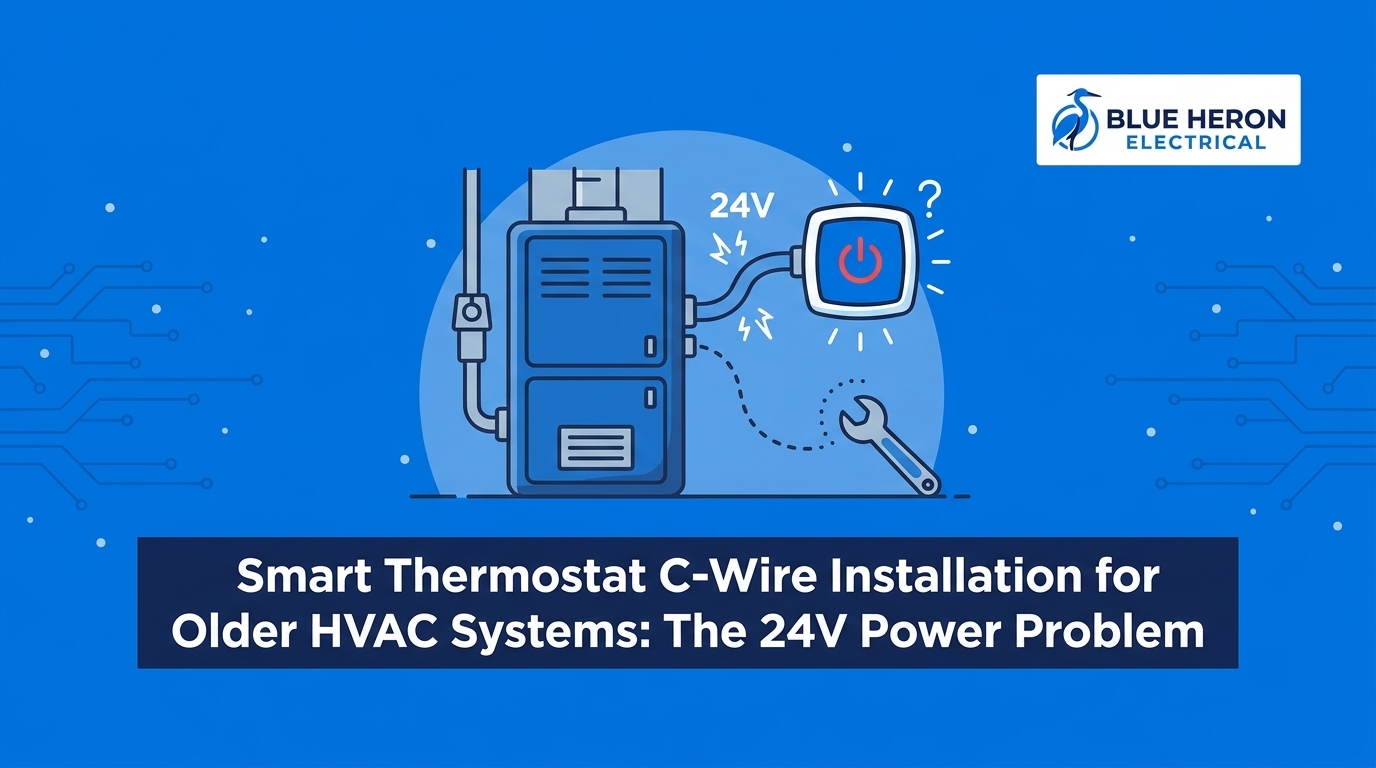
You pull your brand-new Wi-Fi thermostat out of the box, ready to get a jump on energy savings during the pre-heating season this September. The instructions look simple enough, but when you pull the old plastic unit off the wall, you hit a roadblock. There are only two wires sticking out of the drywall, and the manual clearly states you need a "C-wire." Smart thermostat C-wire installation for older HVAC systems is often the first major hurdle homeowners face when trying to modernize their heating controls. You are suddenly left with a frustrating choice: risk using a cheap DIY adapter kit or call in a professional to handle the electrical upgrade safely.
If you are dealing with outdated wiring that cannot support modern technology, professional residential electrical services can safely bring your system up to current standards without risking your equipment.
What is a C-Wire, and Why Do Modern Thermostats Demand It?
The C-wire, or "common wire," is a dedicated electrical line that completes the circuit between your heating system and your thermostat. It provides a steady, uninterrupted flow of electricity to power the device. Without this return path, the electrical loop remains open, and the thermostat cannot draw the power it needs to function.
To understand why this matters, it helps to look at how heating controls have evolved over the years. Modern devices are essentially small computers mounted to your wall. They feature bright touchscreen displays, constant Wi-Fi connectivity, background software updates, and sensors that monitor room activity. All of these features require 24V continuous power to run reliably. If you are planning a smart thermostat installation, this continuous power source is an absolute requirement, not an optional upgrade.
The Shift from Mechanical to Digital
Older thermostats operated on very simple principles. They did not need a steady power supply to run a screen or connect to the internet.
• Mechanical switches: Many older models used a small vial of mercury or a simple bimetallic strip. When the room temperature dropped, the metal would contract, tilting the mercury to close the circuit and signal the furnace to turn on.
• Battery-operated models: Early digital thermostats used AA batteries to power basic LCD screens and programmable timers, relying on the wall wires only to send the "on" or "off" signal to the furnace.
• Modern smart devices: Today's Wi-Fi models process data constantly. Batteries would drain in a matter of days if they had to power a Wi-Fi radio and a full-color screen, which is why a hardwired electrical connection is mandatory.
The Role of the Constant Circuit
The thermostat needs to draw power without accidentally activating the heating or cooling relays. If a device tries to pull power through the standard heating wire, the furnace control board might misinterpret that power draw as a command to turn on the heat. A dedicated common wire ensures safe, uninterrupted electrical flow back to the control board, keeping the thermostat fully powered while keeping the heating commands completely separate.
Why the C-Wire is Missing in Older Heating Systems
It is incredibly common to pull off an old thermostat and find only two, three, or four wires. Homes built decades ago were wired strictly for the technology of their time. Electricians and HVAC installers ran the minimum amount of copper wire necessary to get the job done, which usually meant a simple 2-wire setup for heat-only systems, or a 4-wire setup for basic heating and cooling.
In Sterling Heights MI older neighborhoods, many homes still feature their original wiring runs hidden behind the drywall. The furnace control boards installed in these homes were never designed to handle the electrical load of modern smart devices. They were built simply to receive an analog signal, click a relay, and ignite the burners.
Upgrading a single device often reveals broader electrical modernization needs hidden within aging properties. For example, one homeowner in an older property recently reached out for help updating their home's electrical system. They needed multiple outlets added inside and out, an outdated electrical box updated, and a new dining room chandelier installed. Just like discovering a missing C-wire, tackling one modern upgrade frequently uncovers a network of older wiring that requires a comprehensive, professional update to meet today's safety standards and power demands.
The Dangers of DIY "Add-a-Wire" Kits and Power Stealing
When homeowners discover they lack a common wire, a quick internet search usually points them toward DIY "add-a-wire" kits or "power stealing" workarounds. These solutions claim to bypass the need for a dedicated C-wire by altering how electricity flows between the thermostat and the furnace. However, these shortcuts carry severe risks for older heating equipment.
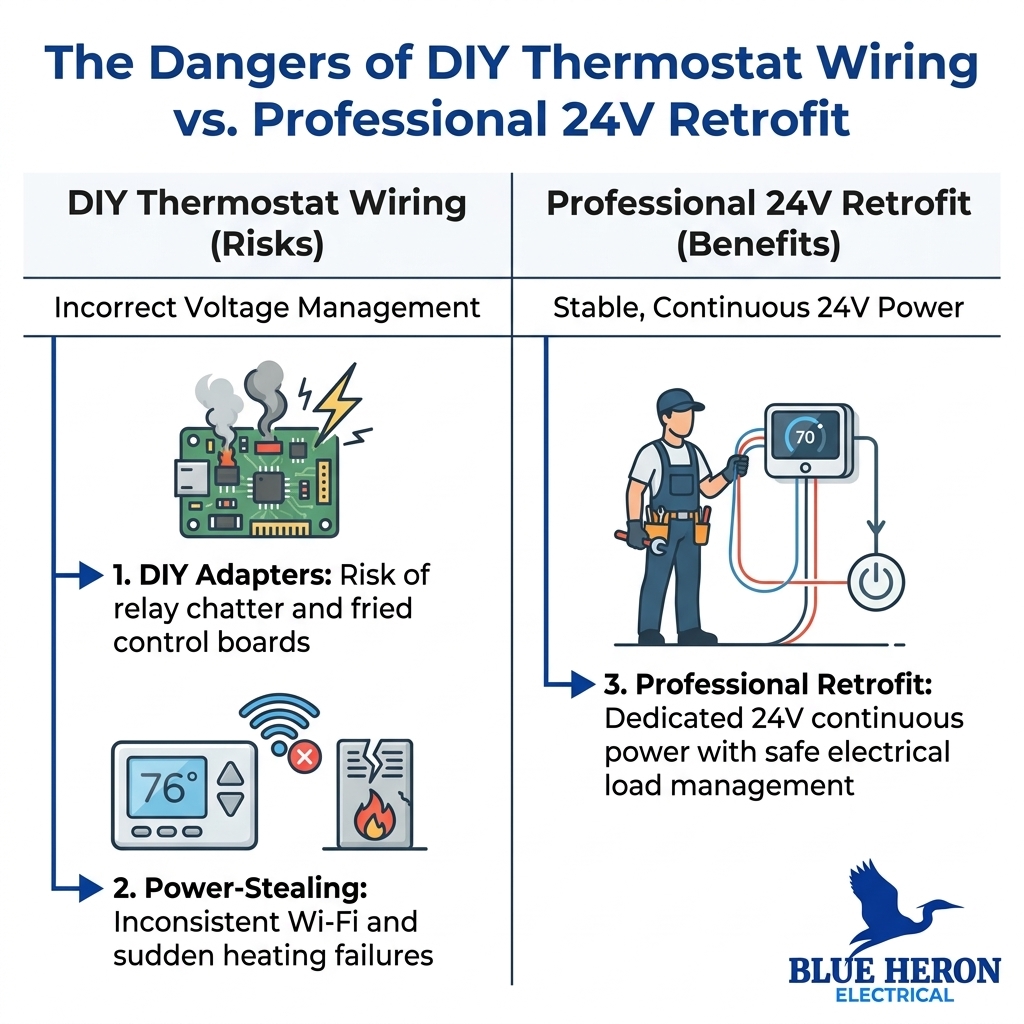
Power stealing occurs when a smart thermostat tries to siphon small amounts of electricity through the existing heating or cooling wires to charge its internal battery. Because older furnace control boards were not built to accommodate this constant trickle of voltage, the system often misinterprets the electrical draw.
This misinterpretation leads to a highly destructive problem known as "relay chatter." The furnace relay rapidly opens and closes, making a rapid clicking sound. This constant mechanical switching generates excessive heat and physical wear, which can quickly overload and fry an aging furnace control board.
A licensed electrician understands the specific electrical load limits of older furnace boards, protecting you from costly DIY mistakes. Attempting to force a modern device to work on an outdated circuit board is a gamble. If you are unsure when to hire a licensed electrician versus DIY, any project involving the delicate control board of your primary heating system should strictly be left to the professionals. A fried control board costs significantly more to replace than a proper electrical retrofit.
The Real Cost of Botched Wiring When Temperatures Drop
The biggest risk of a botched DIY wiring job isn't just a broken thermostat screen—it is losing your home's heating system exactly when you need it most. A stressed furnace control board rarely fails on a mild autumn afternoon. It typically fails when the system is working its absolute hardest to keep up with freezing temperatures.
With Metro Detroit's harsh winters, a sudden loss of heat is a serious safety risk, not just a minor inconvenience. If a power-stealing thermostat finally overloads the furnace control board in the middle of a January night, your home will lose heat rapidly. Plumbing pipes can freeze, and emergency HVAC repairs during a winter storm come with premium costs and potentially long wait times.
This is why addressing these electrical vulnerabilities during the pre-heating season (September) is so critical. A thermostat that seems to be "working fine" on a power-stealing setup in the fall might be slowly degrading the furnace relay with every cycle. By the time the heavy winter workload arrives, the weakened component simply gives out. Fixing the root cause of the power issue before the freezing weather hits ensures your heating system will operate reliably through the coldest months of the year.
How Professionals Safely Retrofit a Common Wire
Resolving a missing common wire requires more than just twisting a few copper strands together. Professionals take a comprehensive approach to ensure the new 24V continuous power supply is safe, stable, and fully compatible with your existing heating equipment.
The diagnostic process begins at the furnace control board. A professional will assess the transformer's capacity to ensure it can handle the additional electrical load of a Wi-Fi device. They will also inspect the existing wire bundle running through your walls. In some cases, there may be an unused wire tucked behind the drywall that can be safely repurposed as a C-wire.
If no spare wire exists, professionals will run a completely new, properly rated thermostat wire bundle directly from the HVAC equipment to the thermostat location. This ensures a clean, dedicated circuit that complies with modern electrical codes.
In older properties, this specific upgrade often coincides with broader electrical evaluations. One local customer recently required significant electrical upgrades for their older home, including a completely new breaker panel. The technicians provided multiple options with clear pricing for the panel, new lighting, switches, and a generator hook-up, completing all tasks safely. When you are upgrading critical infrastructure, it is the perfect time to consider electrical panel upgrades to ensure your entire home can handle modern electrical loads safely.
Preparing Your Home's Electrical System for the Heating Season
A smart thermostat is ultimately only as reliable as the electrical infrastructure supporting it. You can purchase the most advanced, energy-efficient heating controls on the market, but if the wiring behind the wall is compromised, the system will fail.
For homeowners in Sterling Heights MI older neighborhoods, proactive electrical assessments are the best defense against winter breakdowns. Before the heavy winter heating demand begins, it pays to have your home's electrical capacity evaluated by professionals who understand the unique quirks of aging properties.
If you are planning upgrades, local Sterling Heights electricians can evaluate your furnace wiring, check your breaker panel, and ensure your home is ready for the seasonal shift. Taking these steps provides the peace of mind that comes with knowing your heating system's electrical components are safely modernized and ready to perform when the snow starts falling.
Frequently Asked Questions About Smart Thermostat Wiring
What is a C-wire on a thermostat?
The C-wire, or common wire, is a dedicated electrical line that completes the 24V circuit between your heating system and your thermostat. It provides a steady, continuous flow of power required to run the digital displays and Wi-Fi radios found in modern smart devices. Older mechanical thermostats did not require this constant power, which is why the wire is often missing in older homes.
Why do smart thermostats need a 24V common wire?
Smart thermostats are essentially small computers that constantly process data, connect to your home's internet, and light up full-color touchscreens. These features require 24V continuous power to operate reliably. Without a common wire to complete the circuit, the device's internal battery would drain rapidly, causing the thermostat to disconnect from the network or shut down entirely.
Can I install a smart thermostat without a C wire?
While some manufacturers claim their devices can operate without a common wire by using internal batteries or "power stealing" methods, it is highly discouraged for older heating systems. Relying on these workarounds often leads to dropped Wi-Fi connections, drained batteries, and severe strain on your furnace's control board. A dedicated hardwired connection is the only way to ensure long-term reliability.
What happens if I don't connect the C wire?
If your device requires a common wire and you fail to connect one, the thermostat will likely refuse to power on at all. If the device attempts to steal power through the heating wires instead, you may notice your furnace turning on and off rapidly (relay chatter), your thermostat screen going blank unexpectedly, or your Wi-Fi connection dropping repeatedly.
Are C-wire adapters safe for older furnaces?
DIY adapter kits and add-a-wire accessories carry significant risks when used on older furnace control boards. These older boards were not designed to handle the constant voltage manipulation required by adapter kits. Using them can overheat the relays, potentially frying the entire control board and leaving you without heat during the winter.
How can I tell if my current thermostat has a C-wire?
The easiest way to check is to turn off the power to your heating system at the breaker, gently remove the front faceplate of your current thermostat, and look at the wiring terminals. If you see a wire connected to a terminal labeled "C", you have a common wire. If you only see wires connected to terminals like R, W, Y, and G, your system likely lacks the necessary continuous power line.
Ensure Reliable Heating with a Professional Thermostat Upgrade
Upgrading your home's heating controls during the pre-heating season (September) is a smart move for energy efficiency, but it requires a solid electrical foundation. A proper, hardwired electrical connection ensures your new smart thermostat will work flawlessly, keeping your family comfortable without risking damage to your older HVAC equipment.
Don't let a missing wire derail your home modernization plans or put your furnace at risk. By relying on professional installation, you guarantee that your heating system has the safe, continuous power it needs to perform reliably all winter long.
Customer Testimonials

Service Areas