
What Electrical Work Can Be Done Without a Permit Before Winter?
Are Your Home's Electrical Circuits Ready for Heavy Winter Heating Loads?
When preparing for the impending surge of space heaters, heated blankets, and holiday lighting, applying a few essential home maintenance tips and troubleshooting strategies can help you determine if your electrical system is safely equipped for the season. Mid-fall is the critical time to prepare residential electrical panels and circuits for heavy winter heating loads, long before the first freeze sets in. Homeowners often face a crucial decision point during this pre-winter window: identifying which minor upkeep tasks they can legally handle themselves, and which electrical components require professional inspection to prevent dangerous overloads.
As temperatures drop, the demand on your home's electrical infrastructure increases exponentially. A circuit that functioned perfectly fine running a single television in July might trip repeatedly when tasked with powering a 1,500-watt space heater in November. Here at Blue Heron Electrical, our team typically sees a sharp spike in service calls every mid-fall from Sterling Heights homeowners dealing with overloaded circuits. Understanding the boundary between routine upkeep and regulated electrical work is the first step toward a safe season. When in doubt, ensuring your system is legally compliant and winter-ready requires professional electrical services to properly assess your home's capacity.
Electrical Maintenance You Can Do Without a Permit
For homeowners in Sterling Heights looking to prepare their properties for the colder months, it helps to know exactly what minor upkeep is legally permissible without pulling a permit. The State of Michigan distinguishes between superficial, routine maintenance and structural alterations to your electrical system. Routine maintenance generally involves replacing existing, accessible components with identical parts.
The following tasks are widely considered exempt from permitting requirements, meaning you can legally perform this troubleshooting and upkeep on your own:
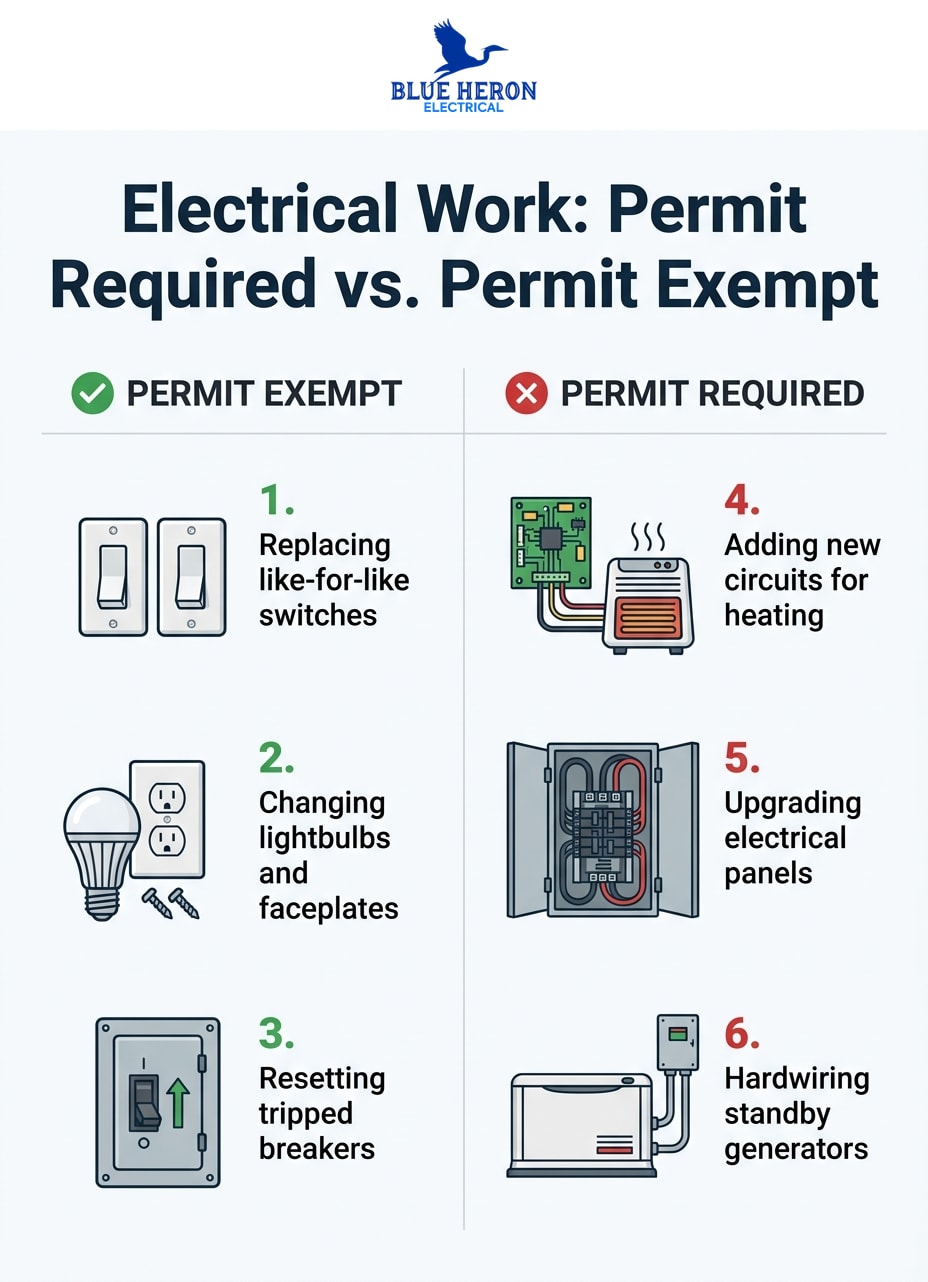
• Replacing like-for-like switches: Swapping out a standard single-pole switch for a new single-pole switch of the exact same rating is considered minor maintenance.
• Changing lightbulbs and lamps: Upgrading older incandescent bulbs to energy-efficient LED bulbs to reduce your winter lighting load requires no legal oversight.
• Swapping out faceplates: Replacing cracked, painted-over, or damaged outlet covers and switch plates is a cosmetic update that does not alter the wiring.
• Resetting tripped breakers: Flipping a breaker back to the "on" position after a temporary overload is standard homeowner troubleshooting. However, if the breaker trips repeatedly, that indicates a deeper issue requiring professional attention.
These tasks fall strictly under routine maintenance because they do not change the electrical distribution, add new loads to the panel, or involve opening up walls to run new wire. They are simple, superficial replacements. Note that while these tasks do not require a permit, safety remains paramount. Always ensure power is completely disconnected at the main panel before performing even the most minor exempt maintenance.
When Mid-Fall Troubleshooting Crosses the Line: What Requires a Permit?
The boundary between simple DIY troubleshooting and complex electrical work is strictly defined by safety codes. The Michigan Residential Code generally requires permits for new circuits, panel alterations, and hardwired equipment installations. As you move through your mid fall / pre-winter preparations, you might realize that your current electrical setup is insufficient for your seasonal needs. Adding a dedicated outlet for a heavy-duty space heater or installing hardwired exterior lighting for the darker months crosses the line from maintenance into alteration.
Any work involving exposed wiring, altering the home's electrical distribution, or upgrading service capacity requires professional intervention. The risks of overloading an existing circuit with new winter heating demands are severe, which is why local municipalities mandate inspections for these changes. Understanding what electrical repairs require a licensed electrician versus a homeowner DIY is critical for keeping your property up to code.
• Replacing a broken 15-amp receptacle with a new 15-amp receptacle — Regulated Alterations (Permit Required): Upgrading a 15-amp receptacle to a 20-amp receptacle
• Changing a standard light fixture to a similar fixture — Regulated Alterations (Permit Required): Installing new recessed lighting where none existed
• Resetting a tripped circuit breaker — Regulated Alterations (Permit Required): Replacing a faulty circuit breaker in the main panel
• Plugging in a portable space heater — Regulated Alterations (Permit Required): Hardwiring a baseboard heating unit
Preparing for seasonal loads means recognizing when your troubleshooting efforts have reached their legal and safe limits. If a task requires opening the main breaker box, running new non-metallic sheathed cable through studs, or calculating load capacities, it mandates a permit and a licensed professional.
Why Panel Inspections and Upgrades Are Not a DIY Project
The electrical panel is the beating heart of your home's power distribution system. According to the National Fire Protection Association (NFPA), home electrical fires peak during the winter months, driven heavily by increased heating and lighting loads. An outdated, degraded, or overloaded panel is a major hazard when winter heating demands reach their peak. In our years of inspecting Sterling Heights homes, we find that older panels simply were not designed to handle the continuous loads generated by modern electric heating appliances running for hours at a time.
Inspecting the panel's internal components or upgrading its capacity absolutely requires a permit and a licensed electrician. In Sterling Heights, upgrading a panel involves coordinating with the local utility company to disconnect the main service drop, removing the old enclosure, installing new grounding systems, and passing a formal municipal inspection. This process ensures that the busbars, main breakers, and neutral connections are properly torqued and capable of handling the home's total calculated load. Keep in mind that federal tax credits or local utility incentive programs may apply to qualifying energy-efficient electrical panel upgrades; we advise readers to verify current programs with their utility or a tax professional.
The dangers of continuous loads: Space heaters are considered continuous loads because they often run for three hours or more. If an older panel has weakened breakers, the sustained heat generated by this continuous draw can cause the breaker to fail without tripping, melting the insulation and leading to an electrical fire.
Positioning preventive seasonal electrical maintenance as a safety necessity rather than an afterthought protects your home. If your mid-fall preparations reveal flickering lights, buzzing sounds from the breaker box, or a lack of available circuits for winter equipment, it is time to look into electrical panel changes and upgrades.
Backup Power and Extreme Weather Preparedness
With extreme weather becoming more frequent, power outages during severe winter storms are a harsh reality. Freezing rain, heavy snow accumulation, and high winds routinely bring down power lines, leaving homes without critical heating systems for days. Reliable backup power is no longer just a luxury; it is a necessity for protecting your property from freezing pipes and maintaining a habitable indoor environment during the harshest mid fall / pre-winter weather events. Our team frequently recommends addressing these backup systems in October, long before the first major freeze hits.
Installing any hardwired backup power system requires strict adherence to local codes and mandatory permits. Whether you are integrating a whole-home standby unit or wiring a manual transfer switch for a portable unit, the connection interfaces directly with your home's main electrical supply. This is highly regulated work.
The extreme dangers of unpermitted, DIY backup power setups cannot be overstated. One of the most hazardous illegal practices is "backfeeding"—plugging a generator directly into a dryer outlet or standard wall receptacle to power the house. This bypasses the main breaker and sends high-voltage electricity back out onto the utility grid. This illegal practice can be instantly fatal to utility workers attempting to repair downed lines in your neighborhood. It can also cause catastrophic fires inside your home when the grid power is restored.
Proper permitting ensures that a mechanical interlock or automatic transfer switch is installed, physically preventing grid power and generator power from colliding. For safe, code-compliant winter readiness, professional standby generator installation guarantees the system will function safely when it is needed most.
The Legal and Safety Risks of Unpermitted Electrical Work
Ignoring permit requirements for electrical alterations carries severe consequences that extend far beyond a simple slap on the wrist. When Sterling Heights homeowners attempt complex electrical projects without municipal oversight, they take on immense liability.
1. Fines and Penalties: The Michigan Department of Licensing and Regulatory Affairs (LARA) heavily regulates electrical work. Performing regulated alterations without a permit can result in significant fines and mandatory orders to tear out the unpermitted work so it can be inspected from scratch.
2. Voided Homeowners' Insurance: Insurance policies require homes to be maintained to legal safety standards. If an unpermitted, DIY electrical circuit causes a fire during the winter peak, the insurance investigator will trace the source. Discovering unpermitted wiring can lead to a completely denied claim, leaving the homeowner financially devastated.
3. Real Estate Transaction Failures: Unpermitted work routinely derails property sales. When it comes time to sell your home, buyers will hire inspectors who easily spot illegal wiring, unpermitted electrical remodeling projects, and overloaded panels. The buyer's lender may refuse to fund the mortgage until the unpermitted work is brought up to code by a licensed professional, forcing you to pay for the repairs anyway.
4. Life Safety Hazards: The most critical risk is the threat to human life. Electrical codes exist specifically to prevent shocks, electrocution, and fires. Without a third-party inspector verifying wire gauges, grounding, and breaker sizing, hidden dangers can lurk behind the drywall for years before sparking a disaster.
Blue Heron Electrical is deeply committed to safety, strict code compliance, and proper permitting. By handling the legal paperwork and municipal inspections, a licensed professional removes the liability from the homeowner and provides the peace of mind that the home's systems are legally sound and completely safe for the winter ahead.
Frequently Asked Questions About Electrical Permits and Seasonal Maintenance
What electrical maintenance can I do without a permit?
Routine maintenance like changing lightbulbs, replacing like-for-like switches, and resetting breakers does not require a permit. These tasks are considered superficial replacements rather than system alterations. Because you are not changing the wiring path, adding new loads, or altering the home's electrical distribution, municipalities allow homeowners to perform these minor upkeep tasks. Always ensure the power is off at the breaker before attempting any superficial replacements during your mid fall / pre-winter preparations.
Do I need a permit to add a circuit for winter heating?
Yes, adding any new circuit to your electrical panel requires a permit. Connecting new wire to the main service panel and running it through the home alters the electrical infrastructure. A permit ensures that the panel has the physical capacity and the calculated load availability to handle the new heating equipment safely. Without this inspection, you risk overloading the main busbar, which can lead to catastrophic panel failure during peak winter demand.
Can a homeowner do their own electrical work in Michigan?
While homeowners can perform minor exempt maintenance, Michigan law strictly regulates major electrical work. Significant alterations, such as upgrading a panel or hardwiring new appliances, require permits and are safely handled by a licensed professional. Even if a municipality allows a homeowner to pull their own permit for certain work, the homeowner is still legally bound to perform the work exactly to the National Electrical Code (NEC) and pass the same rigorous inspections as a master electrician.
Do I need a permit to upgrade my electrical panel?
Absolutely. Upgrading an electrical panel is a major alteration that mandates a permit and a licensed electrician. This complex project involves coordinating with the local utility company to disconnect the main power drop to the house. It requires replacing the main grounding system, calculating new load demands, and passing a formal municipal inspection before the utility will restore power. It is never a DIY project under any circumstances.
What happens if I do electrical work without a permit?
You risk severe safety hazards, code violations, fines, and the potential voiding of your homeowners' insurance. If unpermitted work causes a fire, your insurance provider can deny the claim entirely. Furthermore, unpermitted alterations become a major liability when selling your home. Home inspectors easily identify non-compliant wiring, which can force you to hire an electrician to tear out and redo the work before a buyer's lender will approve the mortgage.
How do I verify if my mid-fall electrical prep requires a permit?
The safest approach is to consult with a licensed local electrician before beginning any work. Professionals stay up-to-date on local LARA regulations and can immediately identify whether your planned winter preparations cross the line into regulated alterations. If a permit is required, a licensed contractor will handle the entire application, scheduling, and inspection process for you, ensuring the work is 100% legal and safe.
Ensure Your Electrical System is Winter-Ready and Code-Compliant
Understanding permit requirements is key to maintaining a safe home during the heavy usage months of winter. While basic upkeep and troubleshooting are safe to handle on your own, leaving complex wiring, circuit additions, and panel upgrades to licensed professionals ensures your home is protected against severe electrical hazards. Preparing your Sterling Heights property for the cold shouldn't involve legal risks or safety compromises. Schedule a professional inspection to evaluate your panel and circuits before the freezing weather arrives, ensuring you have a clear path to safe, reliable winter readiness.
Customer Testimonials

Service Areas