
X Ways to Find Certified Electrical Safety Inspectors for Michigan Homes
Why Electrical Safety Inspections for Michigan Homes Could Save Your Life and Your Property
Electrical safety inspections for Michigan homes are one of the most overlooked ways homeowners protect their families from fires, shocks, and costly damage — yet most people never schedule one until something goes wrong.
Here's what you need to know at a glance:
- What it is: A thorough review of your home's wiring, panel, outlets, grounding, and safety devices by a licensed electrician
- Who requires it: Michigan's Bureau of Construction Codes (BCC) under LARA enforces the 2023 National Electrical Code (NEC) statewide
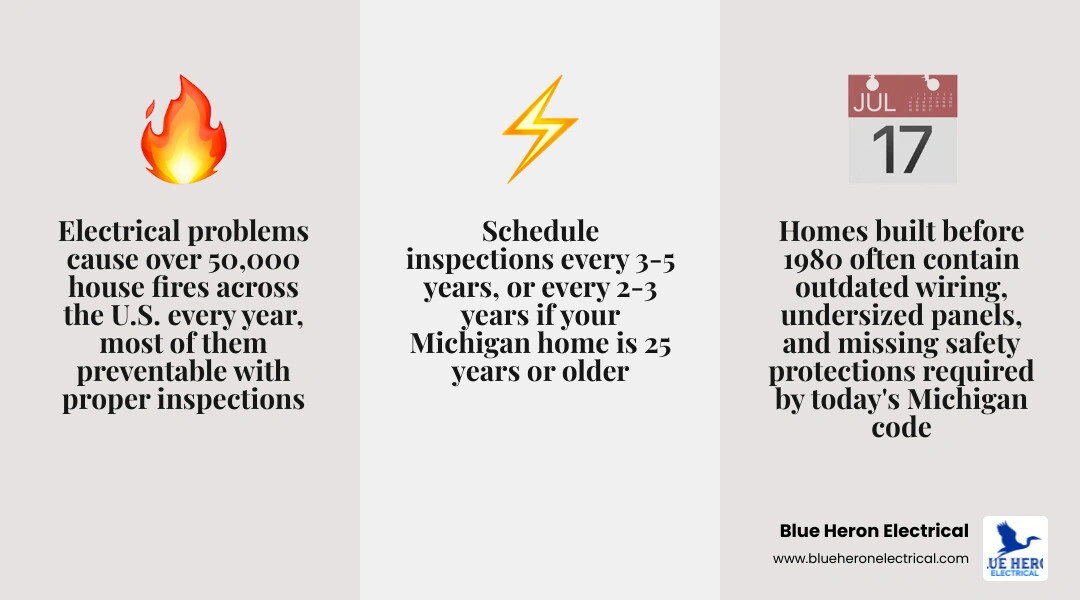
- When you need one: Every 3–5 years for most homes; every 2–3 years if your home is 25 years or older
- Why it matters: Electrical problems cause over 50,000 house fires across the U.S. every year — most of them preventable
- Key warning signs: Flickering lights, tripped breakers, burning smells, warm outlets, or a panel older than 25 years
If your Metro Detroit home was built before 1980, there's a real chance your electrical system wasn't designed to handle modern power demands. Older homes in Oakland County and surrounding areas often contain outdated wiring types, undersized service panels, and missing safety protections that today's code requires. Many of these hazards are completely invisible — no sparks, no smells, nothing obvious — until they aren't.
Think of an electrical safety inspection the way you think of a health checkup. You don't wait until you're in the emergency room to see a doctor. The same logic applies to your home's electrical system.
Simple electrical safety inspections for michigan homes glossary:
- how an electrical inspection protects older homes in southeast michigan
- what common code violations show up in older sterling heights and macomb county homes
- why a home electrical inspection matters before buying or selling in metro detroit
Understanding the Michigan Electrical Code and Regulatory Standards
Electrical installations and safety standards in Michigan are not left to guesswork. The state maintains strict regulatory control to ensure every home's electrical system is safe, stable, and capable of handling modern electrical loads.
In Michigan, the primary regulatory body overseeing these standards is the Department of Licensing and Regulatory Affairs (LARA), specifically the Bureau of Construction Codes (BCC). Together with local municipal offices, they act as the Authority Having Jurisdiction (AHJ) to enforce code compliance, issue permits, and conduct safety inspections.
As of July 2026, Michigan operates under the 2023 edition of the National Electrical Code (NEC), which has been integrated into Part 8 of the Michigan Electrical Code Rules. This modern standard represents a massive leap forward in home safety compared to codes from a few decades ago.
When you schedule an inspection, the inspector checks your home's systems against these state-mandated rules. This is particularly crucial for historic and older properties across Southeast Michigan. Understanding how an electrical inspection protects older homes in southeast michigan is the first step toward preventing catastrophic failures.
Furthermore, local weather patterns play a significant role in how these systems wear down over time. Extreme temperature swings, freezing winters, and heavy summer storms put massive physical stress on utility connections, outdoor meters, and home panels. To learn more about these seasonal impacts, read about how michigan winters and summer storms stress home electrical systems in metro detroit.
Why electrical safety inspections for michigan homes must align with the 2023 NEC
While the National Electrical Code is a country-wide standard, Michigan adopts it with specific state-level amendments that address local building types and regional safety priorities.
One of the most important updates in the 2023 NEC enforced in Michigan is the requirement for an outdoor emergency disconnect. For all new and upgraded one- and two-family dwellings, a readily accessible disconnecting means must be installed on the exterior of the home. This allows emergency responders, such as firefighters, to safely cut power to the entire property from the outside before entering a burning structure.
Another crucial Michigan-specific amendment involves the bonding of Corrugated Stainless Steel Tubing (CSST) gas piping. Because CSST is highly vulnerable to punctures from electrical arcing during nearby lightning strikes, the Michigan Electrical Code mandates that these gas systems be bonded to the electrical service grounding electrode system using a minimum 6 AWG copper wire.
If you are planning major electrical upgrades, such as swapping out an old fuse box or expanding your power capacity, you must comply with these modern updates. For a detailed breakdown of when local laws require official oversight, see our guide on does a panel upgrade require an inspection and permit in michigan.
The Step-by-Step Process for Permits and Inspections in Michigan
Navigating the permitting and inspection process in Michigan can feel overwhelming, but it is a structured, step-by-step sequence designed to guarantee safety. Under the Michigan Building Code Act (Act 230 of 1972), any significant alteration to a home's electrical infrastructure requires an official permit before work begins.
The standard process follows these steps:
- Permit Application: The contractor or eligible homeowner submits a detailed application detailing the scope of work to the local AHJ (such as the township or city building department).
- Plan Review: For larger projects, or systems exceeding 400 amperes or 3,500 square feet, detailed electrical plans must be reviewed and approved by code officials.
- Permit Issuance: Once approved, the permit is issued and must be posted visibly at the jobsite.
- Rough-In Inspection: This occurs after wiring is run but before walls are closed up with drywall.
- Service Inspection: If the utility connection is modified, a dedicated service inspection must occur before the power company (like DTE Energy) energizes the line.
- Final Inspection: Conducted after all fixtures, switches, outlets, and cover plates are installed.
- Certificate of Electrical Compliance: Issued after passing the final inspection, which is required to close out the permit.
To help you understand when this process is triggered, here is a list of common residential projects that require a permit and inspection in Michigan:
- Upgrading or replacing an electrical service panel (e.g., upgrading from 100-amp to 200-amp service)
- Installing new branch circuits or running new structural wiring
- Installing a whole-home standby generator
- Installing an electric vehicle (EV) charging station
- Installing roof-mounted solar photovoltaic (PV) systems
- Running underground electrical conduits to detached garages, barns, or outdoor lighting systems
- Complete home rewiring projects
Homeowner vs. contractor permits for electrical safety inspections for michigan homes
In Michigan, the rules regarding who can pull an electrical permit depend on who is performing the work.
Under state law, a homeowner may pull an "owner-occupant" permit to perform electrical work on their own single-family residence, provided they actually live in the home (or are about to move in) and the property is not a rental. However, the homeowner must personally perform the work and pass the exact same rigorous code inspections as a professional. If a homeowner hires an unlicensed individual to do the work under an owner-occupant permit, they violate state law and assume full liability for any safety failures.
For all other scenarios, and for the vast majority of complex electrical upgrades, a licensed electrical contractor must pull the permit. Licensed contractors carry the necessary insurance, worker's compensation, and professional training to execute code-compliant work safely.
Before hiring anyone to work in your home, it is essential to verify their credentials. You can learn how to check their standing with state regulators by reading how to verify an electrician is properly licensed in michigan.
Rough-in, service, and final inspections explained
To ensure safety at every stage of construction, inspectors divide their reviews into three distinct phases.
During the rough-in inspection, the inspector examines the "skeleton" of the electrical system. They verify that the correct wire gauges are used (such as 14 AWG for 15-amp circuits and 12 AWG for 20-amp circuits), that cables are properly anchored within 8 inches of plastic boxes, and that wires are protected from physical damage using metal nail plates where they pass through wood studs. No drywall can be hung until this stage is approved.
The service inspection focuses strictly on the main electrical panel, meter socket, grounding electrodes, and the connection to the utility grid. The inspector ensures the panel has a minimum of 36 inches of front clearance depth and 30 inches of width, and that the grounding electrode system is properly bonded.
The final inspection takes place once the home is completely finished. The inspector tests individual outlets for correct polarity, verifies GFCI and AFCI protection, ensures all panel breakers are legibly labeled, and confirms that all light fixtures and appliances operate safely.
| Inspection Type | When It Occurs | Key Checklist Items |
|---|---|---|
| Rough-In | Before drywall or wall coverings are installed | Wire sizes, box depths, cable routing, grounding connections |
| Service | After panel upgrade or new service installation | Meter base, main disconnect, outdoor emergency shutoff, grounding electrode system |
| Final | After all finishes, switches, outlets, and fixtures are installed | Polarity, GFCI/AFCI operation, cover plates, panel labeling |
Key Safety Systems Evaluated During Electrical Safety Inspections for Michigan Homes
During a professional electrical safety inspection, the technician evaluates several overlapping safety barriers designed to prevent shocks and fires.
First and foremost is Ground Fault Circuit Interrupter (GFCI) protection. GFCIs monitor the balance of current leaving and returning through a circuit. If they detect an imbalance as small as 4 to 6 milliamperes—indicating that electricity is escaping, potentially through a person—the GFCI cuts off power within milliseconds. Inspectors verify that GFCI protection is installed in all high-moisture areas, including kitchens, bathrooms, laundry rooms, unfinished basements, crawlspaces, garages, and all outdoor receptacles.
Second is Arc Fault Circuit Interrupter (AFCI) protection. While traditional breakers detect short circuits and overloads, AFCI breakers use advanced electronics to detect dangerous, low-level arcing—the primary cause of home electrical fires. Arcing occurs when electricity jumps across damaged or loose wire connections. The 2023 NEC requires AFCI protection on almost all 15-amp and 20-amp branch circuits supplying family rooms, dining rooms, living rooms, bedrooms, hallways, and closets.
Finally, the inspector will check the grounding and bonding systems. Grounding provides a safe, low-resistance path for fault currents to travel back to the earth, triggering the breaker to trip rather than energizing metal appliances or piping.
Many of these systems can deteriorate over time without your knowledge. To understand how these components are systematically tested, read about how a whole home electrical inspection finds hidden problems before they become dangerous.
Common code violations found in older properties
Older homes built before the implementation of modern safety codes frequently harbor significant electrical hazards.
One of the most common issues in homes constructed between 1965 and 1973 is single-strand aluminum wiring. Because aluminum expands and contracts more than copper when heated by electricity, connections at outlets and switches tend to loosen over time, creating a major fire hazard.
Homes built before 1950 often contain knob-and-tube wiring. This system utilizes two separate, uninsulated wires suspended on ceramic knobs and run through ceramic tubes. Knob-and-tube wiring lacks a grounding conductor, and its protective rubberized cloth insulation becomes extremely brittle with age. Furthermore, covering knob-and-tube wiring with modern fiberglass or cellulose attic insulation is a severe code violation because the wires cannot dissipate heat safely.
Inspectors also look out for recalled or obsolete electrical panels, such as those manufactured by Federal Pacific Electric (FPE) or Zinsco. These panels are notorious for failing to trip during an overload, leading to melted wiring and house fires.
For a closer look at what inspectors typically find in local communities, check out our guide on what common code violations show up in older sterling heights and macomb county homes. If you suspect your home has an obsolete panel, read about the signs your electrical panel is no longer safe for modern power needs.
Warning signs and DIY safety checks for homeowners
While a professional should always handle comprehensive inspections, homeowners should stay vigilant by performing basic visual checks and watching for warning signs.
Common red flags that demand immediate professional attention include:
- Flickering, dimming, or blinking lights when large appliances turn on
- Outlets or switch plates that feel warm to the touch or are physically discolored
- A persistent "fishy" or burning plastic odor near outlets or the panel
- Frequent circuit breaker trips or blown fuses
- Buzzing, crackling, or popping sounds coming from electrical devices or walls
- Small sparks when plugging in or unplugging appliances
To protect your home between professional visits, we recommend performing these simple DIY safety checks:
- Test GFCIs Monthly: Press the "Test" button on every GFCI outlet in your home. The "Reset" button should pop out, cutting power to the outlet. Press "Reset" to restore power. If the outlet stays energized during the test, the device has failed and must be replaced immediately.
- Inspect Power Cords: Check all appliance and extension cords for fraying, cracks, or exposed copper. Never run cords under rugs or pinch them behind heavy furniture.
- Check Extension Cord Usage: Extension cords are designed for temporary use only. If you rely on them permanently, your home lacks adequate outlet placement.
- Clean the Panel Area: Ensure there is at least three feet of clear space in front of your electrical panel. Do not store boxes, paint cans, or flammable materials near it.
If you are experiencing issues, read flickering lights: what causes them and when to call an electrician in michigan. If you ever need to cut power in an emergency, make sure you know how to safely shut off power in your michigan home before calling an electrician.
Frequently Asked Questions About Michigan Electrical Inspections
How often should I have my home's electrical system inspected?
For most modern homes in good condition, we recommend scheduling a professional electrical safety inspection every 3 to 5 years. However, if your home is more than 25 years old, you should increase this frequency to every 2 to 3 years. You should also schedule an immediate inspection if you are buying a new home, planning major structural renovations, or installing large, power-hungry appliances like central air conditioning or an EV charger.
Can a Michigan homeowner perform their own electrical work and pass inspection?
Yes, but only if you are the owner-occupant of a single-family home, obtain the proper permit from your local building department, and complete the work yourself. You must still adhere strictly to the 2023 Michigan Electrical Code and pass all rough-in, service, and final inspections. If the work does not meet code, the inspector will issue a correction notice, and you will be responsible for fixing the issues before power can be approved.
What happens if my home fails an electrical safety inspection?
If an inspector finds code violations or safety hazards, they will issue a written correction notice detailing the exact failures. The permit remains open, and you must correct the issues—either by doing the work yourself under a homeowner permit or by hiring a licensed electrician. Once the corrections are complete, you must schedule a re-inspection. The system cannot be legally energized or closed out until the inspector signs off on a passing grade.
Conclusion
Your home's electrical system is its most critical infrastructure, powering everything from your heating and cooling to your daily appliances. Keeping it safe and code-compliant is essential for protecting your family and preserving your property's value.
Whether you are preparing to buy or sell a home, upgrading your panel, or simply want peace of mind, a professional inspection is the most reliable way to identify hidden hazards before they become dangerous. For those navigating the local real estate market, learn why a home electrical inspection matters before buying or selling in metro detroit.
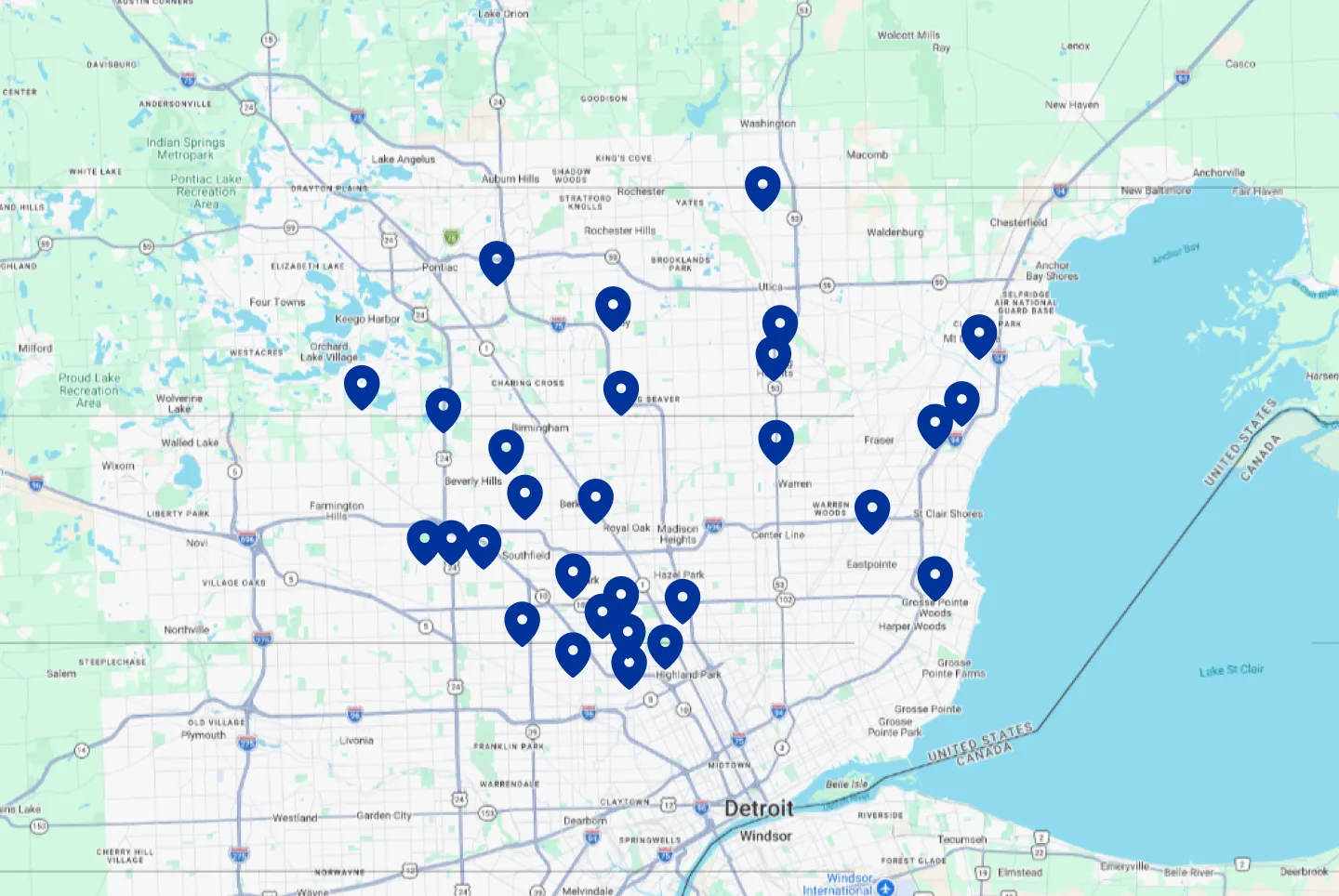
At Blue Heron Electrical, we provide dependable, code-compliant residential electrical services across Metro Detroit and Oakland County. We proudly serve homeowners in Troy, Birmingham, Sterling Heights, Royal Oak, Rochester Hills, Bloomfield Hills, and surrounding communities.
Do not wait for a flickering light or a tripped breaker to turn into an emergency. Schedule professional electrical services with us today to ensure your home's electrical system is safe, reliable, and built to last.
Customer Testimonials

Service Areas