
Why Your Generator Needs an Annual Load Bank Test Before Winter
The False Security of the Weekly Generator Hum
September is here, and the biting chill of a Michigan winter is only weeks away. At Blue Heron Electrical, our team frequently gets calls in January from homeowners who heard their home standby unit fire up for its regular 15-minute test and assumed they were completely prepared for the worst. But understanding exactly why your generator needs an annual load bank test before winter ice storms hit is a matter of basic engine physics. That quick, quiet hum in early fall is reassuring, but it does not guarantee your system can handle the crushing electrical demand of a freezing January outage. If you rely on that system to keep your family warm and your pipes from bursting, knowing the difference between a simple exercise cycle and a true stress test is essential.
To ensure your home is truly protected, professional generator services are the most reliable step you can take before severe weather arrives.
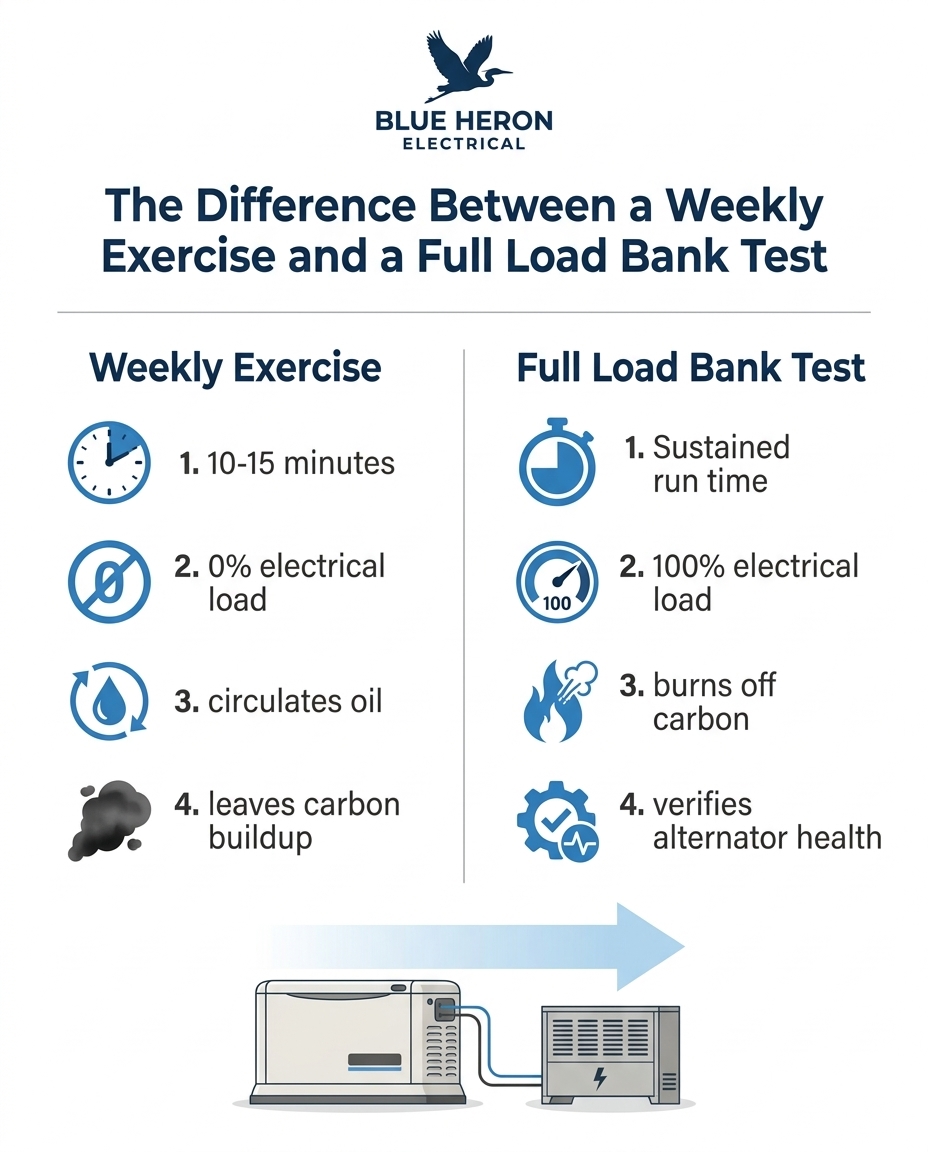
Hearing the generator run for 15 minutes a week provides peace of mind, but it is often a false sense of security. Most homeowners do not realize that the weekly exercise cycle typically runs at virtually 0% electrical capacity. During this brief period, the engine turns on and merely circulates oil to keep the internal parts lubricated. It does not generate any meaningful electricity, nor does it test the alternator's ability to produce power under stress.
When a severe winter storm hits, the sudden demand of heating systems, well pumps, and heavy appliances can easily overwhelm an untested alternator. The gap between a full electrical load vs. no-load exercise is massive. A system that runs perfectly while doing no work can instantly stall when forced to carry the weight of an entire home. Understanding this critical difference is the very first step in true emergency preparedness.
• Electrical Load — Weekly Automatic Exercise: 0% (No power generated for the home) — Professional Load Bank Test: 100% (Full nameplate capacity tested)
• Duration — Weekly Automatic Exercise: 10 to 15 minutes — Professional Load Bank Test: 1 to 2 hours (sustained operation)
• Primary Purpose — Weekly Automatic Exercise: Circulates oil and prevents seals from drying out — Professional Load Bank Test: Verifies alternator health and burns off carbon
• Engine Temperature — Weekly Automatic Exercise: Remains relatively low — Professional Load Bank Test: Reaches optimal, high-heat operating levels
What Actually Happens During a Sudden Winter Outage Surge
Unlike a mild summer outage where the primary concern might be a refrigerator and a few fans, winter power losses immediately trigger high-draw appliances simultaneously. The reality of Michigan winter weather means downed power lines from heavy ice accumulation and freezing temperatures that make heating an absolute necessity, not just a comfort.
Our emergency electricians see this scenario play out firsthand every winter. During one severe winter storm, downed power lines ripped the service box right off a local house. Facing freezing temperatures and a sudden, total loss of utility power, the homeowners needed immediate help. A 24/7 emergency electrician from our team arrived after hours to safely hook up the furnace to a generator. This rapid response kept the home above freezing throughout the storm until the service box could be permanently repaired the following day. This scenario highlights exactly why your backup power must be ready to take on a massive load the second the grid fails.
The furnace blower, well pump, refrigerator, and space heaters create a massive startup surge that hits the generator all at once. If the alternator has not been tested under a heavy load, this sudden electrical spike can cause the engine to stall or breakers to trip immediately. A stalled generator during freezing temperatures can lead to burst pipes, severe water damage, and unsafe indoor conditions within a matter of hours.
The Anatomy of In-Rush Current
To understand why generators fail during winter storms, you have to understand in-rush current. In simple terms, electric motors require significantly more power to start up than they do to keep running. When the power goes out and your generator kicks on, every motor in your house tries to start at the exact same time.
• Furnace Blowers: These powerful motors push warm air throughout your ductwork and demand a huge initial spike of electricity.
• Well Pumps: If you live in an area without municipal water, your well pump is one of the heaviest electrical loads in your home.
• Refrigerators and Freezers: The compressors in these appliances draw massive in-rush current to pressurize refrigerant.
• Sump Pumps: Often running during winter thaws or heavy rain-to-ice events, these pumps add another heavy layer of demand.
When this collective surge hits, the generator's alternator must instantly convert engine power into electrical output. If the system is weakened from months of untested idling, the voltage drops, the engine bogs down, and the entire system shuts itself off to prevent an electrical fire. In our years serving homeowners in Sterling Heights and Southeast Michigan, we've learned this is a risk you simply cannot afford to take.
The Mechanical Threat: Wet Stacking and Carbon Buildup
Beyond the electrical demands, there is a serious mechanical reason why load testing is required. Running a generator under zero or light load prevents the engine from ever reaching its optimal operating temperature. Just like a car that is only ever driven at five miles per hour, an idling generator engine never gets hot enough to burn fuel efficiently.
This leads to unburned fuel, oil, and moisture accumulating in the exhaust system—a damaging condition known in the industry as "wet stacking." When our technicians inspect older, untested units, a pattern we see often is this dark, thick sludge building up inside the engine. The carbon buildup glazes the engine cylinders, severely reducing engine efficiency and overall power output. If left unchecked, this glazing hardens, permanently reducing the lifespan of the unit and often requiring a complete standby generator installation to replace the ruined system.
The only way to reverse this damage is through a full electrical load vs. no-load exercise. A professional load test forces the engine to work at its maximum capacity, generating the intense heat required to burn off this accumulated carbon, clear out the wet stacking, and restore the engine to its rated capacity.
Why the Weekly Exercise Cycle Contributes to the Problem
It sounds counterintuitive, but the automatic weekly test actually contributes to carbon buildup if it is the only exercise the generator gets. We always remind our customers that the automatic test is absolutely necessary for lubrication, keeping parts moving and oil flowing. However, it is completely insufficient for overall engine health.
Running for just 10 to 15 minutes is not long enough to burn off internal moisture or carbon deposits. By the time the engine starts to get warm, the test shuts off, leaving condensation inside the block. Standard vehicle engines get driven on the highway, reaching high temperatures that burn off these impurities. Standby units sit in the cold, running briefly at idle, making a heavy-duty load test the only way to clear their internal systems.
What Exactly is a Professional Load Bank Test?
Because the gap between a full electrical load vs. no-load exercise is so significant, you cannot simply turn on all the lights in your house and call it a test. A proper load bank test involves connecting specialized, professional equipment directly to the generator to safely simulate a maximum electrical draw.
Our technicians bring a portable load bank unit to your home. This machine uses heavy-duty heating elements to artificially step up the electrical load in controlled increments until the generator reaches its full nameplate capacity. While the machine draws power, our team continuously monitors engine temperature, oil pressure, alternator output, and voltage stability under extreme stress.
This process involves high-voltage connections, live electrical panels, and specialized diagnostic gear. Because of the extreme safety risks and technical knowledge required, this must always be performed by a licensed professional. Understanding how home generator installation works in Southeast Michigan makes it clear why these systems are too complex for DIY maintenance. Our team at Blue Heron Electrical provides comprehensive, professional electrical testing to guarantee your system can handle heavy winter loads, going far beyond a basic oil change or visual inspection.
The Four Stages of Professional Testing
1. Initial Baseline Reading and Safety Checks: We inspect the unit for leaks, check fluid levels, and verify that all connections are secure before starting the engine.
2. Incremental Load Application: The load bank is connected, and we apply power demands in stages—typically 25%, 50%, 75%, and finally 100% of the generator's rated capacity. This prevents shocking the system and allows for careful monitoring at each step.
3. Sustained Full-Load Operation: Once at 100% capacity, the generator is left to run for an extended period. This is the stage that monitors thermal stability, ensures the cooling system works under pressure, and generates the heat needed to burn off carbon buildup.
4. Cool-Down Cycle and Final Analysis: The load is gradually removed, allowing the engine to cool down safely while still running. We then provide a detailed performance analysis, noting any voltage drops or mechanical weaknesses that need attention.
Why September is the Critical Window for Standby Power Prep
Timing is everything when it comes to emergency preparedness. We recommend September as the optimal time for load bank testing because it precedes the peak winter storm season. Southeast Michigan routinely experiences its first severe winter weather threats starting in late fall, making September the perfect preparation window.
Testing in early fall provides a critical buffer. If the load test reveals a failing alternator, a weak engine, or a faulty voltage regulator, you have ample time to order parts and perform repairs. Waiting until November or December means competing with hundreds of emergency service calls when the first ice storms hit and utility grids begin to fail.
A proactive September pre-winter prep strategy ensures the unit is primed, cleared of summer carbon buildup, and fully verified before freezing temperatures arrive. Based on our years preparing Sterling Heights homes for winter, we know this timeline is the difference between a minor inconvenience and a major home disaster.
A typical fall preparation timeline looks like this:
• Early September: Schedule the professional load bank test and standard maintenance tune-up.
• Mid-September: Technician performs the test, burns off carbon, and identifies any worn components.
• Late September: Any necessary replacement parts are ordered and installed without rush fees or emergency delays.
• October/November: The system is fully cleared, tested, and ready to handle sudden ice storms with zero hesitation.
The Hidden Costs of Skipping Your Annual Load Test
Skipping this vital test leaves homeowners guessing whether their system can actually power their home during a multi-day outage. You might have invested heavily in a premium standby unit, but without verifying its capacity, you are relying on hope rather than mechanical certainty.
Undetected carbon buildup from wet stacking can lead to premature engine failure. What could have been a simple, routine tune-up eventually spirals into requiring a complete system replacement. Furthermore, failing to follow manufacturer maintenance guidelines—which often align strictly with NFPA 110 standards for emergency power systems—can sometimes void your warranty, leaving you entirely responsible for the replacement costs.
For residents of Sterling Heights and Southeast Michigan, we always stress that the ultimate cost of skipping this maintenance is the sudden loss of heating, running water, and safety during a critical winter weather event. When the grid goes down and the temperature drops below freezing, you need absolute confidence that your backup power will perform flawlessly.
Don't Wait for the Ice to Break: Secure Your Winter Power Today
A weekly hum in the backyard is not a guarantee of winter performance. The gap between a no-load idle and a full-house electrical surge is exactly where untested systems fail. Taking action for your September pre-winter prep is the only way to ensure your family's comfort and safety.
Schedule a professional load bank test with our team this fall to ensure your home stays warm, well-lit, and fully powered no matter what the Michigan weather brings. Reach out to the experts at Blue Heron Electrical to verify your standby system is ready for the heavy demands of the upcoming season, and face the winter with true peace of mind.
Frequently Asked Questions
What is a load bank test on a generator?
A load bank test is a professional diagnostic procedure where we connect artificial electrical loads to your generator to simulate a power outage. It steps the electrical demand up to 100% of the unit's capacity. This verifies that the engine, alternator, and cooling systems can handle maximum stress without failing or dropping voltage.
Why is the weekly generator test not enough for winter prep?
The weekly automatic test only runs the engine for 10 to 15 minutes at zero electrical load. This is only enough to circulate oil and lubricate moving parts, but it does not test the alternator's ability to produce electricity. It also fails to generate enough heat to burn off harmful carbon deposits inside the engine.
How often should a home standby generator be load tested?
Most manufacturers and industry standards recommend having a professional load bank test performed once a year. We suggest scheduling this test in the early fall to ensure the system is cleared of carbon buildup and mechanically verified before the heavy demands of winter weather arrive.
Can I load test a generator myself?
No, a proper load bank test requires specialized, high-voltage diagnostic equipment and must be performed by a licensed professional. Attempting to simulate a full load by turning on all your home's appliances is inaccurate and can cause severe damage to your home's electrical panel or the generator itself.
What is generator wet stacking and how does a load test fix it?
Wet stacking is the accumulation of unburned fuel, oil, and carbon inside an engine that frequently runs without a heavy electrical load. A professional load test forces the engine to run at its maximum capacity, generating the intense heat necessary to burn off this sludge and restore engine efficiency.
How long does a professional generator load test take?
A comprehensive professional test typically takes between one and two hours to complete. Our technicians must slowly step up the electrical load in increments, allow the engine to sustain maximum capacity to monitor thermal stability, and then perform a controlled cool-down cycle.
Customer Testimonials

Service Areas