
Backup Power Options Comparisons for Homeowners: Portable vs. Standby Generators
Are You Ready for Winter Outages? Weighing Your Backup Power Options
Is your home truly prepared to keep the heat running when the next severe winter storm knocks out the power grid? At Blue Heron Electrical, our team spends every fall helping local families navigate backup power options comparisons for homeowners. We know firsthand that the process often begins with a single, urgent priority: surviving freezing temperatures without risking your family's safety or your property's plumbing. Choosing the right backup power solution is not just about keeping the lights on; it is about ensuring your primary heating systems can run continuously during severe winter outages.
As you evaluate your choices, the core decision point usually comes down to whether your specific winter electrical loads and convenience needs justify a permanent standby unit versus a traditional portable generator. Both options serve a purpose, but they operate very differently under the stress of harsh weather. Assessing your home's total energy needs is the critical first step in exploring residential electrical services to support emergency power.
Many homeowners assume they can simply buy a generator and plug it in, but integrating safe, reliable backup power often requires evaluating your current infrastructure. Depending on the age and capacity of your home's electrical system, you may need to consider electrical panel changes to accommodate the new load safely. Taking the time for November pre-winter preparation ensures that when the grid fails, your home is already equipped to handle the transition smoothly. By understanding exactly what it takes to power your essential appliances, you can make an informed, confident choice before the first major freeze arrives.
Understanding Winter Electrical Loads: Furnaces vs. Space Heaters
Before you can choose the right generator, you need to understand exactly how much electricity your home requires to stay warm. Winter heating demands are uniquely challenging because the appliances we rely on draw significantly different amounts of power. Accurately calculating this load is critical for safety and system reliability during an outage in Sterling Heights MI.
The Surprising Power Draw of Space Heaters
A pattern we see often on emergency winter service calls is homeowners assuming that running a few small electric space heaters is an energy-efficient way to survive a power outage. In reality, a single electric space heater can draw up to 1,500 watts of continuous power. If you attempt to heat three different bedrooms with three separate space heaters, you are instantly demanding 4,500 watts from your backup power source. This massive electrical load will quickly max out smaller, portable backup systems, causing breakers to trip and leaving your home entirely without heat.
The Efficiency of Your Gas Furnace
Contrast the heavy draw of space heaters with the relatively low electrical demand of a central gas furnace. While a gas furnace relies on natural gas to create the actual heat, it still needs electricity to run the blower motor that pushes that warm air through your ductwork. A standard gas furnace blower requires approximately 400 to 800 watts to run. This means that powering your home's existing central heating system is often far more electrically efficient than relying on localized electric resistance heating.
Why load calculation matters:
• Overloading risks: Demanding more wattage than your generator can supply can damage both the generator and your home's sensitive electronics.
• Fuel consumption: Generators running at maximum capacity burn through fuel at a drastically accelerated rate.
• System stability: A properly sized generator running at 50% to 70% of its total capacity will provide stable, clean power without surging.
Understanding these specific heating demands dictates the true electrical load required during an outage. Once you know your baseline wattage requirements, you can effectively compare how different generator types will handle that demand.
Portable Generators: Flexibility with Manual Demands
Portable generators are a common starting point for homeowners looking to secure emergency power. They offer flexibility and a lower initial barrier to entry, but they also come with significant manual demands and safety realities that become heavily magnified during winter weather.
The Reality of Manual Deployment
Using a portable generator requires physical intervention. When the power goes out, you must retrieve the unit from storage, wheel it outdoors, check the oil, and manually start the engine. This process is straightforward on a sunny afternoon, but our electricians always advise that November pre-winter preparation requires thinking about the worst-case scenario. In our years of working through Michigan's freezing rain and ice storms, we've seen firsthand how manual refueling of portable generators becomes dangerous and difficult. Navigating a heavy machine over icy driveways in the dark presents a real physical challenge.
Pros of Portable Generators:
• Mobility: They can be moved around the property or taken to different locations if needed.
• Versatility: Useful for powering specific, isolated tools or appliances.
• No permanent footprint: They can be stored in a garage or shed when not in use.
Cons of Portable Generators:
• Fuel sourcing and storage: You must safely store large quantities of highly flammable gasoline or diesel, which degrades over time and must be rotated.
• Weather exposure: They must be operated outdoors in the elements, yet they cannot be left completely exposed to heavy rain or snow without specialized covers.
• Limited capacity: Most portable units can only power a handful of essential circuits, forcing you to choose between running the refrigerator or the furnace blower.
Safety Hazards in the Snow
The most severe safety risks associated with portable generators involve how the power is delivered to the house. Running multiple extension cords from the yard, through the snow and ice, and into a cracked window creates immediate electrocution and tripping hazards. Furthermore, a cracked window lets freezing air into the home, defeating the purpose of running the heater.
If you want to connect a portable generator directly to your home's electrical panel to run hardwired appliances like a furnace, you must use a professionally installed manual transfer switch. Attempting to bypass this requirement with "suicide cords" or backfeeding the panel is incredibly dangerous and illegal. Knowing exactly what electrical repairs require a licensed electrician is vital for your safety. Explicitly warning against unsafe DIY connections cannot be overstated—improper generator wiring can be fatal to both your family and utility workers repairing the grid.
Whole-Home Standby Generators: Automatic Peace of Mind
For homeowners who want to eliminate the physical labor and safety risks of manual backup power, whole-home standby generators offer a permanent, automated solution. These systems are permanently installed outside the home, much like an air conditioning condenser, and wire directly into your electrical system.
How Automatic Activation Works
The defining feature of a standby system is its automatic transfer switch. We generally recommend these permanent systems over portable units because they constantly monitor the utility power coming into your home. The moment the system detects a grid failure, the switch automatically isolates your home from the utility line and signals the generator to start. Within seconds, the generator comes up to speed, and the transfer switch routes the backup power to your electrical panel. This automatic activation provides immense peace of mind when homeowners are away or asleep during sudden winter ice storms. You do not have to lift a finger, brave the elements, or even be on the property for your home to remain heated and secure.
Pros of Standby Generators:
• Hands-free operation: The system detects outages, starts, and shuts itself down automatically.
• Continuous fuel supply: By utilizing piped natural gas or a large, permanent liquid propane tank, you eliminate the need to source, store, and manually pour liquid fuel during an ice storm.
• Whole-home capacity: A professional standby generator installation seamlessly integrates with the home's existing electrical system to handle heavy heating loads, well pumps, and large appliances simultaneously.
• Property protection: Keeping the heat running automatically prevents pipes from freezing and bursting if you are out of town during a severe cold snap in Sterling Heights MI.
Cons of Standby Generators:
• Permanent placement: The unit requires a dedicated, code-compliant outdoor installation space.
• Professional integration required: Installation involves municipal permits, gas line plumbing, and heavy electrical upgrades that must be handled by licensed professionals.
The convenience factor for homeowners who travel, have mobility limitations, or simply cannot safely operate heavy equipment in the snow makes standby generators a highly sought-after winter upgrade.
Side-by-Side Comparison: Portable vs. Standby Generators
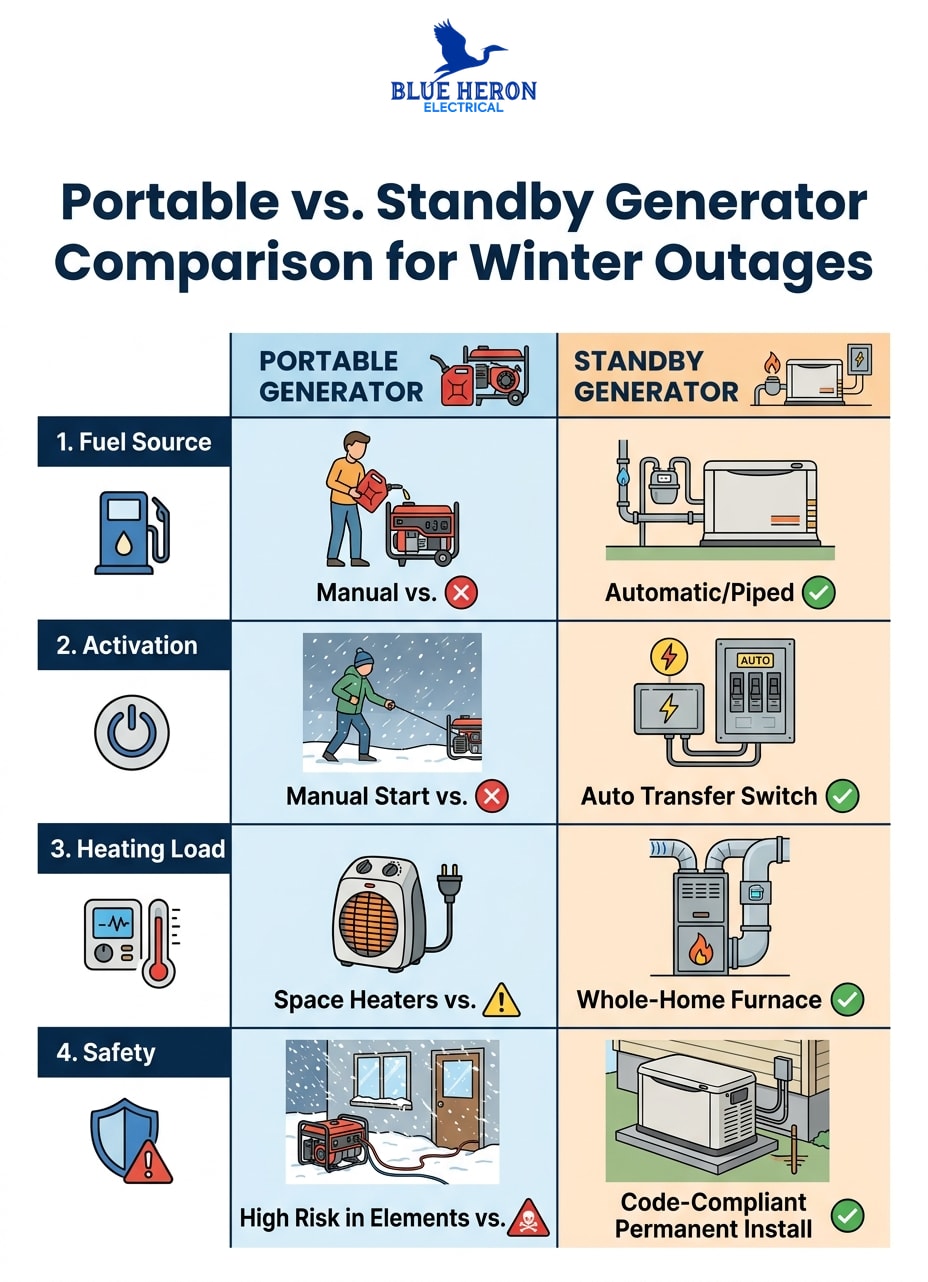
To make the best decision for your household's November pre-winter preparation, it helps to view the operational metrics of both systems side-by-side. The following comparison highlights the core differences in how each generator type functions during a severe winter weather event.
• Fuel Source — Portable Generators: Manual liquid fuel (gasoline/diesel). Requires safe on-site storage and frequent, manual refilling in the cold. — Whole-Home Standby Generators: Continuous piped natural gas or large permanent propane tank. No manual refilling or fuel degradation issues.
• Activation — Portable Generators: Manual pull-cord or electric push-start. Requires the homeowner to go out into the elements to set up and start the unit. — Whole-Home Standby Generators: Automatic transfer switch. Detects outages and restores power within seconds, even if you are asleep or away from home.
• Heating Load Capacity — Portable Generators: Limited. Typically only capable of running a few specific appliances or space heaters safely without overloading. — Whole-Home Standby Generators: Robust. Designed to support whole-home infrastructure, including the central furnace blower, water heater, and well pump.
• Safety Considerations — Portable Generators: High risk of carbon monoxide poisoning if placed improperly. Extension cord hazards in wet/snowy conditions. — Whole-Home Standby Generators: Permanent, code-compliant outdoor installation. Exhaust is safely routed away from the home, and wiring is fully protected.
Reviewing these distinct differences clarifies why many homeowners eventually transition from a portable setup to a permanent standby system once they experience the physical demands of managing a manual generator during a prolonged outage.
Safety First: Transfer Switches and Code Compliance
Regardless of which backup power option you choose, the method you use to connect that power to your home is the most critical safety factor. Addressing the necessity of proper integration and code compliance for any backup power solution is non-negotiable.
The Critical Role of a Transfer Switch
A transfer switch is a specialized electrical device that safely isolates your home's circuits from the utility grid while the generator is running. If you attempt to connect a generator to your home without a transfer switch, the power your generator creates will flow backward out of your house and into the neighborhood utility lines. This phenomenon, known as "backfeeding," transforms standard utility wires into high-voltage hazards, posing a lethal threat to the utility workers trying to restore the grid.
At Blue Heron Electrical, we explicitly advise against DIY transfer switch installations. Our licensed electricians frequently encounter the dangerous aftermath of improper setups, and working inside an electrical panel carries severe electrocution hazards. Furthermore, local building codes mandate strict protocols for how these switches must be wired, grounded, and mounted. A mistake in this process can result in a catastrophic electrical fire or complete failure of the backup system when you need it most.
Integrating Backup Power Safely
Integrating a new backup power system often ties into broader electrical remodeling to ensure the home's aging infrastructure can handle the load safely. If your current electrical panel is outdated, undersized, or lacking the physical space for new generator breakers, upgrading the panel becomes a necessary part of the installation process.
Highlighting the importance of securing proper municipal permits and passing inspections for any permanent electrical upgrades is vital. In Sterling Heights MI, strict codes govern the placement of the generator relative to windows and property lines, as well as the sizing of the gas lines and electrical conduits. Blue Heron Electrical guarantees fully licensed, code-compliant work that seamlessly passes municipal inspections, protecting homeowners from DIY hazards and ensuring the system operates flawlessly under pressure.
Make an Informed Decision for a Safer Winter
Satisfying your winter backup power needs requires a clear, safety-focused understanding of how each generator type handles heavy electrical loads. Whether you opt for the flexibility of a portable unit or the automated reliability of a whole-home standby system, the goal remains the same: keeping your family warm and your property secure when the grid fails.
Our team always emphasizes that the right choice depends heavily on your home's specific heating demands and your personal comfort with manual operation in harsh weather. A portable generator might suffice if you only need to power a few specific items and are physically prepared for November pre-winter preparation and manual deployment in the snow. However, if you want the assurance that your central furnace will continue running without any physical intervention, a standby generator is the superior choice.
We encourage readers to consult with a local expert to evaluate their home's infrastructure before making a purchase. A professional assessment will reveal whether your current panel can support a transfer switch or if modifications are necessary. Schedule a safety evaluation with our team today to discuss your home's specific needs and explore the most reliable backup power options available.
Frequently Asked Questions
Can a portable generator run a gas furnace?
Yes, a portable generator can run a gas furnace, but our electricians note that it requires a professionally installed manual transfer switch to do so safely. The furnace blower motor typically draws between 400 and 800 watts, which is well within the capacity of most mid-sized portable units. However, you must never attempt to wire the generator directly to the furnace using improvised or DIY extension cord methods.
What are the safety requirements for a generator transfer switch?
A transfer switch must physically break the connection between your home's electrical panel and the utility grid before allowing generator power to flow. This prevents dangerous backfeeding that can electrocute utility workers. Local building codes require transfer switches to be installed by a licensed electrician, properly grounded, and inspected by municipal authorities to ensure total compliance and safety.
How does a standby generator work during a winter outage?
A standby generator continuously monitors the incoming utility voltage through its automatic transfer switch. When it detects a drop in power, the switch signals the generator engine to start, usually running on piped natural gas. Within about 10 to 15 seconds, the transfer switch shifts the home's electrical load from the dead utility line to the active generator, restoring power to your furnace and appliances automatically.
Is a whole house generator worth it for winter storms?
For many homeowners, the automated protection against freezing pipes and the elimination of manual labor in harsh weather make a whole-house generator highly valuable. It provides uninterrupted power to central heating systems, well pumps, and medical devices without requiring anyone to go outside in the snow. The peace of mind gained during severe, prolonged ice storms often justifies the permanent installation.
What is the difference between standby and portable generators?
The primary difference is automation and permanence. Standby generators are permanently installed outside, run on continuous natural gas or propane, and turn on automatically during an outage. Portable generators are mobile, run on manually stored liquid fuel like gasoline, and require physical setup, pull-starting, and manual connection to a transfer switch every time the power goes out.
Do I need a permit to install a generator transfer switch in Michigan?
Yes, installing a generator transfer switch requires an electrical permit and a subsequent inspection by local municipal authorities. Because the installation involves altering the home's main electrical panel and interacting with utility-grade wiring, strict code adherence is required. A licensed electrician will pull the necessary permits and ensure the work meets all state and local safety standards.
Customer Testimonials

Service Areas