
Diagnosing a Burning Plastic Smell Near Your Electrical Outlets
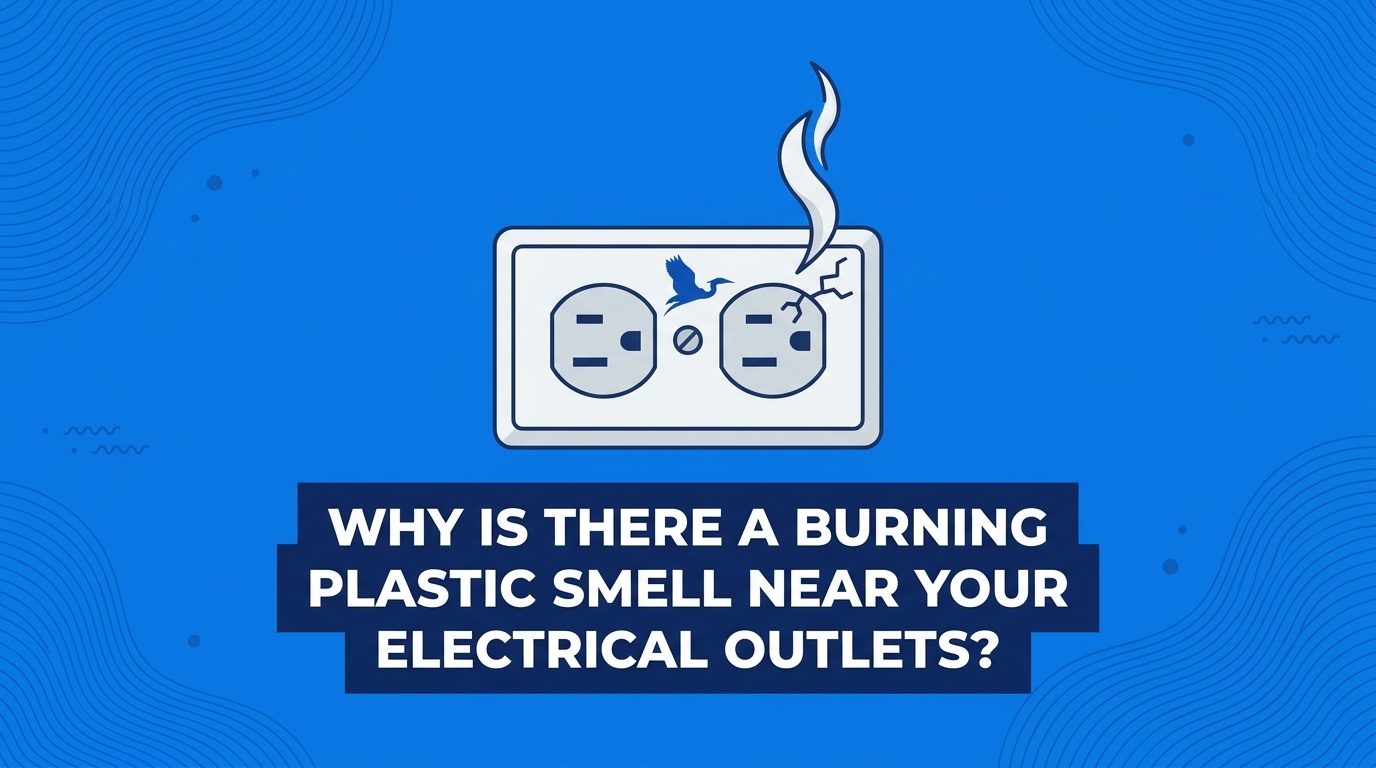
Is That Burning Plastic Smell Near Your Outlet an Emergency?
Have you ever plugged in a device, only to notice a strange, fishy odor wafting from the wall? Diagnosing a burning plastic smell near your electrical outlets is critical, and it is a situation you should never ignore. This highly distinct scent almost always points to an active fire hazard involving electrical arcing and melting plastic hidden right behind your walls. As we move into September and early fall, our team at Blue Heron Electrical frequently sees seasonal shifts expose these hidden electrical weaknesses when homeowners start plugging in heavier devices. Simply unplugging the appliance is not enough to stop the danger. You must recognize this warning sign and make the immediate decision to cut the power safely before a localized issue turns into a devastating house fire.
If you need immediate help, explore our residential electrical services or contact an emergency electrician right away.
The Hidden Danger of Backstabbed Electrical Connections
To understand why your wall suddenly smells like a chemical fire, you have to look at how the wiring connects to the receptacle itself. One of the most frequent culprits behind a melting outlet is the use of backstabbed electrical connections. A "backstabbed" connection refers to a wiring method where the bare copper wire is simply pushed into a spring-loaded hole on the back of the outlet, rather than being securely looped and tightened down under a side screw terminal.
Why Push-In Connections Fail Over Time
While backstabbing is a fast installation method, it is notoriously prone to failure as the years go by. Electricity generates heat as it flows. As you use your outlets, the metal components naturally expand when they warm up and contract as they cool down. Over thousands of these thermal cycles, the internal spring tension inside backstabbed electrical connections begins to weaken. The wire slowly works itself loose, breaking solid contact with the metal terminal.
When the connection becomes loose, the electricity does not just stop flowing. Instead, it attempts to jump, or "arc," across the tiny microscopic air gap between the wire and the terminal. This electrical arcing creates massive amounts of electrical resistance, which in turn generates intense, concentrated heat. This heat quickly exceeds the temperature ratings of the surrounding materials, causing the plastic housing of the outlet and the wire insulation to melt, bubble, and burn.
• Side Screw Terminal — How It Works: Wire is looped around a screw and tightened down. — Long-Term Reliability: Excellent. Resists thermal expansion and contraction. — Arcing Risk: Very Low
• Backstabbed (Push-In) — How It Works: Wire is held in place by internal spring tension. — Long-Term Reliability: Poor. Spring tension weakens over years of use. — Arcing Risk: High as the connection loosens
Understanding these common outlet problems is the first step in protecting your home from hidden wiring faults.
Why Early Fall Triggers Melting Outlets in Older Homes
You might wonder why an outlet that has worked perfectly for years suddenly starts melting. The answer often lies in the changing weather. In the Michigan early-fall context, residents experience a rapid transition from warm summer days to chilly evenings. This sudden drop in temperature prompts many homeowners to pull their portable space heaters out of storage and plug them into the nearest available bedroom or living room wall.
Aging electrical systems in older properties may handle low-draw devices like lamps, phone chargers, or televisions without breaking a sweat. However, they frequently fail under the sustained, heavy seasonal loads demanded by heating appliances. A space heater pulls a continuous, massive amount of amperage for hours at a time. If you plug one of these high-draw devices into an aging receptacle with weakened internal connections, the sudden stress immediately triggers severe electrical arcing.
The Vulnerability of Aging Electrical Systems
Older homes with their original wiring and outdated panels are particularly vulnerable to this sudden autumn stress test. The combination of aging push-in connections and high-wattage heaters is a primary trigger for localized electrical fires. At Blue Heron Electrical, our team sees this pattern frequently across our Sterling Heights service area. For example, we recently helped a local customer whose outdated Pushmatic fuse panel and lack of house grounding were causing severe system stress under heavy seasonal loads. Our licensed electricians safely swapped the fuse panel for a modern setup and properly grounded the house, updating the electrical system efficiently with minimal home interruption. Upgrading these aging components is exactly what prevents sudden failures when you start running heavier loads.
If you live in an older property, having experienced Sterling Heights electricians evaluate your system before the cold weather sets in can save you from a dangerous and expensive emergency.
What Does Electrical Arcing Actually Smell Like?
Identifying the exact odor coming from your wall is a crucial diagnostic step. Electrical arcing produces a very specific set of smells that are hard to mistake once you know what to look for. When the heat-resistant chemicals embedded in the plastic housing of the receptacle begin to break down under extreme heat, they release distinct chemical fumes.
Sensory Symptoms of a Melting Receptacle
• The "fishy" chemical odor: Often the first warning sign, this smells surprisingly like dead fish or strong urine. It is the result of specific flame-retardant chemicals in the plastic vaporizing as they reach their melting point.
• Acrid burning plastic: As the heat intensifies and the plastic faceplate begins to physically melt, the smell transitions into a harsh, toxic burning plastic odor that irritates the nose and throat.
• The smell of ozone: Active electrical arcing also produces a sharp, metallic, slightly sweet smell known as ozone, similar to the scent in the air just after a lightning storm.
Beyond the smell, you should also look for accompanying visual signs. Check the cover plate for brown or black scorch marks, yellowing discoloration, or a deformed and warped receptacle face. It is vital to understand that this smell can persist or even worsen even if nothing is actively plugged into the wall. As long as the circuit breaker is on, electricity is still flowing through the hidden backstabbed electrical connections to feed other areas of the room, meaning the arcing and melting will continue.
Immediate Safety Steps: What to Do Right Now
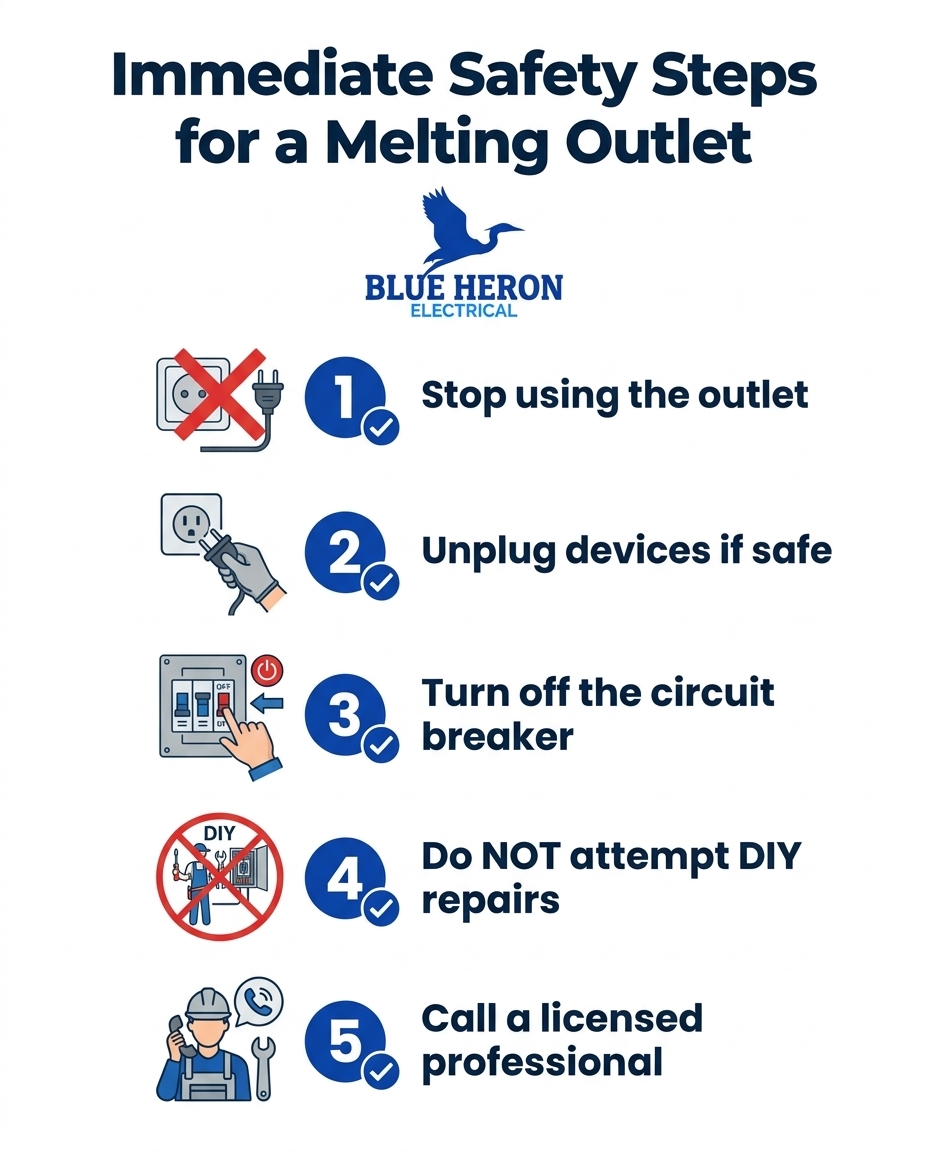
If you notice a burning plastic or fishy smell near your wall, you must act quickly to isolate the hazard. Do not wait to see if the smell goes away on its own, and do not attempt to investigate the wiring yourself. Follow these non-DIY safety steps immediately to secure the area until a professional arrives.
1. Stop using the outlet immediately. If a device is currently plugged in, and you can touch the plug safely without coming into contact with melted plastic or bare wire, unplug it right away.
2. Turn off the circuit breaker. Walk to your main electrical panel and locate the breaker that supplies power to that specific room. Flip it to the "off" position to completely stop the flow of electricity to the melting receptacle.
3. Do not attempt DIY diagnostics. Never try to remove the cover plate, unscrew the receptacle from the wall, or touch the internal wiring yourself. The internal components may still carry a lethal charge, and moving brittle, heat-damaged wires can spark a fire.
4. Call a licensed professional. Contact a qualified expert to safely open the wall cavity, diagnose the extent of the heat damage, and replace the compromised components.
Especially during the busy September early fall transition, having a reliable emergency electrician on speed dial ensures that hidden in-wall hazards are neutralized safely and quickly.
When to Request an Electrical Panel Inspection
A single melted outlet is rarely an isolated incident; it is often a glaring symptom of broader electrical system aging or overloading. When one receptacle fails due to thermal stress, it strongly indicates that other outlets on the same circuit—or throughout the house—may be suffering from the exact same degradation.
Why Didn't the Breaker Trip?
Many homeowners are surprised to find a melted wall plate when their circuit breaker never tripped. The reality is that electrical arcing does not always draw enough excess amperage to trigger an older breaker. A loose connection creates immense heat through resistance, but it might only pull 10 or 12 amps on a 15-amp circuit. Because the total current remains below the breaker's limit, the safety switch assumes everything is operating normally, allowing the plastic to continue melting undetected.
In our experience working on older Metro Detroit homes, we know how stressful these hidden dangers can be. Just recently, a homeowner reached out to our team because they had multiple electrical issues triggered by the seasonal shift. One of our technicians provided thorough education on all available options to fix the electrical issues, ensuring the customer felt informed and satisfied with the proposed solutions before our team began any work. A professional assessment will determine if other receptacles on the same line are compromised. Furthermore, having your main service panel evaluated ensures it meets modern safety standards and that the breakers are actually capable of tripping when a fault occurs.
Blue Heron Electrical provides rapid emergency response to safely neutralize hidden in-wall fire hazards in Metro Detroit homes. If you are concerned about the age and safety of your system, scheduling an electrical panel inspection is the best way to secure your property.
Frequently Asked Questions About Melting Outlets
Why does my outlet smell like burning plastic?
It is caused by electrical arcing generating intense heat inside the wall cavity. This extreme heat melts the plastic housing of the receptacle and the surrounding wire insulation. The breakdown of these synthetic materials releases the toxic, burning plastic odor you are smelling.
Is a burning smell from an outlet an emergency?
Yes, it indicates an active fire hazard inside the wall. An outlet that smells like it is burning is actively melting due to severe electrical resistance. Immediate action to cut power at the breaker panel is required to prevent a house fire.
Can an outlet catch fire if nothing is plugged in?
Yes, if the internal connections are damaged or if power is still flowing through the circuit to feed other receptacles in the room. The circuit remains live until the breaker is flipped, meaning loose backstabbed electrical connections can continue to arc and generate heat even when the outlet itself is empty.
What to do if an outlet smells like fish?
Treat it exactly like a burning plastic smell, as the fishy odor is the first stage of melting plastic components. Turn off the breaker supplying power to that room immediately and call a licensed electrician to inspect the damage.
Will a tripped breaker stop an outlet from melting?
It stops the flow of electricity, halting further heat generation and arcing. However, the physical damage to the internal wiring and the receptacle remains permanent. The compromised components must be completely replaced by a professional before power can be safely restored.
Secure Your Home from Hidden Electrical Fire Hazards
Diagnosing a burning plastic smell near your electrical outlets always leads to the same conclusion: you have an active electrical fault generating dangerous levels of heat. Whether it is triggered by an aging system in Sterling Heights MI or the sudden use of heavy seasonal appliances, ignoring the smell or relying on temporary DIY fixes puts your home at severe risk. Protect your property by having our local experts at Blue Heron Electrical safely cut the power, thoroughly diagnose the compromised wiring, and replace the failing components to ensure your electrical system operates safely.
Customer Testimonials

Service Areas