
How to Coordinate Electrical and Other Trades During a Michigan Remodel
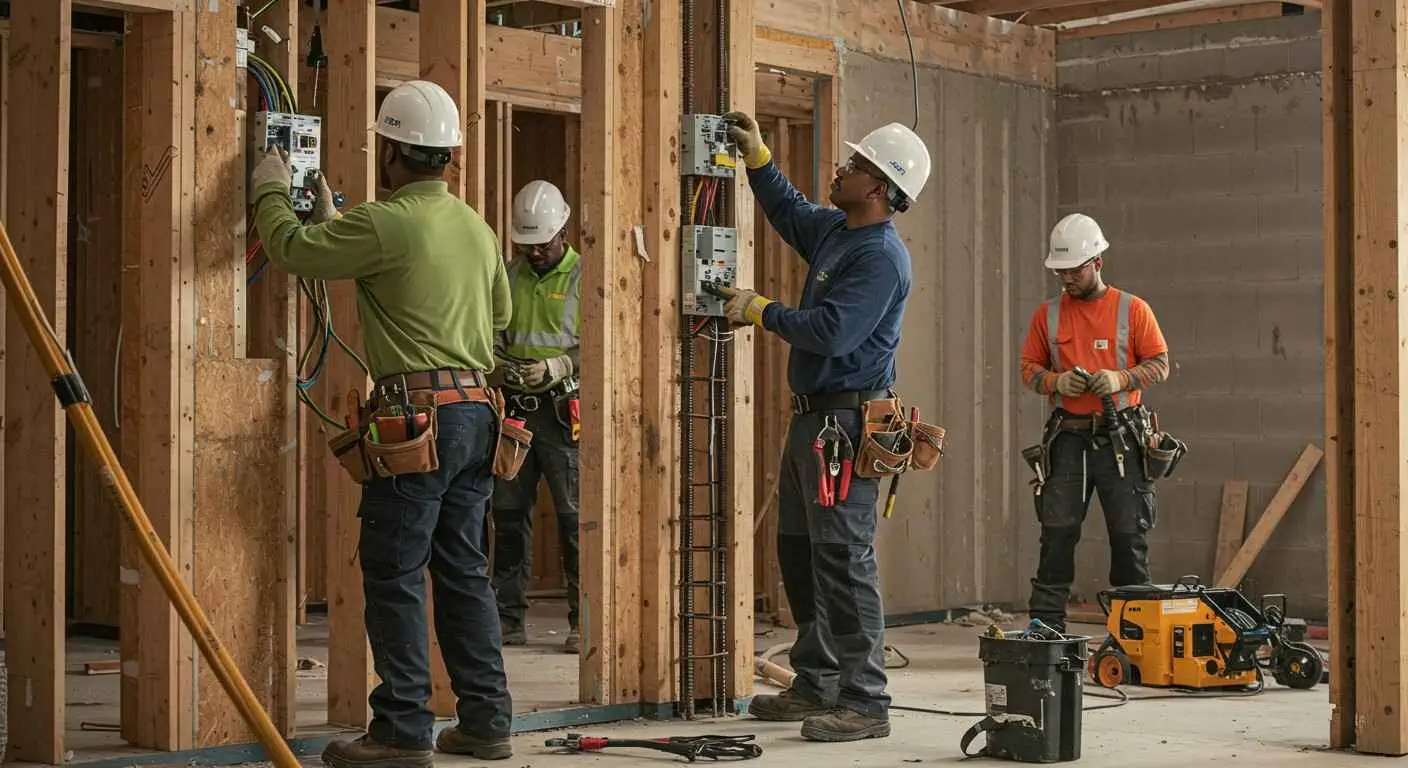
Why Coordinating Trades the Right Way Can Make or Break Your Michigan Remodel
Knowing how to coordinate electrical and other trades during a home remodel in michigan is the difference between a project that finishes on time and one that drags on for months — costing you far more than it should. Here's a quick overview of the correct trade sequence to get you oriented:
Trade Coordination Sequence for a Michigan Home Remodel
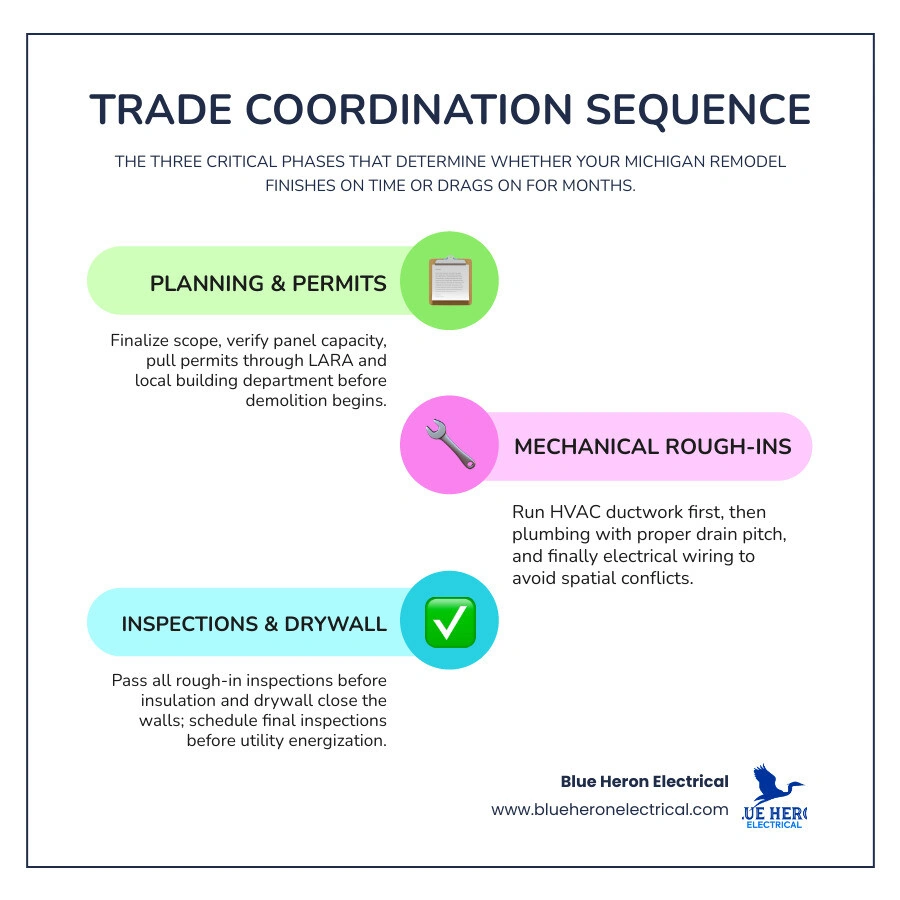
- Planning and permits — Finalize scope, pull permits through your local building department or LARA before any work begins
- Demolition — Remove existing materials only after permits are in hand and asbestos/lead checks are complete
- Structural and framing work — Complete all structural changes before any mechanical trades enter
- Mechanical rough-ins — HVAC ductwork first (largest footprint), then plumbing, then electrical wiring
- Rough-in inspections — Schedule and pass all inspections before insulation or drywall goes up
- Insulation and drywall — Only after all rough-in work is approved
- Interior finishes — Cabinets, flooring, trim, and paint
- Trim-out and final fixtures — Devices, lighting, appliances, and plumbing fixtures installed
- Final inspections — Required before utility energization by DTE Energy or Consumers Energy
- Punch list and closeout — Final walkthrough, documentation, and warranty records
If you're a Metro Detroit homeowner planning a kitchen, bathroom, or basement remodel, the stakes are real. Poor trade sequencing is, according to industry sources, the single biggest cause of project delays — more than weather, more than material shortages, more than budget problems. One trade closing walls before another finishes rough-in work can force costly tear-outs and restart inspections from scratch.
Michigan adds its own layer of complexity. The state's Bureau of Construction Codes (BCC) under LARA enforces specific licensing, permitting, and inspection requirements that every trade must follow — and the timing of those inspections directly controls when the next phase of work can begin.
This guide walks you through every stage of the coordination process so your remodel runs in the right order, stays on schedule, and meets Michigan code requirements.
The Natural Sequence of Trades in a Michigan Home Renovation
A successful home remodel relies on a logical, step-by-step progression. You can't put up drywall before the electrical wires are run, and you shouldn't run those wires before the structural framing is locked in. When we handle Remodeling projects across Oakland County communities like Birmingham, Royal Oak, and Rochester Hills, we always emphasize following the natural order of physical construction.
The process begins with structural changes and rough framing. If you are knocking down a wall between your kitchen and dining room, or building an addition, this framing must be completely erected and stabilized first. Framing establishes the physical "skeleton" of your home, defining the cavities where all your hidden home systems will live.
Once the framing is complete, the mechanical rough-in phase begins. This is where your HVAC, plumbing, and electrical systems are installed inside the open wall studs and ceiling joists. After all mechanical systems pass their rough inspections, the home's exterior envelope is fully sealed against the erratic Michigan weather.
Only then can interior finishes begin. Drywall is hung and finished, followed by trim, flooring, and cabinets. The project wraps up with a detailed punch list, final utility trim-outs (where we install the actual light fixtures, switches, and outlets), and final safety inspections.
How to Coordinate Electrical and Other Trades During a Home Remodel in Michigan
The technical term for managing these overlapping mechanical systems is MEP (Mechanical, Electrical, and Plumbing) coordination. If you treat your remodel like a symphony, MEP coordination is the sheet music keeping the brass, strings, and woodwinds from playing over one another.
Effective MEP coordination begins in the preconstruction phase. Rather than letting trades show up on-site and fight over the best paths through the ceiling joists, we work with you to establish a clear routing hierarchy:
- Gravity-Fed Systems First: Plumbing drain and waste lines get absolute priority. Because drains rely on a continuous downward pitch to function, their paths cannot be easily shifted or curved.
- Ductwork Second: HVAC supply trunk lines are large and rigid (often 20 inches wide by 8 inches deep). They require significant, dedicated ceiling space and cannot make sharp bends without restricting airflow.
- Electrical and Small Pipes Last: Electrical wires and flexible plumbing lines are incredibly adaptable. We can weave Electrical Services around ductwork and drain stacks, running conduit and wiring through remaining spaces without compromising system safety or performance.
Pre-Demolition Planning and Electrical System Evaluation
Before a single sledgehammer swings in your Troy or Bloomfield Hills home, we must evaluate your existing electrical infrastructure. Many older homes in Metro Detroit were built with 60-amp or 100-amp electrical panels. Modern kitchens, smart home systems, and high-draw appliances easily overwhelm these outdated systems.
As part of your preconstruction planning, we conduct a thorough panel capacity assessment. If you are adding a modern kitchen or a home addition, you will likely need to upgrade to a standard 200-ampere service entrance. Michigan enforces the National Electrical Code (NEC) with a lag of one to two code cycles, meaning we must design your system to match the specific state-approved code edition active at the time your permit is pulled.
If your home was built before 1978, we must also prepare for lead-based paint hazards. Federal law requires EPA Lead Renovation, Repair, and Painting (RRP) certification for work disturbing painted surfaces in pre-1978 homes. We handle these safety standards meticulously to protect your family's health.
Additionally, you must finalize your appliance selections before framing begins. Knowing whether you need a 240-volt outlet for an induction range, a dedicated circuit for a built-in espresso machine, or specific power requirements for a smart refrigerator determines our entire wiring layout.
To keep your planning on track, follow these essential steps:
- Audit current capacity: Hire a licensed electrician to verify if your existing panel can support the new load.
- Finalize appliance specs: Provide exact manufacturer specification sheets to your electrician and cabinet designer.
- Check for pre-1978 compliance: Ensure your contractors are RRP-certified if working on an older home.
- Assess future needs: Plan ahead for smart home hubs or EV chargers while the walls are open by investing in a comprehensive Whole House Rewiring Troy MI plan.
Managing the Rough-In Phase for Electrical, Plumbing, and HVAC
Once framing completion is signed off by the local building inspector, the mechanical rough-in window opens. This is a high-traffic phase of the remodel, and spatial conflicts are common if trades do not communicate.
For example, a plumber might run a vent pipe directly through the path where an HVAC technician planned to route a supply duct, or a mechanical unit might be installed too close to where an electrical sub-panel is scheduled to go.
To prevent these issues, we utilize ceiling coordination plans to map out exact elevations. We also strictly enforce National Electrical Code requirements regarding electrical panel clearance. Code dictates a minimum of 36 inches of clear, unobstructed depth in front of any electrical panel, and a width of at least 30 inches. This space must remain entirely clear of plumbing pipes, water heaters, and HVAC ductwork.
When running a Home Addition Wiring Troy MI project, we coordinate directly with the framing and HVAC crews to ensure all structural penetrations are cleared and approved before we pull our wires.
Scheduling Inspections and Code Compliance Under Michigan Law
In Michigan, the Department of Licensing and Regulatory Affairs (LARA) and the Bureau of Construction Codes (BCC) oversee building safety. For your remodel to remain legal and insurable, you must pass two main rounds of inspections: rough-in and final.
The rough-in inspection occurs after all framing, plumbing pipes, ductwork, and electrical wires are installed, but before they are covered by insulation or drywall. The inspector must be able to see every wire run, junction box, and pipe connection.
Once the rough-in work passes, you receive approval to close the walls. After drywall, paint, flooring, and cabinetry are completed, the trim-out phase begins. We return to install switches, decorative light fixtures, and outlets.
After all fixtures are functional, the final inspection is scheduled. Passing this step yields a certificate of electrical approval, which is required before utility providers like DTE Energy or Consumers Energy will permanently energize a new service upgrade. Attempting to bypass these steps can result in severe fines, delayed projects, and denied homeowners insurance claims.
For seamless compliance, ensure your contractor coordinates all Residential Electrical Work Troy MI with local municipal inspectors in cities like Royal Oak, Troy, or Sterling Heights.
When to Hire a General Contractor vs. Self-Managing Your Michigan Remodel
Many homeowners ask whether they should hire a general contractor (GC) or manage the multiple trades themselves as an owner-builder. While self-managing can theoretically save you money on GC markups, it requires an immense amount of time, technical knowledge, and organizational discipline.
A professional GC acts as the conductor of your remodel. They handle subcontractor management, maintain the master schedule, resolve spatial conflicts, and shoulder the liability if something goes wrong.
If you choose to self-manage, you must verify the license of every single trade professional you hire. In Michigan, you can verify builder, electrical, plumbing, and mechanical licenses through the LARA license lookup portal. Never hire an unlicensed contractor; doing so invalidates your permits and leaves you personally liable for any property damage or injuries on-site.
| Management Factor | General Contractor (GC) | Self-Management (Owner-Builder) |
|---|---|---|
| Time Commitment | Minimal; GC handles daily oversight and scheduling. | Extreme; you must be available for daily calls and site visits. |
| Subcontractor Access | Excellent; GCs have established networks of trusted trades. | Limited; you must find, vet, and schedule trades individually. |
| Code & Permit Responsibility | GC pulls permits and manages all municipal inspections. | You are legally responsible for all permit filings and code errors. |
| Liability & Insurance | GC carries comprehensive liability and workers' compensation. | You may face personal liability for injuries or structural damage. |
| Conflict Resolution | GC resolves spatial and scheduling disputes between trades. | You must act as the referee and solve technical trade conflicts. |
Best Practices to Prevent Scheduling Conflicts and Costly Rework
To keep your Metro Detroit remodel running smoothly, you must establish a central communication channel from day one. Whether it's a dedicated group text thread or a project management app, every active trade foreman must have access to the same information.
We recommend holding short, weekly coordination meetings on-site with all active trades. Discussing upcoming milestones face-to-face prevents simple misunderstandings from turning into expensive delays.
Furthermore, you must document all change orders in writing. If you decide to move a light fixture or add an outlet mid-project, a written change order signed by both parties ensures that the budget, timeline, and affected trades are updated simultaneously.
Finally, manage your material lead times carefully. Custom cabinets often take 8 to 16 weeks to manufacture, and specialty lighting fixtures can face long backorder delays. Order these items during the design phase, and maintain a 10% to 15% contingency fund in your budget to comfortably absorb unexpected structural or mechanical surprises.
How to Coordinate Electrical and Other Trades During a Home Remodel in Michigan to Avoid Spatial Conflicts
One of the most common physical conflicts during a remodel is "clashing" in the ceiling and wall cavities. Because HVAC trunk lines and plumbing drain pitch are functionally rigid, electrical conduit and wiring must be routed flexibly around them.
If a trade must cut or drill through a structural beam or floor joist to route a pipe or wire, the cut must comply strictly with building codes. Any major structural penetrations must be reviewed by a structural engineer before any drilling begins to avoid compromising your home's integrity.
Planning a high-tech space? Coordinating these paths early is especially vital when designing a Smart Home Remodel Wiring Troy MI layout, where low-voltage data cables must be spaced away from high-voltage power lines to prevent signal interference.
How to Coordinate Electrical and Other Trades During a Home Remodel in Michigan for Smooth Finish Work
The handoff between rough-in trades and finish trades is a delicate phase. Before drywall installation begins, we complete a thorough walkthrough to ensure every single junction box is flush with the planned drywall depth and all outlet placements align perfectly with the finalized cabinet layout.
Once drywall is hung and painted, the flooring should be installed. Ensure your flooring materials acclimate to your home's temperature and humidity for 48 to 72 hours before installation. To protect these gorgeous new floors during the final electrical and plumbing trim-out phases, cover them completely with heavy-duty Ram Board.
When we perform Kitchen & Bath Remodel Wiring Troy MI services, we coordinate closely with the cabinet and countertop installers so that under-cabinet LED runs, island outlets, and appliance connections line up seamlessly without damaging finished surfaces.
Frequently Asked Questions About Remodel Trade Coordination
What is the correct order of trades during a home remodel?
The standard, code-compliant sequence for any major home remodel is:
- Demolition
- Structural framing and modifications
- HVAC rough-ins (largest ductwork)
- Plumbing rough-ins (rigid drain lines)
- Electrical rough-ins (flexible wiring)
- Rough inspections (building, electrical, plumbing, mechanical)
- Insulation
- Drywall installation and finishing
- Paint, trim, and cabinetry
- Flooring installation
- Electrical and plumbing trim-out (fixtures and devices)
- Final inspections and project closeout.
Can a Michigan homeowner pull their own electrical and building permits?
Yes, under Michigan law, an owner-occupant of a single-family dwelling can pull their own building and electrical permits. However, this permit exemption only applies if you personally own and intend to occupy the home. If the home is a rental property, commercial space, or multi-family building, you must hire a licensed contractor to pull permits and perform the work. Even as an owner-builder, your work must pass the exact same rigorous municipal code inspections as a licensed professional.
How long are building and electrical permits valid in Michigan?
In Michigan, building and electrical permits are generally valid for 6 months from the date of issuance. The project must begin within this 6-month window. If work is suspended or abandoned for a continuous period of 6 months or more, the permit becomes invalid. If your project experiences delays, you must contact your local municipal building department to request an official permit extension before the 6-month limit expires.
Conclusion
Coordinating a home remodel in Southeast Michigan requires careful planning, strict adherence to the natural sequence of construction, and clear communication among all trades. By managing your MEP coordination early, evaluating your electrical system before demolition, and scheduling your inspections at the correct milestones, you can keep your project running smoothly and avoid costly, frustrating rework.
At Blue Heron Electrical, we specialize in providing dependable, code-compliant electrical work for homeowners throughout Metro Detroit and Oakland County. Whether you are in Troy, Birmingham, Royal Oak, or Rochester, our experienced team brings clear communication, safety, and long-term reliability to every project.
Ready to plan your next home improvement project with confidence? Contact us today to learn more about our professional remodeling and electrical coordination services!
Customer Testimonials

Service Areas