
Whole-House Surge Protectors vs. Point-of-Use Power Strips
The Myth of "Either/Or" Surge Protection
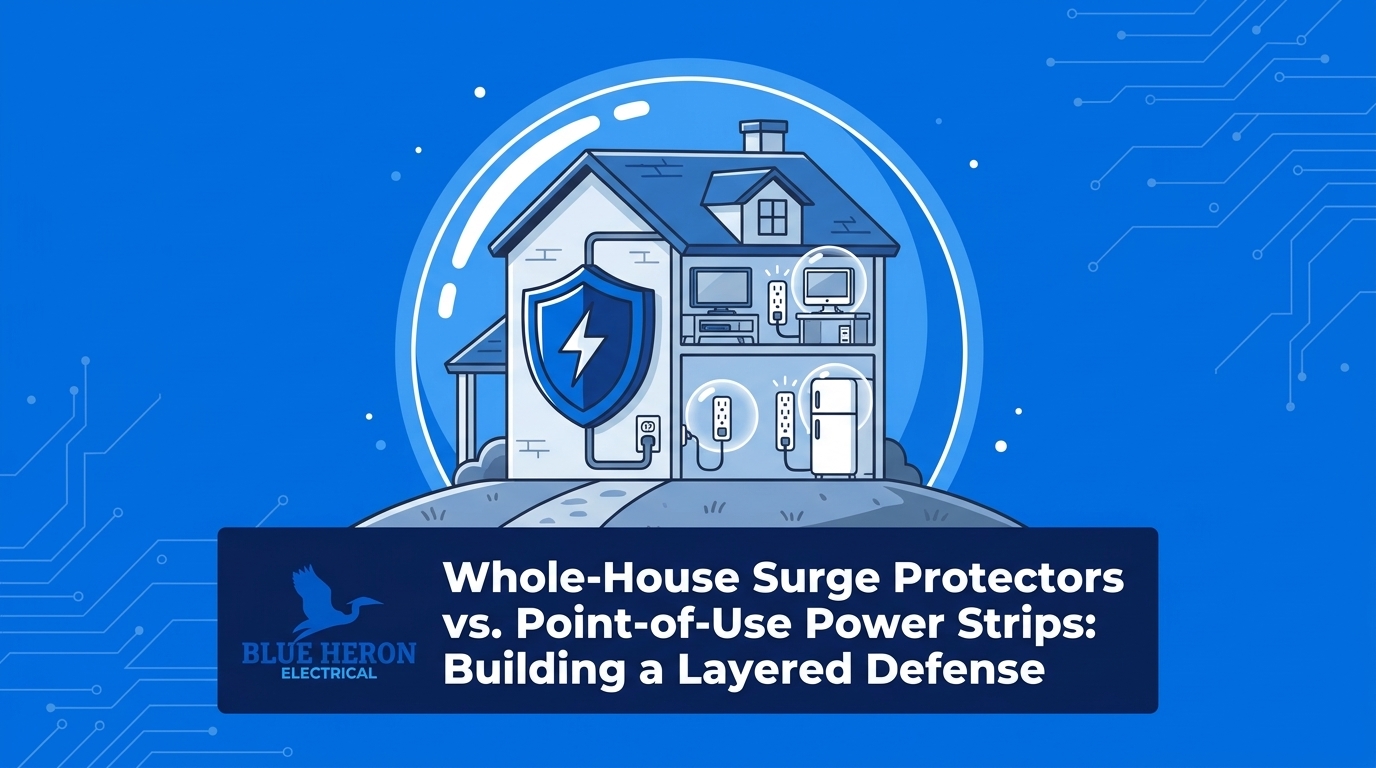
At Blue Heron Electrical, we constantly hear the ongoing debate surrounding Whole-House Surge Protectors vs. Point-of-Use Power Strips, but this argument usually misses the most critical point of home electrical safety: you actually need both. Many homeowners believe that buying a heavy-duty plug-in strip for an expensive OLED television or gaming console is the ultimate safeguard against electrical damage. The common myth we encounter is that you simply have to choose between a panel-level device and a plug-in strip, treating them as competing products rather than complementary tools.
Here is the reality our team sees in the field: true protection requires a layered defense system. A single line of defense leaves your most sensitive electronics fully exposed to either massive external grid spikes or the silent, repetitive internal spikes generated by your own appliances. As the September early fall transition brings unpredictable weather fronts and sudden grid load shifts, relying on just one method is a gamble. If you are looking to upgrade your home's defenses, learning about comprehensive Residential Electrical solutions is the perfect place to start.
Why Modern Home Theaters Are Uniquely Vulnerable
Modern audio-visual equipment is vastly different from the robust, analog electronics of the past. Today's home theater receivers, smart TVs, and gaming consoles are essentially high-powered computers. They contain highly sensitive microprocessors that operate on incredibly low voltages. Because these components are so delicate, they are uniquely vulnerable to electrical fluctuations that older appliances would simply shrug off.
The Danger of Internal Micro-Surges
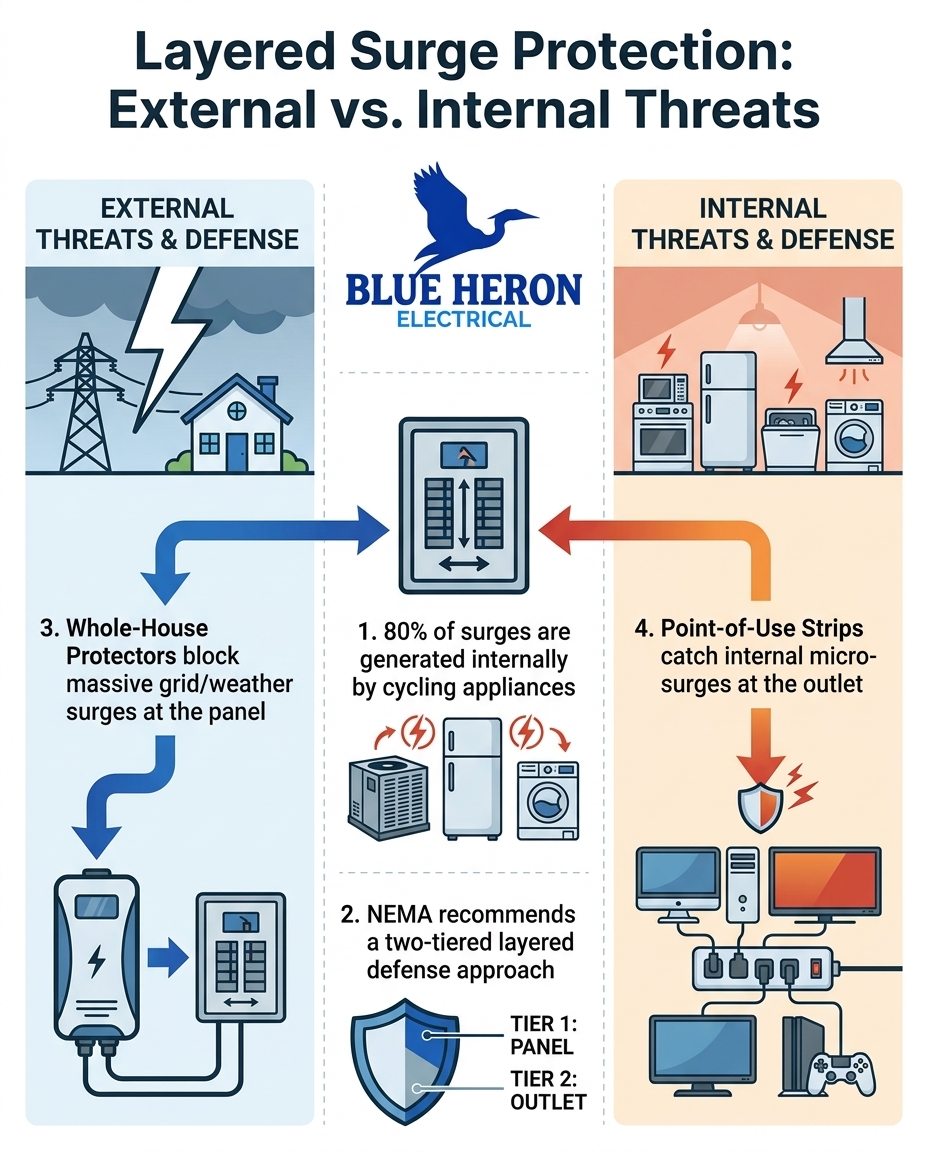
In our experience servicing homes throughout Sterling Heights, we find that most homeowners don't realize the biggest threat to their home theater doesn't come from a lightning storm—it comes from inside the house. Up to 80% of all electrical surges are generated internally. Every time a major motorized appliance cycles on and off, it creates a brief demand for power, followed by a sudden release of energy back into your home's wiring. This creates a micro-surge.
Here is how this internal threat silently damages your equipment:
1. The heavy draw: A large appliance, like an HVAC compressor or a refrigerator, kicks on and instantly draws a massive amount of current, causing a momentary dip in voltage.
2. The sudden release: When the appliance shuts off, the excess electrical energy remaining in the circuit is forcefully pushed back through the home's wiring.
3. The electronic rust effect: This excess energy hits the sensitive microprocessors in your home theater. While a single micro-surge rarely breaks a device instantly, the repetitive stress causes microscopic damage to the circuit boards—often referred to as "electronic rust."
4. Premature failure: Over time, this degradation causes the component to fail completely, often months before you would expect a breakdown.
A single layer of defense leaves these expensive setups exposed. If you only have external protection, the internal micro-surges will still reach your TV. For homeowners in Sterling Heights, ensuring your Electrical Panels are equipped to handle these complex electrical demands is the foundation of protecting your investment.
Whole-House Surge Protectors: Blocking Massive External Threats
While internal micro-surges act like a slow-moving rust, external surges act like a sledgehammer. This is where panel-level surge protectors step in as the primary, heavy-duty layer of defense. The whole-house protector's job is straightforward but highly demanding: stopping massive external surges before they can enter your home's branch circuits.
Intercepting Grid Fluctuations and Storm Damage
External surges typically originate from the utility grid. These can be caused by downed power lines, sudden shifts in grid demand, or nearby lightning strikes. With the risk of late-season thunderstorms and unpredictable lightning activity in Metro Detroit and Sterling Heights during the fall transition, external surge blocking is a non-negotiable requirement for home safety.
How the primary defense works:
• Panel-level installation: These devices are hardwired directly into your main breaker box. They monitor the incoming voltage from the utility line.
• Instant diversion: When a massive voltage spike hits the panel, the protector instantly detects the anomaly and safely diverts the excess electrical current directly into the earth via your home's grounding system.
• Protecting the whole board: By stopping the surge at the source, it protects everything hardwired into your home, including your HVAC system, major appliances, and the wiring itself.
Because these devices interact directly with the main power feed, they must be installed by a licensed professional. This is never a do-it-yourself project. The National Electrical Manufacturers Association (NEMA) highly recommends panel-level protection as the foundation of any residential electrical safety plan. Our team at Blue Heron Electrical recently helped a Sterling Heights homeowner who experienced the necessity of these foundational upgrades when their outdated Pushmatic fuse panel required replacement. Our licensed technicians quickly swapped the old panel for a modern unit and properly grounded the house with minimal interruption, which is exactly the structural foundation needed before advanced surge technology can be added. If your home needs this critical baseline update, exploring Panel Changes is the right next step.
Point-of-Use Power Strips: Catching the Internal Micro-Surges
If the whole-house protector is the heavy shield blocking the front door, the point-of-use power strip is the specialized net catching anything that slips through the windows. Even the highest-quality panel protector cannot stop a surge that originates downstream from the breaker box. If your refrigerator and your home theater share a circuit, the micro-surge generated by the fridge compressor will travel directly to the TV, completely bypassing the main electrical panel.
Decoding Joules and Clamping Voltage
This is exactly why heavy-duty point-of-use strips are required as the final-mile defense. They catch the internal spikes generated by your own appliances before they can reach your plugged-in electronics. However, not all power strips are created equal. During our September early fall electrical tune-ups, we always advise our customers to look at two specific ratings when selecting a strip for sensitive AV gear:
• Joules Rating: This measures the total amount of energy the strip can absorb before it fails. Think of it as a sponge. A higher Joules rating means a larger sponge. For home theater equipment, a rating of 2,000 Joules or higher is generally recommended.
• Clamping Voltage: This is the exact voltage threshold at which the strip activates and begins diverting excess power. A lower clamping voltage (such as 330V or 400V) means the device reacts faster and allows less excess energy through to your equipment.
While these strips are incredibly effective at managing internal micro-surges, we caution that they are insufficient on their own during major weather events. A massive grid surge can easily overwhelm a standard power strip's Joules rating in a fraction of a second, literally melting the internal components and passing the remaining destructive energy right into your television.
Side-by-Side Comparison: External vs. Internal Surge Protection
To fully understand why a layered defense is the only complete solution, it helps to look at how these two methods cover completely different vulnerabilities. The combination of both creates the NEMA-recommended two-tiered approach, ensuring your Sterling Heights home is shielded from every angle.
• Primary Surge Type Blocked — Whole-House Surge Protector (Panel-Level): Massive external threats (grid fluctuations, lightning, downed lines) — Point-of-Use Power Strip (Outlet-Level): Smaller internal threats (appliance cycling, micro-surges)
• Installation Method — Whole-House Surge Protector (Panel-Level): Professional hardwiring at the main breaker panel — Point-of-Use Power Strip (Outlet-Level): Plug-and-play at the specific wall outlet
• Coverage Area — Whole-House Surge Protector (Panel-Level): The entire home's electrical system, including hardwired appliances — Point-of-Use Power Strip (Outlet-Level): Only the specific devices plugged directly into the strip
• Lifespan & Durability — Whole-House Surge Protector (Panel-Level): Designed to handle massive energy dumps; lasts for years before replacement — Point-of-Use Power Strip (Outlet-Level): Absorbs smaller hits over time; degrades and requires periodic replacement
• Role in Layered Defense — Whole-House Surge Protector (Panel-Level): The heavy-duty primary shield for the whole property — Point-of-Use Power Strip (Outlet-Level): The specialized final-mile net for sensitive electronics
Understanding this dynamic is key to protecting your property. For more detailed insights on recognizing your home's vulnerabilities, you can read our guide on How To Tell If Your Home Needs Whole House Surge Protection.
Designing a Code-Compliant Layered Defense System
Transitioning from understanding the theory to actually securing your home requires professional intervention at the panel level. While homeowners can easily handle purchasing and plugging in the point-of-use strips, establishing the primary layer of defense must be code-compliant and professionally executed.
The Critical Role of Proper Grounding
A whole-house unit cannot simply make a massive electrical surge disappear into thin air. It operates by redirecting that dangerous excess voltage away from your home's branch circuits and safely into the earth. This means the protector is entirely dependent on the quality of your home's grounding system. If your home has an outdated grounding setup—common in older properties we service—the surge protector will not function correctly.
Many older homes require panel updates to safely accommodate modern surge technology. Upgrading a home's electrical panel involves assessing the current load capacity, ensuring the grounding rods meet modern municipal codes, and carefully integrating the surge device directly into the breaker layout. Recently, our technicians at Blue Heron Electrical updated another local homeowner's electrical panels to handle modern demands. We completed the panel update smoothly and efficiently, ensuring the home was ready to support advanced surge technology without any safety risks.
Because this work involves the main power feed entering the property, it carries immense safety risks if handled improperly. Blue Heron Electrical specializes in professional, code-compliant panel integration of whole-house surge devices to establish this primary defense layer safely. As we move through the September early fall transition, ensuring your system is grounded and compliant is vital. Professional Circuit Breaker Services in Sterling Heights can ensure your home's infrastructure is ready to handle whatever the grid delivers.
Frequently Asked Questions About Layered Surge Protection
Do I still need power strips if I have a whole-house surge protector?
Yes. Our electricians always remind clients that while whole-house protectors stop external surges at the panel, you still need power strips to catch internal surges generated by appliances. Every time a major appliance cycles on, it creates a small spike that bypasses the main panel. The power strips act as the final net to protect your sensitive electronics from these internal threats.
Will a whole house surge protector stop a direct lightning strike?
While they block massive surges from nearby strikes entering through the grid, a direct strike to the home bypasses the panel entirely. Lightning carries an unfathomable amount of energy that can jump across wiring. Layered protection and a professionally updated grounding system drastically mitigate the damage, but no residential device offers 100% immunity to a direct, structural lightning strike.
Can a power strip protect my home theater from grid fluctuations?
Power strips can handle minor voltage spikes, but massive grid fluctuations can easily overwhelm their Joules rating. When a major shift occurs on the utility grid, the sudden influx of energy can melt the internal components of a basic power strip. Panel-level protection is absolutely required for heavy, external grid shifts.
How does a layered surge protection system work?
It uses a panel-mounted device to block large external threats and point-of-use strips to catch smaller internal threats, ensuring no surge reaches sensitive electronics. The panel device redirects massive grid surges into the earth via your grounding system. Meanwhile, the plug-in strips absorb the daily micro-surges created by your own HVAC system and appliances.
Are older electrical panels compatible with whole-house surge devices?
Some older panels lack the necessary physical space or the proper grounding required to operate a modern surge device safely. If a panel is outdated, it cannot effectively channel a massive surge away from your circuits. A licensed electrician from our team can assess your current setup in Sterling Heights to determine if a panel update is required for a code-compliant installation.
Secure Your Home Theater Before the Next Storm
Protecting your high-end audio-visual equipment is not about choosing one product over another; it requires a strategic, two-tiered approach. True peace of mind comes from a professionally installed, layered defense that shields your home from massive grid spikes while simultaneously catching internal appliance micro-surges. Don't wait for the next major grid fluctuation or late-season storm to test the limits of your current power strips. Take proactive steps today to secure your property in Sterling Heights by scheduling a professional panel assessment with Blue Heron Electrical to integrate a whole-house surge protector.
Customer Testimonials

Service Areas