
How to Verify an Electrician Is Licensed in Michigan in 5 Simple Steps
Why Knowing How to Verify an Electrician Is Properly Licensed in Michigan Could Save You Thousands
Knowing how to verify an electrician is properly licensed in Michigan is one of the most important steps you can take before letting anyone touch your home's wiring. Here's a quick answer:
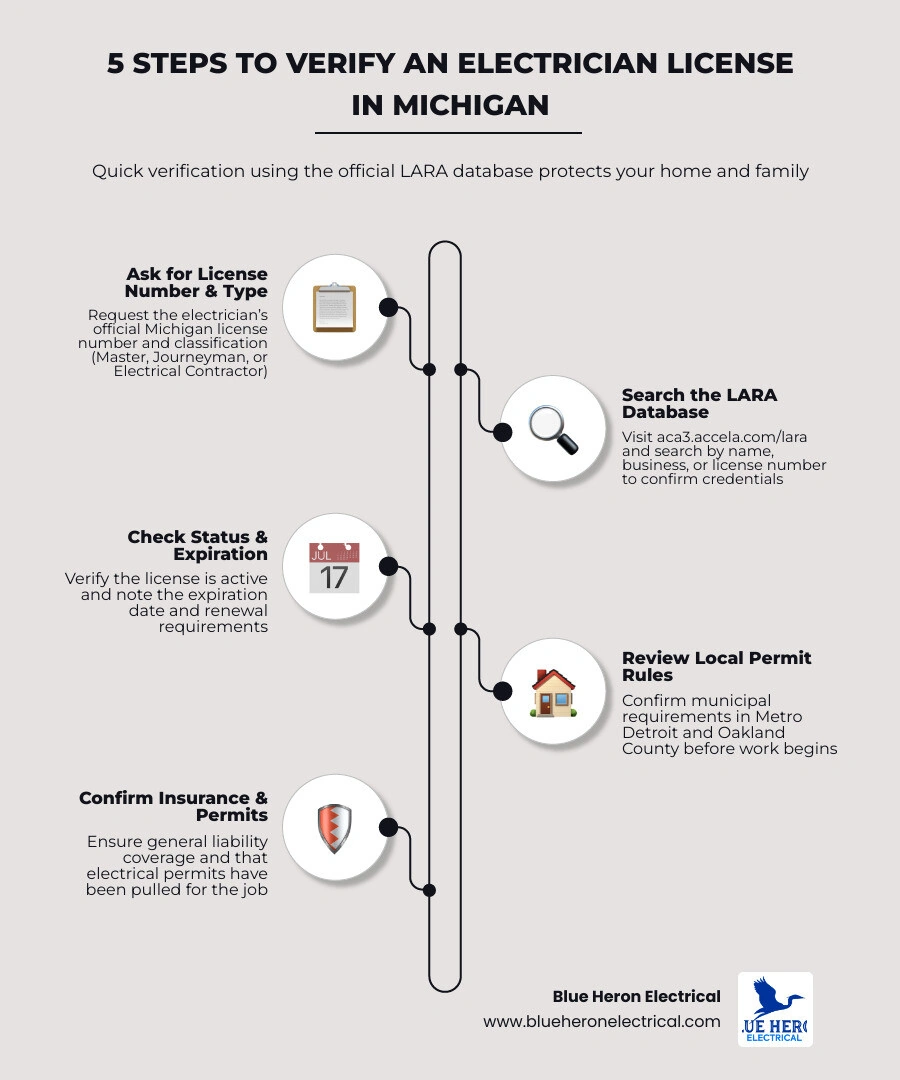
To verify a Michigan electrician's license in 5 steps:
- Ask the electrician for their license number and license type
- Visit the LARA license lookup portal at aca3.accela.com/lara
- Search by name, business name, or license number and confirm the license is active
- Check the expiration date and license classification (Master, Journeyman, or Electrical Contractor)
- Confirm they carry liability insurance and have pulled the required permits for your job
Michigan has more than 157,000 licensed contractors operating across the state, and the agency that oversees them — the Department of Licensing and Regulatory Affairs (LARA) — handles the full spectrum of electrical licensing. But not everyone who shows up with a tool belt is properly credentialed. For Metro Detroit homeowners already frustrated by surprise repair bills and unclear quotes, hiring the wrong person can turn a straightforward job into a costly, unsafe mess. The good news? Verifying a license takes just a few minutes when you know where to look.
Understanding Michigan Electrical License Types and Classifications
To protect your home and family, it helps to understand how Michigan organizes its electrical credentials. The state regulates skilled trades strictly, meaning there is no single "electrician license" that covers everything. Instead, LARA’s Bureau of Construction Codes issues distinct licenses based on experience, testing, and business structure.
When you hire a team for residential electrical services, you will likely interact with individuals holding one of four primary credentials:
- Apprentice Registration: This is an entry-level individual registration. Apprentices are learning the trade and are legally required to work under the direct, constant supervision of a licensed Journeyman or Master Electrician. They cannot perform electrical work alone.
- Electrical Journeyman License: To earn a Journeyman card, an electrician must accumulate at least 8,000 hours of practical experience over a minimum of four years and pass a comprehensive state licensing exam. A Journeyman is fully qualified to perform physical wiring, but they must be employed by a licensed Electrical Contractor.
- Master Electrician License: This is the highest individual technical credential. To qualify, an electrician must hold a Journeyman license for at least two years, document a minimum of 12,000 hours of practical experience over at least six years, and pass a rigorous exam.
- Electrical Contractor License: This is the crucial business credential. An individual Master or Journeyman license does not authorize someone to contract work out to the public. To run an electrical business, pull permits, and sign contracts, a company must hold an Electrical Contractor license, which must be represented by a qualifying Master Electrician.
Understanding these distinctions is vital. If a person shows you their personal Journeyman card but operates their own independent business without an Electrical Contractor license, they are working illegally in the state of Michigan.
Why You Must Know How to Verify an Electrician Is Properly Licensed in Michigan
Electricity is a silent force. When a plumbing pipe leaks, you see water immediately. When electrical work is done poorly, the danger remains hidden behind your drywall until a wire overheats or a short circuit sparks.
The National Electrical Code (NEC) exists to provide strict guidelines that prevent electrical fires and shock hazards. Licensed professionals spend years studying these standards to guarantee absolute code compliance. Unlicensed individuals, often operating as "handymen," rarely keep up with these updates.
Whether you are remodeling your kitchen or upgrading your facility with commercial electrical services, the stakes are incredibly high. The table below outlines the stark differences in protection and safety between hiring a licensed contractor and taking a gamble on an unlicensed worker.
| Protection Category | Licensed Electrical Contractor | Unlicensed Worker / Handyman |
|---|---|---|
| Code Compliance | Guaranteed to meet current National Electrical Code (NEC) standards. | High risk of outdated, messy, or outright dangerous wiring. |
| Permit Eligibility | Authorized to pull necessary municipal permits and schedule inspections. | Cannot pull permits; work is unrecorded and uninspected. |
| Financial Protection | Backed by liability insurance and the state's recovery fund. | Homeowner is fully liable for property damage or injuries on-site. |
| Home Insurance Status | Covered. Insurers approve of professional, permitted upgrades. | Insurers can deny claims for fires caused by unpermitted, unlicensed work. |
| Legal Recourse | Regulated by LARA; disputes can be filed formally with the state. | Very difficult to track down; often operating without a paper trail. |
5 Steps to Verify an Electrician's License in Michigan

Now that you know what licenses exist and why they matter, let’s walk through the actual verification process. It is fast, free, and can be completed entirely online.
Step 1: Ask for the Electrician's License Number and Type
A professional, reputable contractor will never hesitate to share their licensing credentials. Before signing a contract or allowing work to begin, ask for their Electrical Contractor License Number as well as the name and license number of the Master Electrician representing the business.
If they make excuses, claim they "work under a friend's license," or argue that a license isn't necessary for a small job, consider this an immediate red flag and look elsewhere.
Step 2: Use LARA to Verify an Electrician Is Properly Licensed in Michigan
Michigan’s Department of Licensing and Regulatory Affairs (LARA) maintains a public search database through the Accela Citizen Access portal.
To run a search:
- Navigate to the official LARA portal at aca3.accela.com/lara.
- Click on the section labeled "Search for Licensee" or "Search for Provider/Education/Licensee".
- You can search by individual name, business name, license number, or license type.
- For the most accurate results, select "Electrical Contractor" or "Electrical Master" from the License Type dropdown menu and enter their license number.
Step 3: Confirm the Expiration Date and Status
Once the search results load, click on the licensee's name or business to view the full details. Pay close attention to these three critical fields:
- Status: This must explicitly say "Active". If it says "Expired," "Lapsed," or "Suspended," they are not legally allowed to perform electrical work.
- Expiration Date: Ensure the license is current and will not expire mid-project.
- License Type: Confirm that the business holds an Electrical Contractor license, and that the individual working in your home holds a Journeyman or Master credential.
Step 4: Verify Municipal Requirements in Metro Detroit
While state-level licensing through LARA is mandatory, local municipalities often have their own registration and permitting rules. For example, if you live in the City of Detroit, an electrician must meet specific local board requirements and register their state license with the city's Buildings, Safety Engineering, and Environmental Department (BSEED).
Similarly, across Oakland County and Macomb County—including communities like Troy, Royal Oak, Sterling Heights, and Clinton Township—local building departments require contractors to register their state license locally before they can pull building or electrical permits. Always confirm your contractor is registered to pull permits in your specific town or city.
Step 5: Check for Active Liability Insurance and Permits
A valid license is only part of the equation. You must also verify that the contractor carries active general liability insurance and workers' compensation. Liability insurance protects your property if an accident occurs, while workers' comp ensures you aren't held financially responsible if a worker is injured on your property.
Finally, confirm that they will pull the electrical permit for your project. A permit is a legal requirement for almost all electrical installations, alterations, or additions. Once the work is complete, a local municipal inspector will visit your home to review the installation and sign off on its safety. We handle all permit pulling and inspections as part of our comprehensive electrical services, ensuring you never have to worry about municipal compliance.
The Risks of Hiring an Unlicensed Contractor in Michigan
Hiring an unlicensed worker might seem like a way to save a few dollars upfront, but the legal and financial risks are massive.
In Michigan, engaging in unlicensed contracting is a serious crime. Under state law, individuals who perform or attempt to perform unlicensed contracting are guilty of a misdemeanor offense. This crime is punishable by a fine of up to $25,000, imprisonment for up to one year, or both.
The Michigan Department of Attorney General handles more than 10,000 consumer complaints annually, a significant portion of which involve scams, uncompleted work, and subpar property damage caused by unlicensed entities.
Furthermore, if you hire an unlicensed worker, you waive your access to state-level protections. For instance, Michigan's Homeowner Construction Lien Recovery Fund can provide up to $100,000 in recovery compensation for financial losses caused by licensed builders—but this protection is completely unavailable if you choose to hire an unlicensed contractor. If they damage your home or leave your system in a hazardous state, your primary recourse is a costly, stressful civil lawsuit against someone who may not have the assets to pay you back.
Red Flags When Learning How to Verify an Electrician Is Properly Licensed in Michigan
To protect your home, keep an eye out for these common warning signs when hiring a contractor:
- The "Homeowner Permit" Request: If a contractor asks you to pull the building or electrical permit in your own name, run away. In Michigan, homeowners can only pull permits if they personally own and occupy the single-family home and are doing the work themselves. If a contractor asks you to pull the permit, it is almost always because they are unlicensed, suspended, or red-flagged by the local building department.
- Cash-Only Demands: Legitimate businesses accept standard payment methods and provide structured payment schedules. Demanding cash up front is a classic sign of an off-the-books, unlicensed operation.
- No Written Contract: Michigan law requires residential home improvement contracts over $600 to be in writing and to include the contractor's license number. If they refuse to put the scope of work, timeline, and costs in writing, do not hire them. You can find more tips on home safety and contractor compliance on our helpful blog posts.
Frequently Asked Questions about Michigan Electrical Licensing
How often do electrical licenses need to be renewed in Michigan?
In Michigan, individual Master and Journeyman licenses must be renewed annually by December 31st. Electrical Contractor licenses operate on a three-year renewal cycle. To maintain their licenses, professionals must complete continuing education courses on the latest National Electrical Code (NEC) updates whenever a new code cycle is adopted by the state. Failing to renew on time results in immediate late fees, and working with an expired credential can lead to state citations and the inability to pull permits.
What is the difference between a Master Electrician and an Electrical Contractor?
A Master Electrician is an individual credential certifying that a person has achieved the highest level of technical skill, classroom training, and field experience (at least 12,000 hours). An Electrical Contractor is a business license issued to an individual or company, allowing them to legally advertise services, write contracts, hire employees, and pull municipal permits. A Master Electrician cannot contract work out to the public unless they also hold an Electrical Contractor license or are employed as the "Master of Record" for a licensed Electrical Contractor business.
What should I do if I suspect someone is performing unlicensed electrical work?
If you suspect an individual or business is operating without a proper license in Metro Detroit, you can file a formal complaint with LARA’s Bureau of Construction Codes Enforcement Section. You can also report them to the Michigan Department of Attorney General's Consumer Protection Division. Reporting these violations protects your neighbors and keeps unqualified workers from creating dangerous fire hazards in your local community.
Conclusion
Your home’s electrical system is its most important utility, keeping your lights on, your appliances running, and your family safe. Verifying that your electrician is properly licensed in Michigan isn't just a formality—it is a critical safety measure that protects your property, your wallet, and your peace of mind.
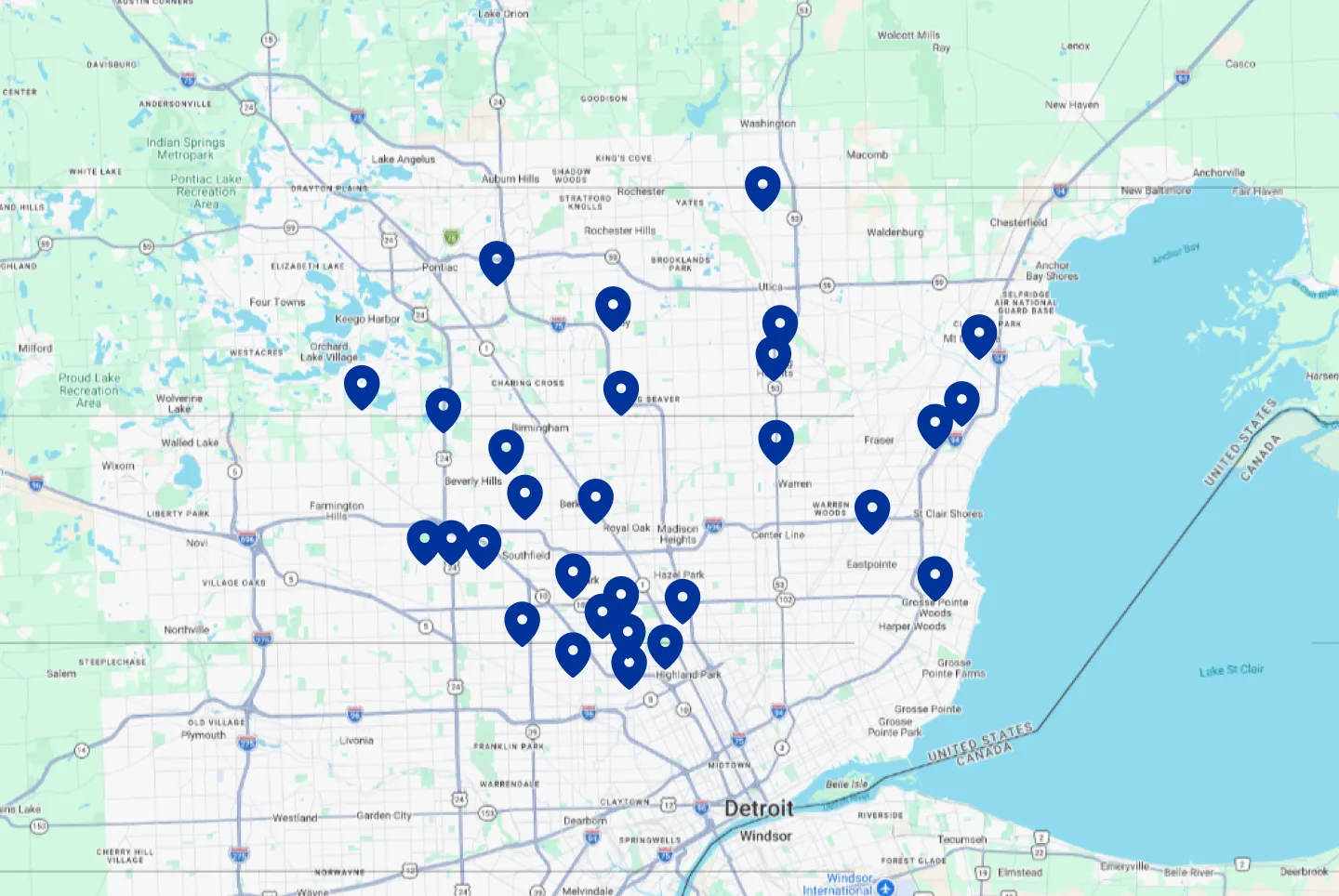
At Blue Heron Electrical, we serve homeowners and business owners across Metro Detroit and Oakland County—including communities like Troy, Royal Oak, Sterling Heights, Rochester, and Clinton Township. We pride ourselves on delivering dependable, fully code-compliant work backed by clear communication and a relentless focus on long-term safety.
Don't take chances with your home's wiring. When you are ready for reliable, professional service from a team that is fully licensed, insured, and deeply rooted in the local community, explore our complete range of electrical services or reach out to us today to schedule your next project.
Customer Testimonials

Service Areas