
Upgrading Your Electrical Panel Before Switching to an Electric Heat Pump
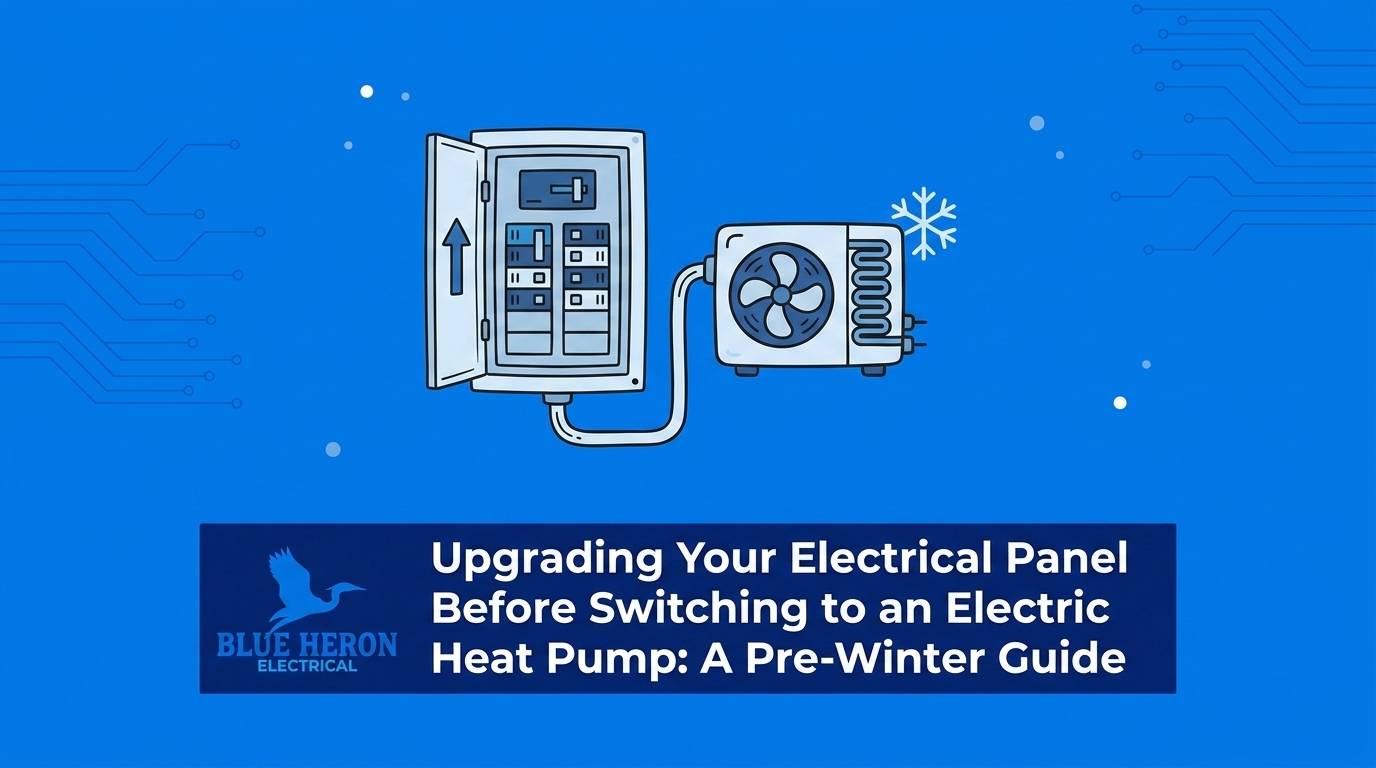
The September Rush: Why Your Heat Pump Upgrade Could Face an Electrical Bottleneck
Your old heating system is showing its age, and you know that upgrading your electrical panel before switching to an electric heat pump is the smartest way to prepare for the freezing months ahead. When you notice strange noises from your furnace or uneven heating throughout your home, the instinct is to call an HVAC contractor immediately. However, many homeowners skip a crucial step and find their exciting new home comfort project stalled before it even begins.
To ensure your home is ready for the cold, learn more about our Electrical Panels services and how we handle panel upgrades.
The early fall months are a chaotic time for home service contractors. In our years of serving the Sterling Heights community, our team at Blue Heron Electrical sees a familiar pattern every September: homeowners rush to schedule HVAC installations to beat the winter freeze, creating a massive backlog. During this September pre-heating season transition, a common and unexpected roadblock frequently brings these projects to a grinding halt: discovering that the home's existing electrical infrastructure simply cannot support a new electric heating system.
Understanding this critical decision point is the key to a smooth transition. Your electrical upgrade must be sequenced and completed well before the HVAC team begins their work. Failing to coordinate this prerequisite can lead to a mid-project halt during the most crucial transition season of the year.
Common signs you might face an electrical bottleneck:
• Outdated equipment: You still have an old fuse box or a panel installed before 1990.
• Limited capacity: Your main breaker is labeled 100 amps or less.
• No physical space: There are no empty breaker slots left in your current electrical box.
• Flickering lights: Your lights dim when large appliances, like a vacuum or microwave, turn on.
As the harsh Michigan winter approaches, the urgency to finalize your heating strategy increases. By addressing the electrical bottleneck first, you clear the path for a fast, efficient, and successful heat pump installation.
Understanding the Massive Power Draw of Cold-Climate Heat Pumps
Switching from a traditional gas furnace to a modern electric heat pump completely changes how your home consumes energy. An older gas furnace relies on electricity only to run the blower motor and a few internal controls. This minimal electrical need easily runs on a standard 15-amp or 20-amp circuit. A fully electric heat pump system, however, relies entirely on electricity to capture, compress, and distribute heat throughout your home.
This difference in power consumption is substantial. To safely support this new technology, you need a robust electrical foundation. If you are unsure about your home's current capacity, exploring professional residential electrical services is the best first step.
Meeting Sterling Heights MI cold-climate requirements means installing a system designed to operate efficiently even when temperatures plummet. Our team frequently reminds local homeowners that these robust systems have unique electrical demands that generic southern climate advice completely ignores.
Compressor Draw vs. Auxiliary Heat Strips
To understand why these systems need so much power, we have to look at how they operate in different weather conditions. During the mild fall weather, the heat pump's compressor operates with incredible baseline energy efficiency. It simply transfers ambient heat from the outside air into your home, drawing a relatively moderate amount of amperage.
The challenge arises when Michigan's deep freezes hit. From our extensive experience out in the field, we know exactly what happens when temperatures drop below freezing: the heat pump can struggle to extract enough heat from the frigid outdoor air. To keep your home warm, the system activates its auxiliary electric resistance heat strips.
The sudden, high-amperage demand:
• What they are: Auxiliary heat strips function like giant toaster coils inside your ductwork, generating heat through sheer electrical resistance.
• The massive power spike: These heat strips can draw 40 to 80 amps on their own, essentially doubling the system's electrical requirements in an instant.
• The frequency of use: Deep freezes trigger these emergency heat strips frequently throughout the winter, making a robust electrical backbone absolutely non-negotiable.
Below is a quick comparison of the electrical demands of different heating systems:
• Standard Gas Furnace — Typical Amperage Required: 15 to 20 Amps — Electrical Impact on the Home: Minimal; easily supported by older electrical panels.
• Standard Heat Pump (Mild Climate) — Typical Amperage Required: 30 to 40 Amps — Electrical Impact on the Home: Moderate; often requires a dedicated double-pole breaker.
• Cold-Climate Heat Pump (with Aux Heat) — Typical Amperage Required: 60 to 100+ Amps — Electrical Impact on the Home: Massive; frequently overloads older electrical systems during winter.
Because these heavy-draw heat strips activate exactly when the weather is at its worst, your electrical panel must be prepared to handle the absolute maximum load without tripping the main breaker.
Will Your Current Setup Pass an NEC Load Calculation?
Before any reputable contractor installs a heavy-draw appliance, they must perform a National Electrical Code (NEC) load calculation. This is not a rough estimate or a casual guess; it is a strict mathematical formula used to determine if your home's electrical service can safely handle the total combined demand of all your appliances, lighting, and heating systems.
This calculation is both legally and functionally required. The NEC load calculation takes into account the square footage of your home, the small appliance circuits in your kitchen, and dedicated circuits for major appliances like electric ranges, dryers, and water heaters. It ensures that when everything is running at once, the wires coming into your home will not overheat and cause a fire.
The mathematical reality of this calculation is eye-opening for many homeowners. Our electricians routinely find that older 100-amp panels simply do not have the capacity for an 80-amp heating load on top of standard household appliances. If your heat pump's auxiliary strips activate while you are cooking dinner on an electric stove and running the clothes dryer, a 100-amp service will instantly overload.
Even if you have previously upgraded, some older 200-amp systems might fail the calculation if the home already features high-draw appliances. If you have recently installed an electric vehicle charger, a hot tub, or an electric on-demand water heater, your available amperage is likely already spoken for.
Because this calculation is a hard prerequisite for safely electrifying home heating, it is critical to understand the panel upgrade inspection and permit requirements in Michigan. Passing the load calculation and securing the proper permits ensures your new heating system operates safely and legally.
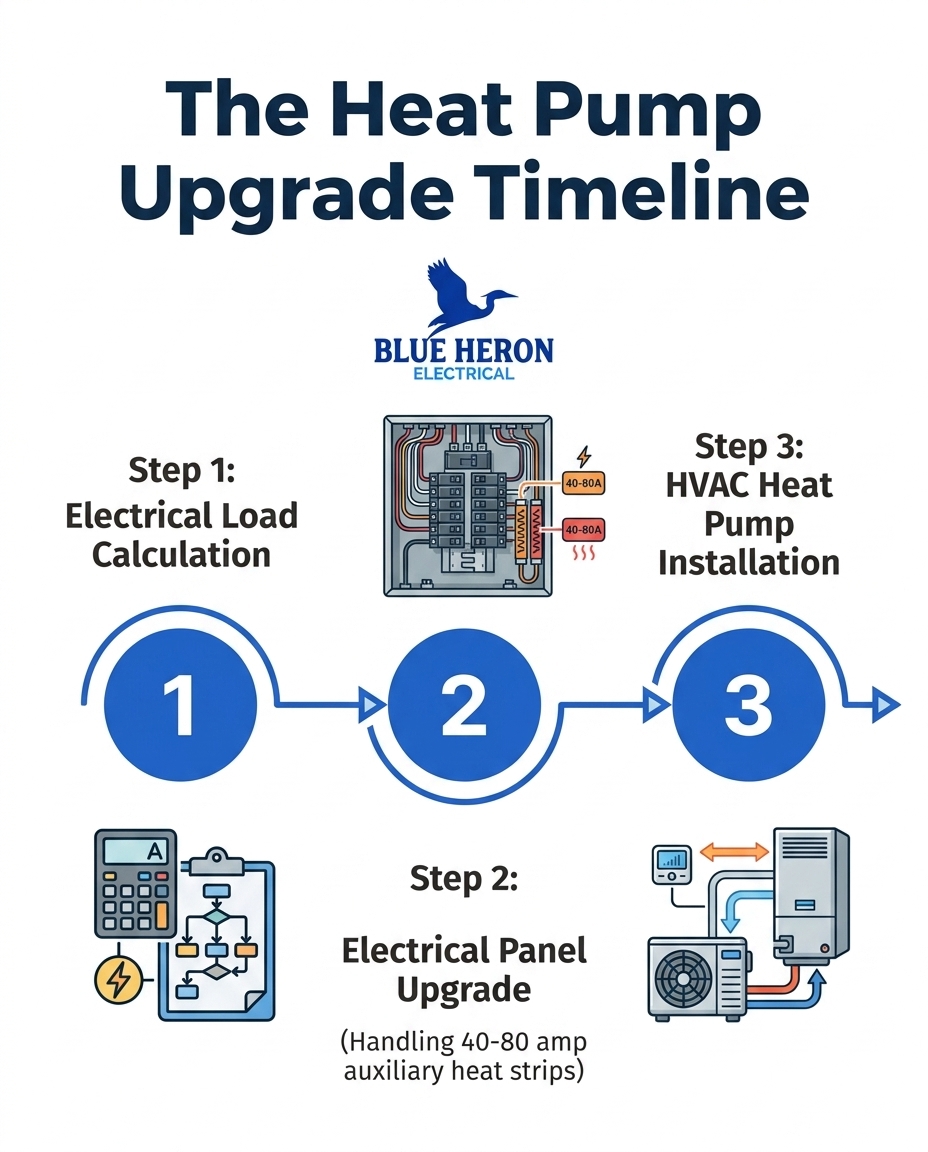
The Essential Chronological Steps for a Heat Pump Upgrade
Upgrading your home's heating system requires careful sequencing. HVAC installers cannot legally or safely finalize their work until the electrical prerequisites are fully complete. Following a strict timeline prevents stressful delays and ensures your home stays warm during the September pre-heating season transition.
1. Step 1: The Electrical Load Calculation. The very first step is having a licensed electrician assess your current capacity and calculate your future needs. This mathematical assessment determines exactly what size panel and service upgrade is required to support the new heat pump and its auxiliary heat strips safely.
2. Step 2: The Panel Upgrade. Once the calculation is complete, the electrician updates the physical electrical box, installs the appropriate breakers, and ensures the home's grounding system meets modern safety standards. This step prepares the necessary dedicated circuits for the HVAC team. For example, our team recently helped a Sterling Heights homeowner who reached out to us during a pre-heating season tune-up to update their electrical box and add outlets in their older home. By completing the electrical box update efficiently and professionally, we secured the power capacity needed for modern demands without delaying their HVAC upgrade.
3. Step 3: The HVAC Installation. With a robust electrical backbone in place, the HVAC installers arrive. They can now seamlessly connect the new heat pump to the newly prepared dedicated circuits, test the system, and ensure the auxiliary heat strips function perfectly without tripping any breakers.
Skipping straight to Step 3 is a recipe for disaster. The HVAC team needs a safe, adequate power source to connect their equipment. If the electrical box is not ready, the heating installation stops immediately.
The Risks of Delaying Your Electrical Assessment Until Fall
Procrastination is the enemy of a smooth home improvement project. Driving seasonal urgency is not about panic; it is about highlighting the logistical nightmares of mid-project delays. Waiting until the HVAC team is actively on-site to discover electrical deficiencies guarantees a project halt.
When an HVAC installer realizes the existing panel cannot support the new heat pump, they have to pack up their tools and leave. A pattern we see often is homeowners then being forced to scramble for an emergency electrical appointment. If you want to avoid this scenario, consulting a trusted Sterling Heights electrician early in the process is essential.
The cascading effects of a delayed assessment:
• Severe scheduling backlogs: Both electricians and HVAC contractors face massive scheduling backlogs during the September and October rush. Finding an available professional on short notice is incredibly difficult.
• Permit and inspection delays: Upgrading a panel requires municipal permits and inspections. You cannot fast-track city bureaucracy, meaning your heating project could sit idle for weeks while paperwork is processed.
• The cold weather risk: The ultimate danger is being caught without a functioning heating system during the first major cold snap of the season. A torn-apart utility room offers no warmth when the temperature drops below freezing.
Furthermore, proper sequencing is often a requirement for financial incentives. Generic federal tax credits and local electrification rebates often require properly permitted and sequenced installations. If the electrical work is done hastily or without the proper documentation, you risk missing out on these valuable incentives. Always verify current rebate programs and requirements with a tax professional before beginning your project.
By scheduling your assessment during the September pre-heating season transition, you give yourself ample time to navigate permits, schedule the upgrade, and keep your HVAC installation perfectly on track.
Seamless Contractor Coordination: Bridging the Gap Between Electrical and HVAC
The most stressful part of upgrading your home's heating system is rarely the equipment itself; it is managing multiple contractors and ensuring they are on the same page. Homeowners often feel like they are forced to act as the general contractor, translating technical jargon between the HVAC team and the electrician.
A dedicated local electrician understands how to communicate directly with HVAC teams. We speak the same language regarding wire sizing, dedicated breaker needs, outdoor disconnect locations, and strict project timelines. This direct communication eliminates confusion and ensures that the electrical backbone is ready exactly when the HVAC installers need it, preventing costly downtime.
At Blue Heron Electrical, our expertise lies in safely upgrading older Metro Detroit homes and seamlessly coordinating with HVAC installers to eliminate homeowner stress. Our team understands that preparing older homes requires specialized knowledge of outdated wiring systems. Many homes in our area still rely on aging 100-amp or older 200-amp panel loads that feature obsolete technology like Pushmatic breakers or ungrounded circuits.
How we bridge the gap:
• Direct communication: We consult with your chosen HVAC contractor to verify the exact specifications and amp draw of your new heat pump.
• Precision planning: We map out the exact routing for the new heavy-gauge wiring required for the auxiliary heat strips.
• Timeline alignment: We schedule our panel upgrades to finish right before the HVAC team is slated to begin, creating a seamless handoff.
By taking ownership of the electrical prerequisite, we allow the HVAC technicians to focus entirely on what they do best: optimizing your home's airflow and heating performance.
Frequently Asked Questions About Panel Upgrades for Heat Pumps
Do I need to upgrade my electrical panel for a heat pump?
The short answer is that it depends entirely on the NEC load calculation and your existing amperage. If you currently have a 100-amp service, an upgrade is almost certainly required to support the new heating demand safely. Even with a 200-amp panel, you might need an upgrade if your home already features high-draw appliances like an EV charger or a hot tub. A licensed electrician must assess your specific setup to give you a definitive answer.
Can a 100-amp panel handle a heat pump with heat strips?
Rarely, if ever. The auxiliary heat strips alone can draw up to 80 amps when activated during a deep freeze. This leaves a mere 20 amps of capacity for the entire rest of your home, which is insufficient to run a refrigerator, lighting, and a stove simultaneously. Attempting to run a cold-climate heat pump on a 100-amp panel will constantly trip your main breaker and pose a severe safety hazard.
Why must an electrical panel upgrade happen before HVAC installation?
HVAC installers need a safe, adequate, and fully functional power source to connect and test the new heating system. If the electrical backbone is not prepared first, the HVAC team cannot legally or safely complete their work. Completing the panel upgrade first ensures the dedicated circuits are ready, preventing mid-project delays and keeping your installation on schedule.
How many amps does a heat pump with heat strips use?
While the heat pump's compressor uses a moderate amount of amperage (typically 30 to 40 amps), the heat strips can push the total draw significantly higher. When the auxiliary resistance heating kicks in during freezing weather, the combined system can easily demand 60 to 100 amps or more. This massive spike is why older 100-amp or older 200-amp panel loads frequently fail the required safety calculations.
Are there generic tax credits available for electrical panel electrification upgrades?
Yes, federal tax credits and local electrification incentives often apply to electrical panel upgrades that enable the installation of energy-efficient heat pumps. These programs are designed to help homeowners transition away from fossil fuels. However, incentive availability and rules change frequently, so homeowners should always verify current programs and documentation requirements with a qualified tax professional before starting the project.
Secure Your Home's Heating Future With a Proactive Electrical Assessment
A successful transition to modern, energy-efficient electric heating relies entirely on a robust electrical foundation. As we have seen in our local Metro Detroit service calls, the massive power draw of auxiliary heat strips means that many older homes simply cannot support these systems without a significant electrical update.
Completing the necessary load calculations and upgrading your panel before the HVAC team arrives is the only way to prevent stressful winter delays. By addressing these Sterling Heights MI cold-climate requirements proactively, you ensure your home remains safe, warm, and compliant with all electrical codes.
Do not wait until the first freeze to discover your electrical system is holding your comfort hostage. Explore a professional electrical assessment today to keep your upcoming HVAC project perfectly on track and secure your home's heating future.
Customer Testimonials

Service Areas