
Why Does My Circuit Breaker Keep Tripping? A Pre-Winter Troubleshooting Guide
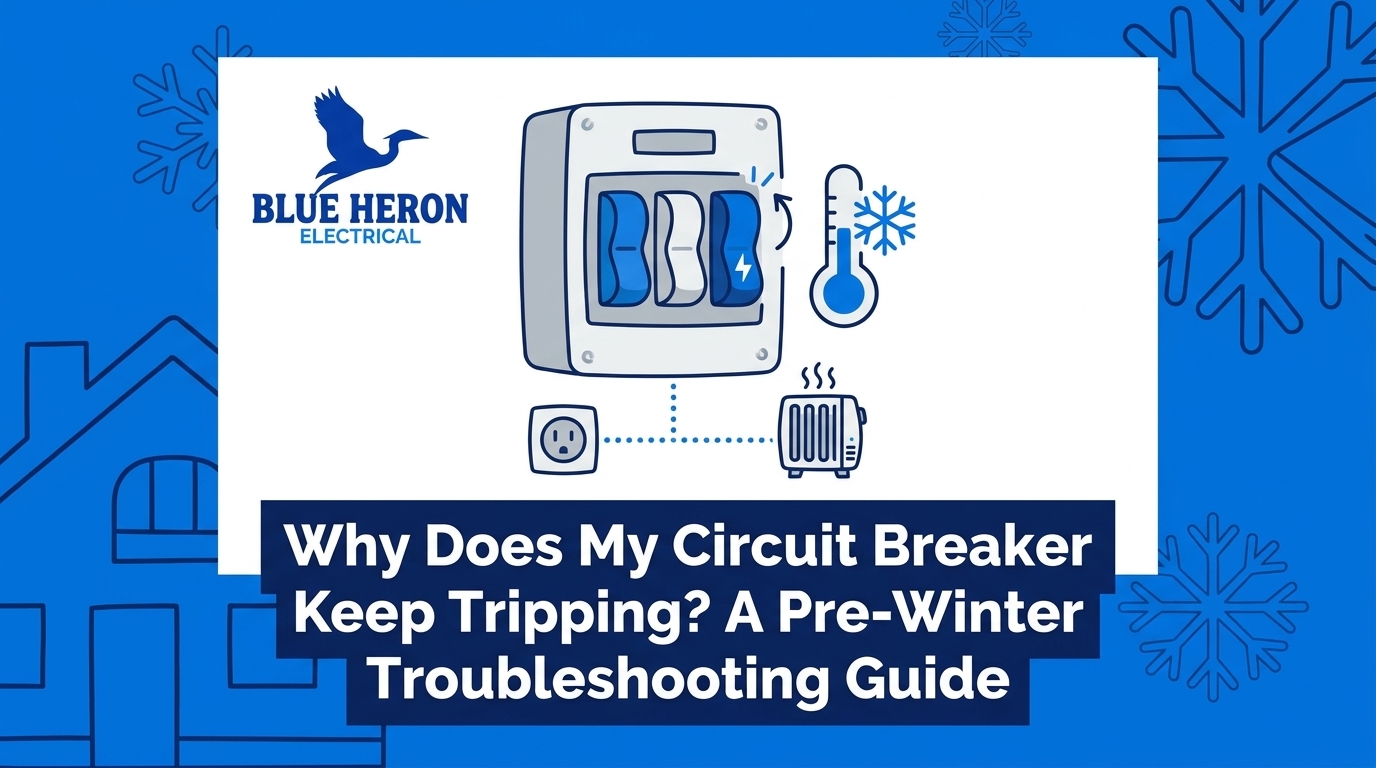
The Sudden Chill: Why Fall Weather Triggers Electrical Headaches
As October in Michigan brings a distinct chill to the air, preparing your home for the impending frost requires reliable local service expertise and area tips tailored to our specific climate. Before the central furnace is fully operational and running daily, many homeowners rely on supplemental heating to take the edge off the brisk morning temperatures. But this sudden shift in weather—and the resulting spike in power usage—often exposes hidden weaknesses in your home's electrical system. If you find yourself constantly walking down to the basement to reset a tripped switch, you are experiencing a clear warning sign, not just a minor nuisance. Navigating this seasonal transition safely means addressing these electrical vulnerabilities before the harsh winter weather arrives.
For comprehensive solutions, explore our residential electrical services or schedule specialized circuit breaker services in Sterling Heights today.
The October pre-winter heating startup acts as a rigorous stress-test for your entire home. During the summer, your electrical demand is largely predictable, dominated by the air conditioning unit on its own dedicated circuit. However, when the temperature drops sharply in the fall, household electrical behavior changes overnight. Families pull space heaters out of storage, plug in heavy-duty electric blankets, and begin running the central furnace blower motor. This simultaneous demand asks your electrical panel to handle a massive, sudden load. Understanding why this happens—and recognizing when your system is crying out for help—is the first step toward securing your home for the freezing months ahead.
Understanding the Demand: Space Heaters and Furnace Blowers
To understand why your breaker keeps tripping, you have to look at the sheer volume of electricity required to generate heat. The transition from passive fall weather to active winter heating pulls a massive amount of continuous power. In our years serving the Sterling Heights community, the Blue Heron Electrical team has found that modern space heaters are notorious energy consumers. A standard portable heater running on its highest setting typically pulls around 1,500 watts of continuous power. When you plug this into a standard living room or bedroom outlet, you are instantly consuming the vast majority of that circuit's available capacity.
The situation compounds when other mechanical systems activate. If your space heater is running and your central furnace blower motor kicks on to circulate air, the combined surge of electricity can easily overwhelm a shared circuit. This heavy load can also cause related symptoms throughout the house, tying directly into what causes flickering lights when major appliances cycle on and off.
Calculating Your Circuit's Limit
Electrical circuits are generally rated for either 15 amps or 20 amps. To understand your home's limits, you can use a simple calculation: Amps multiplied by Volts equals Watts.
• 15-Amp Circuits: A standard 15-amp circuit at 120 volts provides a maximum capacity of 1,800 watts.
• 20-Amp Circuits: A standard 20-amp circuit at 120 volts provides a maximum capacity of 2,400 watts.
• The Safety Margin: Electrical codes recommend never loading a circuit beyond 80% of its maximum capacity for continuous use.
If you plug a 1,500-watt space heater into a 15-amp circuit, you have essentially maxed out that line. If a television, a few lamps, or a computer are plugged into the same circuit—even in a different room—the total demand will exceed 1,800 watts, and the breaker will trip to prevent the wires inside your walls from melting. While redistributing heavy appliances to different outlets on different circuits is a temporary fix, it highlights the need for a more robust electrical infrastructure.
Circuit Overload vs. Short Circuit: Decoding the Trip
Not all tripped breakers are caused by plugging in too many devices. Differentiating between a simple overload and a dangerous electrical fault is a vital part of home safety, especially in older Sterling Heights residential neighborhoods where original wiring may still be in use.
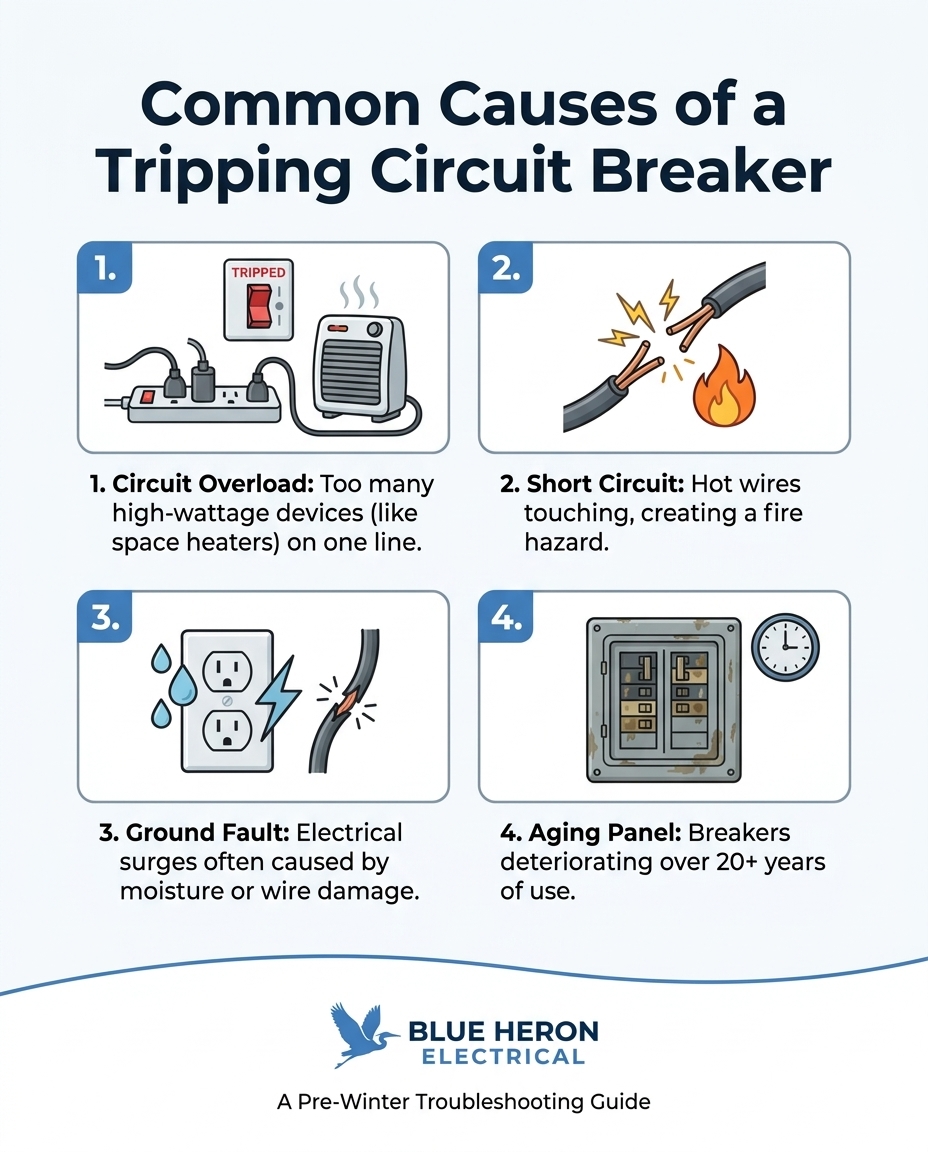
• Circuit Overload — What It Means: Too much electrical demand on a single line, causing the breaker to safely cut power. — Common Warning Signs: Trips only when multiple high-wattage devices (like space heaters or vacuums) run simultaneously.
• Short Circuit — What It Means: A hot wire is making direct contact with a neutral or ground wire, creating a massive, uncontrolled current surge. — Common Warning Signs: Breaker trips instantly upon reset; burning smells; visible sparks or black smudges around outlets.
• Ground Fault — What It Means: Electricity escapes its intended path and travels to the ground, often due to water exposure or damaged wire insulation. — Common Warning Signs: Trips frequently in wet areas (kitchens, bathrooms, basements, or outdoor receptacles).
A strict safety warning: While a homeowner can usually resolve a simple circuit overload by unplugging a space heater, you should never attempt a DIY investigation of a short circuit or a ground fault. These faults indicate compromised wiring, failing insulation, or internal appliance damage. Poking around inside electrical boxes or attempting to splice wires without proper licensing and training is incredibly dangerous. These issues require the diagnostic tools and expertise of a licensed professional.
The Vulnerability of Aging Panels in Older Homes
The symptom of a tripping breaker often points to a much broader issue: outdated electrical infrastructure. Many homes in established Sterling Heights residential neighborhoods still rely on their original electrical panels. These systems were installed decades ago and were simply not designed to handle the simultaneous, high-wattage demands of modern living, let alone the heavy supplemental heating required during a Michigan winter.
A common pattern our team at Blue Heron Electrical sees in older homes involves homeowners trying to modernize their living spaces without addressing the underlying power supply. For example, during a recent winter service call, a local homeowner needed new living room lights and a 3-way switch wired in. While our technicians quickly and professionally wired the new fixtures so everything worked correctly, these types of modernization projects often reveal that the main panel itself is nearing its limit. Adding new lighting or modern appliances to an exhausted panel is like putting a new engine in a car with failing brakes.
Proactive electrical panel upgrades are one of the most effective ways to secure your home. An aging panel will often show physical signs of deterioration. If you notice rust on the metal casing, hear a low buzzing or humming sound coming from the box, or touch a breaker switch that feels physically hot, the internal components are failing. Upgrading before the harshest winter weather arrives provides the peace of mind that comes with a modernized system, capable of handling heavy winter loads seamlessly and safely. Additionally, federal tax credits may apply to qualifying electrical panel upgrades that support energy-efficient home improvements; we always recommend verifying current programs with a tax professional.
When Tripping Becomes a Fire Prevention Mechanism
It is crucial to understand that a tripping breaker is actually doing its job. It is a vital fire prevention mechanism designed to cut the flow of electricity before the wires hidden inside your walls overheat and ignite. During the October pre-winter heating startup, this mechanism is tested frequently.
Inside a standard circuit breaker, there are two primary trip mechanisms. The thermal mechanism uses a bimetallic strip that bends as it heats up from excess current, eventually physically snapping the circuit open. The magnetic mechanism responds instantly to the massive surge of a short circuit. When either of these mechanisms activates, the breaker has successfully prevented a potential disaster.
Because heating equipment and space heaters are leading causes of home fires during the fall and winter months, you must respect the breaker's warning. Never force a breaker to stay on. Never tape a switch down, and never repeatedly reset a breaker that immediately trips again without addressing the root cause. Forcing a failing system to operate bypasses the safety mechanisms entirely, allowing the wiring to reach temperatures that easily ignite drywall paper, wood framing, and insulation. Persistent tripping is a clear, undeniable signal for professional intervention.
Identifying When You Need Immediate Professional Help
Knowing the difference between a minor inconvenience and an active hazard can save your home. While unplugging a vacuum cleaner to reset a breaker is routine, certain symptoms escalate the situation from scheduled maintenance to an immediate emergency.
The Emergency Checklist:
• Immediate Trips: The breaker snaps back to the "off" position the second you try to reset it.
• Visual Damage: You see scorching, black soot, or melted plastic around an outlet or the panel itself.
• Audible Warnings: You hear crackling, popping, or sizzling sounds coming from behind the walls.
• Odor: A distinct burning smell, often resembling burning plastic or fish, near electrical components.
• Critical Power Loss: You lose power to your primary heating system during freezing temperatures.
Extreme winter weather can escalate electrical issues rapidly. Our emergency response team experienced this firsthand when severe freezing rain and a fallen tree ripped the service box entirely off a local client's house, causing a total power outage in below-freezing temperatures. A Blue Heron Electrical technician arrived that night, assessed the dangerous situation, and safely hooked the furnace up to a generator. This rapid response kept the house warm and prevented the pipes from freezing until a permanent repair could be completed.
In the dead of winter, losing your furnace blower motor to an electrical fault creates a severe risk of frozen and bursting water pipes. This is exactly why Blue Heron Electrical offers a 24/7 emergency electrician. Our team ensures that homeowners are never left in the cold with a fire hazard, utilizing professional diagnostic tools to find hidden faults safely and restore power when you need it most.
Frequently Asked Questions About Tripping Breakers
Why does my space heater keep tripping the breaker?
Space heaters consume a massive amount of electricity, often maxing out the capacity of a standard room circuit. If you plug a 1,500-watt heater into a 15-amp circuit that is already powering lights or a television, the combined demand exceeds the safe limit. The breaker trips to prevent the wires inside your walls from overheating and causing a fire. To resolve this, the heater must be moved to a dedicated circuit, or the circuit must be upgraded.
Is it safe to keep resetting a tripped breaker?
No, it is highly dangerous to repeatedly reset a breaker without fixing the underlying issue. A breaker trips because the circuit is overloaded or there is a physical fault in the wiring. Forcing it back on repeatedly stresses the electrical components and allows the hidden wires to reach dangerous temperatures. If a breaker trips more than once after you have unplugged high-wattage devices, leave it off and call a professional.
How do I know if my circuit breaker is bad?
Breakers degrade over time and can eventually fail. Signs of a bad breaker include a switch that feels loose or refuses to stay in the "on" position, a breaker that feels hot to the touch, or visible scorching around the panel. Additionally, if you smell burning plastic near the electrical box or hear a constant buzzing sound, the internal components are compromised and require immediate replacement by a licensed electrician.
Can a tripped breaker cause a fire?
The tripped breaker itself does not cause a fire; it actually prevents one by stopping the flow of electricity. However, the underlying issue that caused the trip—such as a short circuit, degraded wire insulation, or an overloaded line—is a severe fire hazard. If the breaker's internal safety mechanisms fail due to age or repeated forced resets, the resulting heat buildup can easily ignite surrounding building materials.
What should I do if a breaker won't reset?
If a breaker springs back to the "off" position immediately upon reset, you are likely dealing with a dead short circuit or a ground fault. Do not try to hold the switch in the "on" position. Unplug all devices from the affected rooms, turn off all light switches on that circuit, and try one more time. If it still refuses to reset, leave it off and contact an emergency electrician to locate the fault safely.
How do I know if I need a panel inspection before winter?
You should schedule a pre-winter panel inspection if your home is over 20 years old, if you frequently experience flickering lights when the furnace turns on, or if you regularly trip breakers during the October pre-winter heating startup. An inspection is also crucial if you plan to add heavy electrical loads, such as multiple space heaters or extensive holiday lighting. Proactive inspections catch loose connections and degrading breakers before they fail during a winter storm.
Secure Your Home's Electrical System Before Winter Hits
Identifying whether a tripping breaker is a simple appliance overload or a sign of a failing, aging electrical panel is critical for your family's safety. Proactive pre-winter inspections prevent mid-winter emergencies and protect your property from hidden fire hazards. As the October pre-winter heating startup begins, pay close attention to how your system handles the increased demand. If you are experiencing persistent tripping, flickering lights, or any of the warning signs discussed above, reach out to a licensed local professional to secure your home with clear, non-technical guidance and reliable safety solutions.
Customer Testimonials

Service Areas