
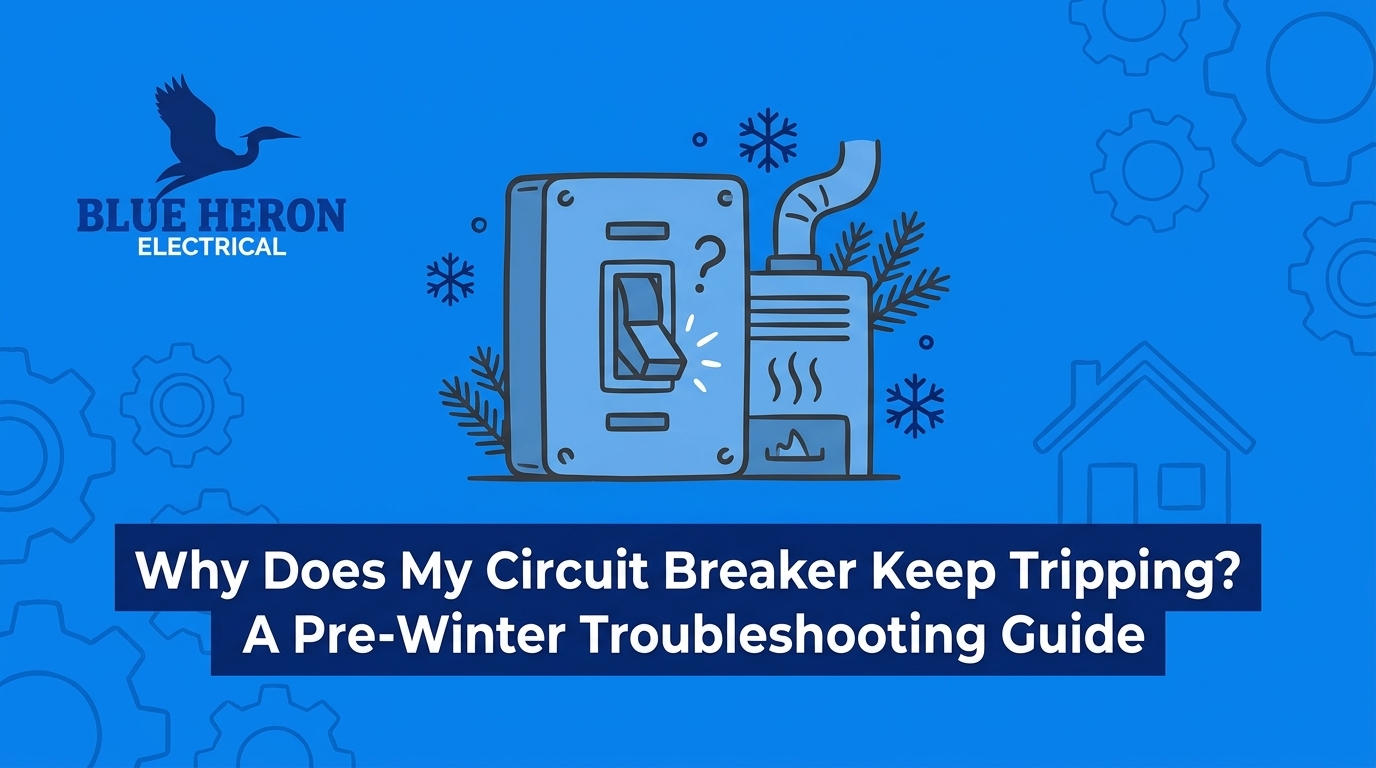
Why Does My Circuit Breaker Keep Tripping? A Pre-Winter Troubleshooting Guide
The Sudden Darkness: Dealing With Unexpected Winter Power Loss
When a sudden chill hits and your space heater plunges the room into darkness, finding reliable local service expertise and area tips can help you determine if you are facing a minor nuisance or a major electrical hazard. Here at Blue Heron Electrical, our team typically sees a spike in service calls when that familiar click from the hallway panel disrupts the October pre-winter heating startup. As Michigan experiences those sharp, unpredictable temperature drops, pulling supplemental heating equipment out of storage is a common reflex. However, if your home's electrical system cannot handle the sudden demand, you will find yourself constantly walking in the dark to reset your power.
If you are dealing with constant power interruptions, reaching out for professional electrical panel services and circuit breaker services in Sterling Heights is the safest way to restore reliable power before the deep freeze arrives.
A tripping breaker forces an important decision point: is this just a simple case of having too many things plugged into one wall, or is it a warning sign that your home's electrical capacity is completely maxed out? Based on our extensive field experience, this guide explores the mechanics behind electrical overloads, the built-in safety features of your panel, and how our professional assessments keep your home safe during the cold months.
Understanding the Mechanics: What a Tripped Breaker Actually Means
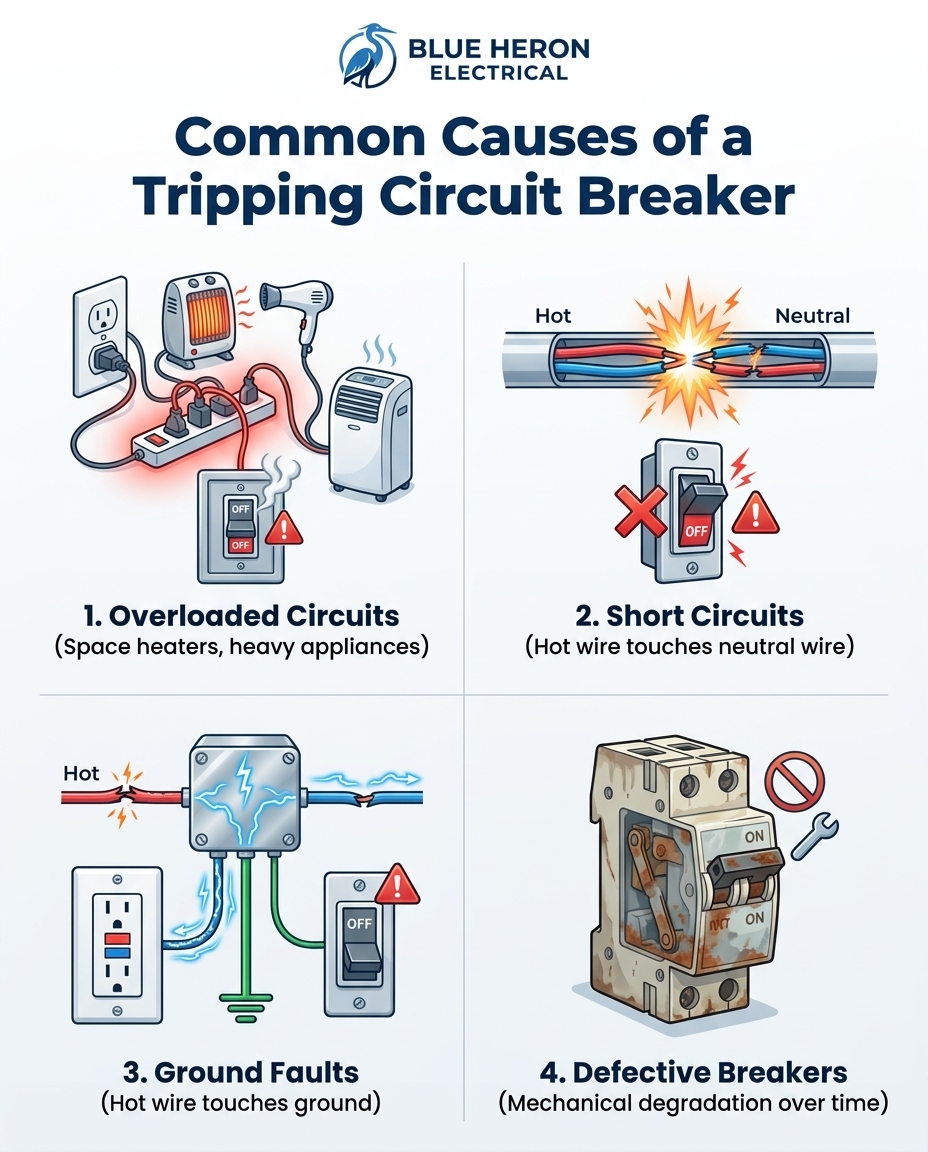
A tripping circuit breaker is actually doing exactly what it was designed to do. It is a protective safety mechanism, not necessarily a defect in your equipment. Breakers act as the security guards for your home's wiring. They constantly monitor the electrical flow traveling through your walls. When the electrical load exceeds safe, manageable limits, the breaker interrupts the circuit, stopping the flow of electricity immediately.
Contrast a healthy, functioning breaker with the massive risks of an unmonitored electrical surge. Without this interruption, overloaded wires would continue to heat up inside your walls, melting their protective insulation and eventually sparking a fire. In our years of serving Sterling Heights and Metro Detroit residential areas, we've found that these safety devices are the first line of defense against catastrophic damage, especially in neighborhoods where homes have varying ages of wiring.
The Role of Amperage Limits
Every electrical circuit in your home is rated for a specific amount of electrical current, measured in amperes (or amps). For general residential use, most standard wall outlets run on 15-amp or 20-amp circuits.
When you plug in appliances that demand more amperage than the circuit is designed to safely carry, the wires begin to physically heat up. If a 15-amp circuit suddenly receives a demand for 20 amps, the breaker detects this dangerous overflow and trips to cut the power. Understanding this limit is the first step in preventing sudden outages.
Thermal vs. Magnetic Tripping
Modern circuit breakers use two distinct internal mechanisms to detect danger and cut power:
• Thermal Tripping — How It Works: Responds to a gradual heat buildup. A bimetallic strip bends as it gets hot, eventually snapping the breaker off. — Common Causes: Plugging too many standard appliances into the same room or running a space heater for hours.
• Magnetic Tripping — How It Works: Responds instantaneously to massive, sudden surges using an internal electromagnet to pull the switch. — Common Causes: Severe short circuits, lightning strikes, or major motor failures in large appliances.
The Space Heater Effect: How Seasonal Shifts Overload Circuits
The transition from summer to fall creates a unique stress test for your electrical panel. During the summer, your central air conditioner handles the heavy lifting on its own dedicated circuit. But during the October pre-winter heating startup, a pattern we see often across Michigan is homeowners simultaneously using central heating, portable space heaters, and heavy indoor lighting. This sudden shift forces high-draw appliances onto standard bedroom and living room circuits that were never designed to handle them.
A typical space heater draws 1,500 watts of continuous power. On a standard 15-amp circuit, that single heater consumes almost the entire available capacity. If you turn on a television, a lamp, or a vacuum cleaner on that same circuit, you will instantly overload it. This seasonal strain is further complicated by early holiday lighting preparations, which pull heavy loads on exterior circuits. We always remind our customers that understanding how overloaded panels in older Metro Detroit homes react to these shifts is vital for winter safety.
Calculating Your Circuit Load
You can understand why your breakers trip by using a simple, non-DIY formula: Watts divided by Volts equals Amps. Standard household outlets provide 120 volts. If your space heater uses 1,500 watts, dividing 1,500 by 120 means the heater pulls 12.5 amps all by itself.
Common high-draw appliances that quickly push a 15-amp circuit past its limit include:
• Space heaters: 1,500 watts (12.5 amps)
• Hair dryers: 1,800 watts (15.0 amps)
• Microwaves: 1,200 watts (10.0 amps)
• Toaster ovens: 1,400 watts (11.6 amps)
Redistributing the Electrical Demand
The most practical solution to a simple overload is redistributing the electrical demand. Move heavy appliances to different circuits in the home. Remember that a single circuit often covers multiple outlets in a room, or even outlets across two adjacent rooms.
We strongly recommend never relying on extension cords or power strips for heating devices. Power strips do not increase the capacity of the wall outlet; they simply allow you to plug in more devices, which accelerates the overload. Space heaters should always be plugged directly into a wall receptacle.
Short Circuits and Ground Faults: Beyond Simple Overloads
While having too many devices plugged in is a common nuisance, breakers also trip to protect you from severe electrical faults. These situations go far beyond a simple overload and present immediate dangers to your home.
A short circuit occurs when a "hot" wire carrying live current makes direct contact with a "neutral" wire. This creates an unregulated path for electricity, causing a massive, instantaneous surge in current. The breaker's magnetic tripping mechanism will snap off immediately to prevent a fire. A ground fault is a specific type of short circuit where the hot wire touches a ground wire or the metal electrical box. This creates a severe shock hazard, especially in areas where water is present.
You can usually distinguish between a simple overload and a serious wiring fault by how the breaker behaves. An overload might take ten or twenty minutes of running a space heater before it trips. A short circuit will cause the breaker to trip instantly the moment you try to reset it. As local electricians, we always advise our Sterling Heights and Metro Detroit customers that these instant trips are a clear signal to leave the panel alone and call for help.
Identifying Signs of a Short Circuit
If you suspect a short circuit, look for visual and auditory clues around your home. You might notice:
• Burning smells: An acrid, fishy, or burning plastic odor near outlets or switches.
• Scorch marks: Black or brown discoloration on the plastic faceplate of an outlet.
• Popping sounds: Audible sparks, crackles, or pops when you plug in a device.
These symptoms require immediate professional attention. Do not attempt to use the affected outlet until it has been inspected by our technicians.
The Role of GFCI and AFCI Breakers
Modern electrical codes require specialized protection for different areas of your home. Ground Fault Circuit Interrupters (GFCI) monitor the balance of current and cut power in milliseconds if they detect electricity leaking to the ground, preventing electrocution in wet areas like kitchens and bathrooms. Arc Fault Circuit Interrupters (AFCI) detect dangerous electrical arcs—tiny sparks caused by damaged wire insulation—that standard breakers might miss. If your home has these modern breakers, they may trip more frequently because they are highly sensitive to these specific hazards.
The Hidden Danger of the 'Endless Reset'
When the power goes out, the natural instinct is to march down to the basement and flip the switch back on. But engaging in the "endless reset"—repeatedly forcing a tripped breaker back into the "on" position without addressing the root cause—is incredibly hazardous.
According to data from the National Fire Protection Association (NFPA), heating equipment is the second leading cause of U.S. home fires. When you force a breaker to accept a load it has already rejected, you are bypassing the exact safety mechanism designed to prevent those fires. A breaker that refuses to stay reset is actively protecting your home from an ongoing electrical emergency in Sterling Heights and Metro Detroit residential areas.
Mechanical Wear and Tear
Circuit breakers are mechanical devices with internal springs and metal contacts. Every time a breaker trips under a heavy load, a tiny electrical arc occurs inside the plastic casing. Over time, these arcs cause the internal contacts to become pitted, scarred, and worn out.
This mechanical degradation increases the risk of dangerous arc faults. Even worse, a severely worn-out breaker might become fused or fail to trip during a real emergency, allowing wires to overheat until they ignite. Blue Heron Electrical prioritizes a commitment to safe diagnosis over quick fixes, ensuring that degraded components are properly identified before they fail entirely.
Why DIY Diagnostics Fall Short
While it is perfectly safe to unplug a space heater and flip a breaker once, deeper diagnostics are not a weekend project. Opening an electrical panel, removing the deadfront cover, or attempting to test or replace a breaker involves extreme voltage risks.
The main lugs inside your panel remain energized even when the main breaker is turned off. A single slip of a screwdriver can result in a lethal shock or a devastating arc flash. This level of troubleshooting must always be left to a licensed professional who possesses the proper protective equipment and training.
Aging Infrastructure: Are Your Home's Electrical Limits Maxed Out?
Many older homes across the region were built long before modern electrical demands existed. It is incredibly common for our team to find 60-amp or 100-amp electrical panels in older regional homes. While these capacities were perfectly adequate in the 1960s or 1970s, they struggle to safely handle modern HVAC systems, multiple televisions, home offices, and the sudden addition of winter space heaters simultaneously.
When legacy systems are pushed beyond their limits, the entire panel operates under constant thermal stress. Upgrading the panel is often the only long-term safety solution. In fact, our team recently helped a local homeowner living in an older property who reached out during winter because they needed significant electrical work, including a complete update to their outdated electrical box. We were able to update the panel quickly, ensuring the home could handle the winter load safely. At Blue Heron Electrical, we have extensive experience working with older Metro Detroit homes and navigating the unique challenges of legacy wiring systems.
If your home is struggling to keep up, exploring electrical panel upgrades can completely resolve chronic power issues.
Identifying Outdated Panels
Certain legacy brands are notorious for safety failures and are common in older neighborhoods. For example, Pushmatic panels or old fuse boxes lack the responsive safety features of modern breakers. Some older brands have been known to fail to trip during an overload, allowing wires to melt. If your panel uses screw-in fuses or has buttons instead of switches, it is operating on borrowed time.
The Benefits of a Capacity Upgrade
Upgrading to a modern 200-amp panel future-proofs your home for modern energy needs. It provides ample space for dedicated circuits, ensuring your heating equipment, kitchen appliances, and entertainment centers have the power they need without sharing. Furthermore, modernizing your electrical service often aligns with general energy efficiency incentives—such as federal tax credits that may apply to qualifying heat pump installations—and makes it easier to install advanced HVAC equipment or electric vehicle chargers down the road.
Preparing for Winter: When to Schedule a Professional Inspection
Troubleshooting has its limits. Knowing when to stop flipping switches and call an expert is crucial for your family's safety, especially during the October pre-winter heating startup.
For example, we recently worked with a homebuyer in the area who realized their older home required a new breaker panel to handle modern loads. Our thorough inspection provided them with multiple safe options for a new breaker panel, adding lights, switches, and a generator hook-up. The peace of mind that comes from knowing your home is safe before freezing temperatures arrive is invaluable.
Here are the clear criteria we look for when determining if you need to schedule a professional inspection:
1. The breaker trips immediately: If the switch snaps back to the "off" position the second you try to reset it, you have a hard short circuit. Stop immediately and call a professional.
2. You detect burning smells: Any odor of burning plastic or ozone near the panel or wall outlets indicates melting insulation.
3. The panel is warm to the touch: A circuit breaker panel should never feel hot. Heat indicates a loose connection or a severe overload.
4. Continuous overloads: If you cannot run your standard heating equipment without tripping a breaker, your home's capacity needs a professional evaluation.
5. Visual damage: Scorch marks, rust, or corrosion inside the panel box require immediate expert attention.
A professional pre-winter electrical inspection from Blue Heron Electrical entails testing the panel for proper voltage, checking the tightness of all connections to prevent arcing, and verifying that your current breakers match the wire sizes in your home.
Frequently Asked Questions About Tripping Breakers
Why does my breaker trip when I turn on my space heater?
Space heaters consume a massive amount of electricity, typically drawing around 1,500 watts of continuous power. When you plug a space heater into a standard 15-amp room circuit that is already powering lights, televisions, or other devices, the combined demand easily exceeds the safe limit. The breaker detects this dangerous overload and trips to prevent the wires inside your walls from overheating and starting a fire.
Is it safe to keep resetting a tripped breaker?
No, it is highly dangerous to repeatedly reset a tripped breaker without fixing the underlying problem. Every time a breaker trips, a small electrical arc occurs inside the device, which slowly degrades its internal mechanical parts. Forcing a breaker back on repeatedly can cause it to fail, meaning it might not trip during a real emergency, leaving your home vulnerable to an electrical fire.
How do I know if my circuit breaker is bad or just overloaded?
You can usually tell by isolating the circuit. Unplug everything from the affected room and reset the breaker; if it stays on, you likely just had an overload. However, if the breaker trips immediately with nothing plugged in, feels hot to the touch, or emits a burning smell, the breaker itself may be defective or you may have a severe short circuit hidden in your wiring.
Why does my circuit breaker trip immediately after I reset it?
An immediate trip is a strong indicator of a short circuit or a ground fault. This happens when a live hot wire makes direct contact with a neutral or ground wire, creating a massive and instantaneous surge of unregulated electricity. Because this is an immediate fire and shock hazard, the breaker's magnetic sensor snaps the power off instantly. You should never attempt to reset it again; call a licensed professional.
Can a tripping breaker cause a house fire?
The tripping action itself prevents fires, but the underlying issue causing the trip is the real danger. If a breaker is constantly tripping due to overloaded wires, loose connections, or short circuits, the excessive heat generated by those faults can easily ignite surrounding building materials. Ignoring a tripping breaker or replacing it with a larger one without upgrading the wires is a leading cause of electrical fires.
How much does it cost to upgrade an electrical panel in an older home?
Panel upgrade costs vary widely based on the age of your home, the size of the new panel (such as moving from 100 amps to 200 amps), and whether the exterior service meter also needs replacement. Because every home's wiring layout is unique, a licensed electrician from our team must evaluate your specific infrastructure to provide an accurate assessment. Upgrading is a long-term investment in your home's safety and modern energy capacity.
Ensure Safe, Uninterrupted Power This Winter
Addressing panel issues before deep winter hits is the best way to protect your home from sudden outages and dangerous electrical faults. During the October pre-winter heating startup, your system faces its biggest stress test of the year. Do not wait until a freezing night to discover that your electrical panel cannot handle the load. We encourage you to schedule an inspection with Blue Heron Electrical to evaluate your home's capacity today. Gaining a clear understanding of what causes winter electrical overloads, learning the warning signs that a professional electrical inspection is needed, and taking safe, non-DIY preparation steps will ensure your family stays warm and secure before freezing temperatures arrive.
Customer Testimonials

Service Areas