
When to Upgrade Your Electrical Panel: Troubleshooting Space Heater Overloads
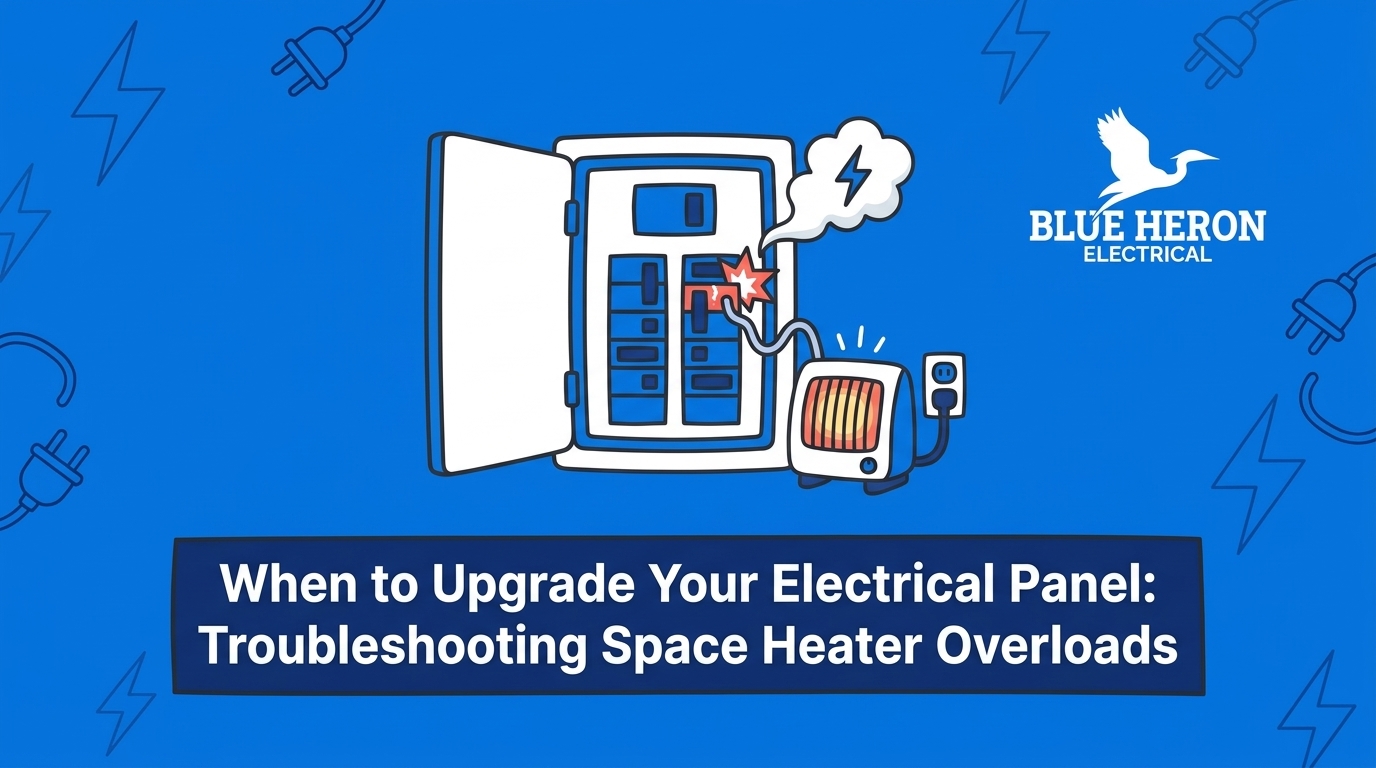
The Crisp Air Arrives: Why Fall Evenings Trigger Sudden Power Interruptions
At Blue Heron Electrical, when customers ask our team for reliable home maintenance tips and troubleshooting, dealing with a suddenly dark bedroom on a chilly autumn evening is usually at the top of the list. You plug in a space heater to take the chill off the room, hit the power button, and instantly, the breaker trips. This is a familiar frustration we see for many homeowners during the first October frost in Michigan. The rapid drop in temperatures forces families to rely on supplemental heating to stay comfortable before the main furnace kicks into high gear for the winter.
When a breaker trips repeatedly under the strain of a space heater, you face a critical decision. You can keep walking down to the basement to reset the switch—risking serious damage to your home's wiring—or you can consult a professional to evaluate your system's capacity. In our experience, understanding why this happens is the first step toward a permanent fix. Modern electrical panels are designed to safely distribute power throughout your home, acting as the central nervous system for every outlet, light switch, and appliance you own.
If you are tired of resetting breakers in the dark, exploring modern electrical panels and professional electrical panel upgrade services is the safest path forward.
The Hidden Math Behind a 1500W Space Heater Load
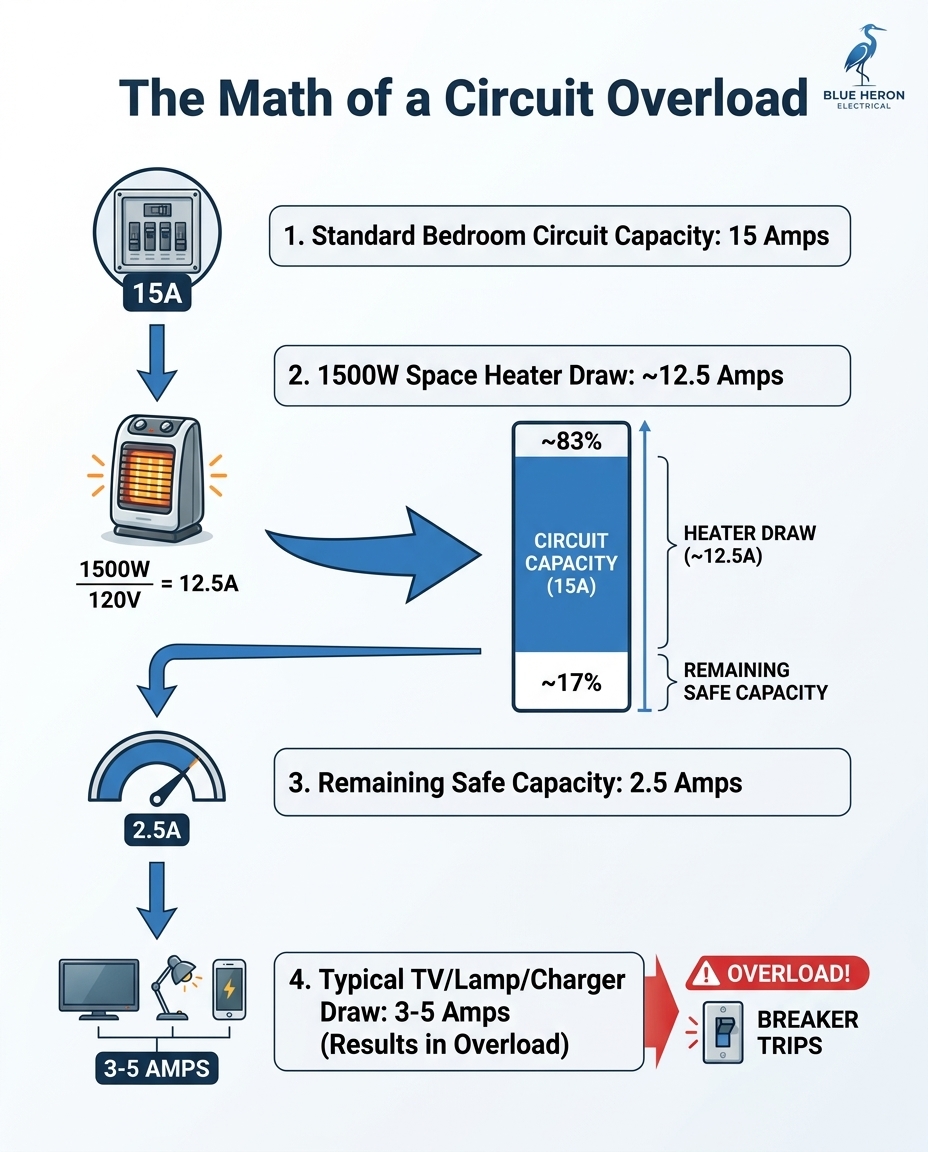
To understand why your bedroom goes dark when you turn on a heater, you need to look at the numbers. While servicing homes across Sterling Heights, we find that the electrical math is straightforward but often surprising to homeowners. A standard 1500W space heater load draws approximately 12.5 amps of power while running continuously.
The problem arises when you look at the capacity of the circuit it is plugged into. Most older bedroom circuits are only rated for 15 amps total. This leaves a tiny margin of just 2.5 amps for everything else in the room. When you combine that heavy heating demand with existing loads—like a television, a few lamps, a ceiling fan, and your phone charger—you easily push the circuit past its safe operating limit.
Our electricians always remind customers that a tripped breaker is not a broken breaker. It is actually doing its exact job: shutting off the flow of electricity to prevent the wires inside your walls from overheating and catching fire. However, if a breaker trips frequently, it indicates a systemic capacity issue that needs professional attention.
Why Shared Circuits Fail Under Heavy Heating Demands
In the older residential wiring we frequently inspect, "shared circuits" are incredibly common. A shared circuit means that multiple outlets, and sometimes the overhead lights across two or three different bedrooms, are all wired back to a single 15-amp breaker in your electrical panel.
Sustained high-draw appliances operate differently than devices that create momentary electrical spikes. A vacuum cleaner might pull a quick surge of power when you turn it on, but a space heater pulls a heavy, continuous load for hours at a time. This sustained draw generates heat within the wiring. If the shared circuit is already supporting other devices, the continuous demand of the heater quickly overwhelms the system, causing the safety mechanism to trip.
Recognizing the Warning Signs of an Overloaded System
Your electrical system will usually give you warning signs before a complete failure occurs. Educating yourself on these physical and visual cues is crucial for keeping your home safe. When your current panel fails to handle modern demands, you will notice distinct symptoms that our team strongly advises should never be ignored.
Look out for these common warning signs of an overloaded electrical system:
• Flickering or dimming lights: If the lights dim every time a major appliance or space heater cycles on, the circuit is struggling to deliver enough voltage.
• Audible buzzing or crackling: A healthy electrical panel operates silently. Any buzzing sounds originating from the breaker box require immediate professional inspection.
• Hot breakers or burning odors: Breakers that feel physically hot to the touch, or emit a faint fishy or burning smell, indicate dangerous overheating within the panel.
• Frequent, repetitive tripping: If the same circuit trips repeatedly despite unplugging obvious loads, the breaker itself may be failing, or the wiring may be compromised.
One local homeowner reached out to our Blue Heron Electrical crew last fall when their older home's electrical box simply could not keep up with the cold-weather demand. Our team updated the electrical box and completed the necessary wiring tasks quickly and in a friendly manner, ensuring their home was safe and fully powered. If you notice any of these warning signs, scheduling professional circuit breaker services is the best way to prevent a minor inconvenience from turning into a major hazard.
The Dangers of Temporary Fixes for Winter Heating
When a bedroom is freezing and the breaker keeps tripping, homeowners often look for quick workarounds. Unfortunately, our technicians frequently discover these temporary fixes are dangerous and pose severe fire risks. The most common mistake we see is attempting to plug a heavy-duty space heater into a standard power strip or extension cord.
The problem: Power strips and standard extension cords are designed for low-draw electronics like lamps and chargers. They are not built to handle the sustained 12.5-amp draw of a space heater.
The cause: Because the wire inside a standard extension cord is too thin for that much current, the electrical resistance builds up rapidly. The cord becomes dangerously hot, eventually melting the plastic insulation and exposing live wires, which can easily ignite nearby carpets or curtains.
The solution: A space heater must always be plugged directly into a wall outlet. If the wall outlet cannot support the heater without tripping the breaker, you must address the wiring or panel capacity. Attempting to bypass breaker safety mechanisms—such as installing a 20-amp breaker on a wire rated for 15 amps—is a severe fire hazard. The breaker will stop tripping, but the wire inside your walls will overheat and potentially catch fire before the breaker ever shuts off. The only safe solution to a persistent overload is a professional electrical evaluation.
When to Upgrade Your Electrical Panel vs. Adding a Dedicated Circuit
Once you realize your current system cannot handle your heating needs, the next step is determining the right solution. Depending on the size of your home and the condition of your existing equipment, we generally recommend one of two options: adding a dedicated circuit or upgrading the entire electrical panel.
• Dedicated Circuit — What It Is: A new wire run from your panel to a single outlet, serving only one appliance. — When It Makes Sense: When your panel has plenty of overall capacity and physical space, but one specific room needs more power for a heater.
• Panel Upgrade — What It Is: Replacing the entire breaker box to increase total home capacity (often to 200 amps). — When It Makes Sense: When the panel is physically full, the total home amperage is maxed out, or the equipment is obsolete and unsafe.
A dedicated circuit is often the appropriate, cost-effective solution we install for a single high-draw appliance. By giving the space heater its own direct line to the panel, you free up the shared bedroom circuit for your lights and electronics.
However, if your panel has no physical space left for new breakers, a full upgrade is necessary. Upgrading to a modern 200-amp panel future-proofs your home, ensuring you have the capacity for electric vehicle chargers, hot tubs, or heavy winter heating loads down the road. Because this is major electrical work, it is vital to understand local municipal requirements. Consulting with experts in residential electrical services will ensure your project meets all panel upgrade permit requirements in Michigan. Additionally, federal tax credits and local utility incentive programs may apply to qualifying electrical panel upgrades that support energy-efficient home improvements. We advise all our readers to verify current programs with their utility provider or a tax professional.
Outdated Technology: Why Older Homes Struggle with Modern Demands
Many neighborhoods we serve in Macomb County feature beautiful homes built during the 1970s and 1980s. While these houses have great character, their original electrical infrastructure was never designed for today's lifestyle. Standard 100-amp panels were perfectly adequate when families had one television and a few basic appliances. Today, with home offices, multiple electronics, and electric supplemental heating, these older systems are severely strained.
Beyond simple capacity issues, specific obsolete technologies pose direct safety risks. Older fuse boxes and outdated Pushmatic panels are known for failing to trip when overloaded, or for breakers that become stiff and refuse to reset. These older designs simply do not offer the sensitive, reliable protection of modern circuit breakers.
We see this pattern frequently. During a recent early-fall inspection, a homeowner contacted us regarding an obsolete Pushmatic fuse panel in their older property. We swapped out the old fuse panel for a modern unit and fully grounded the house with minimal interruption. By taking care of the outdated technology during their autumn maintenance routine, they ensured their home was protected and ready long before the heavy demands of heating season arrived. Upgrading outdated technology is a critical safety investment, not just a modern convenience.
Proactive Fall Maintenance: Securing Your Home Before Deep Winter
Addressing electrical capacity issues in the fall provides a massive advantage. Michigan's extreme freezing winters force heavy reliance on heating systems. By taking action now, you avoid emergency power losses during sub-zero weather when you need reliable heat the most.
When our Blue Heron Electrical technicians perform a professional electrical evaluation, it typically involves a few key steps:
1. Measuring existing loads: A technician will calculate how much power your home is currently drawing and determine how much capacity remains.
2. Inspecting for wear: We look for scorch marks, loose connections, or signs of overheating inside the panel.
3. Checking connections: Ensuring all grounding and bonding connections are secure and up to modern safety standards.
4. Mapping circuits: Identifying which rooms share circuits so you know exactly where it is safe to plug in high-draw devices.
It is absolutely essential to use properly licensed professionals for any panel or circuit modifications. The peace of mind that comes from a properly licensed installation far outweighs the risks of dangerous, unlicensed handyman fixes. An experienced electrician guarantees that the work is permitted, inspected, and safe for your family.
Frequently Asked Questions
Why does my space heater keep tripping the breaker?
Your space heater keeps tripping the breaker because it is drawing more electrical current than the circuit is designed to handle. Most standard bedroom circuits are rated for 15 amps, while a typical space heater draws about 12.5 amps. When you add the power needed for lights, televisions, and chargers on that same shared circuit, the total demand exceeds the limit, causing the safety breaker to trip.
Is it safe to use a power strip or extension cord for a space heater?
No, it is never safe to plug a space heater into a standard power strip or extension cord. These cords are built with thinner wires designed for low-draw electronics, not heavy heating appliances. The sustained electrical draw from a heater will cause the thin wires to overheat rapidly, which can melt the insulation and easily start a house fire.
How do I know if my electrical panel is bad or just overloaded?
An overloaded panel will typically trip breakers when specific high-draw appliances are used simultaneously. A bad or failing panel will show physical warning signs like buzzing sounds, breakers that feel hot to the touch, or a faint burning smell. If you experience flickering lights or breakers that trip even when minimal items are plugged in, you need a professional inspection immediately to determine the root cause.
When should I upgrade my electrical panel entirely?
You should upgrade your electrical panel when you have run out of physical space for new breakers, or when your home's total electrical demand exceeds the panel's maximum amperage rating. Additionally, if your home still uses an outdated fuse box or an obsolete brand like a Pushmatic panel, a full upgrade is strongly recommended to meet modern safety standards.
Can I just add a dedicated circuit instead of replacing the whole panel?
Yes, adding a dedicated circuit is often the perfect solution if your main panel still has available physical slots and sufficient overall capacity. A dedicated circuit provides a direct, unshared line of power to a specific outlet, which is ideal for running a heavy-duty space heater without interrupting the power to the rest of the room.
What are the signs of an outdated or dangerous fuse box?
Signs of a dangerous or outdated fuse box include frequent blown fuses, scorch marks around the fuse sockets, or a panel that feels warm to the touch. Another major red flag is if previous owners installed higher-rated fuses (like a 30-amp fuse on a 15-amp wire) to prevent blowing, which creates a massive fire hazard by allowing the wires to overheat.
Stay Safe and Warm This Winter
Keeping your family comfortable during the colder months should never come at the expense of fire safety. If you are constantly battling tripped breakers, it is time to stop resetting switches and start addressing the root cause. Reach out to the team at Blue Heron Electrical today to evaluate your electrical panel and ensure your home is fully prepared for whatever winter brings.
Customer Testimonials

Service Areas