
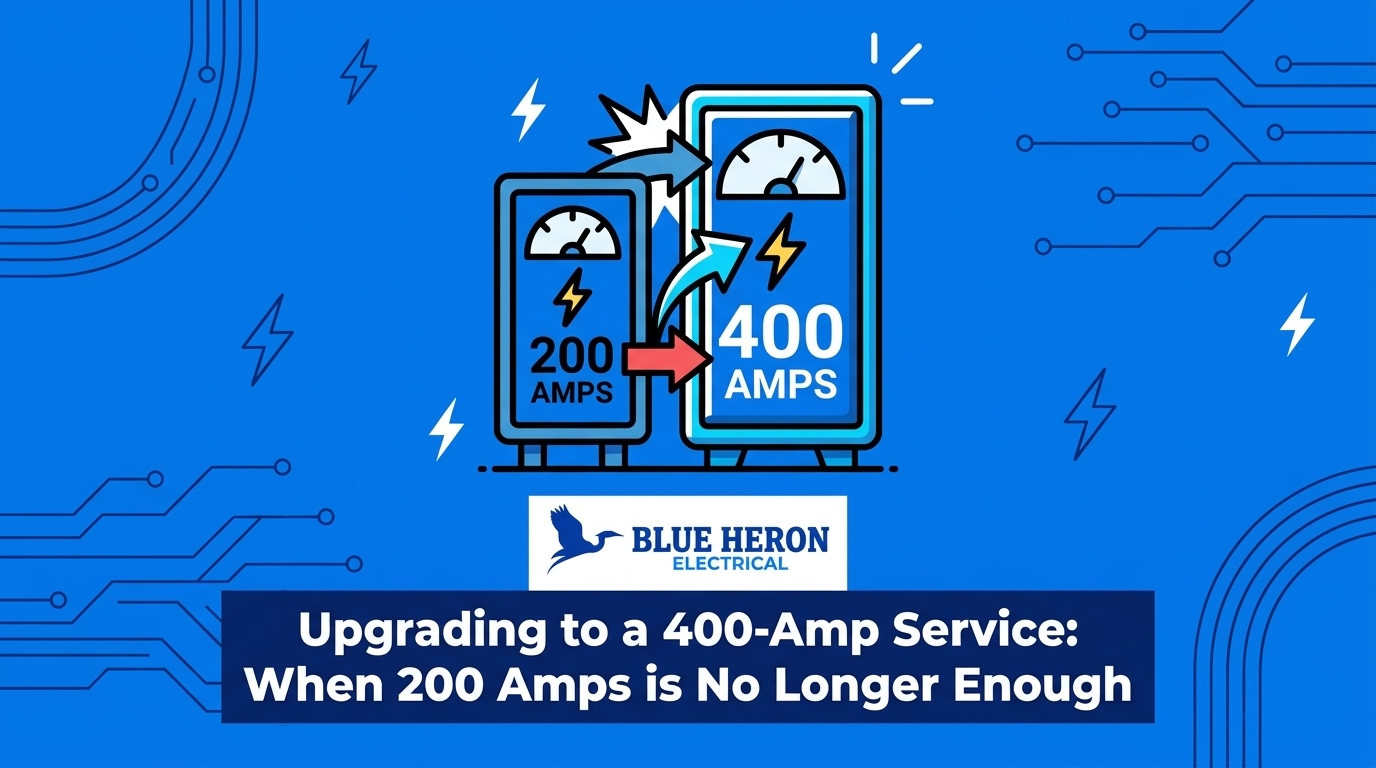
Upgrading to a 400-Amp Service: When 200 Amps is No Longer Enough
The Tipping Point for Modern Home Electrification
Your electrical panel is quietly struggling to keep up, and the warning signs are becoming impossible to ignore, which means upgrading to a 400-Amp Service: When 200 Amps is No Longer Enough is a reality you must face. You plug in your electric vehicle, turn on the induction stove to start dinner, and suddenly the lights dim or a breaker trips. This is a concrete problem our team at Blue Heron Electrical encounters frequently when homeowners max out a standard 200-amp electrical panel while transitioning to full-home electrification. Adding dual EV chargers, high-efficiency electric heating, and heavy-duty modern appliances pushes standard infrastructure past its breaking point. You are now at a critical decision point: recognizing when your home's electrical load has crossed the threshold that requires a massive upgrade, rather than relying on unsafe, temporary workarounds.
To safely support this modern power demand, you need the right foundation. Learn more about your existing electrical panels and discover what it takes to complete a comprehensive panel upgrade with our experienced crew.
For decades, a 200-amp panel was the gold standard for residential properties. It provided more than enough capacity to run a central air conditioner, a standard electric dryer, and everyday lighting without breaking a sweat. However, the modern electrified home operates on an entirely different scale. As we help homeowners in Sterling Heights and surrounding communities transition away from fossil fuels, we see firsthand how the electrical demand inside a standard-sized home has skyrocketed. Attempting to squeeze these massive new loads into an outdated system is not just frustrating—it is fundamentally dangerous. Recognizing this tipping point is the first step toward securing a safe, reliable power supply for your household.
The Cumulative Math: Why 200 Amps Falls Short
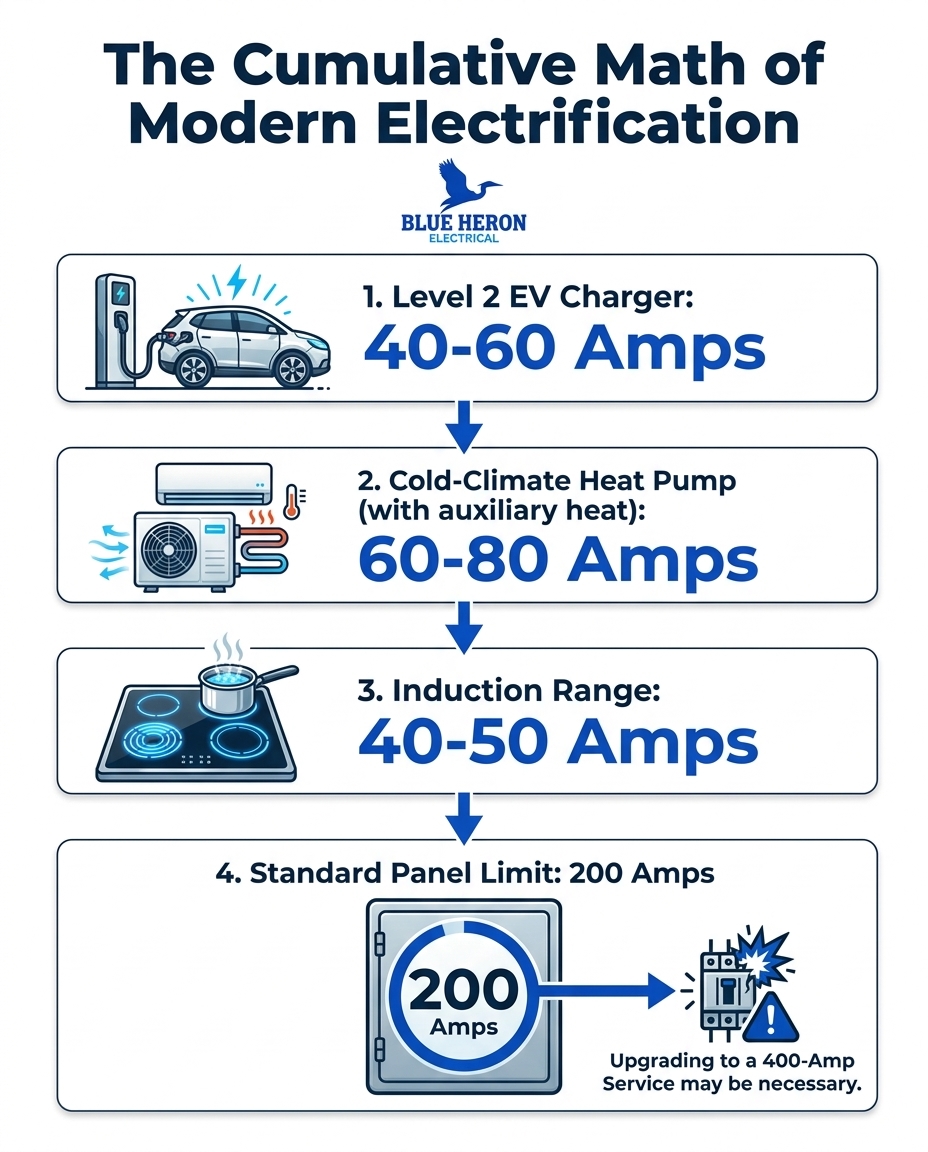
To understand why a 200-amp panel is no longer sufficient for a fully electrified home, you simply have to look at the math. Modern high-draw appliances consume electricity at a rate that quickly exhausts standard capacities. When you start stacking these devices, the numbers add up faster than most homeowners anticipate.
Consider the continuous draw of a single Level 2 EV charger. These units typically require a dedicated circuit pulling 40 to 60 amps. If your household has two electric vehicles, adding a second charger multiplies that baseline load significantly, potentially drawing 100 amps or more just for transportation. Next, factor in an induction range, which requires a dedicated 40 to 50-amp circuit to function properly. When you combine these massive continuous loads with everyday household usage—like your electric dryer, water heater, and lighting—you easily exceed a 200-amp system's safe operating capacity.
• Level 2 EV Charger (Single) — Typical Amperage Required: 40 - 60 Amps — Impact on System Load: Heavy continuous load; requires dedicated circuit.
• Cold-Climate Heat Pump (with Aux Heat) — Typical Amperage Required: 60 - 80 Amps — Impact on System Load: Massive peak draw during severe winter weather.
• Induction Range / Oven — Typical Amperage Required: 40 - 50 Amps — Impact on System Load: High intermittent load during meal preparation.
• Electric Tankless Water Heater — Typical Amperage Required: 80 - 120 Amps — Impact on System Load: Extreme peak draw when multiple taps are running.
If you are planning to add charging stations to your garage, it is vital to understand local regulations. You can review the EV charger permit requirements to ensure your project stays compliant with regional codes.
Calculating High-Draw Appliance Loads
When our electricians evaluate your home, we look closely at the difference between peak load and continuous load. A continuous load is defined as any electrical draw that lasts for three hours or more—such as charging an electric vehicle overnight. According to safety codes, continuous loads should only account for 80% of a breaker's total rating to prevent overheating.
The evening rush hour scenario: Picture a typical winter evening. You come home from work and plug in two EVs (80 amps combined). You turn on the induction stove to cook dinner (40 amps). The electric water heater kicks on while someone takes a shower (30 amps). Meanwhile, your cold-climate heat pump is running to keep the house warm (60 amps). In this single moment, your home is demanding over 210 amps of power. A standard 200-amp panel simply cannot handle this simultaneous usage, which is exactly why transitioning to a 400-amp dual-panel setup is becoming the new standard we recommend for our clients.
Anatomy of a 400-Amp Dual-Panel Setup
When you hear the term "400-amp service," you might picture a single, gigantic electrical box taking up an entire wall in your basement. In reality, the physical infrastructure is designed for efficiency and safety. A 400-amp service typically consists of a heavy-duty 400-amp meter base mounted on the exterior of your home. This meter base then feeds power into two separate 200-amp breaker panels located inside your property.
How the load is distributed: By utilizing a 400-amp dual-panel setup, our electricians can safely divide your home's electrical demands. One panel might be dedicated entirely to your high-draw systems—like your EV chargers, heat pump, and electric water heater. The second panel handles the general lighting, standard outlets, and smaller kitchen appliances. This dual-panel system distributes the massive electrical load safely across the home, ensuring that no single bus bar or main breaker is pushed to its absolute limit.
Space and installation requirements: Installing this setup requires adequate physical wall space. Building codes mandate strict clearances around electrical panels—usually 36 inches of depth in front, 30 inches of width, and 78 inches of height. You will need a clear, accessible area, often in a garage or utility room, to accommodate both panels side-by-side. Upgrading your infrastructure brings immediate stability. For example, our team recently updated a local homeowner's electrical panels during the winter to accommodate new demands, and the process went smoothly despite the heavy seasonal load, proving that a proper installation minimizes disruption.
Furthermore, this dual-panel configuration future-proofs your home. If you decide to add a hot tub, a detached workshop, or an expansion to your property down the line, you will already have the necessary capacity and open breaker slots ready to handle the new additions.
Seasonal Urgency: Preparing Your Electrical System for Winter
The urgency to upgrade your electrical system becomes incredibly apparent as the weather turns cold. Michigan's cold winters drive a massive adoption of high-draw electric heat pumps, which are highly efficient but require substantial power during severe cold snaps. When temperatures plummet, cold-climate heat pumps often rely on auxiliary electric resistance heating strips to maintain indoor comfort. These auxiliary strips are notorious power hogs, demanding 60 to 80 amps all on their own.
The problem of compounding loads: Winter forces us indoors. As the days get shorter and colder, the compounding effect of indoor winter activities, heating, and EV charging occurring simultaneously creates a perfect storm for your electrical panel. You are running the heat, using more lighting, cooking hot meals on your electric range, and charging your cars—all at the exact same time. This rapid accumulation of electrical demand easily exhausts standard capacities.
The critical window for action: As we guide our customers through the early fall pre-heating transition, we emphasize that this is the ideal time to complete your electrical upgrades. Waiting until the middle of January is a risky strategy. You do not want to wait until the first major freeze to discover that your current panel cannot handle the heating load, leaving your family in the cold with a tripped main breaker.
The solution is proactive planning: By scheduling a capacity assessment and panel upgrade during the fall, you ensure your home is fully equipped to handle the heavy winter demands. A proper 400-amp dual-panel setup guarantees that when the auxiliary heat kicks on, your lights won't dim, and your EV will still charge safely overnight.
The Hidden Dangers of Overloading Your Current System
Ignoring your home's capacity limits is not just an inconvenience; it is a serious safety hazard. Pushing a standard 200-amp panel beyond its continuous load rating creates hidden dangers that can lead to catastrophic failures. Your electrical panel is designed to trip and shut off power when it senses an overload, but constantly relying on this safety mechanism degrades the breakers over time.
Warning signs of an overloaded panel:
• Frequent breaker tripping: If your main breaker or individual appliance breakers trip regularly, the system is crying out for help.
• Dimming or flickering lights: When a heavy appliance cycles on and causes the lights to dim, it means there is a significant voltage drop due to inadequate capacity.
• Heat buildup: A panel that feels warm to the touch or emits a faint burning odor is experiencing dangerous electrical resistance and requires immediate attention.
• Buzzing sounds: Audible buzzing or humming from the breaker box indicates arcing or overloaded components.
The risk of dangerous workarounds: In an attempt to avoid a full service upgrade, some homeowners or unlicensed handymen resort to unsafe workarounds. Using "tandem breakers" (which squeeze two circuits into one slot) or simply adding sub-panels without actually increasing the main service capacity from the utility company does not solve the underlying problem. It just masks it. You are still pulling too much power through the main service cables, which drastically increases the risk of an electrical fire.
Older homes are particularly vulnerable when new high-draw appliances are introduced. Legacy electrical boxes were simply never designed for the electrification era. One customer in an older property reached out to us during the winter needing a complete electrical box update and new outlets inside and outside the home to safely handle their modern power needs. Addressing these outdated systems in older Sterling Heights homes is a pattern we see often, and it is critical for long-term safety and functionality.
Why Professional Load Calculations Are Non-Negotiable
When you are dealing with the massive power requirements of a fully electrified home, guesswork is dangerous. Determining exactly how much power your home needs requires strict adherence to the National Electrical Code (NEC). Specifically, NEC Article 220 mandates formal residential load calculations before adding significant new electrical loads to an existing service.
Why DIY math fails: You cannot simply add up the amperage printed on your appliance labels and call it a day. Professional load calculations take into account demand factors, continuous vs. non-continuous loads, and the square footage of your property. DIY estimating is entirely insufficient for safe, compliant electrical upgrades and can lead to rejected permits or, worse, electrical fires.
The technical assessment process: When you hire our team for your residential electrical services, we perform a rigorous assessment. We evaluate the nameplate ratings of your existing HVAC equipment, water heaters, and major appliances. We calculate the baseline load for general lighting and receptacles based on your home's footprint. Then, we project the future capacity needs for the dual EV chargers and induction ranges you plan to install.
Working with a dedicated team like Blue Heron Electrical that specializes in complex residential load calculations and massive dual-panel installations ensures the job is done safely. Proper, documented calculations are required by local municipalities. This meticulous process ensures that your new 400-amp dual-panel setup will easily pass municipal inspections and provide reliable, uninterrupted power for decades to come.
Navigating the Upgrade Process in Michigan
Upgrading to a 400-amp service is a major infrastructure project that involves more than just swapping out a metal box on your wall. It requires careful logistical planning and coordination with regional authorities. Here is what the process typically looks like when you partner with us:
1. Initial Load Calculation and Assessment: Our licensed electricians evaluate your home to confirm that a 400-amp upgrade is necessary based on NEC guidelines.
2. Utility Company Coordination: We coordinate directly with your local utility provider. The utility company needs to verify that their neighborhood transformers and grid infrastructure can support delivering 400 amps to your specific address.
3. Upgrading Physical Service Wires: In many cases, the physical wires running from the utility pole or underground transformer to your house are too small to carry 400 amps. The utility company will need to trench new underground lines or pull thicker overhead service drop wires to your new meter base.
4. Permitting and Installation: Our team pulls the necessary municipal permits, installs the new 400-amp meter base, and wires the dual 200-amp panels inside your home.
5. Inspection and Reconnection: Once the installation is complete, a municipal inspector verifies the work. Finally, the utility company connects the new high-capacity lines, restoring power to your home.
As you plan this project, keep in mind that generic energy rebates or tax credits may apply to qualifying home electrification projects. Always verify current programs with your utility provider or a tax professional to see if your panel upgrade qualifies for incentives alongside a heat pump installation. Because this process involves strict utility guidelines, it is vital to work with experienced Sterling Heights electricians who understand regional utility requirements and local permitting laws.
Frequently Asked Questions About High-Capacity Electrical Services
Do I need 400 amp service for 2 EVs?
While not universally required, our team typically sees that charging two EVs simultaneously triggers the need for a 400-amp service. A single Level 2 charger draws between 40 and 60 amps continuously. When you double that load and add it to a home that already uses electric heating, air conditioning, and electric appliances, a standard 200-amp panel will easily overload. A professional load calculation is required to give you a definitive answer based on your home's specific footprint.
What does a 400 amp electrical service look like?
A 400-amp electrical service rarely looks like one giant breaker box. Instead, it typically features a heavy-duty 400-amp meter base on the outside of your home that feeds into two separate 200-amp breaker panels mounted side-by-side indoors. This 400-amp dual-panel setup allows for safer load distribution and provides plenty of physical space for all the necessary breakers required by a modern, fully electrified home.
Can a normal house have 400 amps?
Yes, it is becoming increasingly common for normal, standard-sized homes to require 400 amps. In the past, 400-amp services were reserved for massive luxury estates or commercial properties. Today, a typical 2,500-square-foot home with a cold-climate heat pump, an induction stove, an electric water heater, and dual EV chargers will easily require a 400-amp service to operate safely.
What is the difference between 200 and 400 amp service?
The primary difference is the total volume of electrical current the system can safely handle at any given moment. A 200-amp service provides enough power for standard gas-heated homes with basic electrical needs. A 400-amp service doubles that capacity, providing the massive bandwidth required for whole-home electrification, allowing multiple high-draw heavy appliances to run simultaneously without tripping the main breaker.
How do I know if my heat pump requires an electrical service upgrade?
You will know an upgrade is required if a formal NEC load calculation shows your total household demand exceeds your current panel's rating. Cold-climate heat pumps often rely on electric resistance auxiliary heat strips during deep freezes, which can draw up to 80 amps alone. If your current 200-amp panel is already nearing capacity with your dryer, oven, and lighting, adding a heat pump will necessitate an upgrade.
Taking the Next Step Toward a Fully Electrified Home
Transitioning away from fossil fuels is an exciting step, but your home's infrastructure must be ready to support the load. A 400-amp dual-panel setup provides the necessary foundation for a safe, modern, fully electrified home. It eliminates the risk of overloaded circuits and ensures your heavy-duty appliances operate efficiently.
Upgrading your electrical service grants you the ultimate peace of mind, knowing that specific appliance combinations won't overload the system, even during the heavy demands of the early fall pre-heating transition. At Blue Heron Electrical, we encourage you to explore your options, schedule a professional load calculation with our team, and learn more about how a professional panel upgrade can safely power your home's future.
Customer Testimonials

Service Areas