
Wiring a Backup Portable Generator to Your Furnace
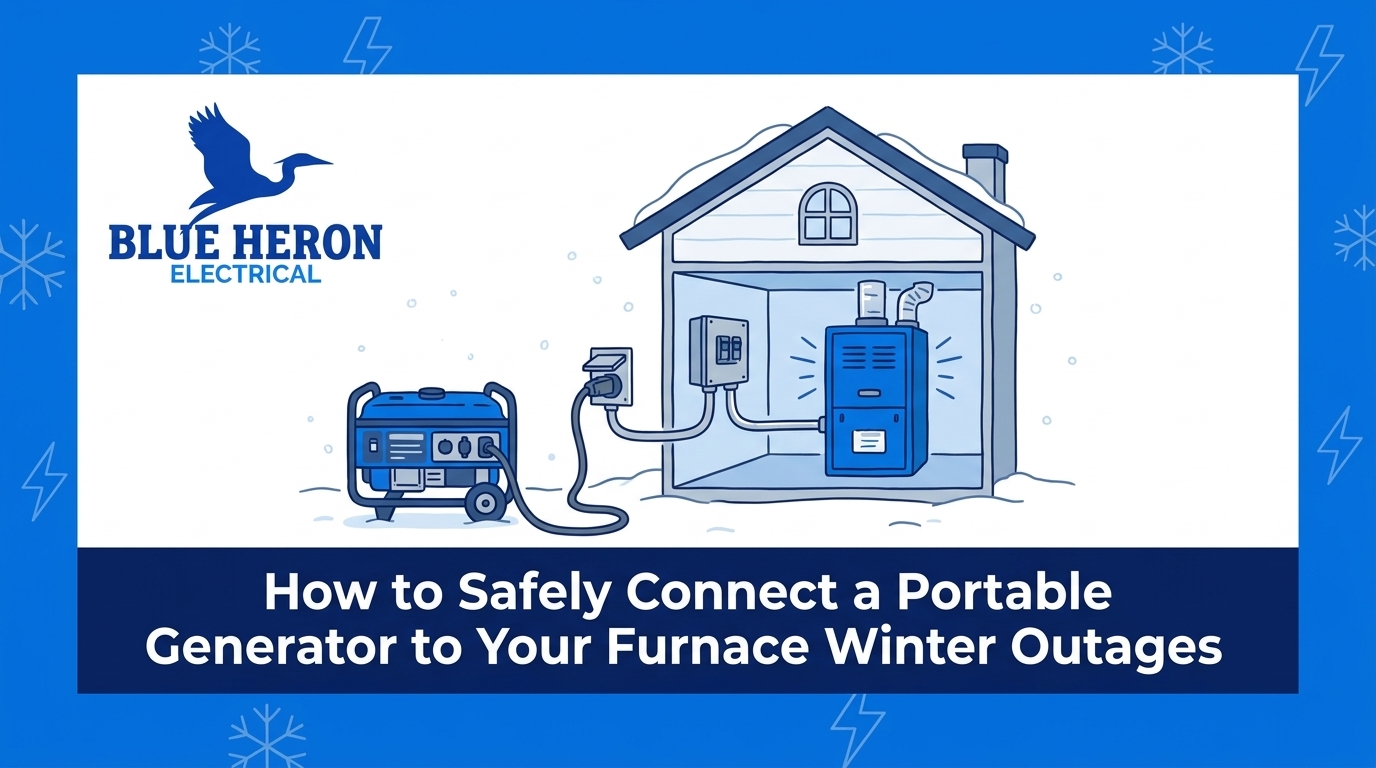
Surviving a Winter Outage: Why Your Furnace Needs a Safe Generator Connection
With September fall-prep underway, figuring out the safest method for wiring a backup portable generator to your furnace is a top priority before the first freeze hits. The early weeks of the September pre-heating-season offer a brief window to prepare your home for the inevitable power grid failures that accompany severe winter weather. Here at Blue Heron Electrical, our team sees the same scenario play out every year: homeowners wait until the lights go out to drag their portable generator out of the garage, only to face a frustrating realization: a hardwired gas furnace cannot simply be plugged into a standard extension cord.
Because your furnace is permanently wired into your home's electrical panel, delivering backup power requires a physical, code-compliant bridge between the generator and your heating system. Attempting to bypass this requirement with last-minute, dangerous electrical hacks puts both your HVAC equipment and your family's safety at severe risk. The decision point is clear: schedule a professional, code-compliant connection now, rather than panicking in the dark during an ice storm. A licensed electrician serves as the ultimate protector of your home, ensuring that your backup power integration is handled legally and safely.
For comprehensive generator services and professional generator installation, our licensed electricians are ready to help you prepare for the season ahead.
The Hidden Dangers of DIY Furnace Wiring and Backfeeding
When the temperature drops inside a dark house, desperation often leads homeowners to search for quick DIY fixes online. In our years servicing homes throughout Sterling Heights and Metro Detroit, we've unfortunately encountered too many of these hazardous setups firsthand. The internet is filled with dangerous advice regarding generator connections. The most notorious and lethal of these methods is illegal backfeeding, which involves creating a "suicide cord" (a cord with two male ends) to plug a generator directly into a wall outlet. This bypasses all safety mechanisms and pushes electricity backward through your home's electrical panel.
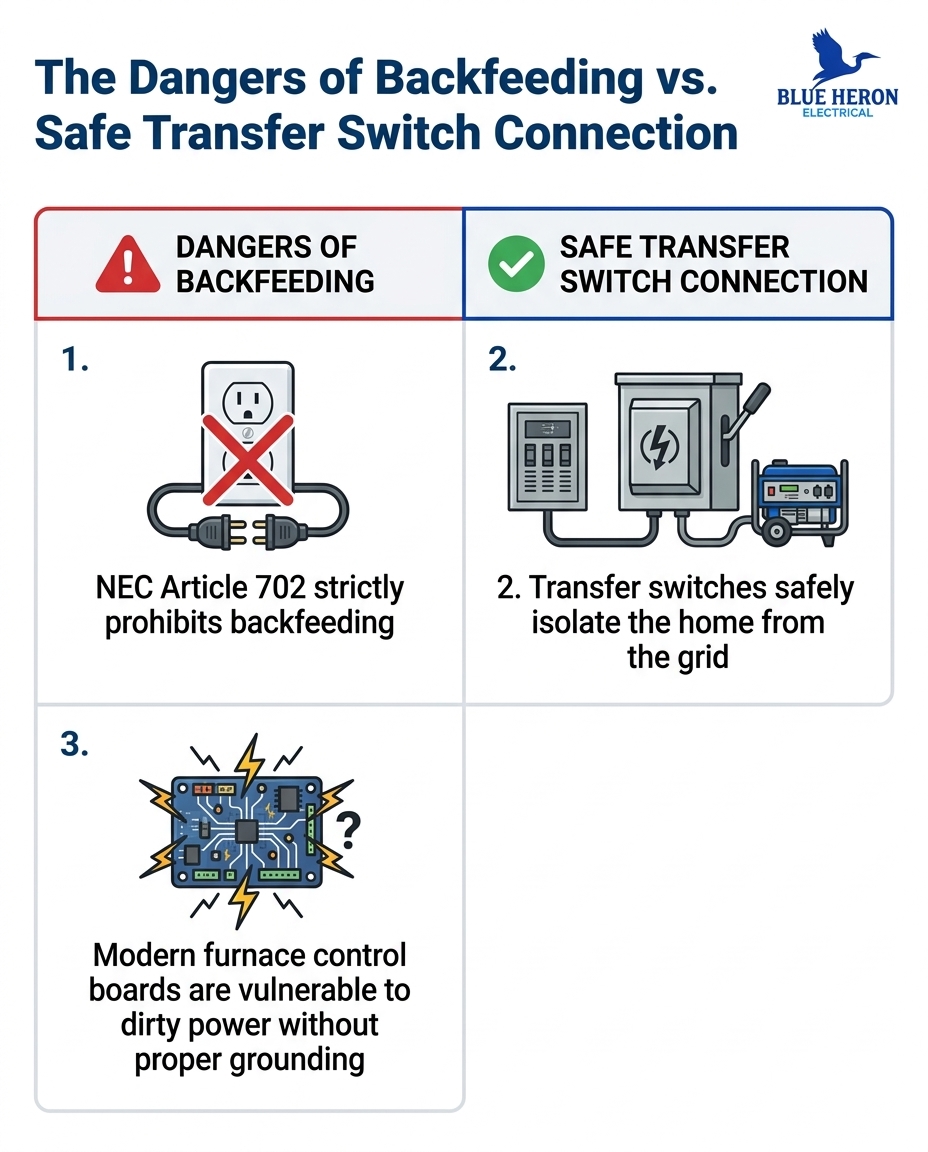
The cause of the danger: The National Electrical Code (NEC) strictly prohibits backfeeding for a very specific reason. When you push power backward through your panel, that electricity doesn't just stay in your house. It travels out to the street and up to the municipal utility transformer. The transformer then steps that voltage up to thousands of volts, sending it down the local utility lines. During local Metro Detroit ice storms, downed power lines put utility workers in highly vulnerable positions. If a lineman is working to restore the grid and encounters stepped-up voltage from an illegally backfed generator, the result can be a lethal shock.
The professional solution: Step-by-step DIY wiring is never an option for hardwired appliances due to these severe liability and safety risks. OSHA guidelines regarding portable generator safety mandate proper isolation from the grid. Working with a licensed electrician ensures absolute NEC compliance, protecting the homeowner from devastating liability and safeguarding the lives of the utility workers trying to restore power to your neighborhood.
• Single-Circuit Transfer Switch — Safety Level: Extremely High — NEC Compliance: Fully Compliant — Risk to Utility Workers: None (Grid is isolated)
• Illegal Backfeeding (Suicide Cords) — Safety Level: Extremely Dangerous — NEC Compliance: Severe Violation — Risk to Utility Workers: Lethal Shock Hazard
• Standard Extension Cords — Safety Level: Moderate (Tripping hazard) — NEC Compliance: N/A (Cannot power a hardwired furnace) — Risk to Utility Workers: None
The Code-Compliant Solution: Single-Circuit Transfer Switches
If DIY methods and backfeeding are off the table, how do you actually get power from a portable unit to your heating system? The answer we always recommend is a single-circuit transfer switch. This specialized piece of electrical equipment is the only proper, legal method to connect a portable generator to a hardwired furnace. Installed directly next to your furnace or main electrical panel, this device acts as a safe, controlled gateway for backup power.
Understanding Mechanical Isolation
A single-circuit transfer switch features a "break-before-make" mechanical design. When you flip the switch from "Line" (municipal power) to "Generator" (backup power), the device physically disconnects the furnace from the municipal grid before it allows the generator's power to flow in. This guarantees that the two power sources can never collide, and it absolutely prevents the backfeeding scenario that endangers utility workers. Once isolated, the portable generator can safely power the furnace blower motor, the inducer motor, and the igniter.
Sizing Your Generator Correctly
Having a transfer switch installed during the September pre-heating-season is only half the battle; you must also ensure your portable generator is adequately sized for the furnace. Gas furnaces do not use electricity to create heat, but they do require significant electrical power to run the blower motor that circulates the warm air.
• Running Wattage: The continuous power required to keep the blower motor spinning.
• Starting (Surge) Wattage: The massive, brief spike in power required to get the heavy motor turning from a dead stop. This can be up to three times the running wattage.
A licensed electrician from our team at Blue Heron Electrical can calculate these exact loads to ensure your generator won't stall out when the furnace kicks on. Furthermore, a pattern we see often is that older homes may require electrical panel upgrades before integrating new transfer equipment, as outdated panels may lack the necessary grounding or space to safely support the new sub-circuit.
Protecting Sensitive Furnace Electronics from 'Dirty Power'
There is a widespread misconception that a furnace is just a simple mechanical box with a fan and a flame. In reality, modern gas furnaces rely on highly sensitive microprocessors and complex control boards to manage ignition sequences, fuel ratios, and safety sensors. These electronic components demand a smooth, consistent flow of electricity to function correctly.
The Threat of High Total Harmonic Distortion (THD)
Standard open-frame portable generators are notorious for producing what electricians call "dirty power." This refers to electricity with a high Total Harmonic Distortion (THD). Instead of a smooth, rolling sine wave of alternating current, dirty power delivers choppy, erratic voltage spikes. When this jagged electrical current hits a modern furnace control board, the microprocessors can become confused, causing the furnace to lock out, fail to ignite, or run erratically.
Why Proper Grounding Matters
Beyond erratic operation, improper grounding or severe voltage fluctuations can permanently fry a furnace control board. We frequently receive emergency calls where this exact scenario has left a family without heat right in the middle of a Sterling Heights / Metro Detroit winter storm. Professional installation of a transfer switch ensures that the system is properly grounded according to code. A licensed electrician will also advise you on selecting an inverter generator or a unit with a THD of less than 5%, which produces the "clean power" necessary to protect these expensive HVAC components from permanent electrical damage.
Keeping the Heat On When the Grid Fails
The true value of having a professional connection ready before an emergency strikes becomes crystal clear the moment the grid fails. A sudden winter power outage brings immediate chaos. The house goes dark, the temperature inside begins to plummet, and the immediate risk of freezing pipes becomes a ticking clock. In the Sterling Heights / Metro Detroit area, where freezing temperatures and heavy ice accumulations frequently snap tree branches and down power lines, losing heat is not just uncomfortable—it is a property emergency.
The unprepared home: Without a transfer switch, an outage means scrambling in the dark, running extension cords through cracked windows (which lets the freezing air inside), and realizing that the furnace cannot be powered at all. Space heaters plugged directly into the generator can easily overload the unit, and the home continues to cool down dangerously.
The prepared home: Contrast that stress with the peace of mind that comes with a pre-installed transfer switch. The operation becomes a simple plug-and-flip-switch routine. You roll the generator outside, run a single heavy-duty cord to the specialized inlet box, start the engine, and flip the transfer switch inside your warm, dry basement. The furnace powers up safely, the blower motor pushes warm air through the vents, and your family remains safe and comfortable. Rapid professional response to install this infrastructure before severe weather hits is the key to maintaining uninterrupted heat.
Why Early Fall is the Critical Window for Generator Upgrades
Timing is everything when it comes to electrical upgrades. Waiting until the local meteorologist predicts the first major freeze is a critical mistake. As local professionals, we can tell you firsthand that once a storm is on the radar, our schedules book up instantly, and supply houses frequently run out of transfer switches and heavy-duty inlet boxes.
Positioning September as your primary action month allows you to evaluate your backup power needs alongside your standard fall HVAC maintenance. Here are the seasonal steps to ensure you are ready for the September pre-heating-season:
1. Assess your current backup plan: Determine if your current portable generator produces clean enough power (low THD) to safely run a modern furnace control board.
2. Evaluate whole-home needs: Consider the broader context of your electrical demands. This is the perfect time to explore your options, including deciding between a portable generator and a full standby system that powers the entire house automatically.
3. Schedule the installation: Book a licensed electrician to install the single-circuit transfer switch while appointment slots are still available and weather conditions are mild.
4. Perform a dry run: Once installed, test the entire system. Hook up the generator, flip the transfer switch, and verify that the furnace cycles on and produces heat properly before you actually need it.
Frequently Asked Questions About Furnace Generator Connections
Can a portable generator run a gas furnace?
Yes, a portable generator can power the blower motor of a gas furnace, provided it supplies enough wattage to handle the motor's starting surge. However, because the furnace is hardwired into your home's electrical system, it cannot be plugged in with a standard extension cord. It must be connected via a professionally installed transfer switch to ensure safe and legal operation during a Sterling Heights / Metro Detroit winter outage.
Why does a furnace need a transfer switch?
A transfer switch safely isolates the furnace from the municipal power grid. This physical disconnection is critical because it prevents backfeeding, which is illegal and highly dangerous. Without a transfer switch, power from the generator could flow backward into the utility lines, endangering the lives of utility workers trying to restore the grid.
What happens if you backfeed a generator?
Backfeeding sends electricity back through your home's electrical panel and out into the utility lines, where pole transformers step up the voltage to thousands of volts. This creates a lethal shock hazard for linemen repairing the grid. Additionally, if municipal power is suddenly restored while you are backfeeding, the collision of two power sources can cause catastrophic fires and instantly destroy your generator and home electronics.
Will a 2000 watt generator run a gas furnace?
Most gas furnace blower motors require between 800 and 1,500 running watts, but starting wattage can be up to three times higher. A 2000-watt generator may struggle with the initial surge required to get the heavy blower motor spinning from a dead stop. Generator sizing should always be verified by a licensed professional to ensure the unit won't overload or stall when the heating cycle begins.
How does dirty power affect my furnace control board?
High Total Harmonic Distortion (THD) from non-inverter generators produces choppy, erratic electricity that can cause sensitive furnace microprocessors to malfunction. This "dirty power" can confuse the ignition sequence or cause the furnace to lock out entirely. Proper grounding and using a generator with low THD protects the expensive control board from permanent electrical damage.
Secure Your Winter Warmth with a Professional Transfer Switch Installation
When the grid goes down in the dead of winter, a single-circuit transfer switch is the only safe, code-compliant way to power your hardwired gas furnace with a portable generator. Attempting to bypass this requirement with DIY wiring or illegal backfeeding puts your expensive HVAC electronics, your home, and local utility workers at severe risk.
The urgency of the September pre-heating-season cannot be overstated. Don't wait for the first ice storm to realize your backup plan is incomplete. Contact a licensed professional from our team today to schedule your transfer switch installation, ensuring your home is safely prepared, fully code-compliant, and ready to keep your family warm through the next winter outage.
Customer Testimonials

Service Areas