
The Dangers of Daisy-Chaining Extension Cords for Fall Yard Work
Is It Safe to Connect Multiple Extension Cords Together for Yard Work?
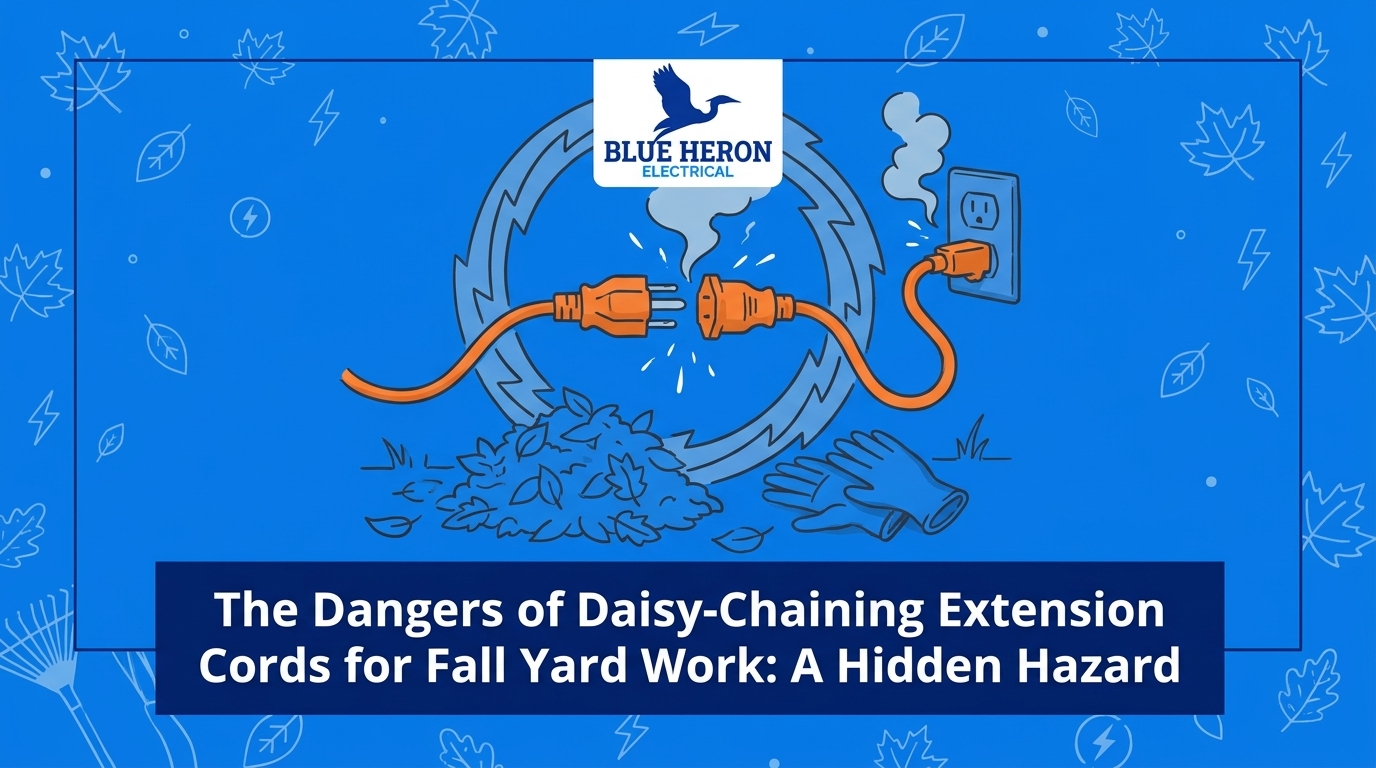
How do you power your yard equipment when the nearest electrical outlet is miles away from the furthest corner of your property? If you are asking yourself this question, you are not alone. As you prepare for September / early fall leaf cleanup, the temptation to string together multiple cheap, 16-gauge extension cords is incredibly common. It seems like a harmless, quick fix to reach that stubborn pile of leaves near the back fence. However, the dangers of daisy-chaining extension cords for fall yard work are severe and often hidden until structural damage is already done.
Using multiple lightweight cords across a large yard creates immediate overheating issues, strains your expensive lawn equipment, and can even compromise your home's main electrical panel. When you realize that this temporary, daisy-chained wiring is actually a severe fire hazard, you reach a critical decision point. It is time to stop risking your safety and commit to a proper, heavy-duty solution.
Common misconceptions about temporary yard power:
• Misconception 1: All extension cords carry power equally, regardless of length.
• Misconception 2: If the plug physically fits into the socket, the connection is safe to use.
• Misconception 3: Indoor-rated cords are perfectly fine to use outside as long as it isn't actively raining.
As professionals providing comprehensive residential electrical services, we see the hidden dangers behind this seemingly simple power delivery method every single season. Understanding exactly why this practice is prohibited is the first step toward securing a safer home.
Understanding the Physics of Severe Voltage Drop
To understand why linking cords is hazardous, we have to look at how electricity actually travels. Extension cords are not just hollow tubes that electricity flows through effortlessly. They are metal conduits with inherent electrical resistance. This resistance is determined by two main factors: the thickness of the wire (the gauge) and the total length of the cord.
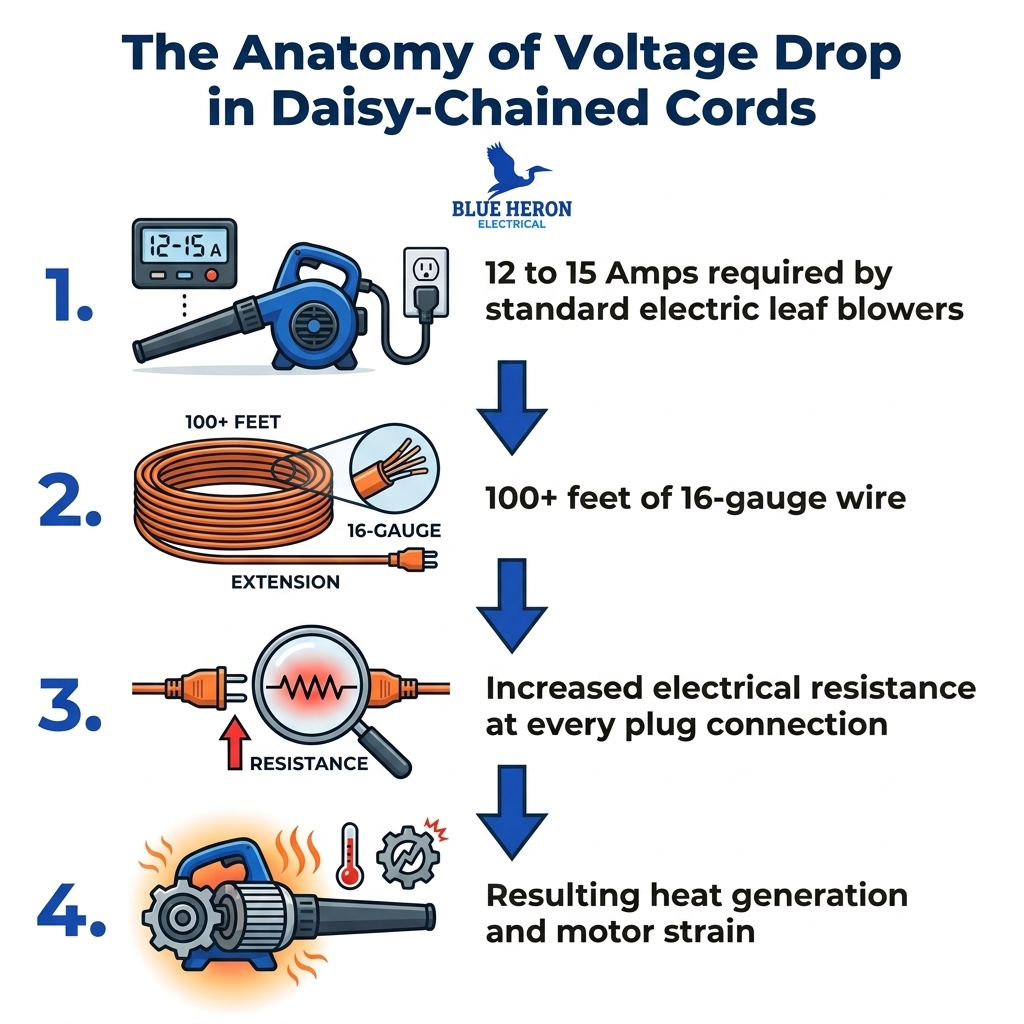
When you push electrical current through a wire, some of that energy is lost as heat due to this resistance. If you use a single, short, heavy-duty cord, the resistance is minimal. But when you create a severe voltage drop over 100+ feet by stringing together thin 16-gauge wires, you force the electrical current to fight its way down the line. Pushing high amperage through undersized wire over long distances turns the cord into a dangerous heating element.
• 16-Gauge (Light Duty) — Typical Maximum Amperage: 10 Amps — Safe Length for High-Draw Tools: Up to 25 feet — Overheating Risk if Daisy-Chained: Severe (Melting / Fire Hazard)
• 14-Gauge (Medium Duty) — Typical Maximum Amperage: 15 Amps — Safe Length for High-Draw Tools: Up to 50 feet — Overheating Risk if Daisy-Chained: High (Voltage Drop / Motor Strain)
• 12-Gauge (Heavy Duty) — Typical Maximum Amperage: 20 Amps — Safe Length for High-Draw Tools: Up to 100 feet — Overheating Risk if Daisy-Chained: Moderate (Requires single continuous cord)
The National Electrical Code (NEC) strictly prohibits temporary daisy-chained wiring for this exact reason. The longer the run and the thinner the wire, the more hazardous the setup becomes.
How Connection Points Increase Resistance
The wire itself is only half of the problem. Every plug-to-receptacle connection adds a significant bottleneck to your electrical flow. The metal prongs of one cord sliding into the plastic receptacle of another do not create a perfectly seamless bond.
• Bottleneck creation: Electricity must jump across these imperfect metal contacts, adding immediate resistance to the circuit.
• Heat generation: This localized resistance generates intense heat directly at the connection point, which frequently melts the plastic casings of the cords.
• Source strain: The increased resistance forces your home's power source to work exponentially harder just to push the same amount of electricity to the end of the line.
Why Modern Electric Leaf Blowers Burn Out Early
The dangers of daisy-chaining do not stop at the extension cord itself; the hazard extends directly into the expensive yard equipment you are trying to use. Modern 12 to 15-amp electric leaf blowers draw a massive amount of power to generate the hurricane-force winds required to clear wet, heavy debris.
Electrical devices are designed to operate at a specific voltage (typically 120 volts in a standard residential outlet). When you experience severe voltage drop across multiple connected cords, the voltage reaching your leaf blower might drop to 105 or even 100 volts. Because the motor still needs a specific amount of total wattage to spin the internal fan, it is forced to compensate for the missing voltage.
The mechanics of motor failure: To make up for the low voltage, the equipment's motor must draw more current (amps). This excess current causes the copper motor windings inside the blower to heat up rapidly. Eventually, this excess heat melts the protective insulation surrounding the windings, causing the motor to short out and permanently fail. The damage to the motor is cumulative—every time you use an undersized, daisy-chained cord, you shave months or years off the lifespan of your equipment.
Signs your equipment is suffering from voltage drop:
• Sluggish startup: The blower takes noticeably longer to reach full speed when you pull the trigger.
• Excessive heat: The plastic housing around the motor feels uncomfortably hot to the touch after just a few minutes of operation.
• Burning odors: A distinct smell of melting plastic or burning metal emits from the tool's exhaust vents.
• Inconsistent power: The fan speed audibly surges and dips randomly while you are actively clearing debris.
Shock Hazards in Damp, Freezing Autumn Weather
Beyond equipment damage, the physical degradation of cheap extension cords in colder temperatures introduces a severe safety risk. Typical indoor-rated or lightweight 16-gauge cords are manufactured with thin vinyl casings designed for climate-controlled environments. When exposed to the elements, this material reacts poorly.
As temperatures drop, the vinyl casing becomes incredibly stiff and brittle. When you drag a rigid cord across your driveway or wrap it tightly around your arm for storage, the brittle vinyl is highly susceptible to micro-cracking. These tiny fissures expose the live internal wiring to the outside world.
With Sterling Heights' damp autumn mornings and freezing early-fall temperatures, this creates a high-conductivity environment for brittle cords hidden in wet leaves. When you drag a cracked cord through morning dew or wet ground cover during your September / early fall leaf cleanup, moisture inevitably enters those cracks. Because water is highly conductive, this creates an immediate and heightened risk of electrical shock for anyone holding the equipment or walking nearby. What started as a simple chore can quickly escalate into a dangerous electrical emergency.
The Toll on Your Home: Tripped Breakers and Damaged Receptacles
The hazard of daisy-chaining is a two-way street. The excessive heat generated by severe voltage drop over 100+ feet doesn't just damage the cord and the leaf blower—it travels backward into your home's permanent electrical infrastructure.
The quick fix becomes a permanent problem: When you force a circuit to push high amperage through extreme resistance, the exterior house receptacle takes the brunt of the impact. Continuous over-amping causes the metal contacts inside the outlet to overheat. Over time, this heat can literally melt the plastic face of the exterior outlet and severely damage the permanent wiring hidden inside your walls.
This scenario frequently leads to nuisance tripping at the main electrical panel. When the breaker senses that the circuit is pulling more current than it is safely rated to handle, it trips to prevent an in-wall electrical fire. Many homeowners mistakenly believe that a tripping breaker is just a nuisance or a sign of a faulty panel. In reality, repeated breaker trips are a critical warning sign of a dangerously overloaded circuit.
If you find yourself constantly resetting the panel while doing yard work, you are pushing your system beyond its limits. Ignoring this warning sign can lead to melted panel bus bars or permanent wiring damage. If this happens, you will likely need professional circuit breaker services to assess and repair the underlying damage before it becomes a structural fire hazard.
Eliminating the Hazard with Dedicated Outdoor Outlets
The most common reaction to extension cord problems is to simply buy a thicker cord. While upgrading to a single, continuous 12-gauge cord is safer than daisy-chaining thin wires, it is still a temporary fix. Dragging 100 feet of heavy-duty cable across your lawn is exhausting, creates a tripping hazard, and still leaves your connection exposed to the elements.
The permanent, structural solution to yard power needs is installing strategically placed, weather-resistant outdoor receptacles. Dedicated circuits for outdoor equipment prevent you from overloading shared indoor circuits (like the garage or kitchen) and completely eliminate the need for dangerous 100+ foot cord runs.
For example, one local homeowner with an older property recently reached out because they needed secure power access. They required outlets added both inside and outside the home, along with an updated electrical box to handle the load. The installation crew completed the work in a quick and friendly manner, identifying hidden problem areas in the older wiring along the way. The result was a satisfactory, modernized electrical system that provided safe, accessible power exactly where the family needed it, without relying on hazardous temporary setups.
Highlighting Blue Heron Electrical's expertise in installing safe, weather-resistant, dedicated outdoor outlets means you can trust that your exterior power needs will be handled with precision. When you rely on experienced Sterling Heights electricians, you eliminate the need for hazardous extension cord setups entirely, protecting both your 12 to 15-amp electric leaf blowers and your home.
Soffit and Landscape Power Solutions
Modern exterior electrical design offers incredibly convenient options for every corner of your property.
• Soffit Outlets: Installing receptacles high up under the eaves of your roof provides perfect, weather-protected power for holiday lighting and security cameras, keeping cords off the ground entirely.
• Landscape Pedestals: For deep-yard power access, specialized landscape pedestals can be trenched and wired safely underground, giving you a dedicated plug right next to your garden or back fence.
• Weatherproof Covers: All modern exterior installations feature "in-use" weatherproof covers that keep rain and snow out of the receptacle, even while a tool is actively plugged in.
Frequently Asked Questions About Extension Cord Safety in Fall
Before heading out for your weekend yard cleanup, it is critical to understand the rules of temporary power. If you are tired of dealing with tangled wires, we highly recommend installing dedicated exterior soffit outlets to bypass these issues entirely. For immediate safety, here are the most common questions we hear regarding extension cords.
Why shouldn't you plug two extension cords together?
Plugging two extension cords together multiplies electrical resistance and creates a severe fire hazard at the connection point. Every time you connect a plug to a receptacle, you force electricity to jump across imperfect metal contacts. This bottleneck generates intense heat that can easily melt the plastic casing around the plug. Furthermore, the combined length creates a severe voltage drop over 100+ feet, which restricts the power reaching your tool and strains your home's electrical panel.
What gauge extension cord is safe for a leaf blower?
For high-draw yard equipment, you generally need a heavy-duty 12-gauge or 10-gauge extension cord. Standard 12 to 15-amp electric leaf blowers pull a massive amount of continuous power. If you try to run this equipment on a thin 16-gauge cord, the wire will overheat and the motor will starve for voltage. Always check the manufacturer's manual for your specific blower, but investing in a single, continuous 12-gauge cord rated for outdoor use is the safest baseline approach.
Can daisy chaining extension cords cause a fire?
Yes, daisy-chaining extension cords is a leading cause of temporary wiring fires. The excess electrical resistance generated by linking multiple cords causes the wire itself to act like a heating element. When the copper wire gets too hot, it melts the surrounding vinyl insulation. Once that protective insulation fails, the live wires can arc against each other or ignite nearby dry leaves and debris, sparking an immediate electrical fire.
What happens if you daisy chain extension cords?
When you daisy-chain extension cords, you drastically reduce the voltage that reaches the end of the line while simultaneously increasing heat generation. This severe voltage drop forces the motor in your yard equipment to draw extra current to compensate, which inevitably leads to motor burnout. At the same time, the excessive heat travels back up the line, potentially melting your exterior house receptacle and tripping your main circuit breaker.
Is it safe to leave outdoor extension cords plugged in overnight?
No, it is never safe to leave temporary extension cords plugged in and exposed to the elements overnight. Even cords rated for outdoor use are meant for temporary operation, not permanent installation. Leaving them outside overnight exposes them to morning dew, unexpected rain, and freezing temperatures that degrade the vinyl casing. A cord left plugged into a live outlet overnight is an active shock hazard waiting for a person or an animal to accidentally interact with it.
How do I know if my extension cord is rated for outdoor use?
You can identify an outdoor-rated extension cord by looking for the letter "W" printed directly on the wire's outer jacket. The letters stamped on the cord indicate its designated use—for example, "SJTW" stands for Service, Junior, Thermoplastic, and Weather-resistant. If the cord lacks a "W" in its designation, it is strictly meant for indoor use and will quickly degrade, crack, and become a severe shock hazard if exposed to damp outdoor conditions.
Secure Your Property with Safe Outdoor Power Solutions
Understanding the actual physics behind voltage drop and overheating risks allows you to make much safer choices during your September / early fall leaf cleanup. Temporary wiring is exactly that—temporary. Relying on daisy-chained, undersized cords to power high-draw equipment puts your tools, your family, and your home's electrical infrastructure at unnecessary risk.
The most actionable guidance is simple: if you must use an extension cord, use a single, properly rated heavy-duty cord that easily reaches your workspace without stretching. Better yet, upgrade your home's permanent infrastructure to eliminate the hazard entirely. We encourage you to consult a professional to assess your exterior electrical needs and install dedicated outdoor outlets before the harsh weather sets in, ensuring your property is safe, secure, and ready for every season.
Customer Testimonials

Service Areas